How Parliament Works (AQA GCSE Citizenship Studies): Revision Note
Exam code: 8100

Parliamentary process
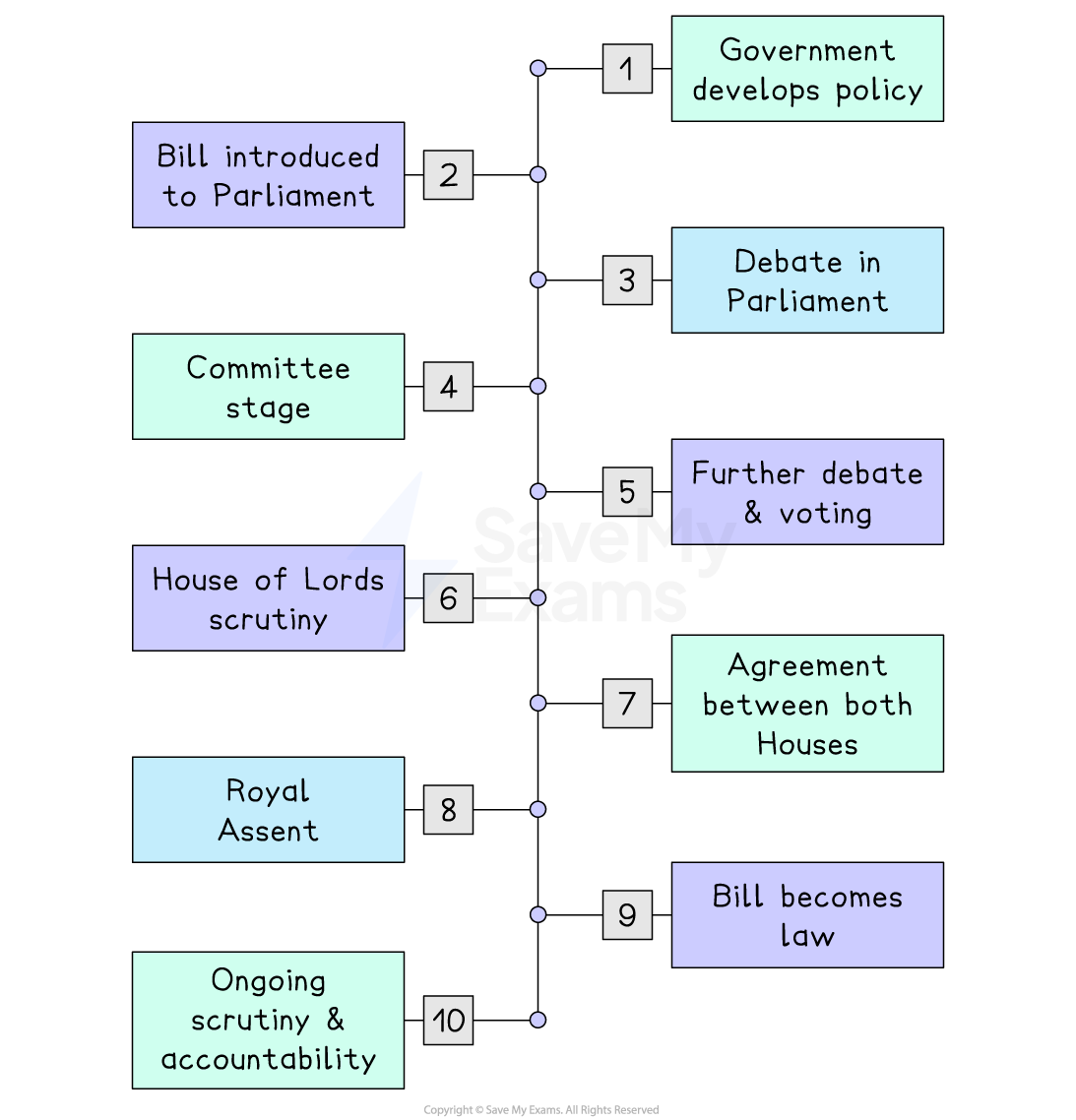
Parliament plays a central role in the UK’s democracy by making laws, debating national issues and holding the government to account
It works through a set of formal processes that balance the government’s power with scrutiny, debate, and oversight
This helps ensure that decisions are lawful, transparent and accountable
Scrutiny and accountability
Parliament plays a key role in scrutinising the government and holding it to account
Scrutiny means carefully checking government actions and decisions
The government proposes laws and policies to deliver its election manifesto
These include new laws, changes to regulations and decisions about spending and taxation
MPs and members of the House of Lords can challenge government proposals
They may question whether policies are effective, fair or affordable
Ministers are accountable to Parliament
They must explain and justify their actions
Poor decisions or failures can be criticised publicly
This scrutiny helps prevent the abuse of power and improves the quality of decision-making
Parliamentary debate and questioning
Debates take place on the floor of the House of Commons and the House of Lords
MPs and peers discuss proposed laws and important national issues
Amendments to proposals can be suggested and voted on
Questioning is a major way Parliament holds the government to account
Ministers regularly answer questions from MPs about their departments
Prime Minister’s Questions (PMQs) takes place every Wednesday in the House of Commons
The Prime Minister must answer questions from MPs
The Leader of the Opposition is allowed six questions
The Leader of the Liberal Democrats is allowed two questions
Remaining questions are asked by MPs from across all parties, selected by the Speaker
PMQs are often highly public and reported in the media
This increases transparency and public awareness
Similar debates and questioning occur in the House of Lords
However, there is no equivalent of PMQs in the Lords
Committee system
Parliamentary committees allow Parliament to examine issues in greater detail
Bill committees examine proposed laws line by line
This helps identify problems or unintended consequences
Select committees focus on the work of specific government departments
For example, the Health and Social Care Committee scrutinises the NHS
Committees can:
Call ministers, civil servants and experts to give evidence
Question government departments about their decisions and performance.
Some committees are joint committees, made up of members from both the Commons and the Lords
Committees produce reports
These are published and debated.
The government is expected to respond
Committee work is often less political and more detailed than debates in the chamber
This makes it an important part of effective scrutiny
Examiner Tips and Tricks
Students often describe what Parliament does but forget how it scrutinises
To gain marks, link debates, PMQs and committees directly to accountability. Avoid just listing features - explain why scrutiny matters
For example how select committees improve policy or expose weaknesses

Unlock more, it's free!
Join the 100,000+ Students that ❤️ Save My Exams
the (exam) results speak for themselves:

Was this revision note helpful?
