Roles in Parliament (AQA GCSE Citizenship Studies): Revision Note
Exam code: 8100
An introduction to roles in Parliament
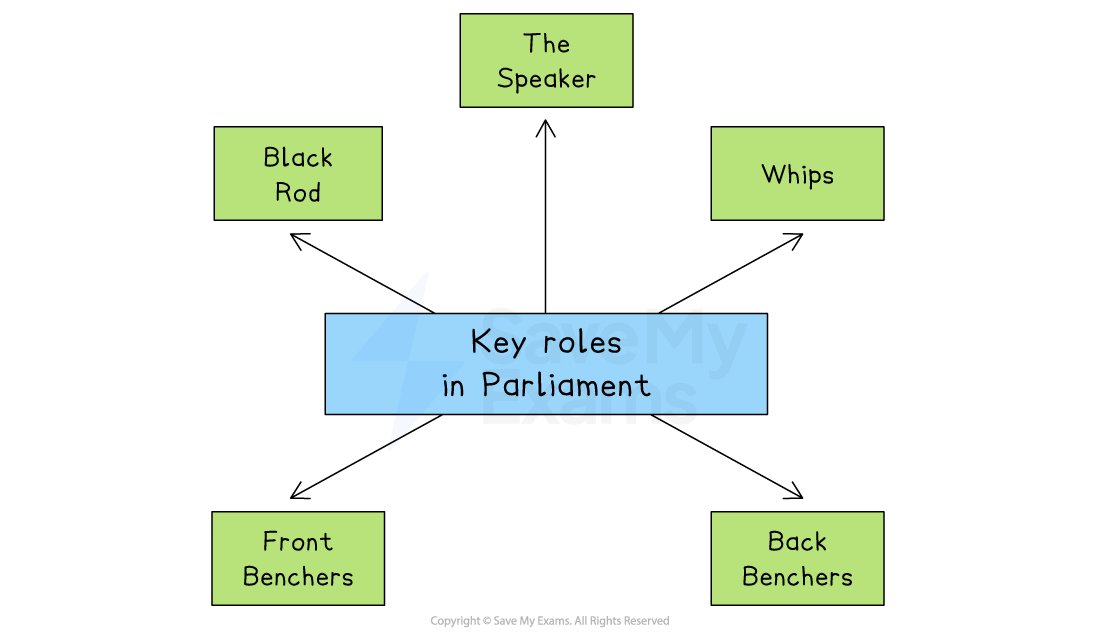
Parliament is made up of hundreds of people with different jobs and responsibilities, all of which help it function smoothly
Some roles are ceremonial, some are about keeping order and fairness, and others help organise political parties and debates
Key roles in Parliament
Black Rod
Black Rod is a senior official of the House of Lords
Their main role is to maintain order and security in the House of Lords and during major ceremonies
They are best known for their role in the State Opening of Parliament
When the King’s Speech is about to be read, the doors of the House of Commons are symbolically slammed shut
Black Rod then knocks three times with the black rod to request MPs attend the House of Lords
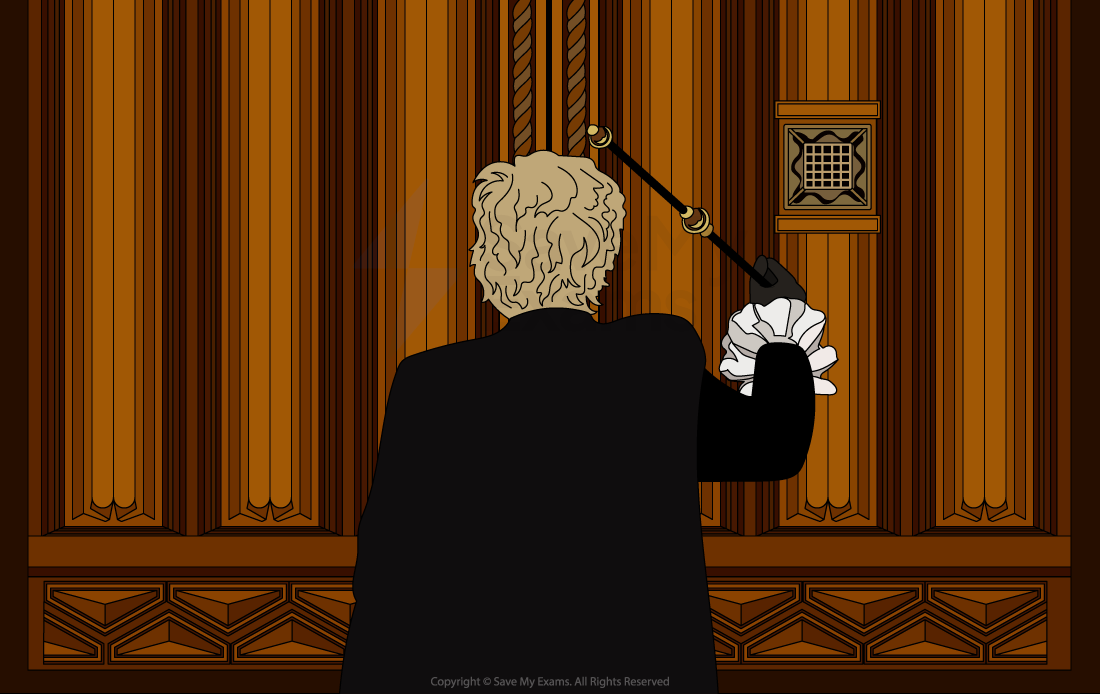
This tradition symbolises the independence of the House of Commons from the monarch
The Speaker
The Speaker is an MP elected by other MPs to chair debates in the House of Commons
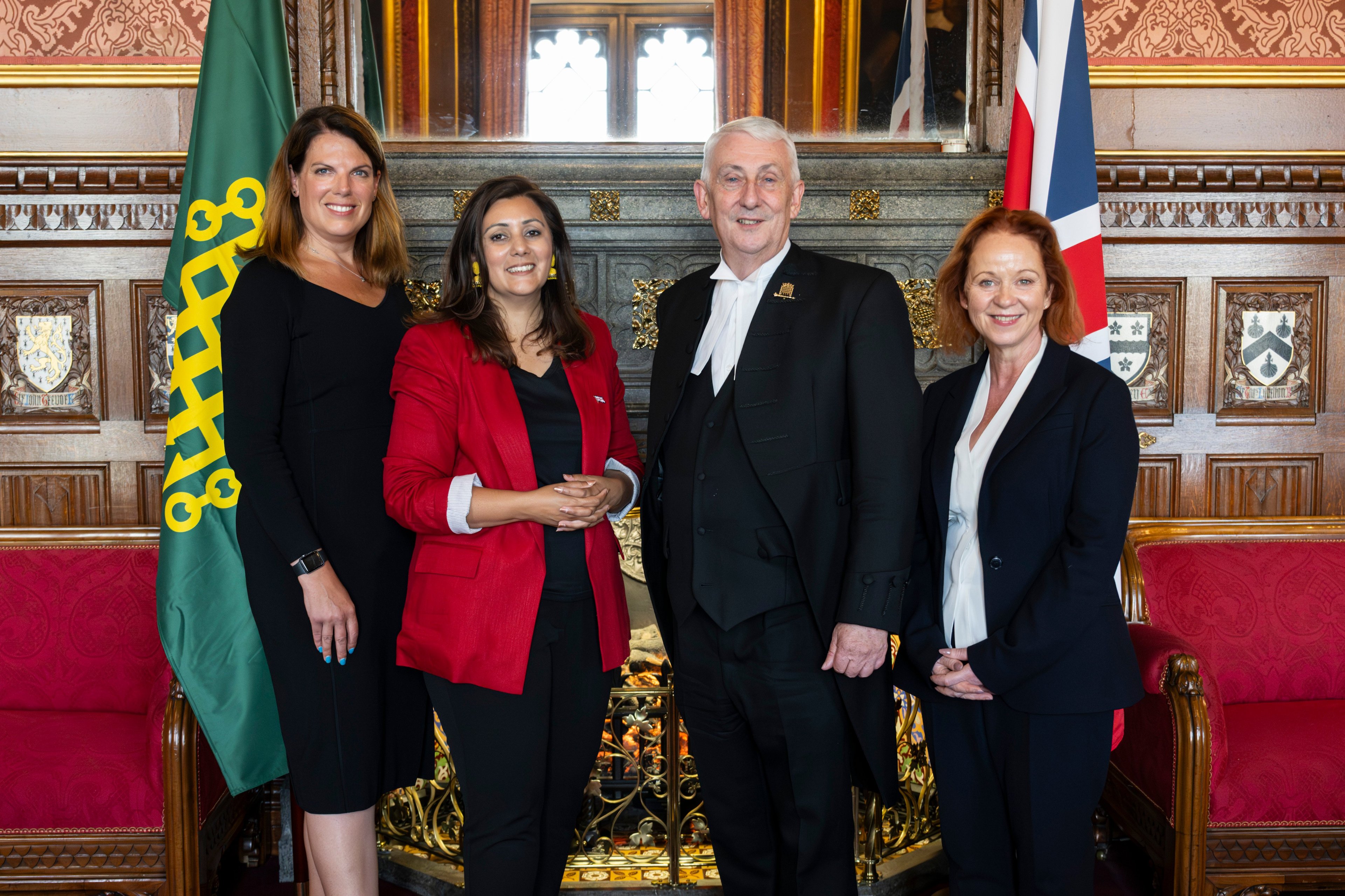
Their main role is to ensure debates are fair, orderly and follow the rules
They decide who is allowed to speak
They interpret the rules of Parliament
They can discipline MPs, including ordering them to leave the chamber
Once elected, the Speaker becomes politically neutral
They give up party membership
At the next general election, they stand as the Speaker, not as a party candidate
By tradition, other major parties do not contest the Speaker’s seat
Whips
Whips exist in both the government and opposition, in the Commons and the Lords
Their role is to:
Maintain party discipline
Make sure MPs attend important votes
Whips tell MPs how important a vote is using the whip system
One-line whip | Two-line whip | Three-line whip |
|---|---|---|
|
|
|
MPs who ignore a three-line whip may lose the party whip, meaning they are temporarily expelled from the party
Front benchers
Front benchers sit on the front rows in the House of Commons
On the government side, front benchers are ministers, including the Prime Minister and Cabinet
On the opposition side, front benchers are shadow ministers
Each shadow minister monitors and challenges a specific government minister
Front benchers lead debates and answer questions on behalf of their party
Back benchers
Backbenchers are MPs who are not ministers or shadow ministers
They sit on the benches behind the front benchers
Backbenchers have a range of roles
They represent their constituents
They ask questions and take part in debates
They serve on select committees
Backbenchers can be very influential
Rebellions by backbench MPs can force the government to change policy
E.g. In 2025, Labour backbenchers opposed planned cuts to welfare spending
Over 100 Labour MPs signed a motion and publicly criticised the plans.
Facing the risk of a large rebellion, the government withdrew and revised the proposals, even though the government had a large majority
Many Prime Ministers, including Theresa May and Rishi Sunak, began their careers as backbenchers
Examiner Tips and Tricks
To remember the key parliamentary roles, use the mnemonic SBWFB – Speaker, Black Rod, Whips, Front bench, Backbench

Unlock more, it's free!
Join the 100,000+ Students that ❤️ Save My Exams
the (exam) results speak for themselves:

Was this revision note helpful?