The Legislative Process (AQA GCSE Citizenship Studies): Revision Note
Exam code: 8100

Types of legislation
A bill is a proposed law that is debated in Parliament
If it is approved by both the House of Commons and the House of Lords and then given Royal Assent, it becomes an Act of Parliament
Types of Bill
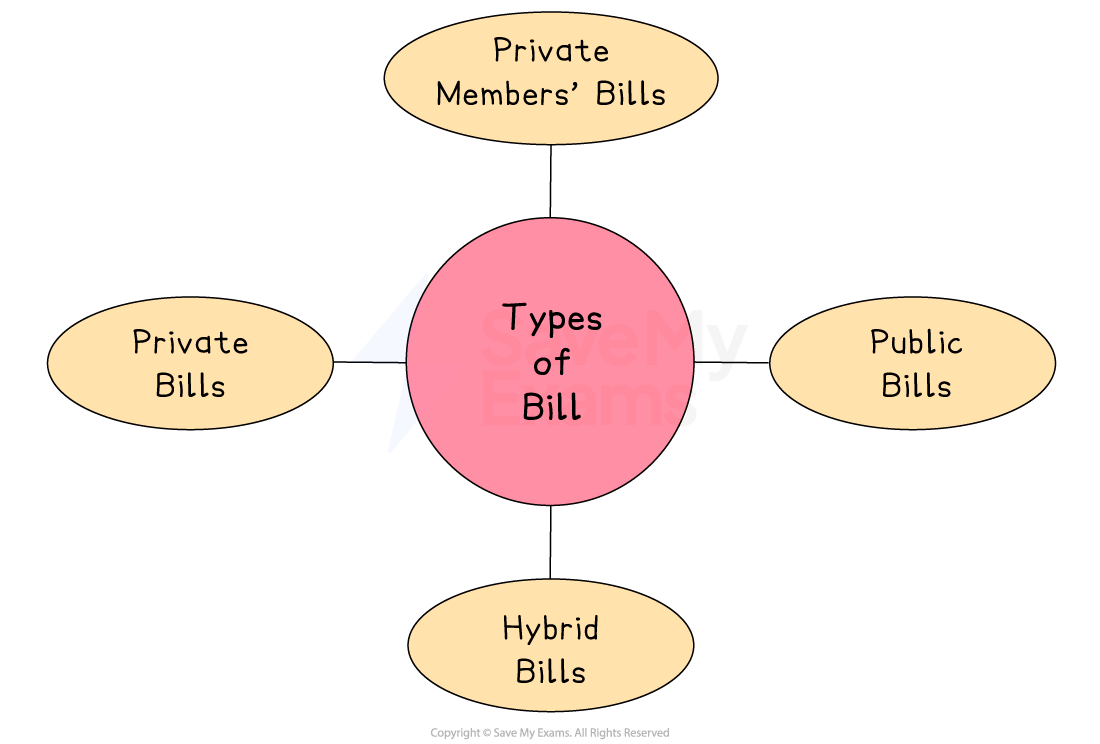
Public Bills
Public Bills, which are the most common type, are proposed by the government
They apply to the whole country and deal with major national issues
These bills take up most of Parliament’s time because the government controls the timetable
Examples of Public Bills include
Budget and Finance Bills, which set out tax and public spending plans
Laws on areas such as education, health, crime or immigration
Private Members’ Bills
Private Members’ Bills are introduced by MPs or members of the House of Lords who are not government ministers
They allow individual parliamentarians to raise issues that matter to them or their constituents
They are important because they can raise awareness and influence future government legislation
Very few become law because:
There is limited parliamentary time set aside for them
The government may oppose them
Some Private Members’ Bills have been successful
For example, the Smoking Ban in public places began as a Private Members’ Bill
Private Bills
Private Bills are sponsored and paid for by outside organisations, not the government
They apply to specific individuals, companies or local areas, rather than the whole country
Common sponsors include:
Local councils
Transport authorities
Harbour boards
A recent real example is the City of London (Various Powers) Act 2023
This law was requested and paid for by the City of London Corporation
It only applies to the City of London, not the whole country
It gives the local council extra powers over things like traffic and street trading
Hybrid Bills
Hybrid Bills combine features of Public Bills and Private Bills
They affect the general public but also have a direct impact on specific groups or areas and go through extra scrutiny
A recent example is the Holocaust Memorial Bill
It is a government bill but affects a specific site and local community
Other examples include bills related to major infrastructure projects, such as high-speed rail
Examiner Tips and Tricks
A common mistake is saying all bills are proposed by the government
Remember: Public Bills = government, Private Members’ Bills = backbench MPs or Lords, Private Bills = organisations
In exam answers, name the bill type before explaining it to show clear understanding and secure method marks early
The process of making a law
The legislative process in the UK can begin in either the House of Commons or the House of Lords
Most important government bills start in the House of Commons because it is the elected chamber
Legislative stages
Stage | Explanation |
|---|---|
First Reading |
|
Second Reading |
|
Committee Stage |
|
Report Stage |
|
Third Reading |
|
Consideration by the other House |
|
Royal Assent |
|

Unlock more, it's free!
Join the 100,000+ Students that ❤️ Save My Exams
the (exam) results speak for themselves:

Was this revision note helpful?
