Migration & the UK (Edexcel GCSE Citizenship Studies): Revision Note
Exam code: 1CS0

A brief history of migration
Migration has shaped the UK for over a thousand years
The idea that population diversity is new is incorrect – people have been moving into, out of and across Britain throughout history
After the Second World War, the government encouraged migration from former colonies in the Caribbean, Africa and Asia
Case Study
The arrival of the Empire Windrush
Britain after World War 2
After World War 2, the UK faced shortages of workers in key sectors such as transport, health care and manufacturing
To rebuild the country, the government encouraged migration from Commonwealth nations, especially in the Caribbean
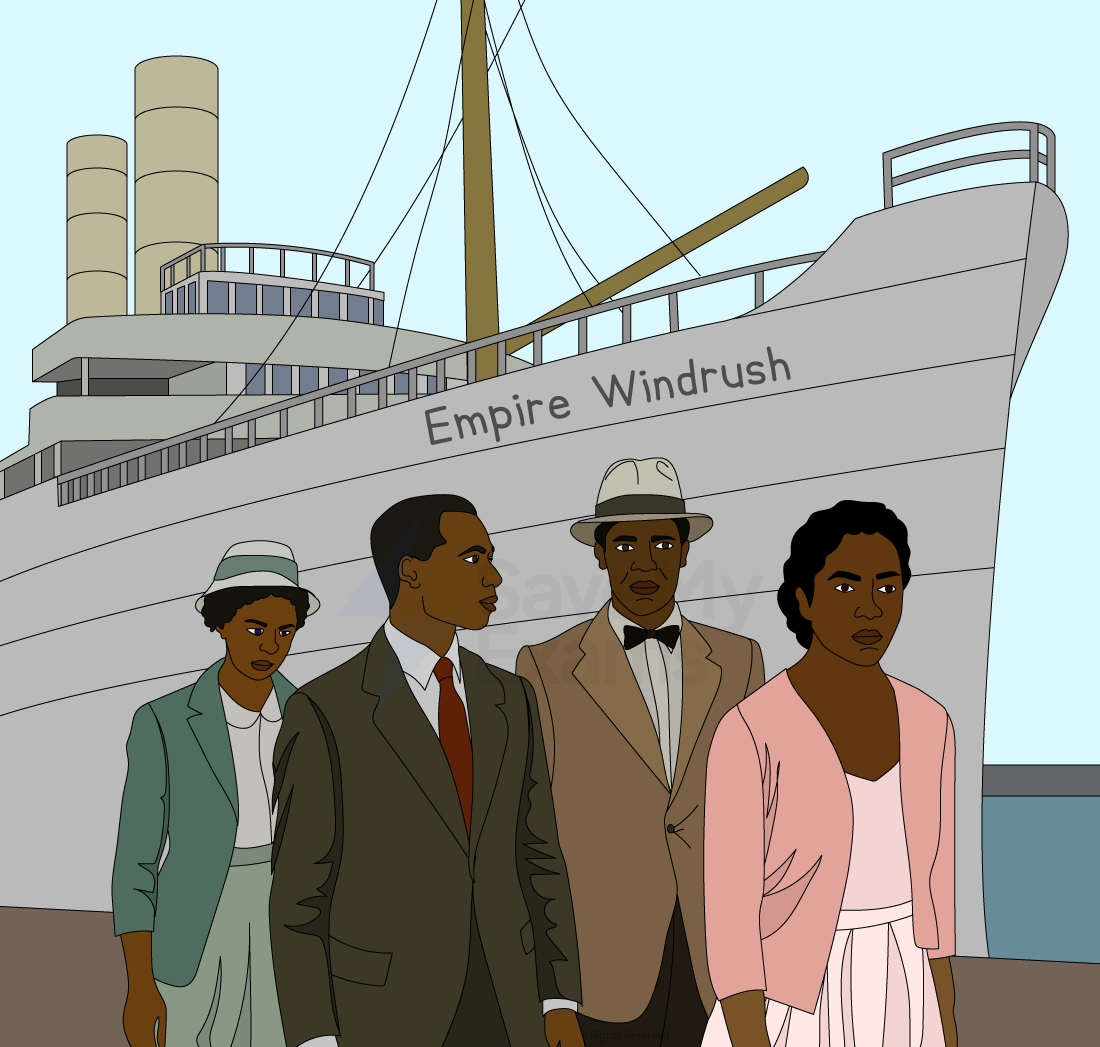
The most symbolic moment was the arrival of the ship Empire Windrush at Tilbury Docks on 22 June 1948, carrying passengers from the Caribbean who had responded to advertisements offering work in the UK
Caribbean migrants were motivated by a combination of economic, social, and historical factors
Reasons for leaving the Caribbean | Reasons for choosing the UK |
|---|---|
|
|
Contributions and difficulties
The Windrush Generation contributed significantly to British society but often faced many challenges
Employment
Many found work quickly in the NHS, public transport, factories and construction
They filled labour shortages and became essential to rebuilding post-war Britain
Housing and discrimination
Many were denied housing due to racist policies and signs saying "No Blacks, No Irish, No Dogs"
Families were often forced into overcrowded or poor-quality accommodation
Racism and social barriers
Despite being British subjects, many faced prejudice in work and daily life
Racist attacks and discrimination were common in the 1950s and 1960s
Community and cultural impact
Caribbean communities built social and cultural networks, establishing churches, clubs and events
They contributed to British culture in music (e.g. reggae, ska), literature, food and sport
The Notting Hill Carnival, one of Europe’s biggest street festivals, grew from Caribbean traditions
Late 20th century–21st century migration
Towards the end of the century, migration increased from European Union countries due to freedom of movement rules
At the same time, more people arrived seeking safety from wars and conflict around the world
By the time the London 2012 Olympics took place, the city proudly stated that it was home to communities from every competing nation
Migration from around the world continues to be a major feature of the UK’s population today
Migration and population statistics
Aspect | Statistic | Key point |
|---|---|---|
Net migration (recent years) |
|
|
Typical migrant age |
|
|
NHS workforce |
|
|
Students |
|
|
Types of migrants
There are three main types of migrant in the UK
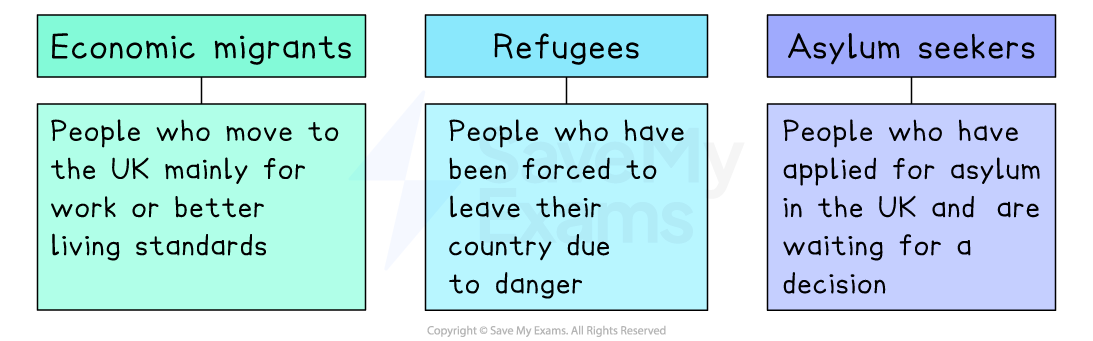
Economic migrants
People who move to the UK mainly for work or better living standards
Attracted by job opportunities, higher wages or better working conditions
Often fill labour shortages in sectors such as healthcare, construction, agriculture and hospitality
May also move to gain work experience or improve career prospects
Refugees
People who have been forced to leave their country due to danger
Flee war, conflict, persecution, or human rights abuses
Are given legal protection and the right to stay in the UK
Often supported by the government or charities when they arrive
Asylum seekers
People who have applied for asylum in the UK and are waiting for a decision
Claim they would be unsafe if returned to their home country
Are not allowed to work while their claim is being processed in most cases
If their application is successful, they become refugees
Reasons why people migrate
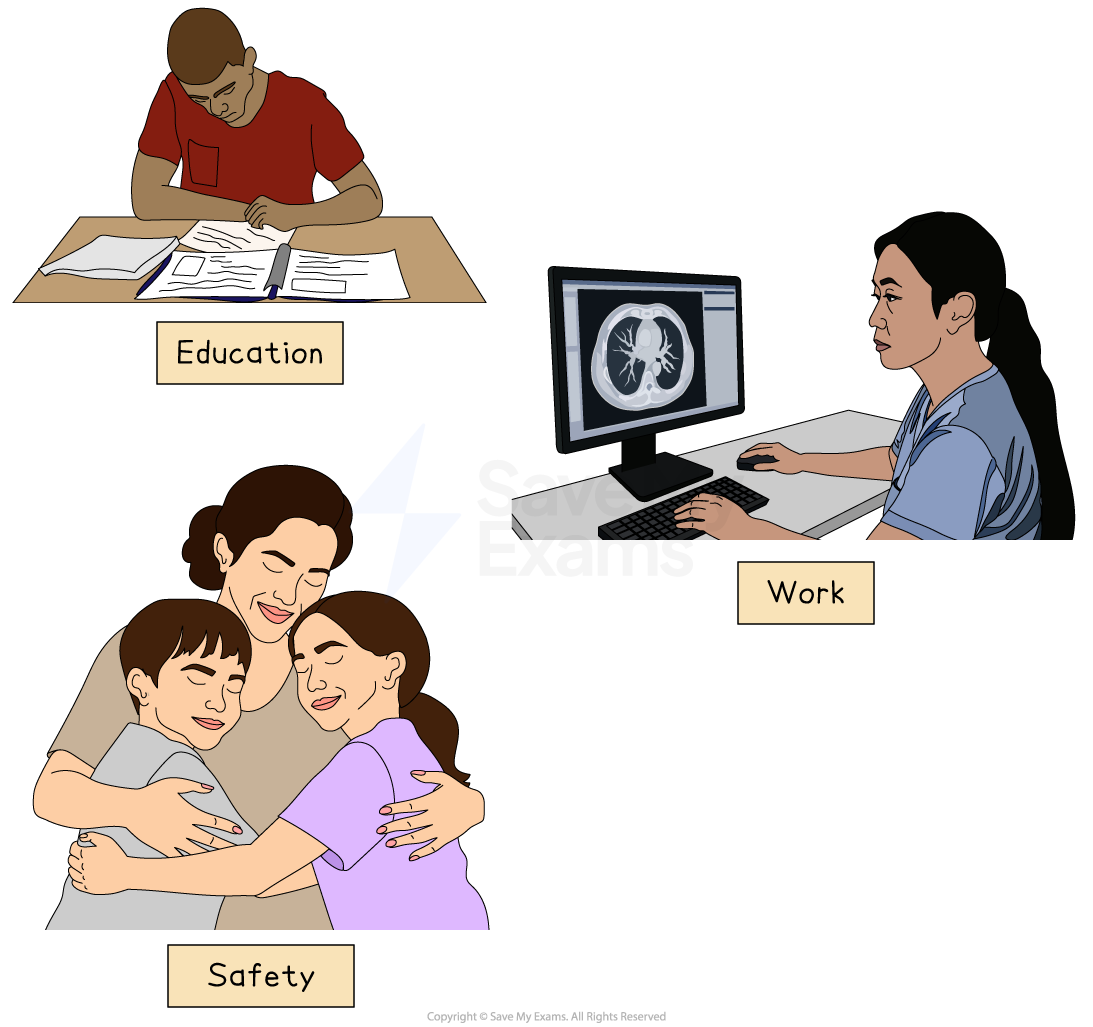
Work and economic reasons
To find work or earn higher wages
To escape poverty or unemployment
To join or support family members already living in the UK
Access to better healthcare, education and public services
Education
To study at universities, colleges or training centres
Safety and security
To escape war, violence or persecution
To seek protection and human rights
Examiner Tips and Tricks
Make sure you can clearly explain the difference between refugees and asylum seekers, as this is a common exam focus

Unlock more, it's free!
Join the 100,000+ Students that ❤️ Save My Exams
the (exam) results speak for themselves:

Was this revision note helpful?
