Rights & Responsibilities in Challenging Global Situations (Edexcel GCSE Citizenship Studies): Revision Note
Exam code: 1CS0
Balancing rights and responsibilities
Balancing rights and responsibilities in challenging global situations means ensuring that human rights are protected even during conflict or crisis
Civilians still have the right to life, safety and dignity, regardless of war or instability
However, rights come with responsibilities
Governments and armed forces have a responsibility to protect civilians and must follow international rules when using force, including the laws of war
In global crises, rights can sometimes come into conflict
For example, governments may limit some freedoms to protect national security or public safety, but these limits should be lawful and proportionate
International humanitarian law helps to balance rights and responsibilities by setting rules that reduce harm during conflict
It aims to protect civilians, prisoners of war and aid workers
The UK and non-governmental organisations (NGOs) also have responsibilities in challenging global situations
The UK must act in line with international law, while NGOs provide humanitarian aid and support vulnerable people
International law in conflict situations
International Humanitarian Law (IHL) applies to all those involved in a conflict and aims to
Protect people not directly involved in the conflict, such as the sick and wounded and prisoners of war
Sets out limits to warfare activity, such as attacks on civilians and certain types of weapons
It also requires humanitarian aid to be made available to those who need it
International humanitarian law and the rules of war
The two key documents relating to the conduct of war are the Geneva Convention, and the Hague Convention, which in 1907 codified the rules of land warfare
The Geneva Convention
The Geneva Conventions were first created in 1864 following the Battle of Solferino, where the suffering of wounded soldiers identified the need for international rules to protect those injured in war
Their original aim was to ensure that wounded and sick soldiers received medical care, regardless of which side they were fighting for
Over time, the Conventions were extended and amended between 1906 and 1929 to respond to changes in warfare, including the use of poison gas and the need for clearer rules on the treatment of prisoners of war
A major revision took place in 1949, creating four modern Geneva Conventions that expanded protection to civilians, prisoners of war and wounded members of armed forces at sea and on land
Further changes were made in 1977 and 2005 to address newer forms of conflict, including biological warfare, the impact of landmines and the special protection of children in armed conflicts
Today, the Geneva Conventions form the foundation of International Humanitarian Law
They set out rules designed to limit suffering during war and protect those who are not fighting
The International Committee of the Red Cross (ICRC) acts as the custodian of the Conventions, helping to monitor compliance, support victims of conflict and promote respect for humanitarian law worldwide
Breaches of the Geneva Convention
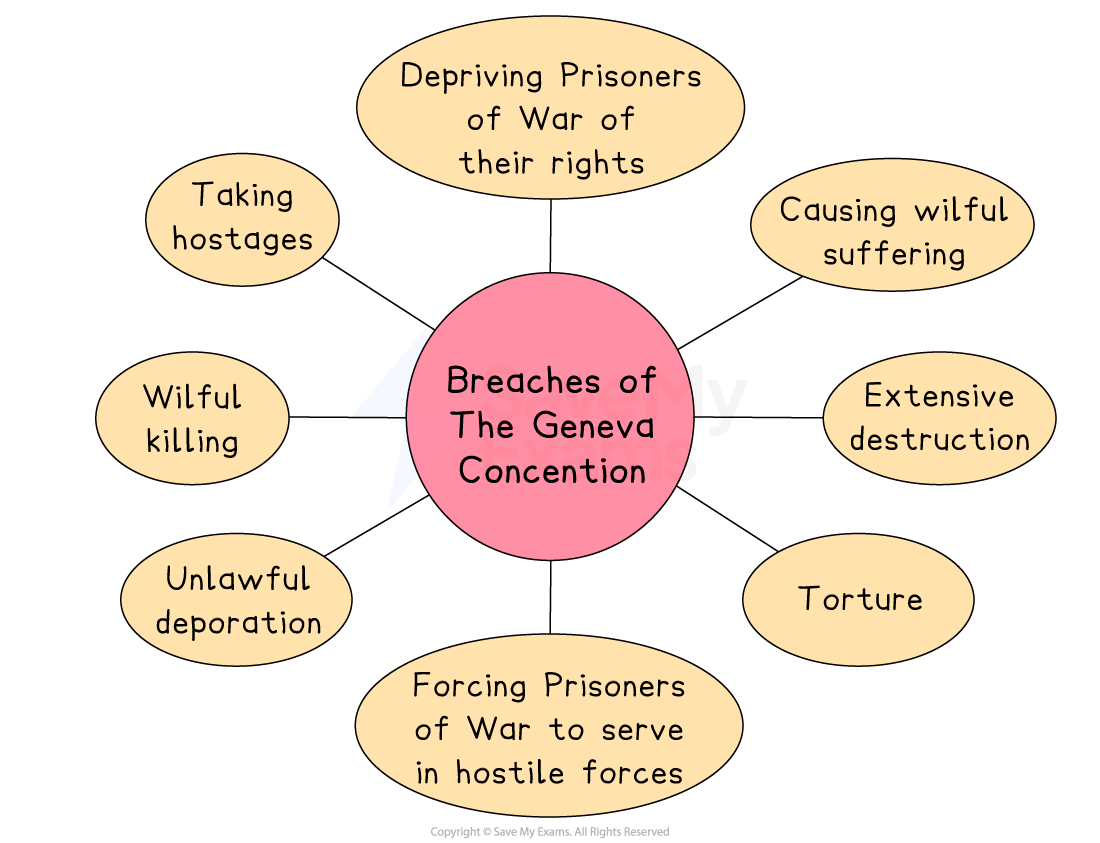
The International Criminal Court
At the end of the Second World War, the victorious allies set up international tribunals to try the leaders of the defeated countries for war crimes and crimes against humanity
They established a new international set of rules about holding those who start wars to account for their actions
Case Study
The Nuremberg Trials
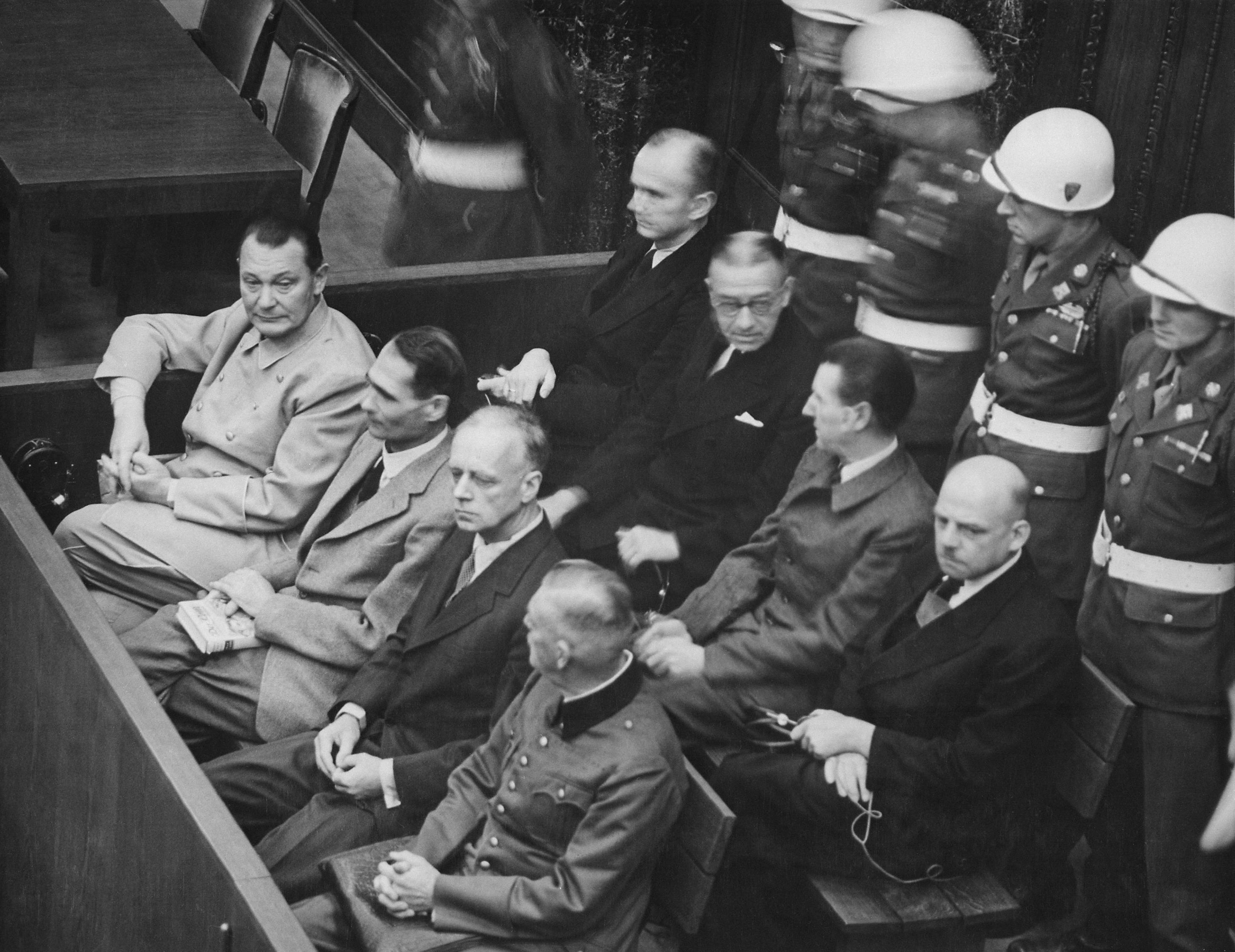
Purpose of the Trials
The Nuremberg Trials were a series of international military trials held after the Second World War to prosecute leading Nazi officials for their actions
They were set up by the Allied powers to ensure accountability for serious crimes committed during the war
Senior Nazi leaders were charged with war crimes, crimes against humanity and crimes against peace, including genocide and mass murder
The trials were significant because they established that individuals, including political and military leaders, could be held personally responsible for international crimes
The outcome
Many of those convicted received death sentences and long prison terms, though some were acquitted
The Nuremberg Trials helped shape modern international law
They influenced later courts such as the International Criminal Court, and reinforced the principle that following orders is not a defence for war crimes
In the 1990’s, an international tribunal was established following the wars in the former Yugoslavia and the civil war in Rwanda
In 1998, 120 countries signed the Rome Statute
This set up the International Criminal Court (ICC) which meets in The Hague
It also established what was meant by a war crime
The role of NGOs
Non-governmental organisations (NGOs) are independent bodies that are not controlled by governments
They play an important part in responding to conflicts, disasters and human rights issues around the world
What are NGOs?
Many NGOs are registered charities and may operate nationally (within one country) or internationally (across many countries)
Although independent, many NGOs receive government funding and often work alongside governments, the EU, the UN, or other international organisations
What NGOs do in international disputes
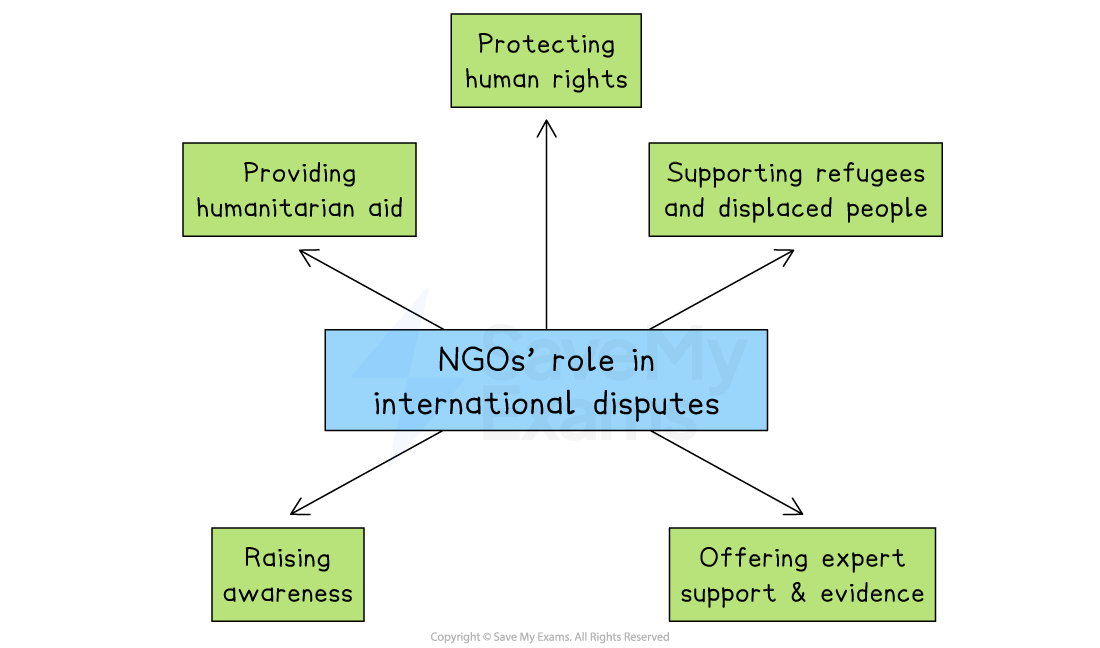
Providing humanitarian aid
NGOs often provide basics, such as food, shelter and medical support, during conflicts
E.g. The Red Cross provided emergency medical care and shelters for civilians during the Syrian civil war
Protecting human rights
NGOs report abuses and put pressure on governments to intervene
E.g. Amnesty International published reports on the treatment of political prisoners in Myanmar and pressured the government to release them
Supporting refugees and displaced people
NGOs provide advice and resources for those fleeing violence or persecution
E.g. The Refugee Council helps refugees arriving in the UK by providing housing and legal advice as well as language support
Raising awareness
NGOs launch campaigns and engage in global activism
E.g. Oxfam campaigns to highlight global poverty and inequalities through its Make Poverty History campaign
Offering expert support and evidence
NGOSs provide their expertise to international bodies such as the UN
E.g. Médecins Sans Frontières (Doctors Without Borders) giving medical evidence to the UN about health crises in conflict zones such as Yemen
Case Study
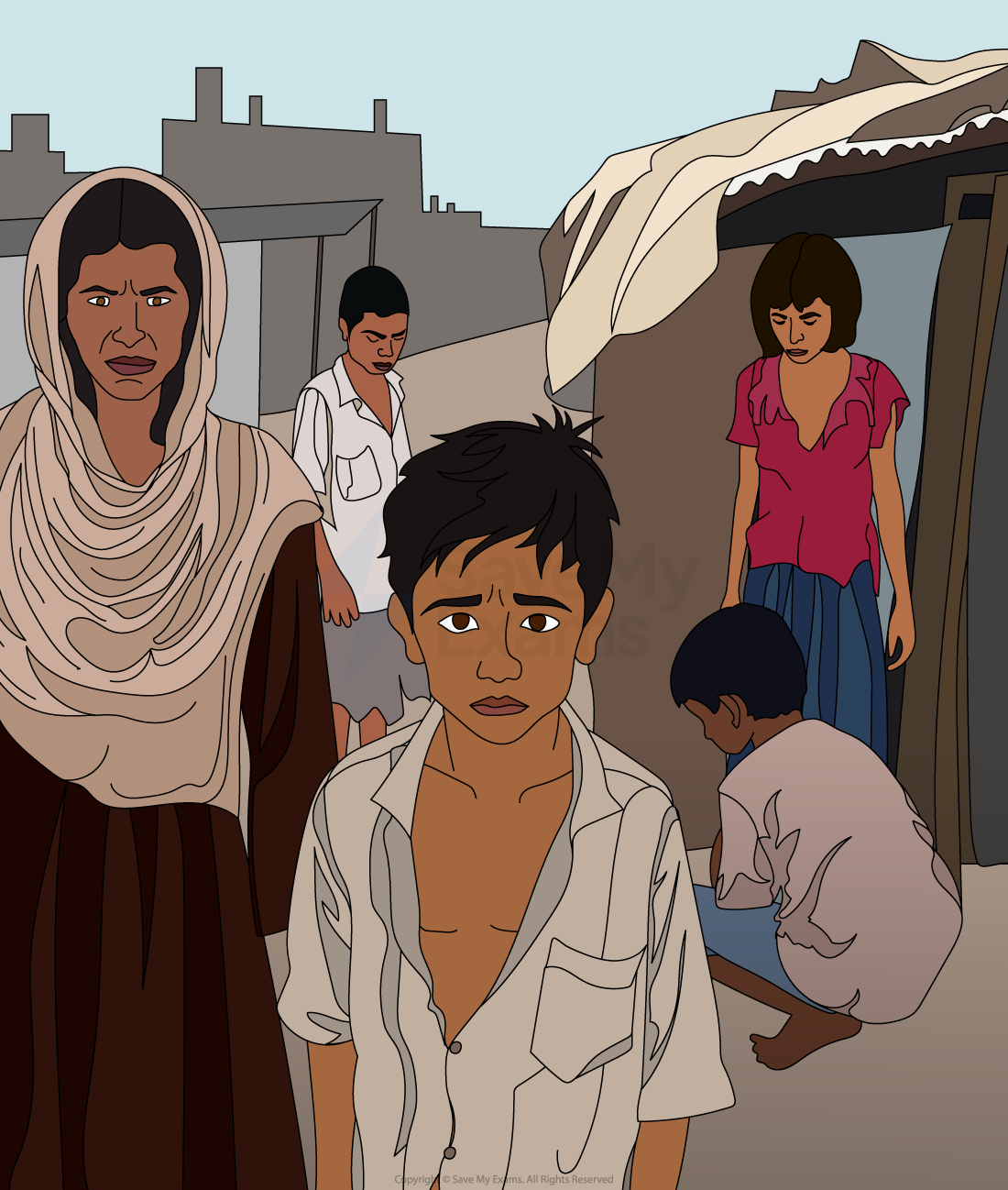
Save The Children in Yemen
The long-running conflict in Yemen created severe shortages of food, clean water and medical care, especially for children
Many communities were cut off from hospitals and basic supplies due to ongoing fighting
How did Save The Children help?
Save the Children delivered essential food packages to families at risk of famine
It deployed mobile health clinics to treat sick and injured children in areas without functioning hospitals
The organisation provided clean water and sanitation equipment to reduce the spread of disease in conflict-affected regions
The UK's role in international disagreements
The UK plays an important part in helping to prevent, manage and resolve international disputes
1. Diplomacy
The UK uses diplomatic channels to calm tensions and encourage peaceful solutions
As a permanent member of the UN Security Council, the UK helps write and vote on resolutions about conflicts, sanctions and peacekeeping
UK embassies across the world allow British diplomats to negotiate directly with other governments during crises
2. Humanitarian aid
The UK gives emergency assistance when disputes create suffering, such as food shortages, refugee crises and lack of medical care
It is part of groups like the Group of Friends for Action on Conflict and Hunger, which focus on helping civilians affected by conflict
3. Military support
The UK sometimes provides military aid when disputes escalate and security is threatened
A current example is the UK’s major role in supplying military equipment and training to Ukraine to help it defend itself
4. International co-operation
The UK works with global organisations to address disputes and prevent them spreading
Bodies such as the G7 and the World Bank allow the UK to work with other leading nations to support countries in crisis, rebuild economies and reduce the risk of further conflict
5. Legal routes
London is one of the world’s most respected centres for commercial and maritime law
International companies and governments often choose UK courts to settle disputes because they are viewed as fair, neutral and highly skilled
This provides a peaceful alternative to conflict and encourages countries to resolve disagreements through legal processes instead of violence
Methods to resolve international disputes
The UK plays a major role in dealing with international disputes because it is a leading member of organisations such as the UN, NATO, the G7 and the Commonwealth
It uses a mixture of soft power and hard power to influence events and help resolve conflicts
Soft power versus hard power
Soft power | Hard Power |
|---|---|
|
|
Methods the UK uses to resolve international disputes
1. Mediation (soft power)
Mediation brings different sides of a dispute together so they can try to agree a peaceful solution
Sometimes the parties do not meet directly, and mediators communicate separately with each group
E.g. The Good Friday Agreement (1998) involved the UK working with American mediators to help resolve conflict in Northern Ireland
2. Sanctions (soft and hard power)
Sanctions are penalties placed on a country to encourage it to change its behaviour.
Soft power sanctions include sporting or cultural boycotts
These signal disapproval without causing major economic harm
E.g. For many years, the UK refused to play South Africa in international sports such as cricket and rugby to pressure the government to end its racist apartheid system
Hard power sanctions include refusing to buy goods from or sell goods to a country
These put direct economic pressure on governments
E.g. The UK and its allies banned the export of military equipment to Russia after the 2022 invasion of Ukraine
Individuals may also take part through boycotts by refusing to buy imported goods from a country involved in wrongdoing
3. Use of force (hard power)
This is the most extreme method and involves military action
The UK usually acts with other countries through NATO or UN-led operations
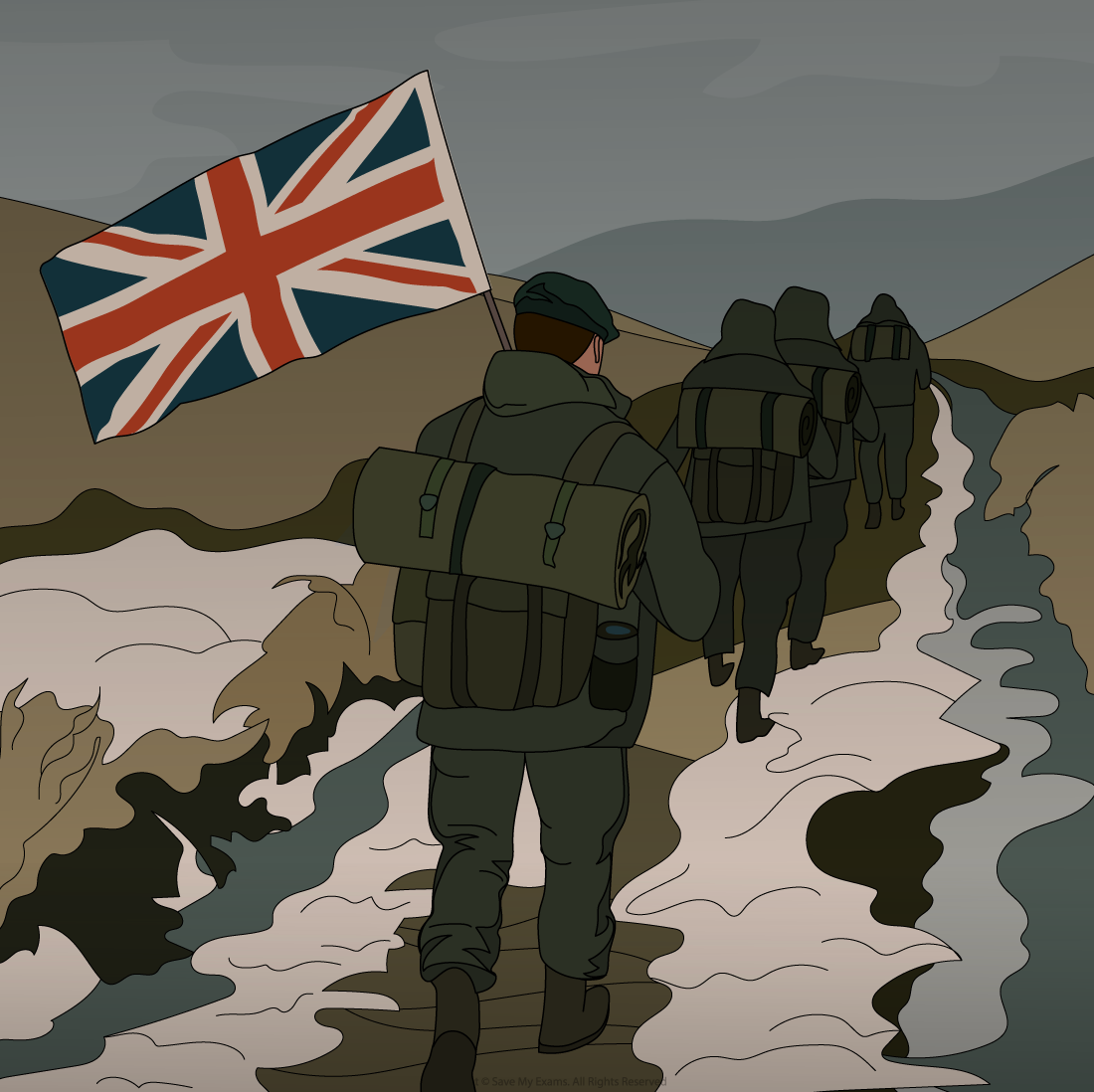
E.g. The Falklands War (1982) was a unilateral UK military operation to remove Argentinian forces from the islands
Examiner Tips and Tricks
A frequent mistake is confusing mediation with the media
Mediation means helping sides in a dispute talk and reach agreement, not reporting on the conflict

Unlock more, it's free!
Join the 100,000+ Students that ❤️ Save My Exams
the (exam) results speak for themselves:

Was this revision note helpful?
