Citizen Participation in Politics & Society (Edexcel GCSE Citizenship Studies): Revision Note
Exam code: 1CS0

Opportunities for citizen participation
Citizens in the UK have a range of opportunities that allow them to take part in society and influence decisions
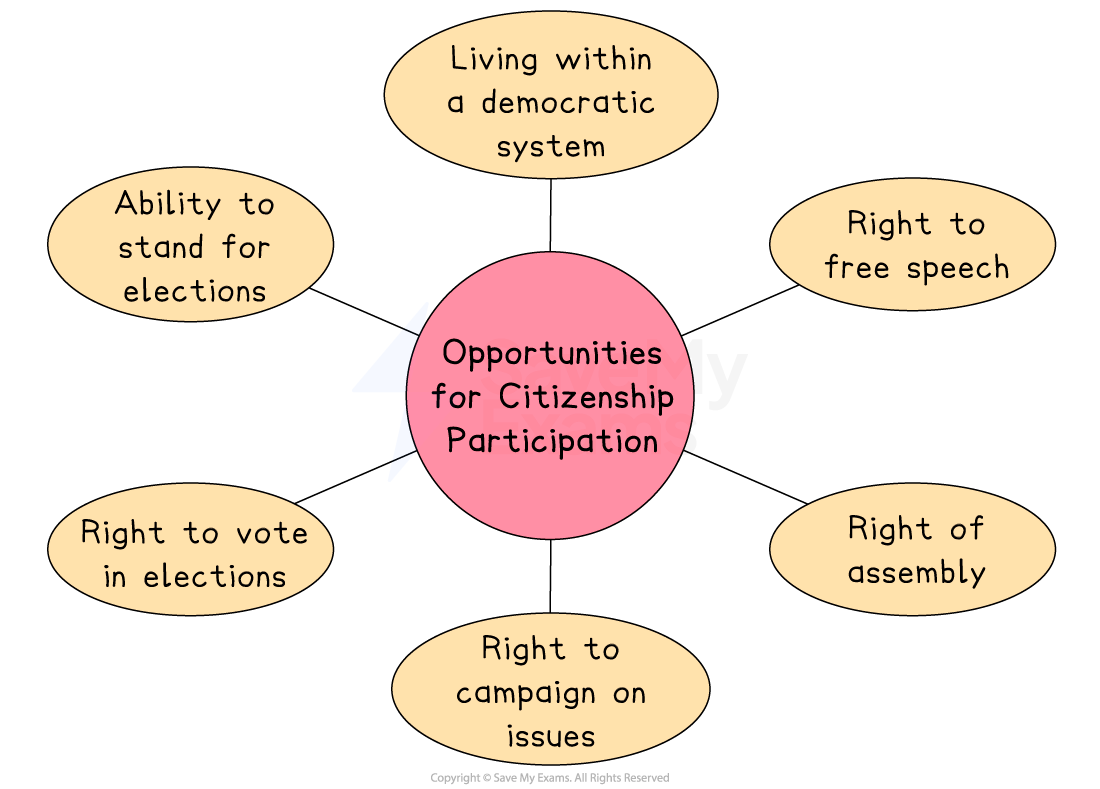
Living within a democratic system
Democracy encourages participation by allowing citizens to have a say in how the country is run, for example through elections or public debate
Right to free speech (within the law)
Citizens can express opinions, criticise the government and raise concerns, as long as they do not break the law, such as those on hate speech
Right of assembly
People are allowed to meet, protest and work with others to bring about change, such as joining demonstrations or supporting campaigns
Right to campaign on issues
Citizens can campaign for causes they care about, such as environmental protection or better local services, using petitions or social media
Right to vote in elections
Voting allows citizens to choose representatives and influence government decisions at local and national levels
Ability to stand for election
Citizens who meet legal requirements can stand for public office, such as becoming a councillor or Member of Parliament
Examiner Tips and Tricks
Many students think citizenship only means voting
Citizenship is broader - it also includes responsibilities, participation in the community, and taking action to bring about change
Barriers to citizen participation
Despite these opportunities, some citizens face barriers that prevent or discourage participation
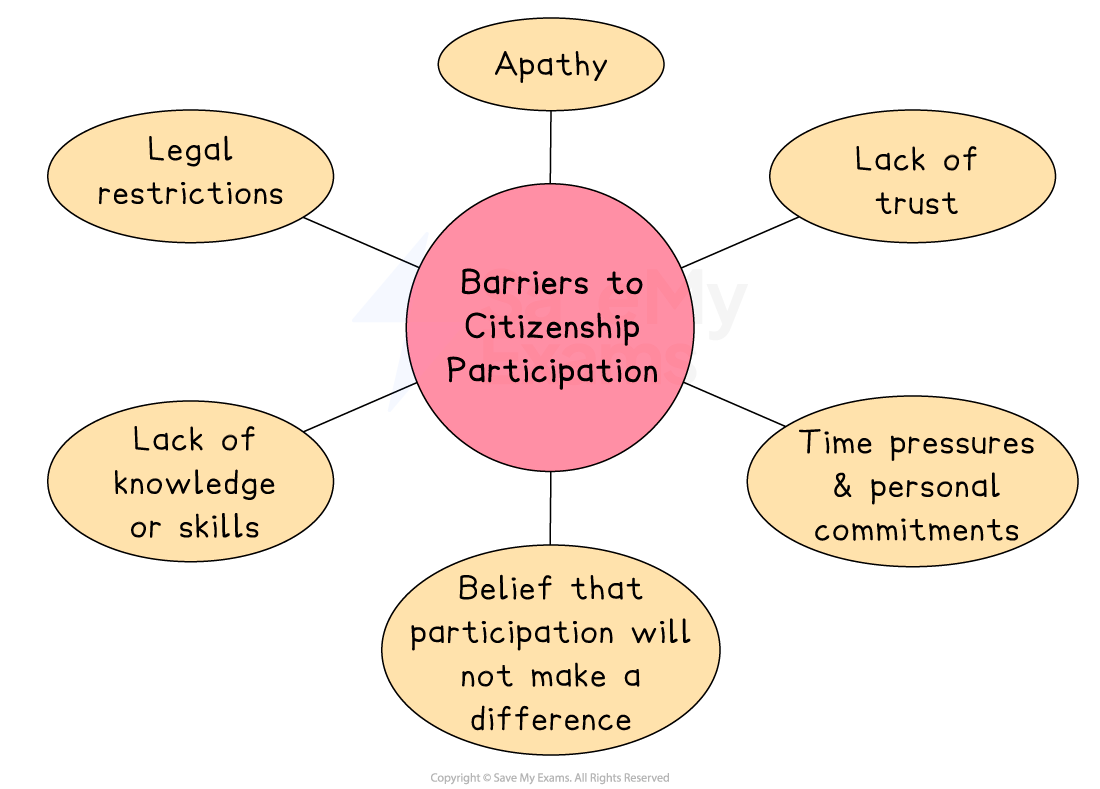
Apathy (lack of interest)
Some people do not take part because they feel politics does not affect them or is unimportant
Belief that participation will not make a difference
Citizens may feel their vote or actions will not change anything, reducing their motivation to get involved
Lack of trust in politicians or the political process
Scandals or broken promises can lead to low confidence in government and discourage participation
Legal restrictions on protest and campaigning
Public authorities, such as the police, can place limits on protests for reasons such as public safety, which may restrict participation
Lack of knowledge or skills
Some citizens do not understand how the political system works or how to take effective action
Time pressures and personal commitments
Work, caring responsibilities or education can make it difficult to attend meetings, campaign or volunteer
How citizens can participate in democracy
Direct action
Direct action is when citizens take part personally and immediately in democracy to try to bring about change themselves
It usually involves public, visible actions rather than working through representatives
Form of action | Example | Explanation |
|---|---|---|
Voting |
|
|
Standing for election |
|
|
Joining a demonstration |
|
|
Indirect action
Indirect action is when citizens try to influence democracy through others, such as representatives, organisations or groups
It involves putting pressure on those in power rather than making decisions directly
Form of action | Explanation |
|---|---|
Joining a political party |
|
Joining an interest or pressure group |
|
Campaigning |
|
Advocacy |
|
Lobbying |
|
Petitions |
|
Volunteering |
|
Digital democracy
Digital democracy refers to the use of digital technology to increase citizen participation in political and democratic processes
It aims to make democracy more accessible, inclusive and responsive
Social media and political engagement
Social media platforms allow citizens to share opinions, debate issues and follow political events
It is especially effective at engaging younger people who are less likely to use traditional media
Politicians and political parties use social media to communicate directly with citizens
Raising awareness and campaigning
Citizens can use social media to raise awareness of issues quickly and at low cost
Online campaigns can reach national and international audiences
Hashtags and videos help mobilise support and encourage action
Online petitions and consultations
Digital platforms allow citizens to sign Parliamentary and local authority petitions online
If enough signatures are gathered, issues may be debated in Parliament
Governments also use online consultations to gather public views on policies
Evaluation of digital democracy
Advantages | Disadvantages |
|---|---|
|
|

Unlock more, it's free!
Join the 100,000+ Students that ❤️ Save My Exams
the (exam) results speak for themselves:

Was this revision note helpful?
