Citizens Working Together for Change (Edexcel GCSE Citizenship Studies): Revision Note
Exam code: 1CS0

The Hillsborough Campaign Group
Citizens can hold those in power to account
Even when they face strong institutions like the police and state
Background to the injustice
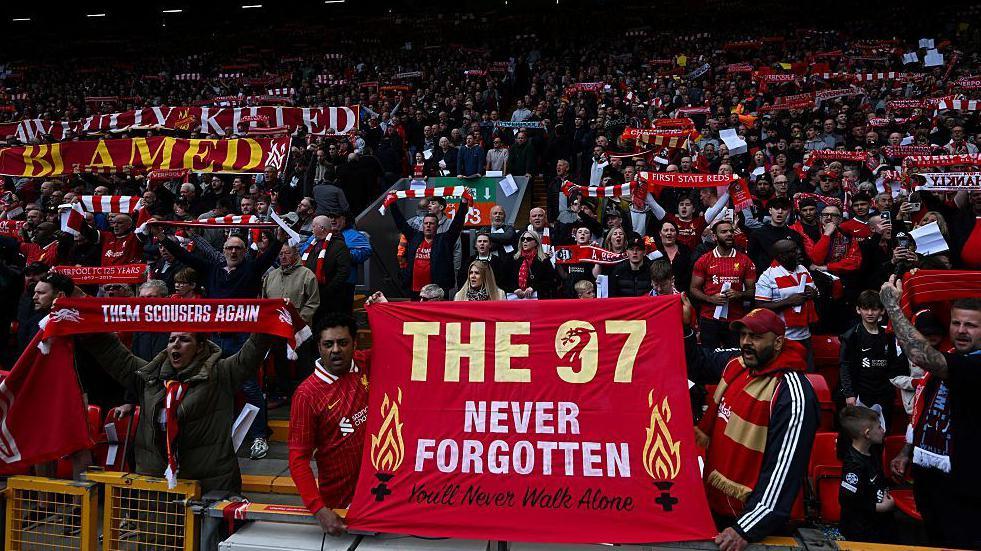
In 1989, 97 Liverpool football supporters died in the Hillsborough disaster
A fatal crowd crush occurred during an FA Cup semi-final
Victims and their families were wrongly blamed for the disaster
Some media reports and official statements claimed fans were responsible
This led to a long-running injustice
Families were denied truth, accountability and justice
How citizens worked together
The Hillsborough Campaign was led by bereaved families and supporters
They worked together with campaigners, lawyers and journalists
They campaigned consistently over many years, ensuring the voices of victims' families were heard
Marches, memorials and public events were organised to keep the issue visible
They used the media to challenge false narratives
Most specifically, they campaigned against inaccurate reporting, particularly by some newspapers
They demanded truth and accountability, focused on justice for victims rather than blame of supporters
They exposed failures by the police and authorities
They lobbied politicians and public bodies and took legal action
MPs and governments were put under pressure to reopen investigations, such as inquests and for an independent review
Impact on public policy and law
The campaign group's persistence led to the formation of the Hillsborough Independent Panel in 2012
The panel revealed evidence of cover-ups and institutional failings which led to new inquests in 2016
The jury concluded the victims were unlawfully killed and fans were not to blame
They influenced debate on public accountability and justice
Their campaign contributed to calls for a Hillsborough Law which would
Create a legal duty of candour that would require public authorities, such as the police and public bodies, to be honest and transparent
Prevent cover-ups and the withholding of evidence, ensuring families receive the truth more quickly
Give victims’ families greater support and fairness during inquests and investigations
The campaign group helped to change attitudes towards victims of public disasters, including greater scrutiny of police conduct and media responsibility
The Where’s Our Bridge? campaign
The market town of Faversham in Kent has an old swing bridge that connects one side of the town to the other that has been decaying for many years
Access to the tidal basin is blocked, limiting local boats, businesses, and community use of the creek
Local residents and organisations wanted the bridge restored by its owner, Peel Ports, as a working crossing with sluice gates
The creek and basin could be used for recreation, business and community life
The campaign included local citizens, community activists, and groups such as:
Faversham Creek Trust
Faversham Town Council
The Faversham Society
Support from local councillors and MPs
This was citizens acting together, not led by a political party, showing civic engagement at the local level
How citizens worked together
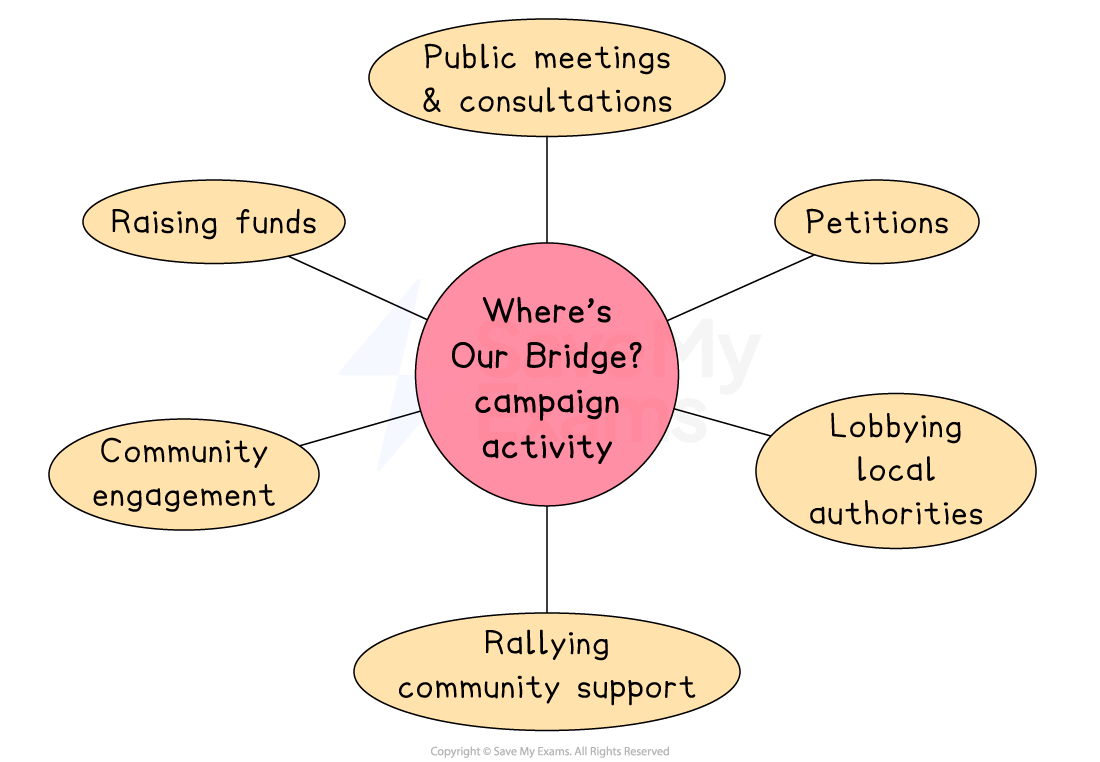
Rallied community support
Residents attended meetings, events, and workshops to push for bridge restoration
Raised funds
Local people and groups raised £125,000 in community fundraising for restoration plans
Public meetings and consultations
Held public meetings (for example at St Mary of Charity Church) with local leaders to discuss plans and commitments
Petitions
A petition with over 1,500 signatures was delivered to the Department for Transport calling for action
Lobbying local authorities
Campaigners met Kent County Council leaders, MPs and local representatives to push for official commitments
Community engagement
Posters, banners and leaflets helped raise awareness across the town, increasing public interest and support
How they tried to resolve the issue
Collaborated with local institutions
Campaigners worked with town and county councils, MPs and heritage groups to build a case for restoring the bridge
Legal and planning work
The group and councils sought legal advice to clarify who owns and has the duty to maintain the bridge
Communication with local and national government and the bridge owner
Petition and meetings with the Department for Transport aimed to get government powers used to compel the owner to carry out maintenance and, preferably, replace the bridge
Challenges faced
Funding and cost increases
The estimated cost to repair or replace the bridge rose over time, making progress difficult
Complex ownership and responsibility
Uncertainty over whether Kent County Council or Peel Ports was responsible slowed action
Government delays
The Department for Transport has been slow to act despite petitions and lobbying

Unlock more, it's free!
Join the 100,000+ Students that ❤️ Save My Exams
the (exam) results speak for themselves:

Was this revision note helpful?