Workplace Rights & Protections (Edexcel GCSE Citizenship Studies): Revision Note
Exam code: 1CS0

The role and origins of trade unions
Trade unions are associations of workers
They represent employees in a particular job or industry
Their main aim is to maintain or improve conditions of employment
This includes pay, working hours, safety and job security
Trade unions developed during the Industrial Revolution
Workers faced long hours, low pay and unsafe conditions
Individual workers had little power against employers so workers joined together for protection and fairness
Types of trade unions
Type of union | Explanation | Example |
|---|---|---|
General union |
|
|
Industrial union |
|
|
Craft union |
|
|
White-collar union |
|
|
The work of trade unions
Workers pay a monthly fee to join a trade union
The fee is called a subscription
Their membership ends when they stop paying this fee
Benefits of union membership include the following:
Collective bargaining
Job-specific training
Legal representation in disputes
Discounts on a wide range of goods/services
When collective bargaining fails and discussions break down, trade unions have several methods of forcing employers/governments to continue engaging with them
These methods are collectively referred to as "industrial action" and include the following:
Strikes
Overtime bans
Work to rule
Go-slows
The focus of trade union efforts
Collective bargaining on wages, working conditions and contractual terms | |
|---|---|
|
|
|
|
|
|
Protecting the employment of their workers | |
|---|---|
|
|
|
|
Influencing government policy | |
|---|---|
|
|
|
|
What rights do workers have?
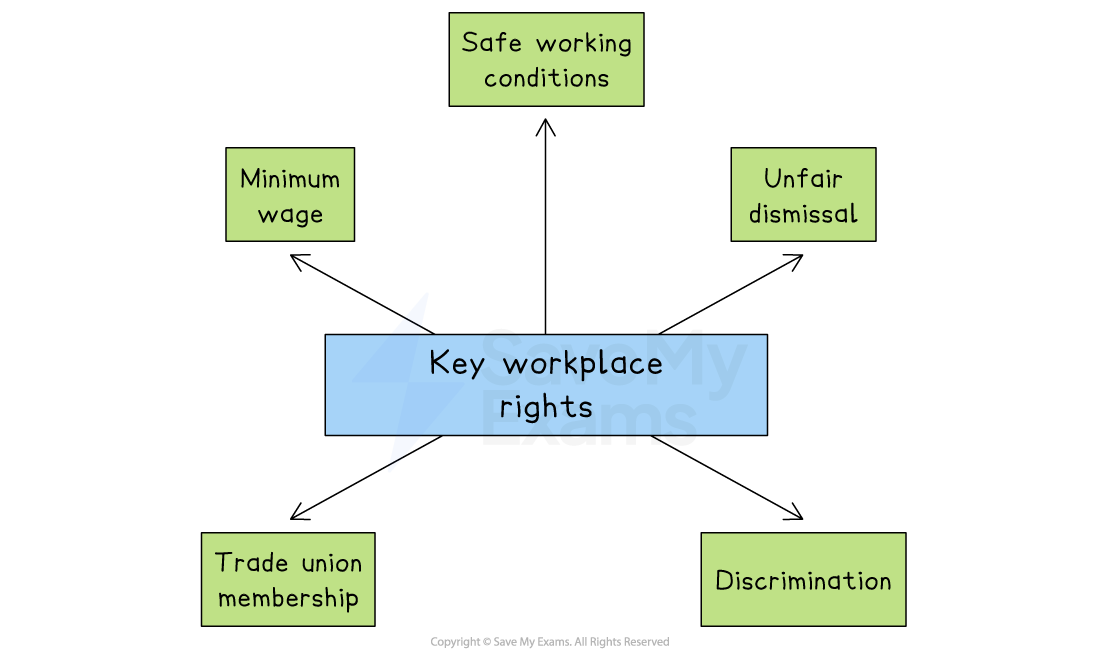
The right to be paid at least the National Minimum Wage
Workers must be paid a legal minimum hourly rate
Rates vary depending on age and whether the worker is an apprentice
This right protects workers from exploitation
Prevents employers paying extremely low wages
E.g. A retail worker being paid below the minimum wage can make a legal complaint and receive back pay
The right to safe working conditions
Workers have the right to work in an environment that does not put their health at risk
This includes protection from dangerous equipment, chemicals or unsafe buildings
Employers must assess and reduce risks in the workplace
E.g. Construction workers must be provided with safety equipment such as helmets and harnesses
Employers are legally required to follow health and safety regulations
This includes training staff and providing safety equipment
These laws are enforced by organisations such as the Health and Safety Executive
The right not to be unfairly dismissed
Employees cannot be dismissed without a fair reason
Fair reasons include misconduct or redundancy
Employers must follow a fair procedure before dismissal
E.g. A worker dismissed without warning or explanation may take the case to an employment tribunal
Protection from discrimination
Workers must be treated fairly at work
Discrimination based on personal characteristics is illegal
This protects equality and dignity in the workplace
E.g. An employee cannot be treated unfairly because of their age or gender
The Equality Act 2010 protects workers from discrimination
Covers protected characteristics such as race, sex, disability, religion and age
Employers must make reasonable adjustments for disabled employees
E.g. An employer providing flexible working hours for a disabled worker
The right to join a trade union
Workers have the legal right to join or leave a trade union
Employers cannot punish workers for union membership
Trade unions provide collective support and representation
E.g. A worker can ask their union to represent them in a dispute with their employer
How workers are protected
As explained above, the rights of members of trade unions are protected through collective bargaining and representation in the workplace
Case Study
RMT rail workers’ strikes (2022–2023)
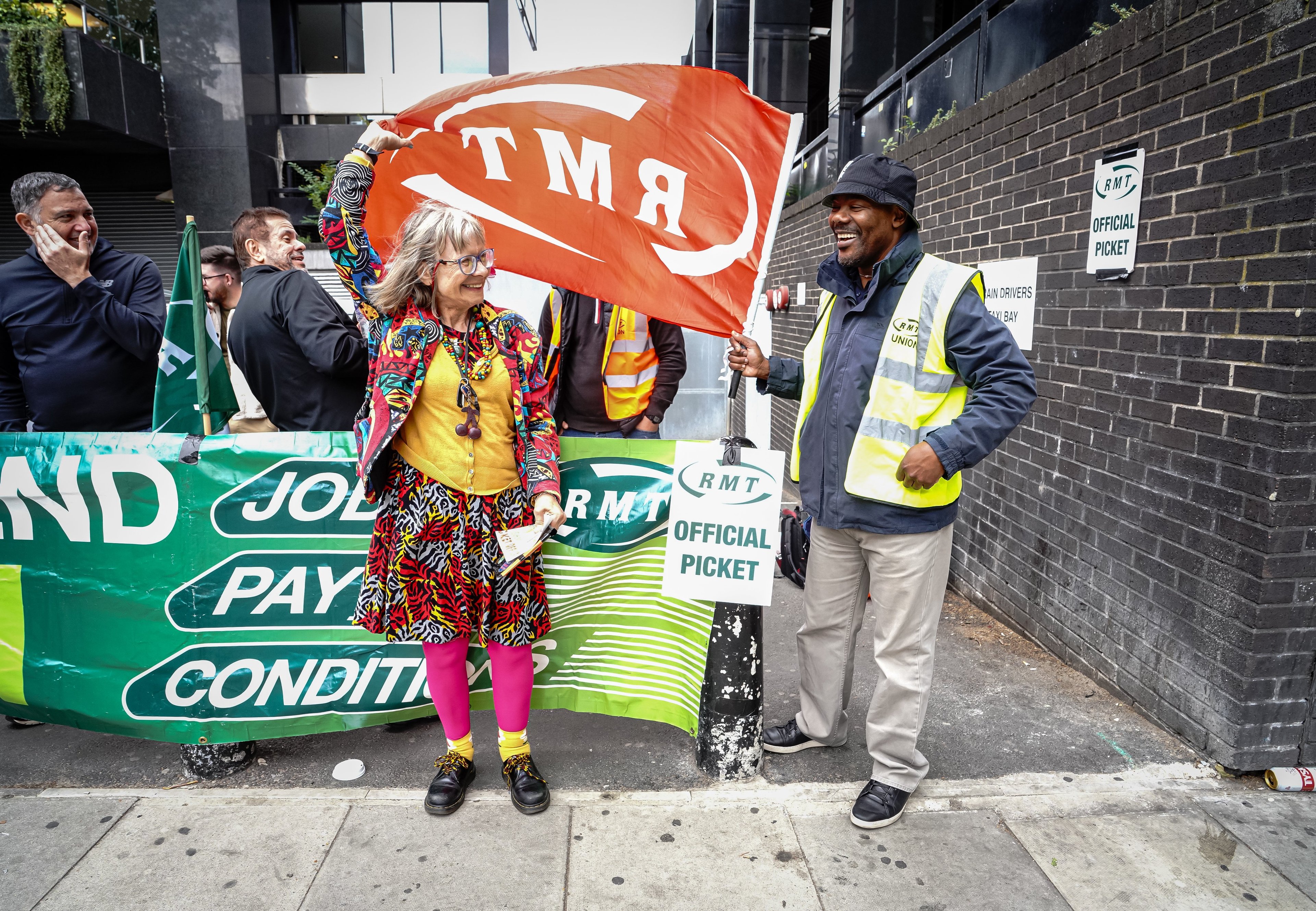
Rail workers faced pay freezes, rising living costs and job insecurity
Changes to working practices were proposed without agreement
Workers felt their conditions were worsening
Collective trade union action
Rail workers were represented by the RMT trade union
Union members voted collectively for industrial action
This shows democratic decision making within a union
National rail strikes took place
Caused major disruption and gained widespread media attention
Outcome and improvements
Negotiations between unions, rail companies and the government followed
Pay deals were agreed for many rail workers
Included pay increases and protections against compulsory redundancies
Some changes to working conditions were modified
Employers were required to consult workers more closely
Workers' rights may also be represented by staff associations and, in some cases, by tribunals
Staff associations | Employment tribunals |
|---|---|
|
|

Unlock more, it's free!
Join the 100,000+ Students that ❤️ Save My Exams
the (exam) results speak for themselves:

Was this revision note helpful?