Rights & Responsibilities of the Media (Edexcel GCSE Citizenship Studies): Revision Note
Exam code: 1CS0

Media rights and responsibilities in the UK
Rights of the media
The UK media have strong rights that allow them to investigate and report stories that are in the public interest
Journalists can look into issues involving government, public authorities, businesses and individuals, as long as they follow the law
Key rights include
The right to investigate and publish public-interest stories
UK law protects the media’s ability to report on matters that affect the public, such as wrongdoing, government failures or threats to safety.
The right to access information
The Freedom of Information Act (2000) gives citizens and journalists the right to request information from government departments and public bodies
It supports investigative reporting by increasing transparency
Recent investigations that have led to change
ITV’s 2024 investigation into the Post Office Horizon scandal exposed how more than 900 sub-postmasters had been wrongly accused or convicted of theft
Public pressure after the broadcast pushed the government to overturn their convictions
News of the World’s campaign for “Sarah’s Law” (2000) helped create the Child Sex Offender Disclosure Scheme
This allows parents and carers to request information from police about known offenders in their area
Responsibilities of the media
The media play a powerful role in shaping what the public knows and understands
Because of this influence, journalists and broadcasters must follow clear responsibilities
Key media responsibilities
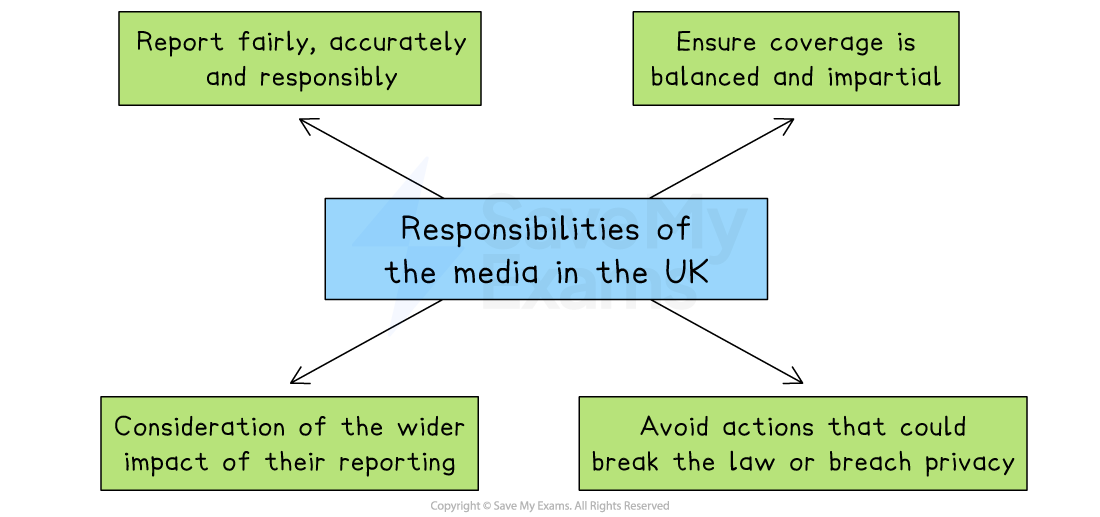
Media organisations must report fairly, accurately and responsibly, as inaccurate reporting can harm individuals and mislead the public
E.g. In 2024, several newspapers issued corrections after misreporting details about the Post Office Horizon scandal
Broadcasters have a legal duty to ensure their coverage is balanced and impartial, especially on political issues
The media should consider the impact of their reporting on individuals, communities and wider society
Coverage of the recent cost-of-living crisis included guidance on support services and avoided panic-inducing language
They must avoid actions that could break the law, breach privacy, or create misinformation
After the rise of misinformation online during the recent Israel–Gaza conflict, UK broadcasters and newspapers emphasised fact-checking and avoided publishing unverified claims
Regulation and censorship
Media censorship
Censorship refers to preventing or limiting publication
In the UK, censorship mainly applies in areas where content may cause harm, break the law or breach standards
Self-censorship is where media organisations sometimes choose not to publish sensitive details to protect individuals or avoid legal risks
Regulator-led censorship can occur when rules are broken
E.g. Ofcom recently ruled that a BBC documentary about Gaza breached broadcast rules in a “serious” way - the documentary was later removed from BBC's iPlayer
In addition, although the media can report on crimes, strict legal rules prevent them from publishing information that could identify victims, influence a trial or put someone in danger
Examples include
No naming of children involved in crimes (victims, witnesses or defendants)
No reporting of details that could prejudice a jury, such as previous convictions before a verdict is reached
No identifying victims of sexual offences, who have lifelong anonymity
Restrictions during ongoing investigations to avoid harming police work
Court orders can stop the media from naming people or publishing certain facts
These rules protect fairness, safety and privacy while still allowing the public to stay informed
Examiner Tips and Tricks
A common exam error is saying the UK media is either completely free or heavily censored
The correct answer shows balance
Explain that the media has strong rights, but regulation and court restrictions exist to protect fairness, privacy and the justice system
Media regulation in the UK
Even though media organisations have strong rights, they must also follow legal and ethical obligations to protect the public and are trustworthy in their reporting
Several bodies oversee different areas of the media
Ofcom
Regulates TV, radio and on-demand broadcasting through its Broadcasting Code
Under the Media Act 2024 and the Online Safety Act, Ofcom also regulates certain aspects of social media and online platforms
IPSO and Impress
These independent regulators oversee most of the print press, including newspapers
They handle complaints, set standards for journalists and can require corrections or apologies
Advertising Standards Authority (ASA)
Acts on complaints about adverts and can ban those considered misleading, offensive or harmful
E.g. recent Zara adverts were banned after concerns that models were shown as “unhealthily thin”

Unlock more, it's free!
Join the 100,000+ Students that ❤️ Save My Exams
the (exam) results speak for themselves:

Was this revision note helpful?
