Global Perspective on Development Issues (WJEC Eduqas GCSE Geography B): Exam Questions

Exam code: C112

2 hours28 questions
1
4 marks

Trade plays a very important role in the development of a country.

Complete the sentences using words from the box below.

tariffs imports tradblocs exports

quotas fair trade subsidies trade embargoes

Goods which are sold to other countries are called .............................. ..

Goods bought from other countries are called .......................................

Taxes on goods brought into the country are called .................................

Trading partnerships between groups of countries are called .....................

2a
2 marks

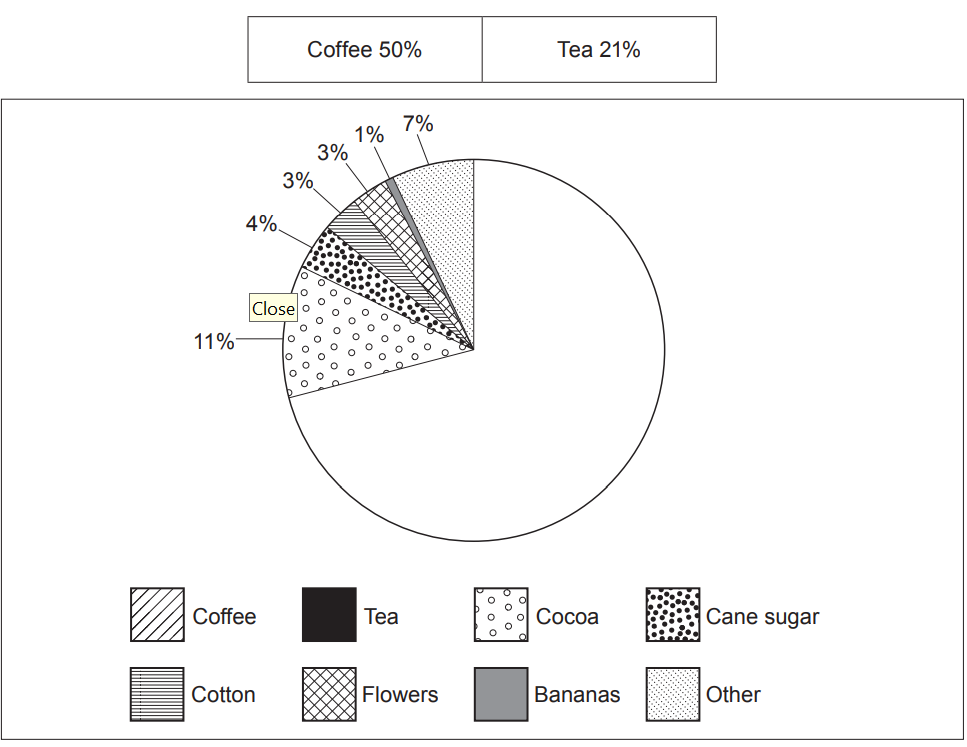
Study Figure 1.2. Fair Trade products are often seen in shops and online.

Complete the pie chart to show the following products.

Pie chart showing coffee at 50%, tea at 21%, and other segments including cocoa, cane sugar, cotton, flowers, bananas, and others, with percentages.
Figure 1.2: Fair Trade products
2b
4 marks

Explain why trade can help to reduce global inequalities.

3
12 marks

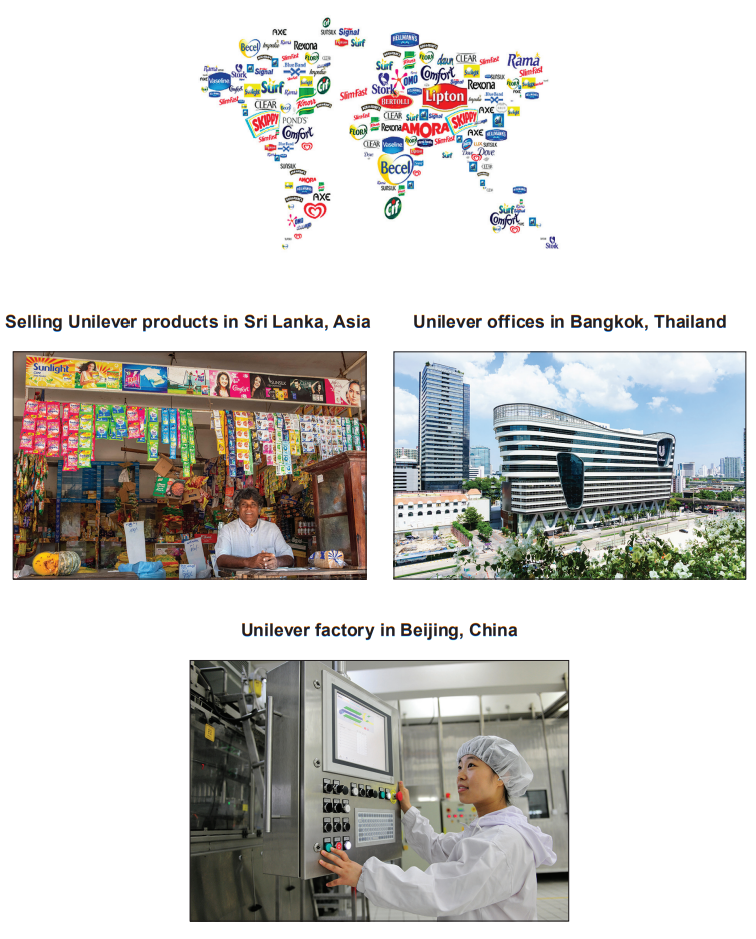
Multinational companies (MNCs) locate all over the world. One example is Unilever. Study Figure 1.3.

World map of Unilever brands; a Sri Lankan shop selling products; modern Unilever office in Bangkok; factory worker at a machine in Beijing.
Figure 1.3: Some examples of Unilever products sold worldwide

MNCs, like Unilever, bring more advantages than disadvantages to the countries they locate in.

How far do you agree?

[8]

Your ability to spell, punctuate and use grammar and specialist terminology accurately will be assessed in your answer to this question.

[4]

4
4 marks

Explain why using data to measure development has limitations.

5a
4 marks

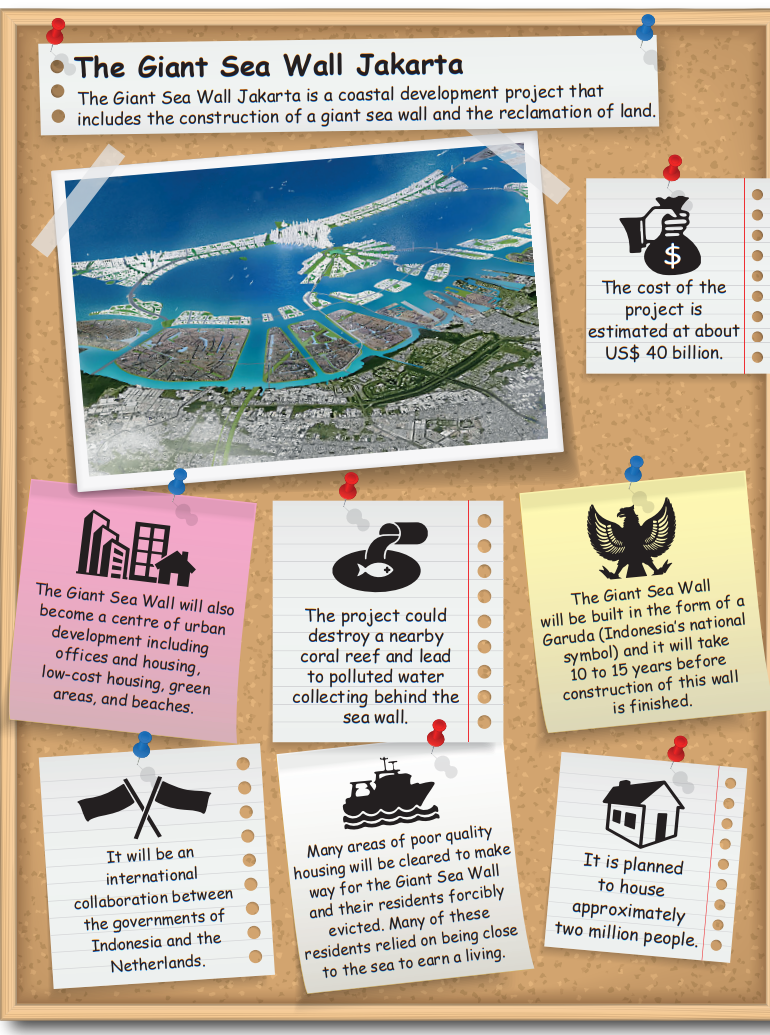
Study Fact File 1

The Great Sea Wall will be built with aid from The Netherlands (a HIC).

Corkboard with notes about the Giant Sea Wall Jakarta project, including cost, environmental impact, urban development, and international collaboration.
Fact File 1 – Plans for a new sea wall

Give two reasons why there are advantages to High Income Countries (HICs) that donate aid.

5b
2 marks

The government of Jakarta is working with The Netherlands to build the Great Sea Wall.

Give two advantages that working with a HIC may bring for the government of a NIC.

6
1 mark

International migration is one feature of globalisation.

Tick (√) one box below to give the correct definition of the term ‘international migrant’.

  • Someone who moves from part of a city to a different part

  • Someone who moves from one country to another country

  • Someone whose parents were born in a different country

7a
4 marks

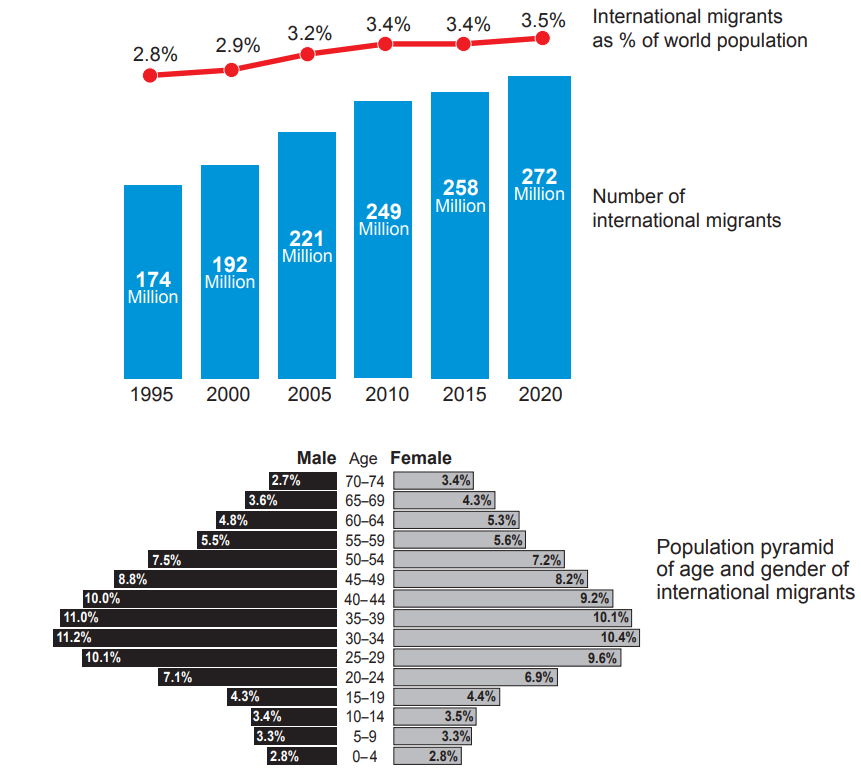
Study Figure 1.1 below.

Chart showing growth in international migrants from 174 million in 1995 to 272 million in 2020, plus age and gender distribution pyramid for 2020.
Figure 1.1 – Global changes in the number of international migrants

Circle the correct answer in each of the following sentences.

Between 1995 and 2020 the total number of international migrants increased by

( 84 million / 89 million / 98 million ) people.

Between 2010 and 2020 the proportion of the world’s population who are international migrants

( decreased / slightly increased / rapidly increased ).

The lowest percentage of international migrants are

( males aged 70–74 / females aged 65–69 / males aged 0–4 ).

The difference between male and female international migrants aged 30–39 is

( 0.8% / 1.1% / 1.7% ).

7b
4 marks

Give four push factors which can lead to international migration.

7c
4 marks

Give two reasons why international migration can have social consequences.

8a
2 marks

Emergency aid is sometimes needed when a disaster occurs. Countries that send aid are called ‘donor countries’.

Describe two advantages for a donor country when short-term emergency aid is given.

8b
4 marks

Explain why short-term emergency aid was needed in an LIC (Low Income Country) you have studied. [4] Name of country

9
1 mark

Name one social indicator, other than the Human Development Index (HDI), that is used to measure human development.

10
1 mark

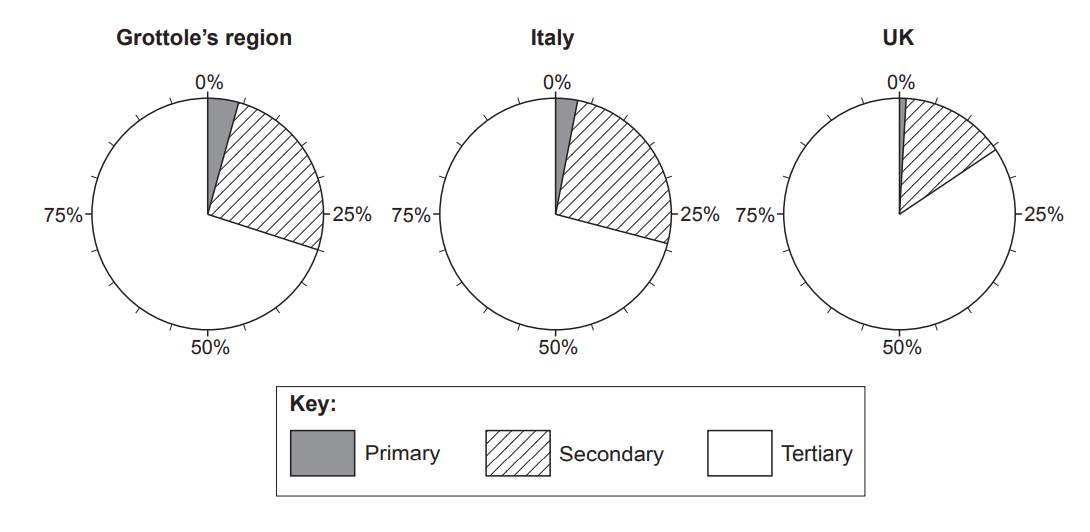
Study Figure 3.

Many of the people employed in the primary industry in Grottole are farmers. They export a lot of their products.

Three pie charts compare employment sectors: Grottole's region, Italy, and UK, showing primary, secondary, and tertiary sector percentages.
Figure 3 – Comparison of Jobs/Employment Structure between Grottole, Italy and UK.

What does export mean?

11a
3 marks

Study the development indicators in Figure 4 Compare Grottole’s region with Italy as a whole.

Figure 4 – Some development indicators comparing Grottole’s region, Italy and UK (2018)

Grottole’s region

Italy

UK

HDI

0.853

0.883

0.920

GNI per capita (US$)

$2562

$33840

$41730

Unemployment

12.5%

9.1%

4.1%

11b
1 mark

Suggest what these indicators do not tell us about the level of development in Grottole?

12a
2 marks

Multinational companies [MNCs] have invested in Grottole because it is part of a trading bloc, the European Union (EU).

Give one reason why governments benefit from investment by MNCs.

12b
2 marks

Governments sometimes offer industries help to move to an area.
Explain one problem this might cause.

13a
2 marks

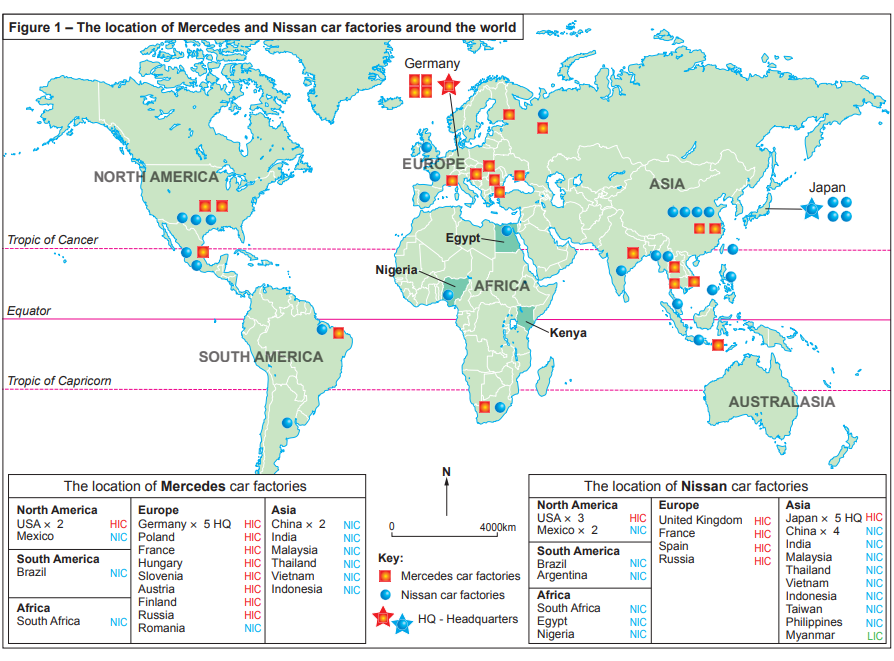
Study Figure 1.

World map showing locations of Mercedes and Nissan car factories, with icons for factories and headquarters in North America, Europe, Asia, and more.
Figure 1 – The location of Mercedes and Nissan car factories around the world

Identify one similarity and one difference between the location of Nissan and Mercedes car factories across the world.

13b
3 marks

Figure 1 uses initials to list countries at different levels of development, i.e. LIC, NIC and HIC.

What do these initials stand for?

Write your answers in the spaces provided.

LIC..................................................................

NIC.................................................................

HIC.................................................................

14
4 marks

List four factors that attract multinational companies to LICs or NICS.

15
6 marks

Explain why there are both advantages and disadvantages for the host country where an MNC has built a new factory or office.

16a
1 mark

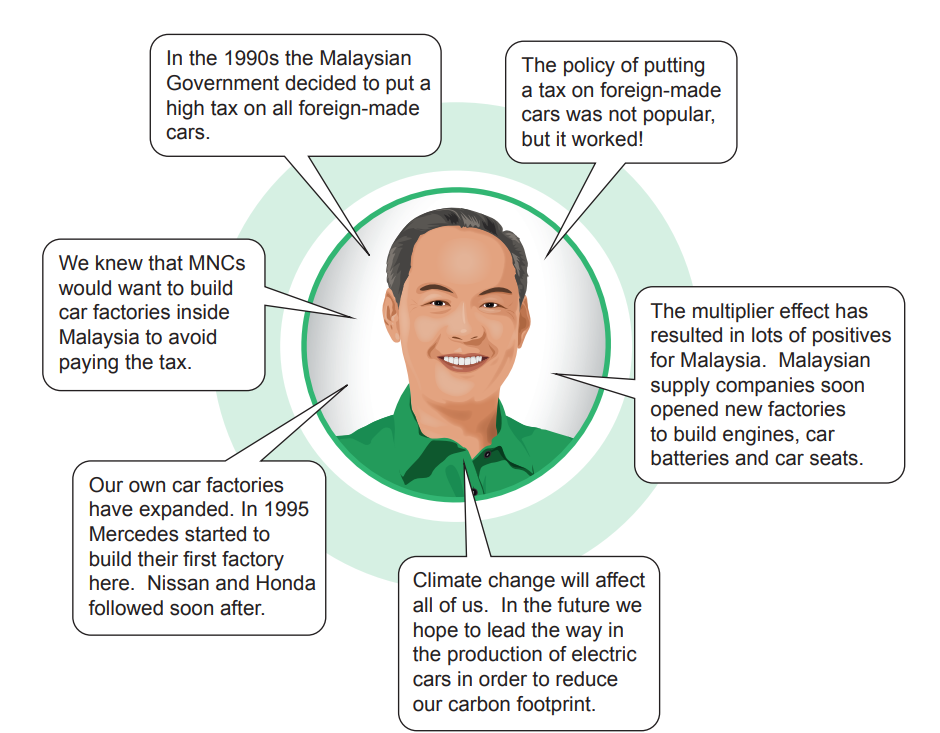
Some countries, such as Malaysia, have been very successful in attracting MNCs into their country.

Study Figure 2

Illustration of a smiling man with speech bubbles about Malaysia's tax on foreign cars, its impact, and future in electric car production.
Figure 2 – Malaysia has attracted many MNCs, including companies that manufacture cars.

The Malaysian Government explained that it introduced a tax on all foreign-made cars.

What is the correct name for a tax which is charged on goods entering a country? Tick (√) the correct answer.

  • Export tariff

  • Import tariff

  • Environment tariff

16b
4 marks

Give two reasons to explain why tariffs may not be popular.

17a
4 marks

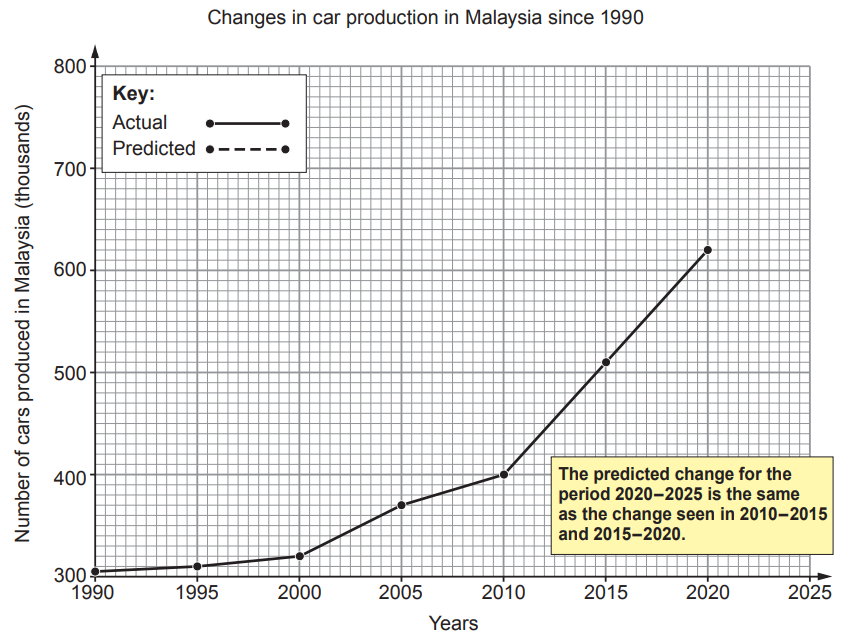
Study the graph below. It shows changes in car production in Malaysia since 1990.

Describe the trend shown on the graph from 1990 to 2020. Use data from the graph to support your answer.

Graph showing Malaysia's car production from 1990 to 2020, with predicted increase from 2020 to 2025. Actual and predicted data lines shown.
changes in car production in Malaysia since 1990
17b
2 marks

The rate of growth from 2020 to 2025 is predicted to be the same as for 2010 to 2020.

Complete the graph to show the predicted growth up to the year 2025.

17c
2 marks

MNCs started to build new car factories in Malaysia as early as 1995.

Suggest why car production remained low for the next five years.

18
4 marks

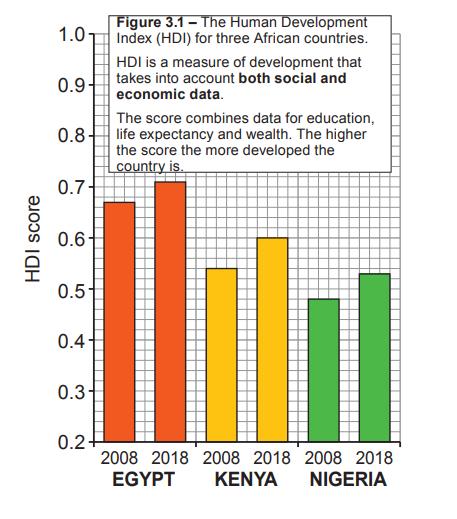
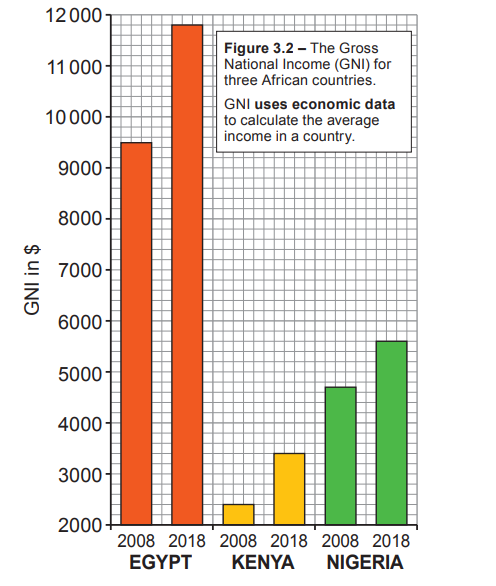
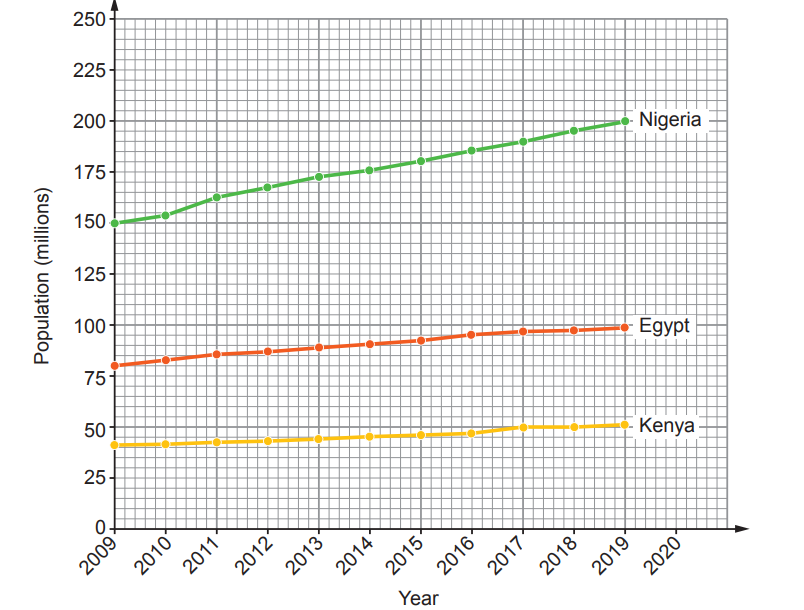
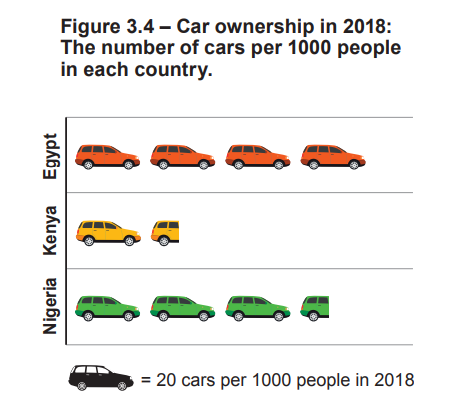
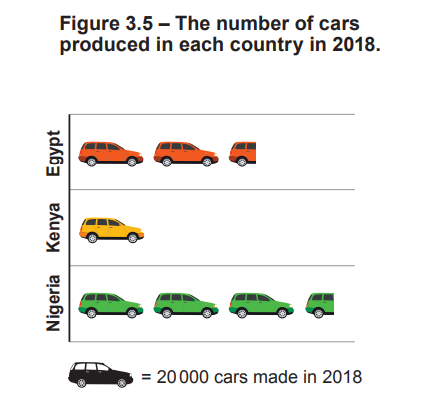
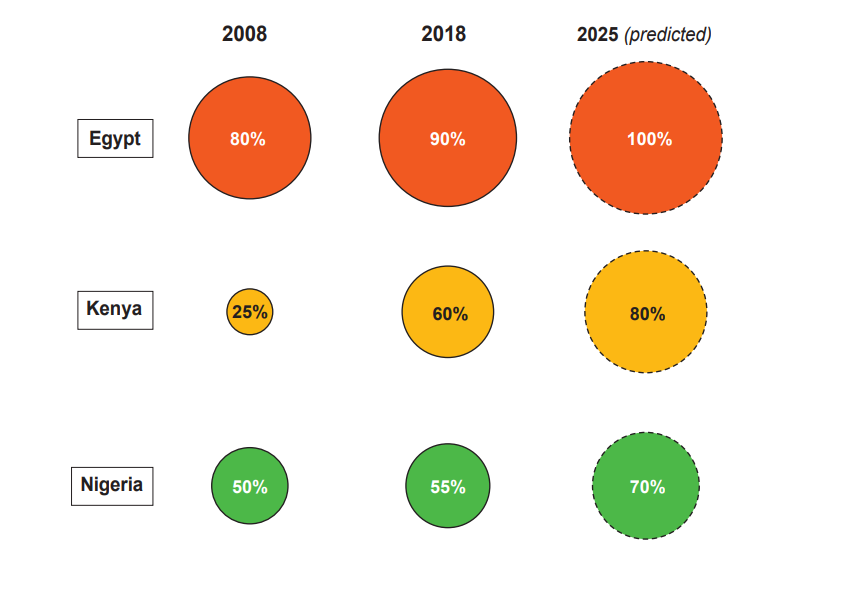
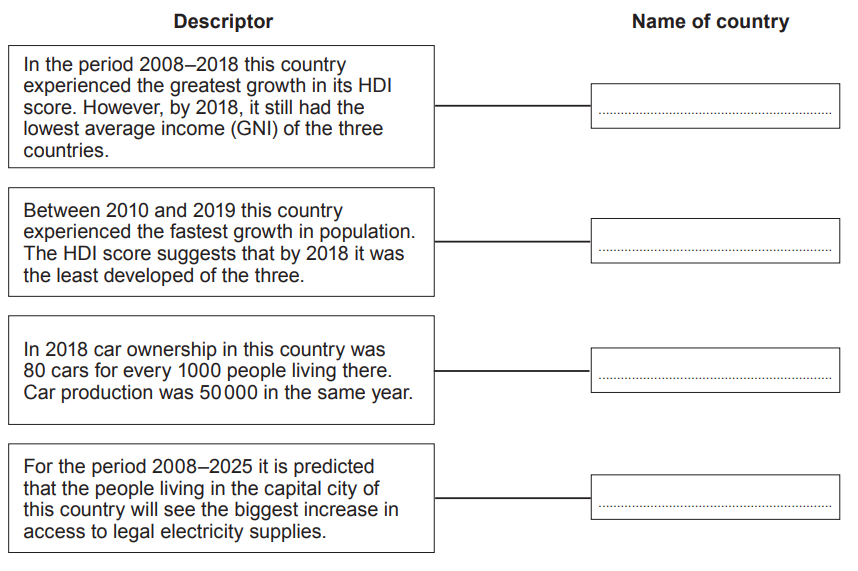
Study Figures 3.1 – 3.6. which give information about Egypt, Kenya and Nigeria.

Bar chart of HDI scores for Egypt, Kenya, and Nigeria in 2008 and 2018, showing development with higher scores in 2018 for all countries.
Figure 3.1 – The Human Development Index (HDI) for three African countries.
Bar chart showing Gross National Income (GNI) in US dollars for Egypt, Kenya, and Nigeria in 2008 and 2018, highlighting economic growth.
Figure 3.2-The Gross National Income (GNI) for three African countries.
Line graph showing population growth from 2009 to 2020. Nigeria's population rises from 150 to 200 million, Egypt's from 75 to 100, Kenya's from 40 to 55.
Figure 3.3 – Population growth
Car ownership graph for 2018 showing Egypt with 7 orange cars, Kenya with 1.5 yellow cars, and Nigeria with 4 green cars per 1000 people.
Figure 3.4 – Car ownership in 2018: The number of cars per 1000 people in each country.
Chart showing car production in 2018: Egypt 60,000 cars, Kenya 20,000 cars, Nigeria 80,000 cars. Each car symbol represents 20,000 cars.
Figure 3.5 – The number of cars produced in each country in 2018.
Diagram comparing internet usage percentages in Egypt, Kenya, and Nigeria for 2008, 2018, and predicted 2025, with varying circle sizes and colours.
Figure 3.6 – The percentage (%) of the population with access to legal electricity in the capital city

Identify which country is best described by each of the four descriptors below.

Write the name of the country in the box. One country will be named twice.

Table with descriptors linking to unnamed countries, detailing HDI growth, population growth, car ownership, and electricity access predictions.
19
4 marks

Economic data is often used to measure development.

Explain why it is important to also use human/social data when measuring development.

20
2 marks

Explain one push factor that causes people to migrate to cities in HICs.

21
3 marks

Desalination plants are rarely found in LICs (low income countries) and NICs (newly industrialised countries). They may seek help from MNCs (multi-national companies) to develop such infrastructure.

Give one reason to explain why these countries might need investment from MNCs.

22
4 marks

When MNCs are prevented from expanding in an area, they are likely to move to other locations.

Explain why social problems can occur in areas that lose major employers.

23a
3 marks

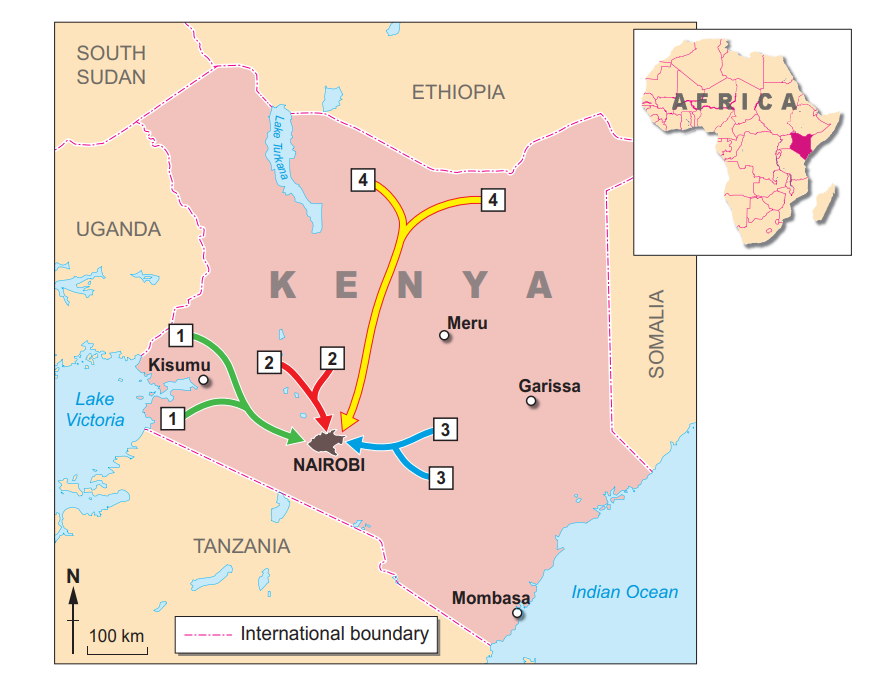
Study Figure 1 and Figure 2.

Map of Kenya showing major roads from Nairobi to Kisumu, Mombasa, Meru, and Garissa. Inset map shows Kenya’s location in Africa.
Figure 1 Migration flows within Kenya. Most migrants settle in slum areas, such as the Kibera district in Nairobi.
Bar chart showing migration reasons from four regions: Lake Victoria, North Central, East Central, and Northern, with factors like health and wages.
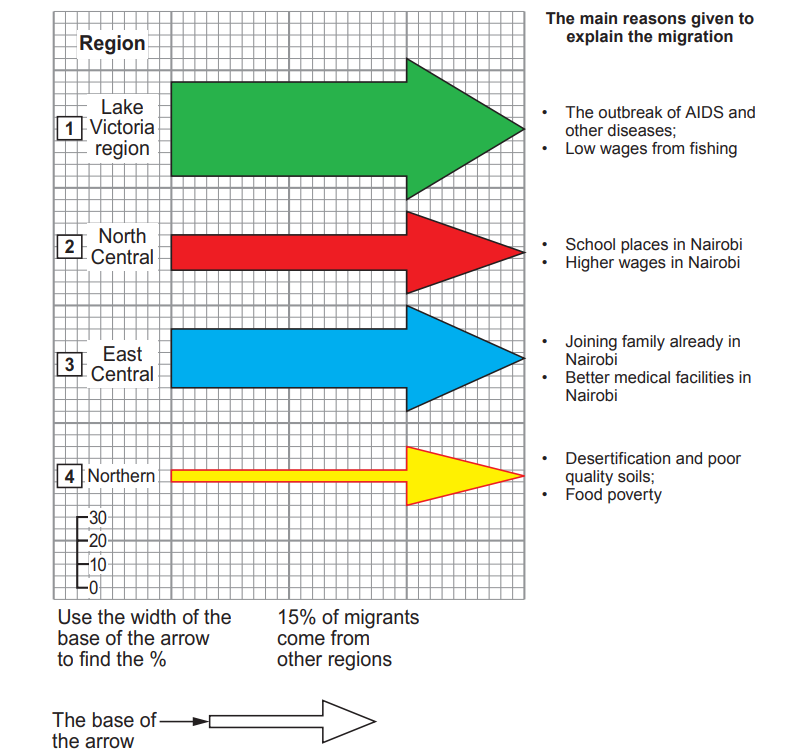
Figure 2-The % (percentage) of the population of the Kibera district in Nairobi who have migrated from different regions.

Use the information to Tick (√) the three correct statements in the table below.

  • Kenya is located on the west coast of the African continent.

  • The capital city, Nairobi, is located in south central Kenya.

  • The main reasons people give for leaving the East Central region are ‘push’ factors.

  • The main reasons people give for leaving the Lake Victoria region are ‘push’ factors.

  • 15% of the population of Kibera migrated from the North Central region.

  • 30% of the population of Kibera migrated from the North Central region.

23b
3 marks

Describe one way that the map in Figure 1 could be adapted (changed) to more clearly show migration flows in Kenya.

24
6 marks

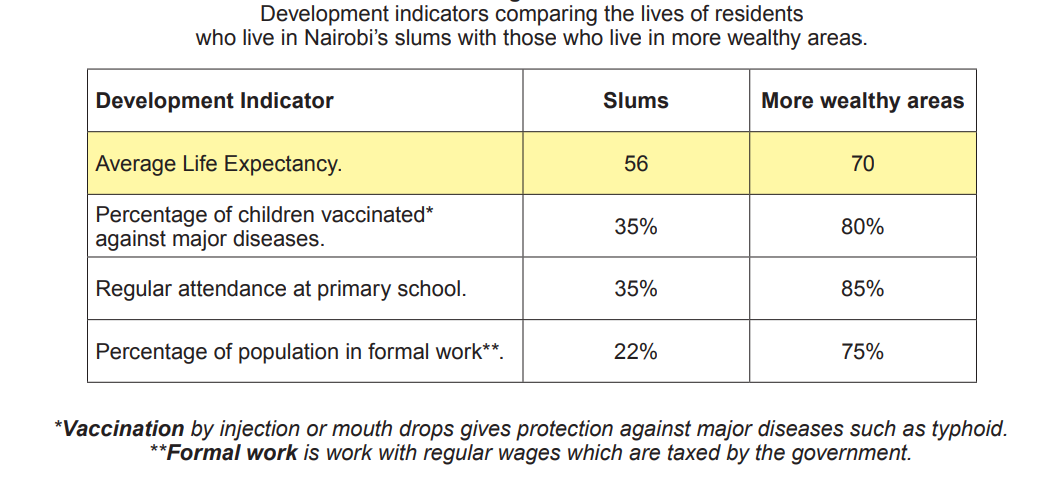
Study the data in Figure 6. It shows development indicators comparing the lives of residents who live in Nairobi.

Table comparing Nairobi slums and wealthy areas: life expectancy 56 vs 70, child vaccination 35% vs 80%, school attendance 35% vs 85%, formal work 22% vs 75%.
Figure 6

Explain why life expectancy varies between the slums and more wealthy areas.

25
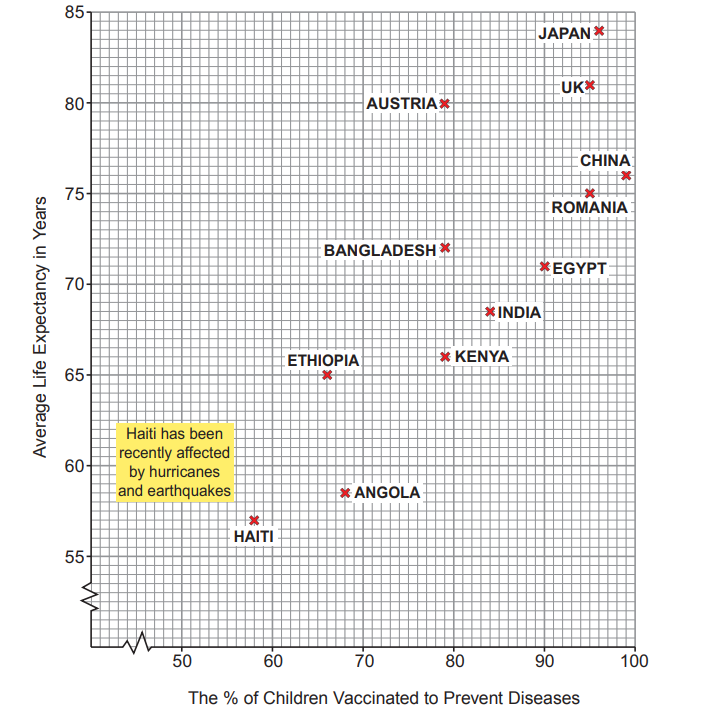
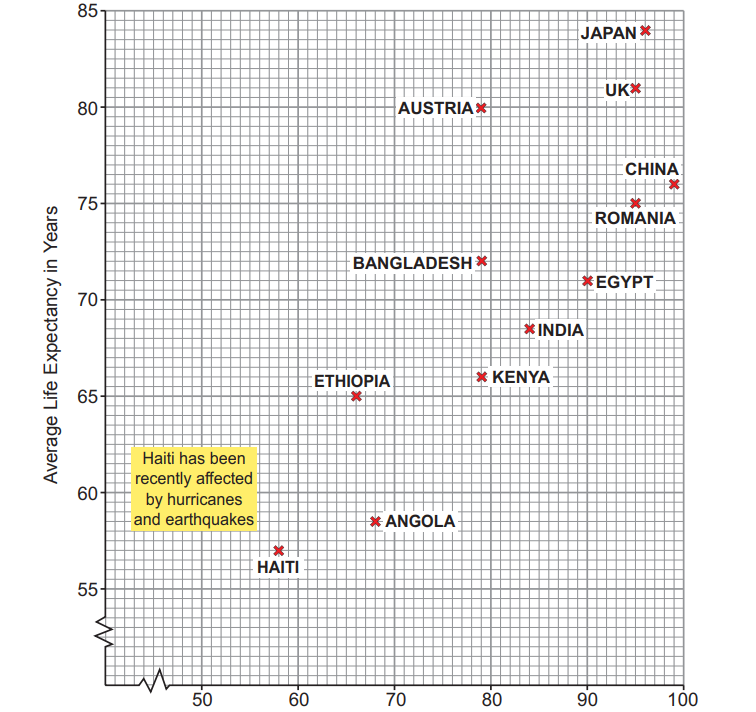
5 marks

Suggest why it is sometimes difficult to reach firm conclusions when investigating links between two data sets such as those shown on the scatter graph. You should refer to Haiti in your answer.

Scatter plot showing life expectancy vs. children's vaccination rates for various countries. Haiti noted for low metrics due to recent natural disasters.
26
3 marks

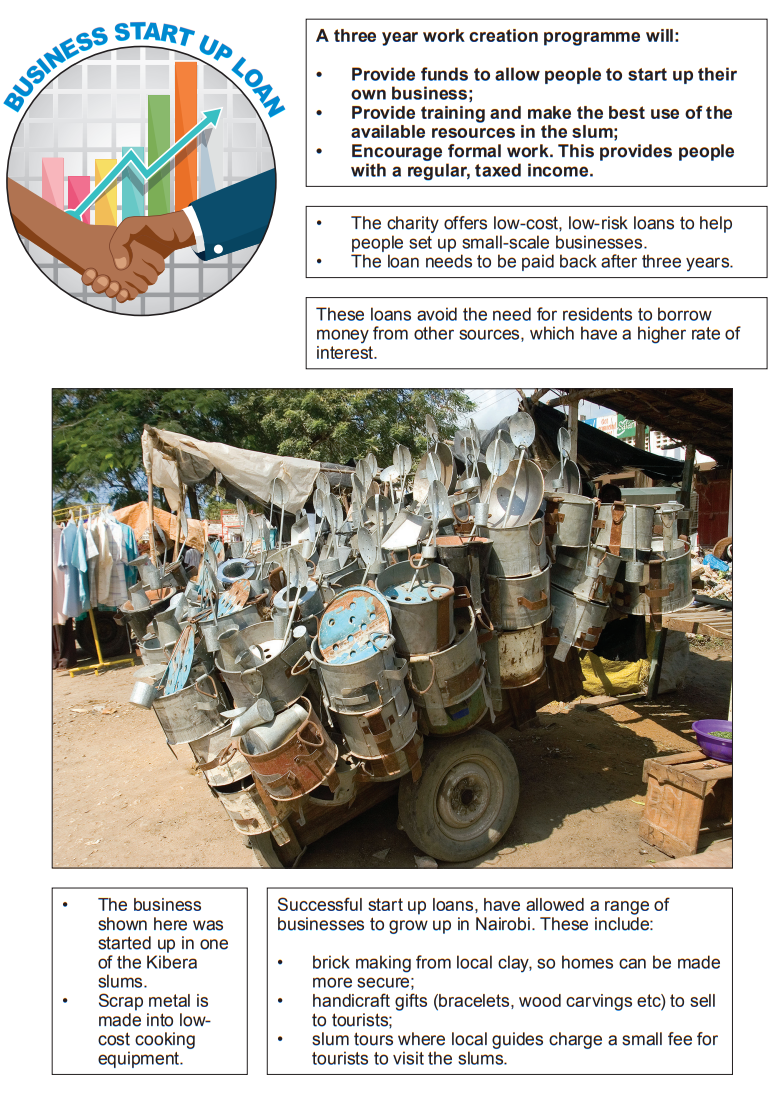
Study Figure 8. It gives information about a self-help work creation project.

Infographic on a business start-up loan programme supporting small businesses in Nairobi slums, offering funds and training. Image shows scrap metal goods on a cart.
Figure 8: A self-help work creation project

Explain why people who borrow from a charity to start their own business need three years to pay back the loan.

27a
4 marks

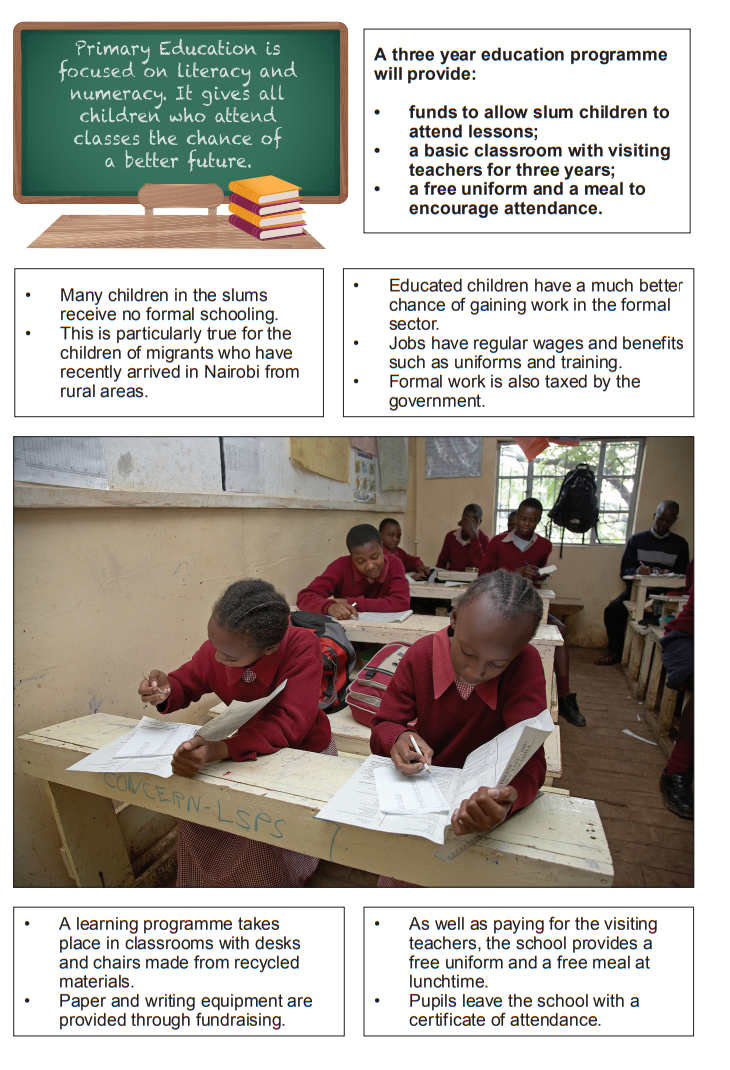
Study Figure 9 . It gives information about a small-scale education project.

Education programme for slum children emphasising literacy, numeracy, and future benefits. Kids in uniform study in basic classrooms with free meals.
Figure 9: A small-scale education project

Explain why a more educated population is likely to attract multi-national companies into countries such as Kenya.

27b
2 marks

Suggest why free school meals and uniforms are given to slum children.

28a
2 marks

The scatter graph below compares two sets of data. The aim was to see if there is a link between life expectancy and vaccination rates in different countries.

Graph showing life expectancy vs. national income across various countries, with a note highlighting Haiti's impact by hurricanes and earthquakes.

On the graph, draw the line of best fit to show the relationship between the two variables.

28b
2 marks

Identify two conclusions you can reach about the relationship between the two variables.