How Ecosystems Function (WJEC Eduqas GCSE Geography B): Exam Questions

Exam code: C112

59 mins19 questions
1a
3 marks

One major global biome is the hot semi-arid grassland.

Study Figure 3.1.
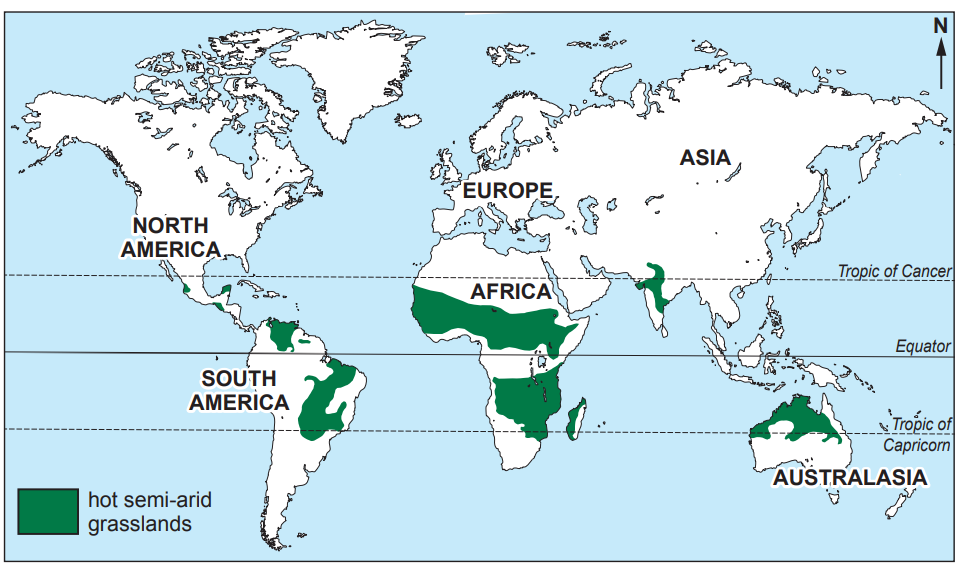
World map showing regions of hot semi-arid grasslands in green across parts of five continents, with geographical labels and latitude lines.
Figure 3.1: Distribution of hot semi-arid grasslands.

Describe the distribution of hot semi-arid grasslands shown in Figure 3.1.

1b
4 marks

Describe how vegetation adapts to survive the climate of hot semi-arid grasslands.

2
1 mark

Tick (√) the choice below that gives the correct definition of biodiversity.

  • A very large ecosystem

  • The non-living parts of an ecosystem

  • The variety of living things in an ecosystem

  • The variety of weather conditions

3
3 marks

Describe the characteristics of a small-scale ecosystem in the UK you have studied.

Name of ecosystem:...........................................................

4
2 marks

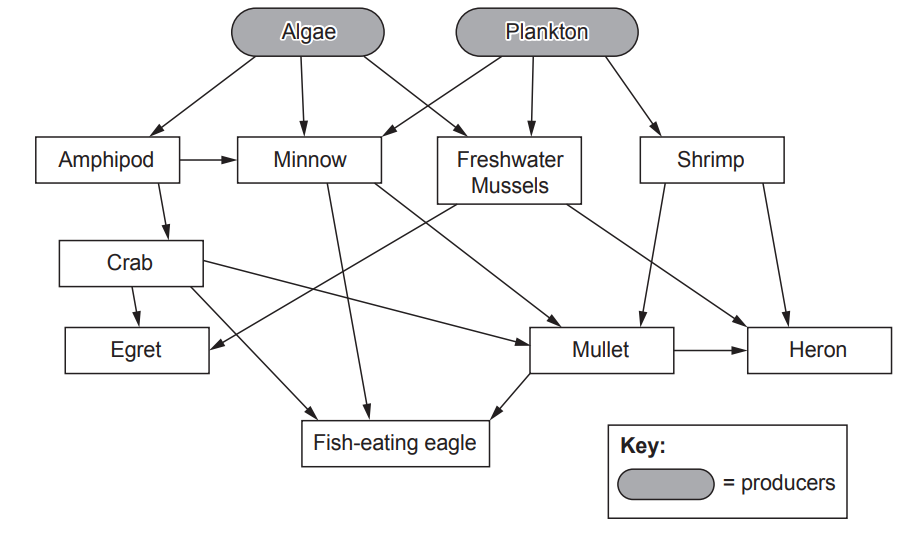
Study the diagram below. It shows part of a food web in mangrove forests.

Food web diagram showing energy flow from producers algae and plankton to amphipod, shrimp, minnow, leading to crabs, heron, eagles and egret.

Identify two primary consumers that will decline if the number of plankton were to be significantly reduced.

5a
2 marks

Ecosystems contain many different components.

Study Figure 3.1 below.

Letter

Definition

A

The parts of an ecosystem which are non-living things.

B

The parts of an ecosystem which break down leaf litter.

C

The community of plants, animals and the environment they live in.

D

The parts of an ecosystem where plants convert starch from the sun’s energy.

E

The parts of an ecosystem which are living things.

Complete the table below by adding the correct letter from Figure 3.1.

Term

Letter from Figure 3.1

Biotic

......................................

Abiotic

......................................

5b
2 marks

Describe the role of producers in an ecosystem.

6
1 mark

Explain why a reduction in the number of secondary consumers would have an impact on a food web.

7
4 marks

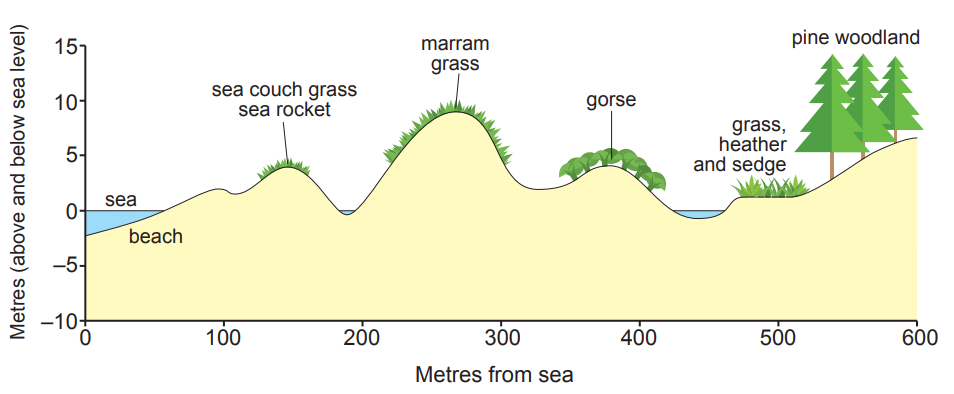
Sand dunes are an example of a small-scale ecosystem. They are mounds of sand formed by wind. Study Figure 3.2.

Diagram of coastal sand dunes from beach to pine woodland, showing sea rocket, marram grass, gorse, with elevation changes above and below sea level.
Figure 3.2 – Transect across a sand dune ecosystem

Describe changes in vegetation with distance from the sea. You should use figures in your answer.

8
1 mark

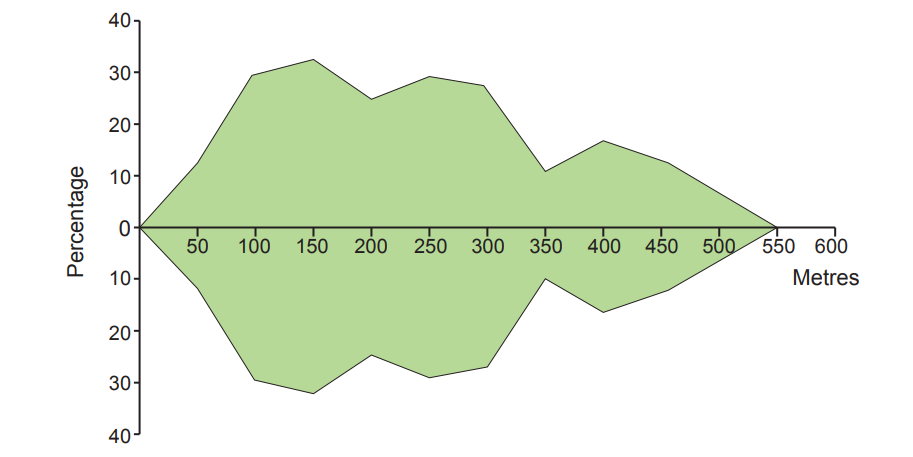
Study Figure 3.3

Green kite diagram illustrating data along axes: percentage on the vertical, ranging -40 to 40, and metres on the horizontal, ranging 0 to 600.
Figure 3.3 – Changes in the amount of marram grass along a sand dune transect

What technique has been used to show the data in Figure 3.3?

Tick (√) the correct answer in the box below.

  • Dispersion graph

  • Star graph

  • Pictogram

  • Kite diagram

9
3 marks

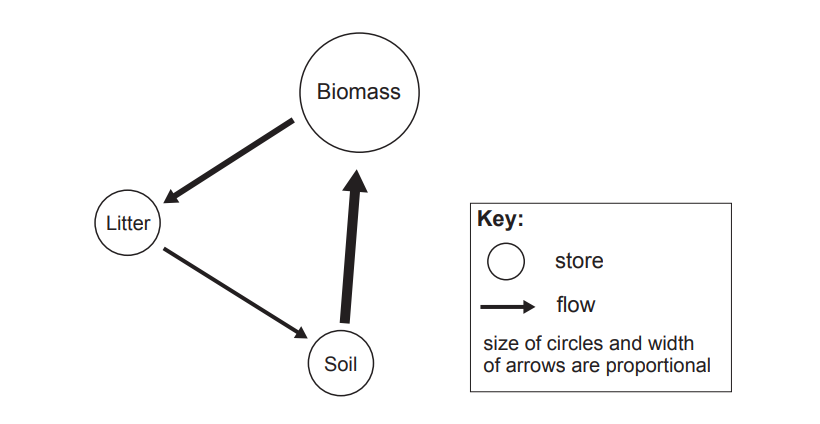
Study Figure 3.4.

Diagram showing nutrient flows between Biomass, Litter, and Soil. Arrows indicate flow direction; sizes of circles and arrows are proportional to flow.
Figure 3.4 – The nutrient cycle in a sand dune ecosystem

Complete the sentences below using the information in Figure 3.4.

The largest store of nutrients is the ............................................................

The greatest flow of nutrients is from ........................................................ to ...............................................................

10
4 marks

Explain why groups of people have different views about managing a small-scale UK ecosystem you have studied.

Name of ecosystem....................................................................

11
1 mark

What is meant by the term ‘biome’?

Tick (√) one of the definitions below.

  • The part of the Earth that contains living things.

  • A plant and animal community covering a large part of the Earth’s surface.

  • A small community of plants and animals and the environment they live in.

12
3 marks

Complete the sentences that follow using three words from the text box below.

rocks photosynthesis biodiversity plants

weathering decomposers soil leaching

water

Ecosystems include both living and non-living components.

The living parts include ........................................................ and ........................................................ .

The non-living parts include solar energy, which is taken in by plants through the process of ............................................................................ .

13
2 marks

Give one reason why there are more primary consumers than secondary consumers in a food web.

14
1 mark

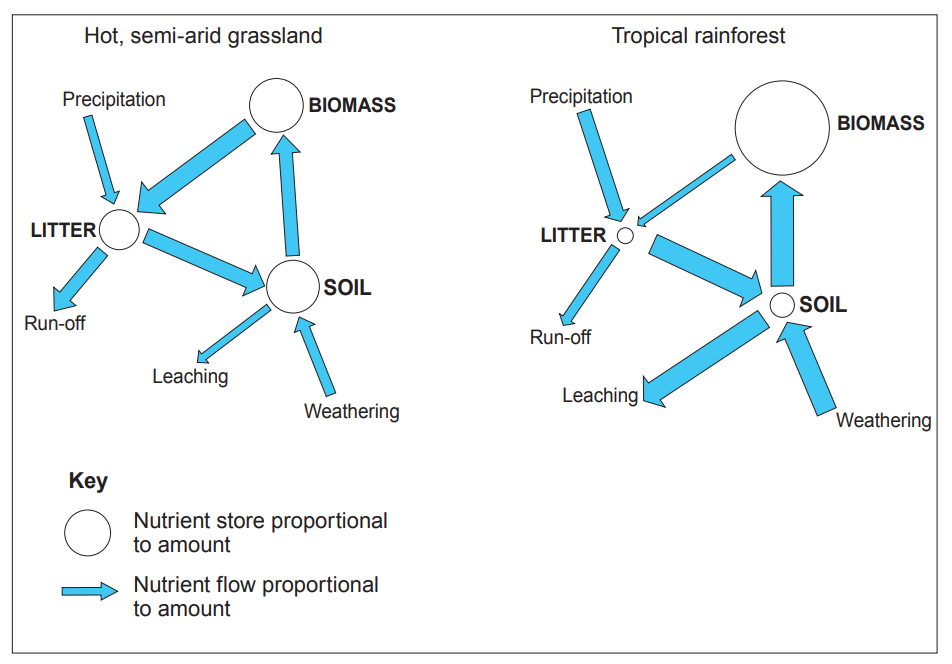
Study Figure 3.1.

Diagram comparing nutrient cycles in hot, semi-arid grasslands and tropical rainforests, showing biomass, litter, soil, and nutrient flows with arrows.
Figure 3.1 – Nutrient cycles in two major ecosystems.

Identify three differences between the two nutrient cycles shown in Figure 3.1.

1....................................................................................................................... 2....................................................................................................................... 3.......................................................................................................................

15
4 marks

Describe how one small scale ecosystem you have studied in the UK benefits the local community.

Name of Ecosystem ................................................................................

Location.....................................................................................................

16
8 marks

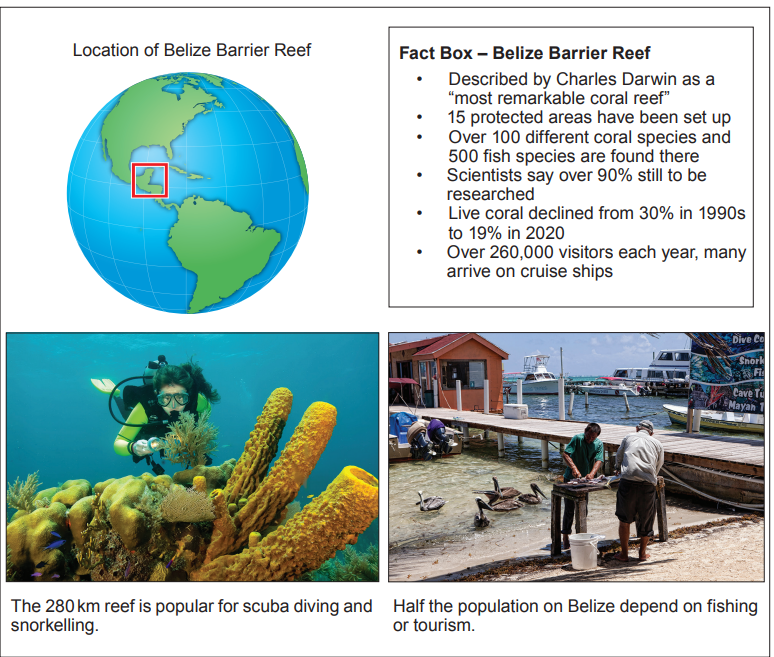
Study Figure 3.3 which shows information about one marine ecosystem under threat. Coral reefs are made of millions of tiny animals called coral polyps. Reefs are a very complex and fragile ecosystem.

Images and information about the Belize Barrier Reef, its location, scuba diving popularity, and local reliance on fishing and tourism.
Figure 3.3

Evaluate the advantages and disadvantages of protecting vulnerable ecosystems such as the Belize Barrier Reef. You may use the resources above and/or examples you have studied to support your answer.

17
2 marks

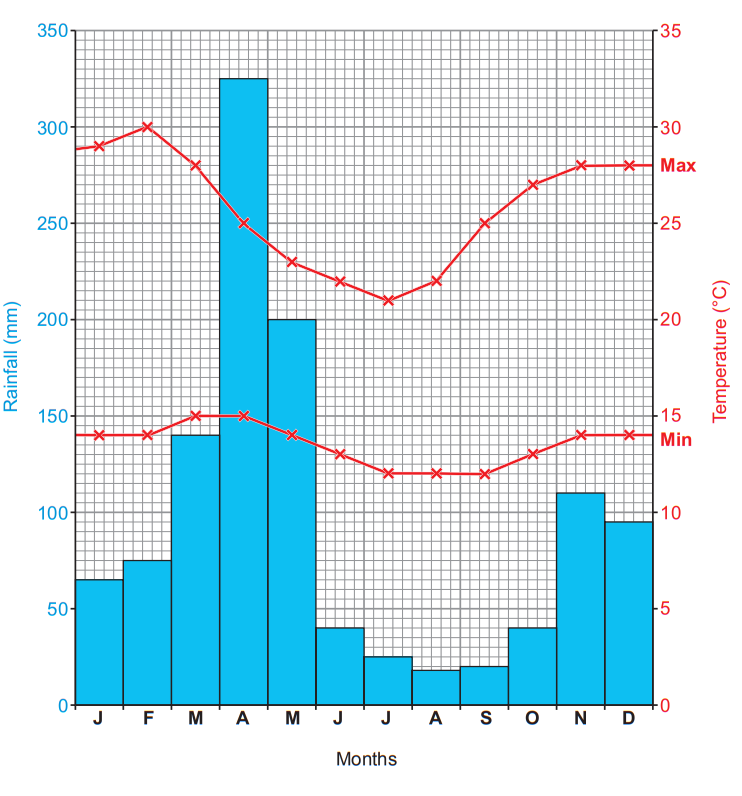
Study Figure 3.1 which shows the climate of a hot semi-arid grassland area.

Bar and line graph showing monthly rainfall in blue bars and temperature ranges in red lines with max and min values on a grid background.
Figure 3.1 – Climate of an area of hot semi-arid grassland

Tick (√) the two correct statements about the graph.

  • March is the wettest month

  • June has the greatest range of temperature

  • February is the hottest month

  • The minimum temperature never drops below 20°C

  • July and August have low rainfall and lower maximum temperatures

  • There is more rain in November and December than there is in May and June.

18
4 marks

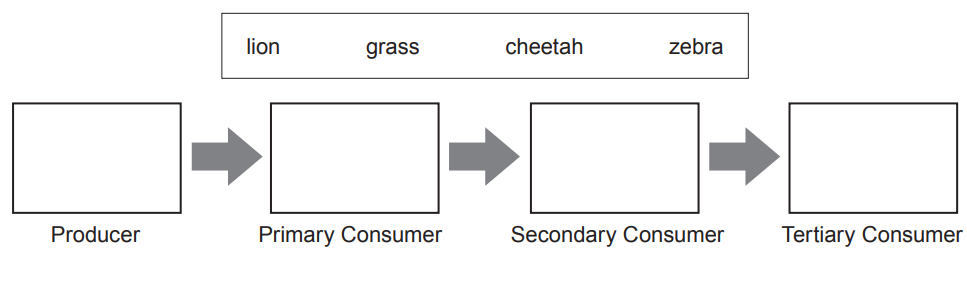
Complete the hot semi-arid grassland food chain below using the words in the box in the correct sequence.

Flowchart showing four boxes labelled Producer, Primary Consumer, Secondary Consumer, Tertiary Consumer, with words lion, grass, cheetah, zebra above.
19
4 marks

Explain why vegetation can survive in the climate of hot semi-arid grasslands.