Government & Public Health in Early Modern Britain (OCR GCSE History B (Schools History Project)): Revision Note
Exam code: J411

Summary
National and local governments played a limited role in public health during the Early Modern Period. They did become more involved during the various plague outbreaks. During the Early Modern Period, there was widespread addiction to alcohol in many cities. Known as the gin craze, it also caused the national government to become involved.
The impact of local government on public health
Councils and mayors introduced various laws and measures during the Early Modern Period to try to improve life in their towns and cities
Measures included:
Fining people for not clearing dung hills or for throwing their excrement into the streets
Employing scavengers and rakers to clean the streets and to collect household rubbish
Providing water through public conduits
Towards the end of the Early Modern Period, many councils made efforts to improve the living conditions for wealthy inhabitants
Streets were paved (making them easier to clean) and lit by oil-burning lamps (making the streets safer)
Large, terraced houses were built around squares and broad streets with pavements to attract wealthy people
Water was often piped directly into the houses of wealthy people
For both rich and poor, however, the problem of dealing with human sewage remained a major problem
The impact of national government on public health
The national government mostly stayed out of public health in the Early Modern period
An exception to this was their attempts to deal with the various outbreaks of the plague
A royal proclamation was issued by Henry VIII in 1518, which instructed mayors on how to deal with the outbreak
Elizabeth I's government printed and issued Plague Orders in 1578, which local officials were instructed to enforce
The Plague Act of 1604 introduced punishments for breaking isolation for the whole country
Another time the national government became involved in public health matters was in response to the gin craze
The gin craze
Alcoholic drinks in the form of small beer had been drunk by people of all ages for centuries in place of water
In Early Modern Britain, poor people began to drink spirits instead of ale
Alcoholism became a common issue in Britain from around 1650
Thousands of small distilleries were soon opened in Britain's towns and cities.
This led to gin becoming incredibly cheap to buy
Many people escaped their hard and miserable lives by getting drunk
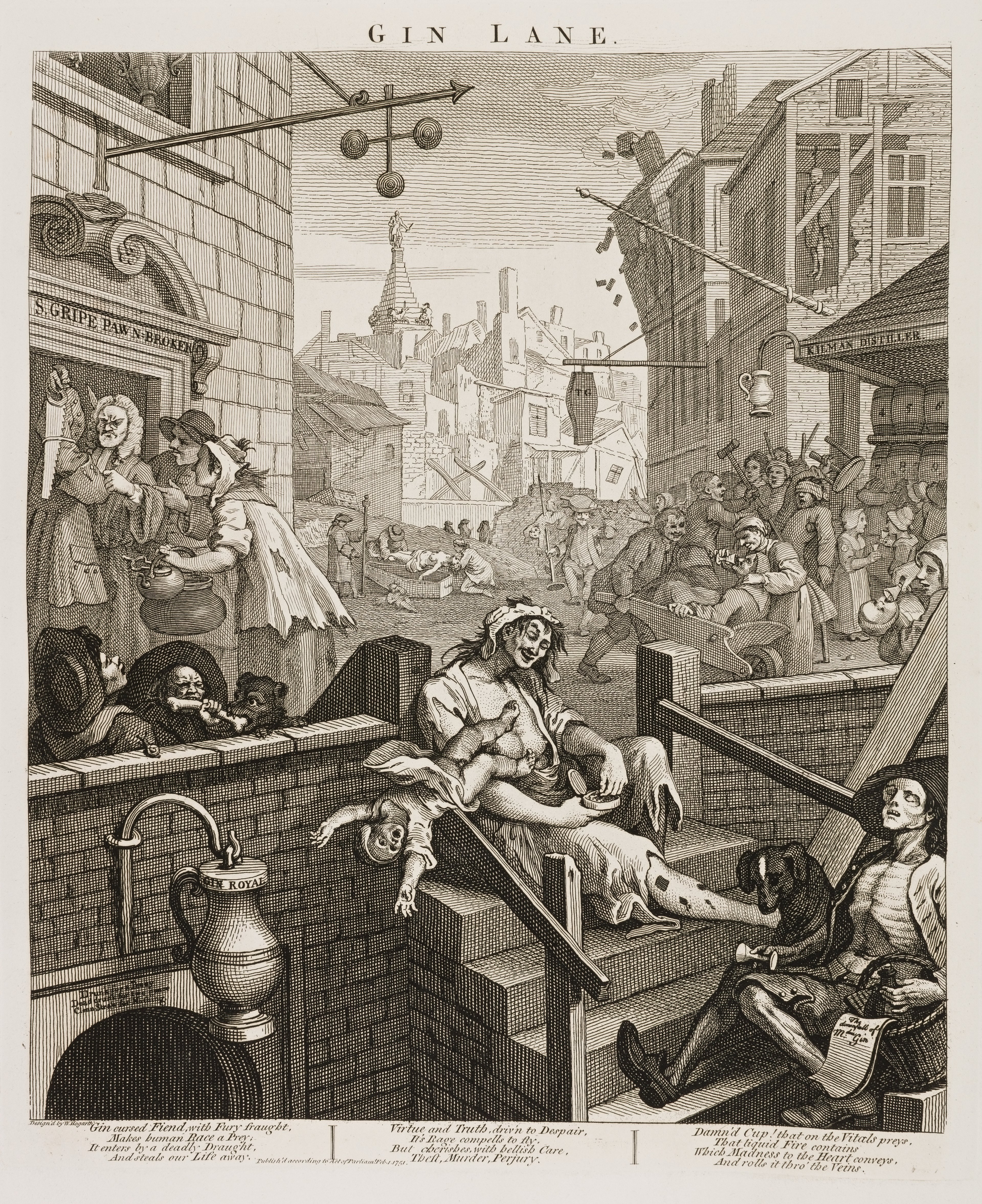
The increase in consumption of spirits had a major impact on the health of individual people and caused major social problems
Drunk people became more involved in crime and violence
It caused families to break up
Drunk people get involved in more accidents, including fatal accidents
The problem had become so significant by the 1720s that the government decided to act
The 1729 Gin Act
Placed a tax of five shillings on every gallon of gin
Required gin sellers to buy an annual licence for £20
The aim was to drive the price of gin up, but it failed
There were so many distillers and tiny gin shops that people just ignored the law
The 1736 Gin Act
The tax was increased to twenty shillings
The licence increased to £50
This was also ignored and gin remained very cheap
The 1743 Gin Act
The 1743 Gin Act made it illegal to sell gin anywhere apart from alehouses
Gin consumption continued to increase
Over 11 million gallons of it were drunk in London in 1750 alone
These laws had little effect because they were difficult to enforce and easily ignored
The 1751 Gin Act
Punishing anyone caught selling gin illegally with whipping and imprisonment
If they were caught three times, the punishment was transportation
This acted as an effective deterrent
It dramatically reduced gin consumption
The national government brought the gin craze to an end and improved the health of the nation
Worked Example
Name one way in which the national government attempted to reduce gin consumption in the 1700s.
One way in which the government attempted to reduce gin consumption in the 1700s was by taxing the gin to make it more expensive and therefore less affordable for poor people.
Examiner Tips and Tricks
As well as being able to explain WHAT has changed, you need to understand the reasons WHY something has changed.
For each example of change that you identify in your revision notes, explain whether the change is due to the government, attitudes, science or society. It also works with why things DIDN'T change.

Unlock more, it's free!
Join the 100,000+ Students that ❤️ Save My Exams
the (exam) results speak for themselves:

Was this revision note helpful?
