The Plague (OCR GCSE History B (Schools History Project)): Revision Note
Exam code: J411

Summary
The disease that arrived in medieval Britain in 1348 and became known as the Black Death never really went away. Outbreaks regularly occurred in the Early Modern Period. The sickness caused by the epidemics was known as the plague. The causes and cures of the sickness remained a mystery but the responses of the national and local governments changed and became more coordinated.
What was the plague?
The plague was the same illness that arrived in Britain in 1348-49 and devastated the medieval population
The epidemic that struck medieval Britain is referred to as the Black Death
The disease never went away
Outbreaks occurred approximately every twenty years
The outbreaks of bubonic and pneumonic plague that occurred in the Early Modern Period were referred to as the plague
The outbreak of 1665 was so severe that it is sometimes referred to as the 'Great Plague'
The reactions and responses to the outbreaks in Early Modern Times were different to those in medieval times
Symptoms of the plague
The symptoms of the plague were identical to those of the Black Death
Although the name was different, the disease was the same
The symptoms a person displayed depended on whether they contracted the bubonic or pneumonic plague
Bubonic plague symptoms
Bubonic plague was caught after a person was bitten by a flea that had been infected with the Yersinia pestis germ
The infection caused large swellings or buboes in the lymph nodes in the armpits and groin
The victim would develop a high temperature, headache and nausea
They would usually die within five days of being bitten by the infected flea
Pneumonic plague symptoms
This was caught from breathing in cough droplets that contained the Yersinia pestis germ
It led to internal bleeding and the coughing up of blood
Death usually occurred within two days of infection
Examiner Tips and Tricks
It is important to remember that people in the Early Modern Period did not know how either was caused and made no distinction between the two illnesses
Both brought death suddenly and horribly and both were simply referred to as the 'plague'
National responses to the plague
There were an estimated eight major plague outbreaks in Britain between 1500 and 1670
The responses of the national government evolved with each outbreak
1518 outbreak
A royal proclamation issued by Henry VIII in response to the outbreak was the first attempt to adopt a national response to the plague
It instructed the mayors of all major towns and cities to:
Hang straw from the windows of infected houses
Isolate the people inside for forty days
Instruct people from infected houses to carry white sticks so that other people could avoid them
1578 outbreak
The printing press enabled Elizabeth I's government to give more detailed instructions to people on how to respond to the plague
The instructions were publicly displayed for people to read and follow
The instructions included that people should:
Burn the bedding and clothing of plague victims
Burn barrels of tar on the streets to prevent miasmas
Say special prayers
Kill stray dogs and cats
Appoint 'Searchers' to report on the infections in each parish
Mark infected houses and lock up other household members for six weeks
1604 outbreak
The instructions of Elizabeth I's government to deal with outbreaks remained in place
These were supported by the Plague Act of 1604
The Act ordered that:
Infected people who did not isolate were to be hanged
Healthy people who escaped from an infected house were to be whipped
Town councils could collect money from the entire surrounding county to pay for the instructions to be enforced
Examiner Tips and Tricks
Creating a Venn diagram is an excellent way to reinforce the similarities and differences in responses to the Black Death and the Plague.
Draw two large overlapping circles. Write down the responses that were unique to the Black Death of 1349 in the left circle. Write down the responses that were unique to the Plagues of the 1600s in the right circle. Then write down the responses that were common to both outbreaks in the space where the circles overlap.
Local responses to the plague
Responses varied from town to town but certain measures were common
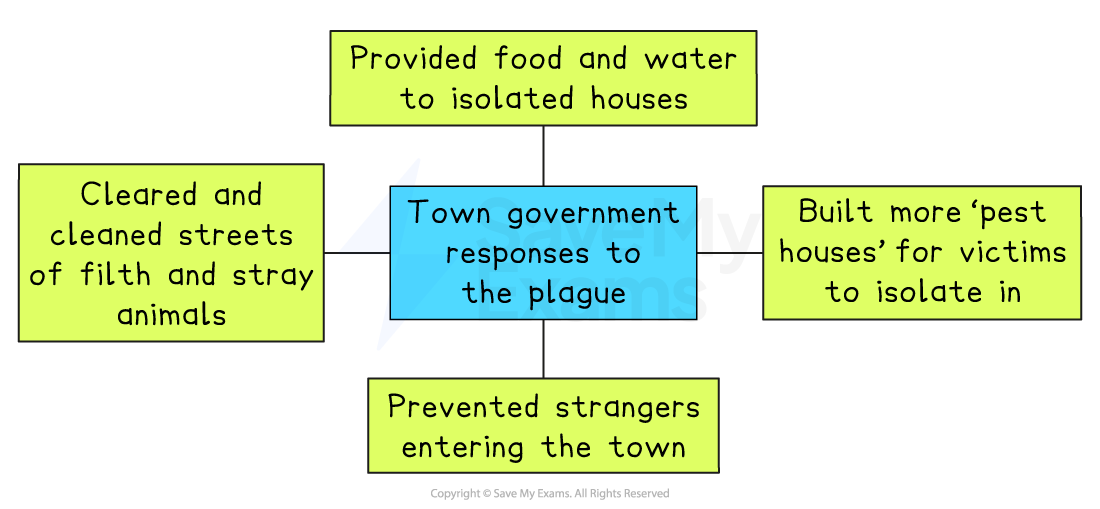
The cause of the plague remained unknown in the Early Modern Period
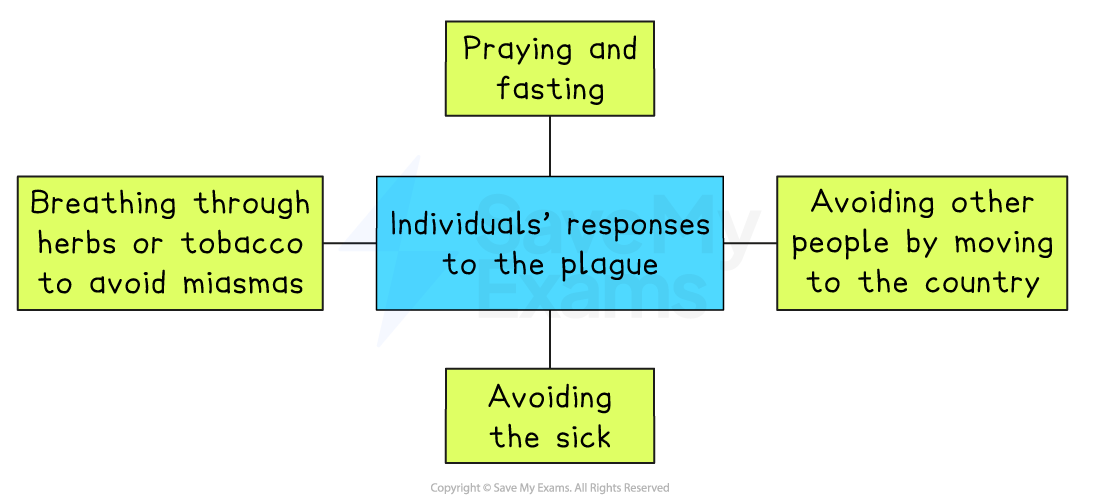
Individuals took a variety of measures to prevent themselves from falling ill
After Henry VIII split with Rome and England became Protestant, people stopped going on pilgrimages to holy sites
People did continue to try to please God
They still believed God was responsible for the plague
Worked Example
Give one example of how the national government reacted to the plague in the Early Modern Period.
Example answer
One example of how the national government reacted to the plague in the Early Modern Period was to use the printing press to issue instructions to councils, such as isolating victims for six weeks and burning tar in the streets.

Unlock more, it's free!
Join the 100,000+ Students that ❤️ Save My Exams
the (exam) results speak for themselves:

Was this revision note helpful?
