What was Industrialisation? (OCR GCSE History B (Schools History Project)): Revision Note
Exam code: J411

Summary
Between 1750 and 1900, Britain went through the most dramatic and important change in its history. This change became known as the Industrial Revolution. It changed Britain from a rural society to an urban one. Cities grew rapidly as people moved to work in the factories.
The living conditions in these new cities were appalling and diseases spread rapidly. Life expectancy for people living in them reached an all-time low.
As the 19th century progressed, things slowly began to improve. This was due to a combination of improved scientific understanding of the cause of disease and working-class men being able to vote in elections. Politicians had previously ignored the conditions of the poor but now had to improve them if they wanted to win working-class votes.
The growth of major cities
The population of Britain grew significantly between 1750 and 1900
Perhaps more importantly, the number of British people who lived in towns and cities grew rapidly too
By 1851, Britain had become the first nation in the history of the world where more of its population lived in urban areas than rural areas
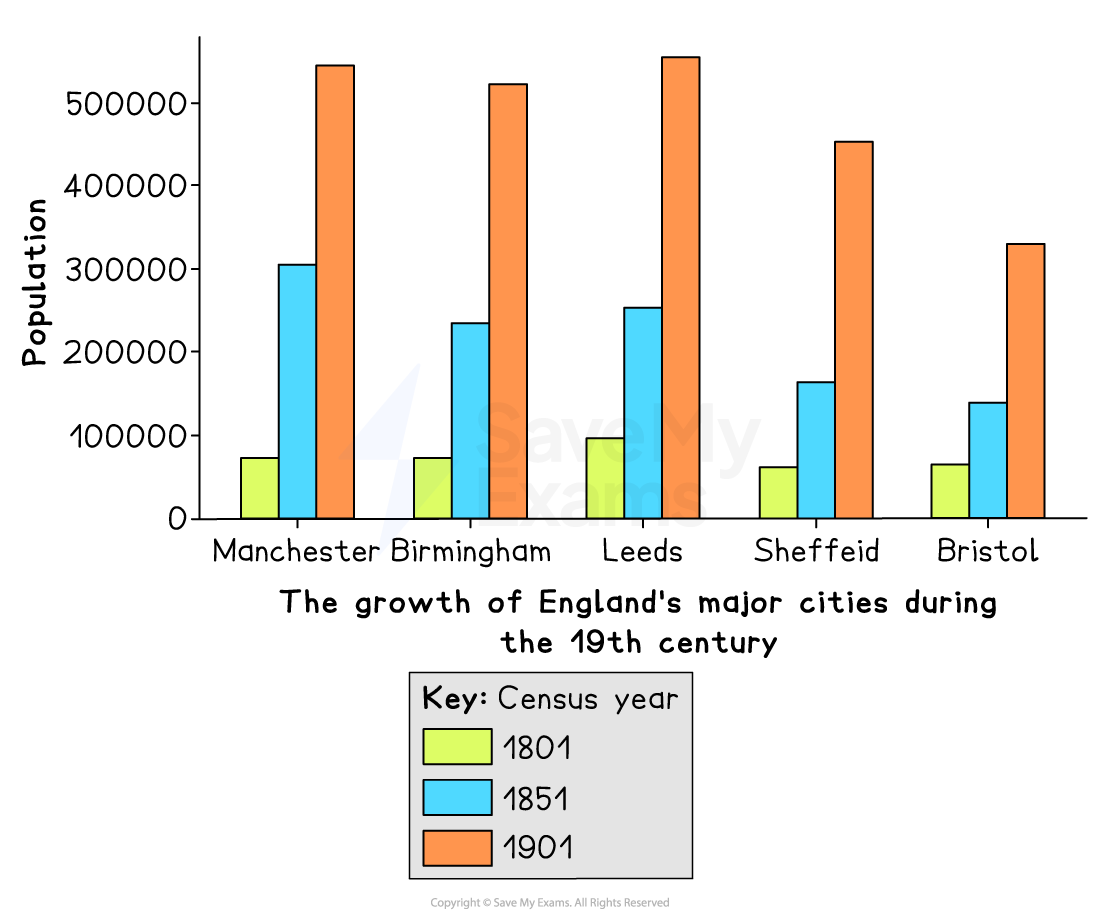
What made Britain's cities grow?
From around 1750 onwards, people in Britain started making things by machine rather than by hand
A process known as industrialisation
The machines were housed in factories, meaning people had to live close to factories if they wanted to work
The factories acted like magnets and drew people to live in the rapidly growing industrial cities
London became the first city in history to have a population of over 2 million people
By 1901, London's population was over 6 million
Other British cities also experienced enormous growth.
Britain's deadly cities
Towns and cities were dangerous places to live in the medieval and Early Modern Periods
The average life expectancy for people living in the city was lower than for people living in the countryside
After industrialisation, they became more dangerous
Average life expectancy reached its lowest ever level
The overcrowded conditions meant diseases spread quickly
The cities grew with no planning to:
Provide clean water
Deal with the increasing amounts of human sewage
For most of the 1800s, there was no scientific understanding of how disease and sickness spread
This meant that any attempts to control the spread of disease failed
Political change
Britain’s Parliament had grown more influential than the monarchy during the early modern period
Britain was referred to as a democracy but only 5% of its people could vote at the start of the 1800s
This changed in 1832 when the Reform Act was passed
After this, all men who owned property could vote
Further changes in 1867 and 1884 gave the vote to working-class men
The new industrial cities also had their own Members of Parliament to represent them
This meant the living conditions of working people in the cities became more important to the government
If they did not improve those living conditions, working people would not vote for them
Worked Example
Name one reason why towns and cities grew so rapidly in Britain between 1750 and 1900.
One reason why towns and cities grew so rapidly in Britain between 1750 and 1900 was that factories were located in towns and cities and people moved there in search of work.
Examiner Tips and Tricks
Although towns grew during the Early Modern Period, it is important to understand that the growth in towns and cities during the Industrial Period was far, far greater. The rapid growth of towns and cities was one of the main reasons for the decline in public health and life expectancy.

Unlock more, it's free!
Join the 100,000+ Students that ❤️ Save My Exams
the (exam) results speak for themselves:

Was this revision note helpful?
