Living Conditions in Medieval Britain (OCR GCSE History B (Schools History Project)): Revision Note
Exam code: J411

Summary
People's health and life expectancy are affected by their living conditions and diet. That was true in medieval times and remains true today. In medieval Britain, people did not understand about germs or the importance of diet. However, their living habits, what they ate and drank and how they dealt with their waste all had a major impact on their health and wellbeing.
Medieval housing
The size of a medieval person's home depended on their position in society
Lord of the Manor's housing
The lord of the manor would have the biggest house
These often had stone walls and the privacy of separate rooms
Homes of peasants
The homes of peasants were often constructed of wattle and daub - woven sticks smeared with a mud mixture to keep the wind out
The houses had one room with a stone hearth in the centre with a hole in the thatched roof directly above it
A fire would be lit on the hearth
This was used for both heating and cooking
The hole in the roof would allow the smoke to escape
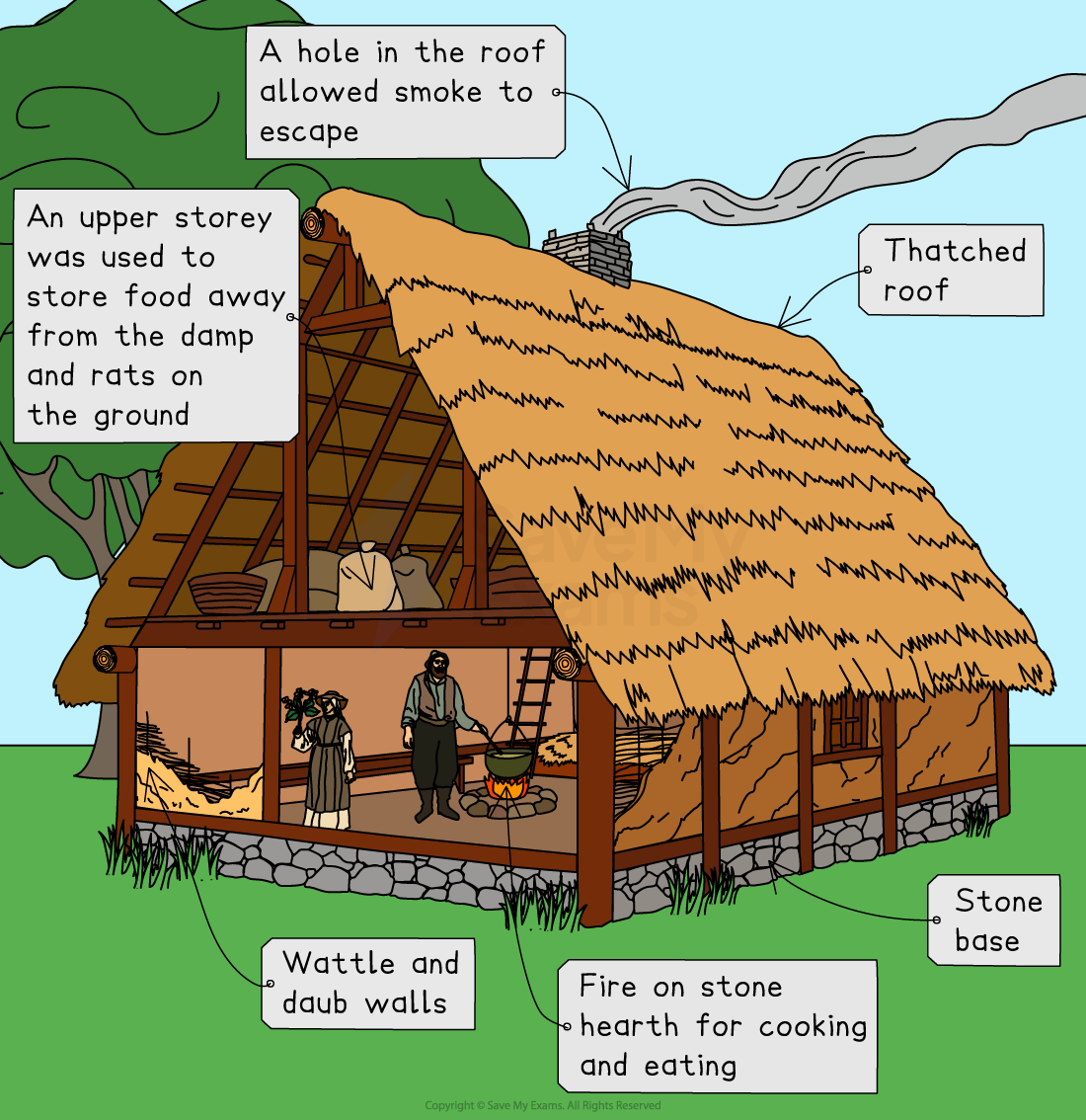
Any windows in the walls would have wooden shutters rather than glass
Floors were usually made from compacted mud and covered with straw that was routinely swept out and replaced
Animals such as cows could be brought indoors, especially during the winter
This was to keep the animal safe and to provide warmth
Medieval food
The diet of a medieval person would also depend on their position in society
Peasants would eat a vegetable-based diet, and most meals were of a dish known as pottage
Pottage was a thick soup made of ingredients such as cabbage, onions, peas, leaks, broad beans, barley and oats
It was cooked in a large iron pot
Whatever ingredients were available were added to the pot every day and the mixture would be topped up with water
Animal bones were sometimes added to the pottage, and bread was either purchased or baked in the shared village ovens
Meat was expensive and eaten only on special occasions
As well as the food that they grew, peasants would also gather honey from beehives, and nuts and fruit from the woods
The food supply was never secure
If a harvest failed, peasants were the first to go without food
It is estimated that around 10% of Britain's peasants died in the Great Famine of 1315-16
The diet of Lords and knights and their families would also feature pottage but it would have included much more meat and expensive spices
Common meats included beef, lamb or mutton, pork, pigeon, chicken, goose and wild birds such as woodcocks
Meat was replaced with fish on Fridays as the Church instructed people not to eat meat on the day of Jesus' death
Clean water in Medieval Britain
Villages were built near streams or springs that provided a constant source of water
The location of the village was usually chosen for access to water
Springs were preferred to streams
They were less likely to be polluted by animals drinking from them
Streams were popular for bathing and washing
Drinking water during this time was dangerous and medieval people understood this
They were much more likely to drink an ale that was brewed from barley and called 'small beer'
It had a low alcohol content but enough to prevent it from going bad
The boiling that took place during the brewing process killed off germs
Medieval people did not know about germs but they understood that it was safer than water
Cider made from apples and mead made from honey were other alcoholic drinks that were popular in medieval Britain
People living in towns were even less likely to drink water because
Water in towns was more polluted by the larger population
Beer would have been readily available.
Waste in Medieval Britain
There would be a space outside each home called a midden that was used as a rubbish dump
Animal dung and the reeds that covered the floor of the home would be dumped here, along with any other household waste
Some homes, like the lord of the manor's, might have had a cesspit, which acted like a toilet
Unlike a toilet, it did not flush and would have to be regularly emptied with shovels
Peasants often just dug a small ditch, which they covered over after they had finished or walked to some nearby woods
The waste from both middens and cesspits was scattered on fields and acted as a fertiliser that enriched the soil
Examiner Tips and Tricks
Question 1 on this paper is actually three questions - each worth one mark. They will normally ask you to "Name one..." or "Give one example..." Do not waste valuable exam time writing more than one sentence to answer these questions - you will not get any more marks for it!
Worked Example
Give one example of the way in which medieval people avoided becoming sick from drinking water.
[1 mark]
They drank 'small beer', which was boiled during the brewing process and that helped to kill any germs in the water. [1]

Unlock more, it's free!
Join the 100,000+ Students that ❤️ Save My Exams
the (exam) results speak for themselves:

Was this revision note helpful?
