The Black Death (OCR GCSE History B (Schools History Project)): Revision Note
Exam code: J411
Summary
The Black Death is probably the most deadly epidemic in human history. Today, we understand that it is caused by a germ called Yersinia pestis and it can be quickly and easily treated with antibiotics. In the 14th century, people had no idea what caused it, how it spread or how to stop it.
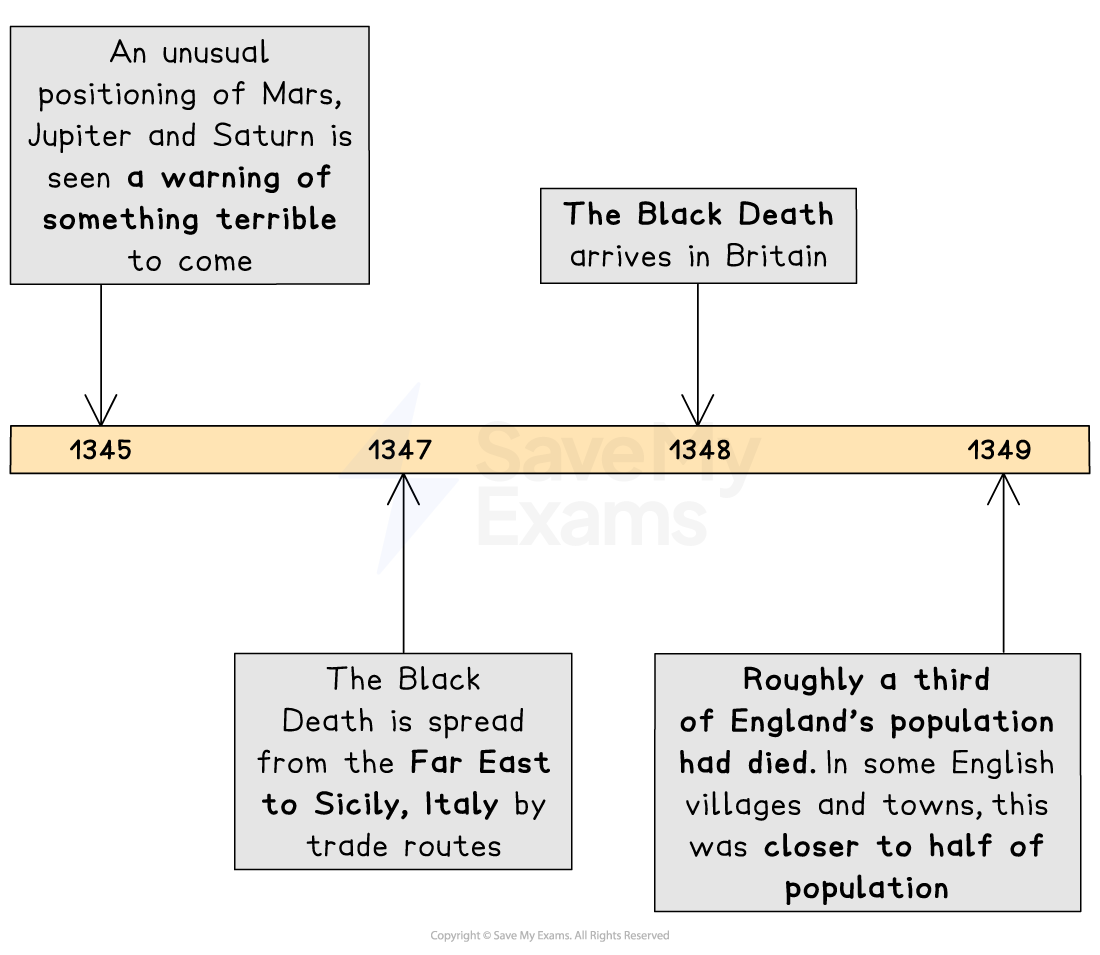
No member of the British population was safe as the Black Death spread rapidly. Within months of it arriving in Britain, between a third and a half of the British population had been killed by the Black Death.
The arrival of the Black Death
It is believed that the sickness that became known as the Black Death originated in Asia
The deadly germ, Yersinia pestis, travelled the world in the guts of fleas
These fleas lived on the rats that were commonly found on the trading ships that travelled between Europe and Asia
When the rats came ashore, the fleas would jump onto people and bite them
This infected them with the Yersinia pestis germ
The symptoms of the Black Death
People bitten by an infected flea would develop bubonic plague
This would cause buboes (painful swellings) to grow in the lymph nodes in the armpits and groin
The sufferer would also develop an intense fever
Once the infection reached the bloodstream, it caused internal bleeding, which would lead to the sufferer developing a bruised, blackish appearance
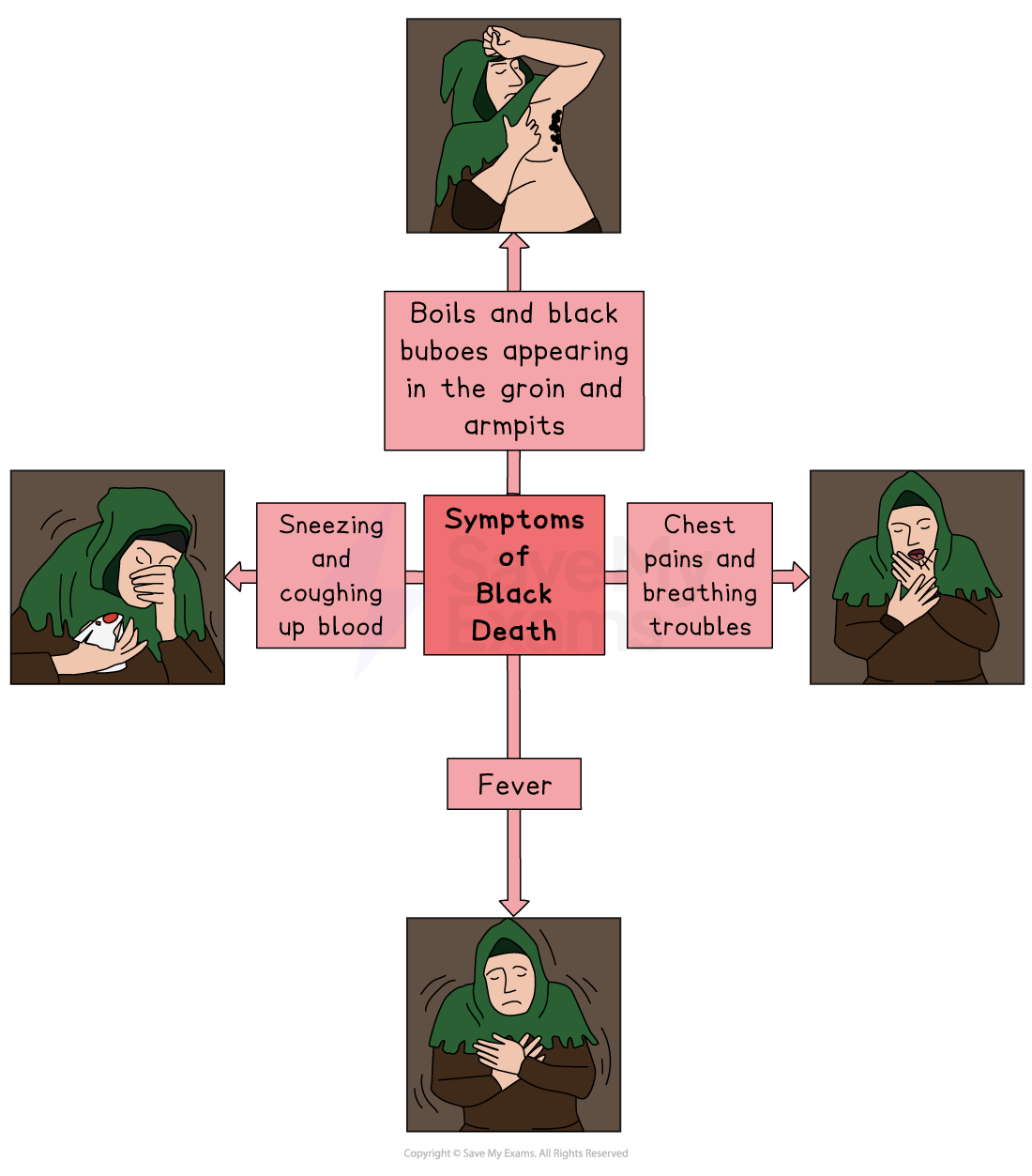
People also caught the pneumonic plague by breathing in droplets containing the Yersinia pestis germ after an infected person coughed near them
This would result in them developing a fever and coughing up blood
Both the bubonic plague and the pneumonic plague frequently resulted in death
In Medieval Britain, they were collectively called the pestilence and later became known as the Black Death
Beliefs about the Black Death
Due to the strong belief in God at the time, most people saw the Black Death as a punishment from God
They believed that, if God had wanted to stop the epidemic, then He would have
The fact that death and sickness kept spreading was proof to them that the Black Death was God's will
Other people believed that the unusual position of the planets lay behind the outbreak
Some people thought that the Black Death spread through bad smells, which they called miasma
Dirty places, vomit and excrement all smell foul and being exposed to all of these is likely to result in illness
As they did not know about germs, medieval people thought it was the smell itself that spread infection
Eye contact with a sufferer was also believed to pass on the sickness
Another widely believed explanation for sickness in the Middle Ages was that a person's humours were out of balance
It was believed that the four humours made up the human body:
Blood
Phlegm: A water-like substance coughed out or contained in a sneeze
Black Bile: Blood that had clotted, seen in vomit or poo
Yellow Bile (Choler): A substance contained in vomit or pus
People believed that for a person to be healthy, the four humours should be in balance
If humours were unbalanced, the person would then become ill
Actions during the Black Death
As most people believed that God was responsible for the Black Death, their actions centred around trying to please Him
These actions included:
Praying
Lighting candles in church
Fasting
Confessing their sins
Organising large processions to church
Going on pilgrimages to holy sites
Some people, known as flagellants. publicly whipped themselves
They thought this would show God they were punishing themselves and did not need further punishment
People also took more rational steps to prevent the Black Death from spreading
These included:
Carrying sweet-smelling flowers and herbs to counteract the foul-smelling miasma
Ordering the streets to be cleaned
Moving to the countryside, where they would not have any contact with other people
However, no national laws were passed that ordered streets to be cleaned or banned people from travelling
Worked Example
Question: Give one example of medieval people's beliefs about the cause of the Black Death (1 mark)
Answer: Medieval people believed that God was responsible for everything and in control of everything, so they concluded that the Black Death was a punishment from God
Examiner Tips and Tricks
Question 2 on this paper is worth 9 marks and requires you to write a 'clear and organised summary that analyses...' an event.
This requires you to show good knowledge of what an event was, but also to explain how people responded to it and why they responded in the way they did.

Unlock more, it's free!
Join the 100,000+ Students that ❤️ Save My Exams
the (exam) results speak for themselves:

Was this revision note helpful?
