The Characteristics of Medieval Britain (OCR GCSE History B (Schools History Project)): Revision Note
Exam code: J411
Summary
Medieval Britain was a deeply religious society where most people lived and worked in the countryside. The king was the absolute ruler, with barons and knights as his supporters and deputies. These people were rewarded by the king with land, which was farmed to earn the barons and knights' money.
The people who did the actual farming were peasants who had no rights. They were rewarded for their hard work by being allowed to live on their lord's land. The majority of the population of Medieval Britain were peasants.
Although the king was the absolute ruler, the Church was extremely powerful and influential in Medieval Britain. Almost everybody was Christian, and the Church had a priest in every village.
Nine out of ten people in Medieval Britain lived in the countryside but the towns played an important role in enabling people to trade. Britain's most important trade was wool, which was turned into cloth and sold for huge profits throughout Europe.
Medieval social structure
Britain’s medieval society was organised in a strict hierarchy
This hierarchy was known as the feudal system
At the very top was the king who people believed had been appointed by God
Kings were seen as being God’s representatives on Earth
The wealth and influence of Medieval kings came from owning land
The word feudal comes from the Latin word for land
They taxed and charged rent from people for living on it
Kings gained loyalty by gifting land to people
People expected their king to maintain law and order, keep the country safe and encourage trade
But unlike Roman emperors and modern leaders, people did not expect medieval kings to build roads, sewers or provide clean water.
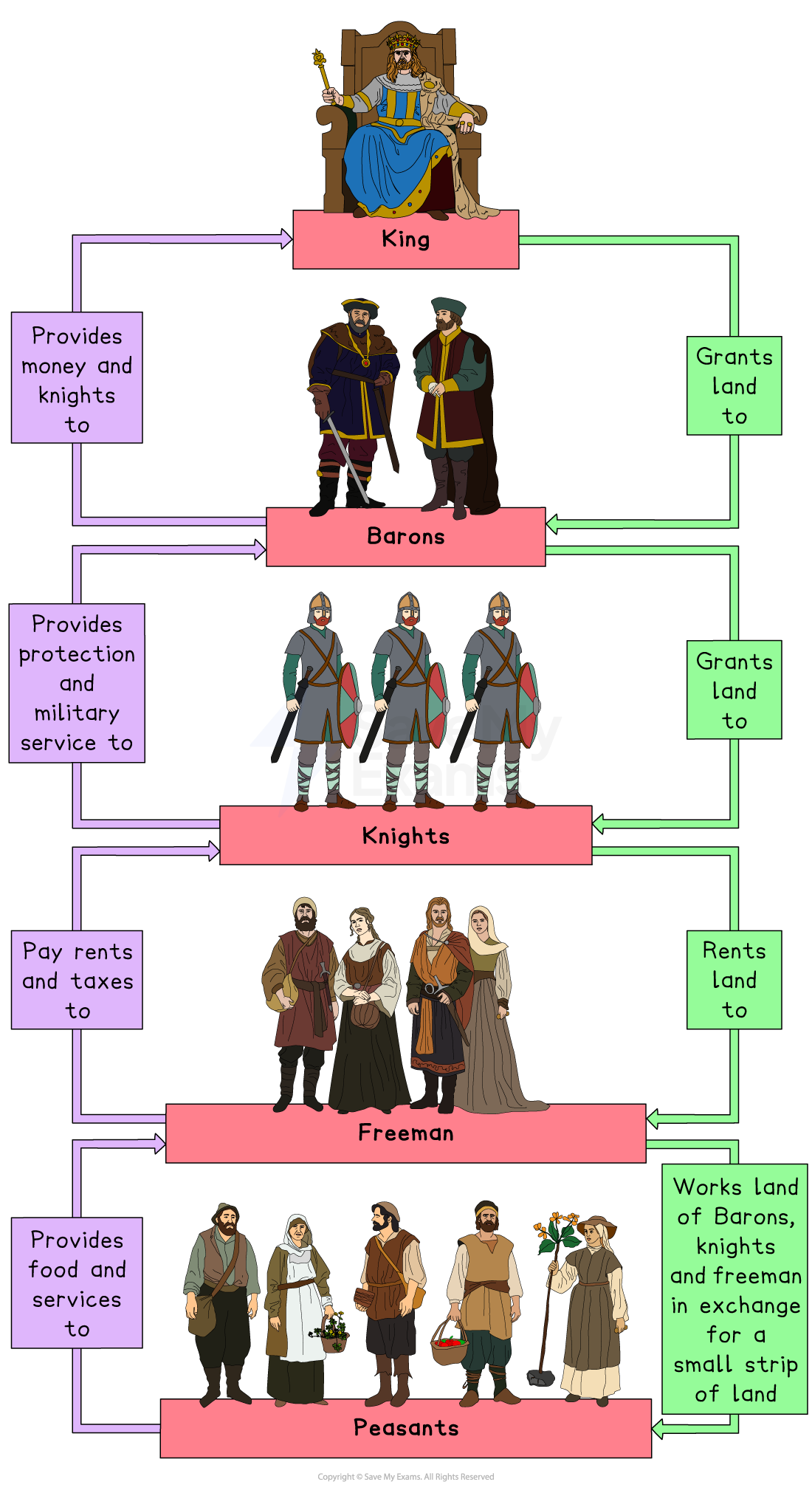
The barons and the knights were given land by the king and controlled different parts of the country on the king's behalf
The land given to them was known as the manor
The knights and barons were the lords of the manor
All the profits from the land that was farmed went to the lords of the manor
The peasants did all the hard, physical work needed to grow crops and raise animals
In return for working their lord's fields, peasants were allowed to live on the lord's land and given a small strip of land to grow their own food
Peasants who worked as domestic servants for the lord were paid in wages
Over 90% of Britain's medieval population lived in the countryside and most of them were peasants
The lives of most peasants were short and hard
They were the most at risk from hunger and starvation when crops failed
Peasants had no rights or way of influencing how the country was run
Religious beliefs in medieval Britain
Nearly everybody in medieval Britain believed in God and was a devout Christian
They believed God had made the world and ruled over all events
Whatever events happened, people believed they were the will of God
This included sickness and starvation
Pleasing God to avoid such things was an important part of people’s lives
The Power of the Church
In the Middle Ages, the Roman Catholic Church was the most powerful organisation in Europe
It was led by the Pope from Rome but there were many powerful Archbishops and bishops in Britain
Britain was divided into small areas known as parishes
Each parish had its own church building and priest
Towns and cities had larger cathedrals
There were also hundreds of abbeys and monasteries scattered across the country
These housed monks and nuns who devoted their whole lives to God
As well as praying, monks and nuns fulfilled many important roles such as copying books by hand, caring for the sick and poor and giving shelter to travellers
Trade in medieval Britain
Almost all trade in medieval Britain took place in towns and cities
By modern standards, medieval towns were small
Towns with populations above 10,000 were very rare
Peasants from surrounding villages would travel to towns on market days to buy and sell goods
This could make them busy places
Permanent residents of towns often worked in trades rather than farming
These included roles such as bakers, brewers, tanners, blacksmiths, cloth workers and candle makers
The Wool Trade
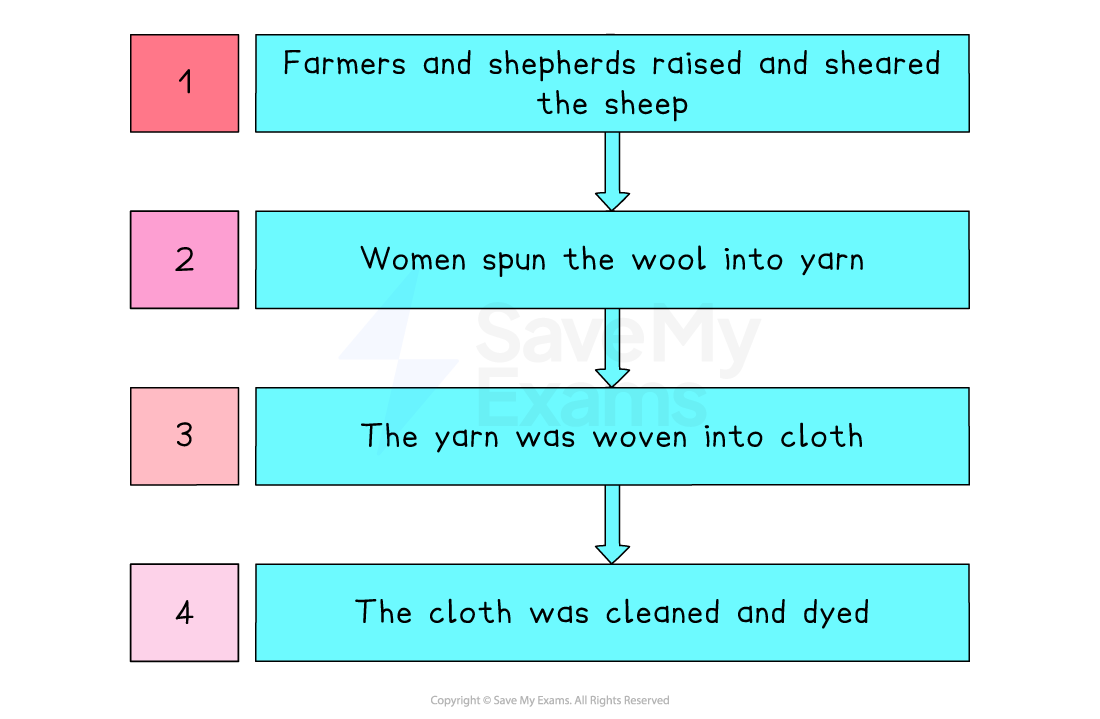
Wool from sheep was the most important trade in Medieval Britain
The finished cloth was then sold to merchants across Europe for enormous profits
Britain became famous for its woollen cloth
It was the country's most important source of income in the Middle Ages and beyond
The wool trade was also the main driver for the growth of many towns during the medieval period
Examiner Tips and Tricks
When studying this module, it is crucial that you understand the difference between medicine and public health. Medicine is what is given to sick people to cure an illness. Public health is the name given to the steps that are taken (or not taken) to prevent people from becoming ill in the first place.
An easy way to remember it is:
Medicine = cure
Public health = prevention is better than a cure
Worked Example
Question: Give one example of how religious beliefs affected life in Medieval Britain. (1 mark)
Answer: One example of how religious beliefs affected life in Medieval Britain was the hundreds of abbeys and monasteries that house monks and nuns who cared for the sick and the poor.

Unlock more, it's free!
Join the 100,000+ Students that ❤️ Save My Exams
the (exam) results speak for themselves:

Was this revision note helpful?
