Why did People Support the Nazi Party? (WJEC Eduqas GCSE History): Revision Note
Exam code: C100

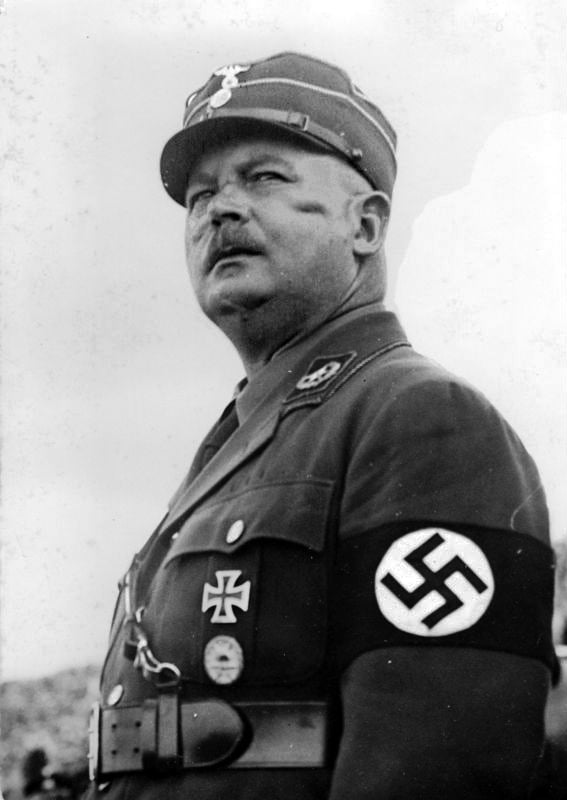
Role of the SA
SA stood for Sturmabteilung (‘Stormtroopers’)
The organisation was formed in August 1921
They gained the nickname ‘Brownshirts’ due to the colour of their uniform
Members of the SA included:
The unemployed
Students
Ex-soldiers
Hitler used the SA to:
Control crowds at meetings
Start fights on the streets
Disrupt the meetings of opposition groups like the KPD
Strengthen the image of the NSDAP
Ernst Röhm became the leader of the SA in 1923
The SA was not under Hitler’s direct control
Ernst Röhm was popular amongst the stormtroopers
By 1925, the SA had 400,000 members
To many Germans, the SA made the Nazis look strong, powerful and well organised
Nazi Party Propaganda
One of the most important aspects of Nazi propaganda was Hitler’s skill at public speaking
Hitler spent a considerable amount of time practising his speeches
Hitler developed a unique pattern of oration, increasing his tempo of speaking until he reached a frantic and aggressive crescendo
This made his arguments very persuasive
He would practice hand gestures to utilise in certain sections of his speeches

Initially, Hitler was the propaganda minister for the Nazi Party
In 1928, Hitler made Joseph Goebbels the propaganda minister
Goebbels was highly skilled at getting the Nazi message across and his propaganda campaigns of 1930 and 1932 increased Nazi popularity
His campaign included:
Flying Hitler around Germany to give speeches, a new idea at the time
Hosting enormous marches and rallies
Using the new technology of radio to get the Nazi message into people’s homes
Creating posters and pamphlets
All the different propaganda techniques carried the same messages:
Exact revenge for the dolchstoss committed by the ‘November Criminals’ for signing the armistice and the Treaty of Versailles
Portrayal of the Jewish people as the ‘enemies of Germany’
Promotion of a return to traditional values
What Groups of People Voted for the Nazis?
The key to the Nazi success in elections in the 1930s was that they did not just appeal to one group in German society
They gathered votes from a wide range of social groups
Big Business

The Working Class
The National Socialist German Workers’ Party (NSDAP), or Nazis, specifically targeted the votes of workers
They were named the ‘Workers’ Party’, which, together with their policies, appealed to the working classes
The policies included:
The redistribution of land from wealthy landowners
Improved working conditions
The promise of employment
The NSDAP won the votes of many workers but never gained the majority of the working-class vote, who traditionally favoured the left-wing

The Middle Class
The middle classes contained teachers, lawyers and smaller business owners
They often owned property and had savings
Between 1929 to 1933, the middle classes stopped supporting moderate parties and began to vote for extremists like the Nazi Party
Fear of losing what wealth and property they had meant they would not vote for the communists

Farmers
Farmers had suffered under the Weimar Republic
High debt, low prices and increasing taxes damaged the standard of living in farming communities
By 1929, the income of agricultural workers was 44% below the national average
Farmers initially did not like the NSDAP
The Twenty-Five Point Programme created a policy of confiscating all private land
Under this policy, farmers would lose their income
The Nazi Party changed their policy to say that, if the people voted for the NSDAP, it would only confiscate land owned by the Jewish people
In 1930, the Nazi Party gained 60% of the rural vote in some areas

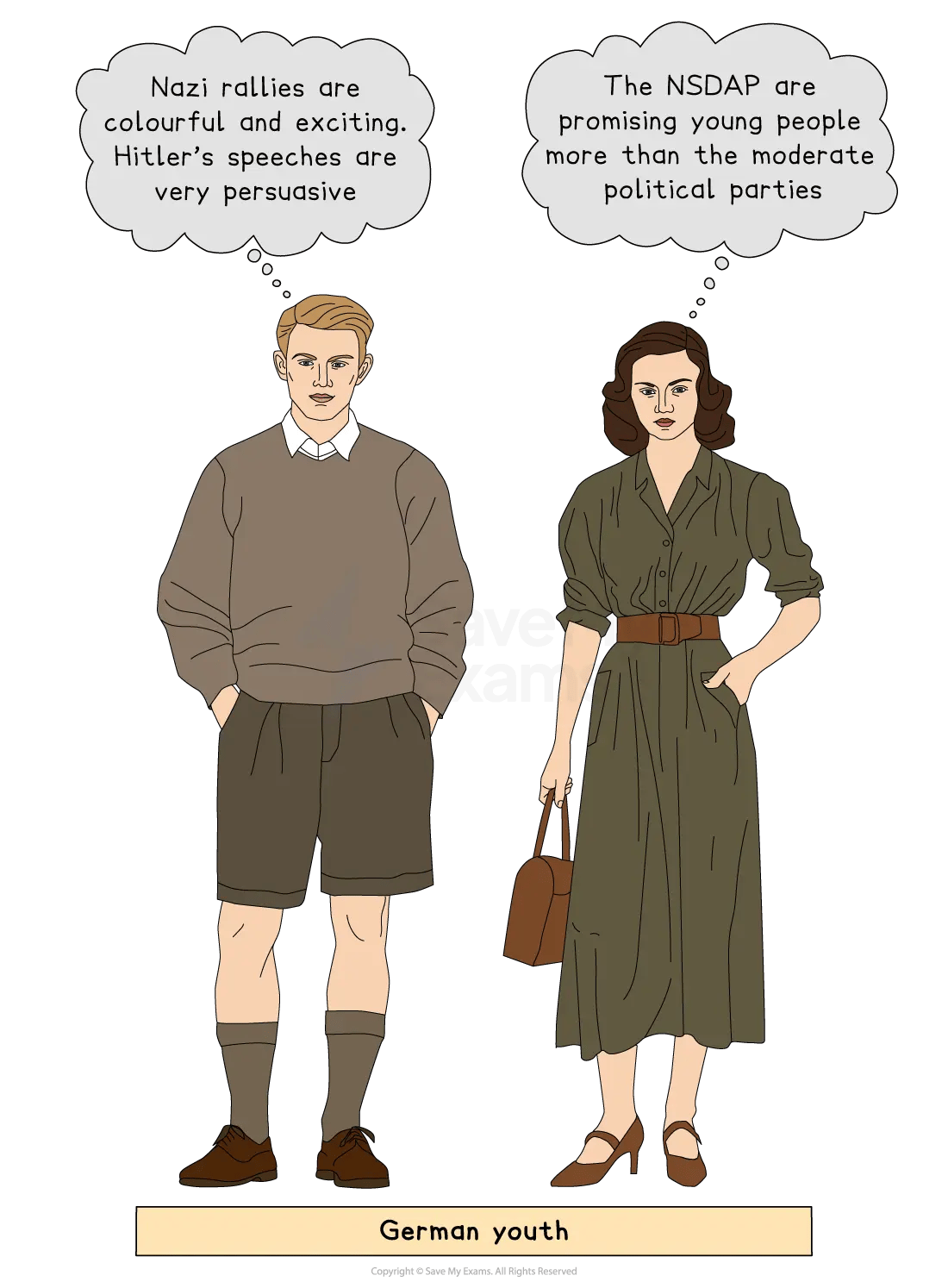
Young People
The economic depression in the 1930s had hit young people especially hard
By January 1933, unemployment hit 6.1 million people
Half of all 16 and 30-year-olds did not work
The Nazis positioned themselves as the party of youth and promised a better future
Political extremism and Scheming, 1929-1932

The result of the propaganda campaigns and broad political appeal was enormous gains for the Nazi Party in the elections
Hitler may have lost to Hindenburg in the Presidential elections of 1932, but 13 million Germans still voted for him, and he secured 30% of the total vote
The General Election of July 1932 was a spectacular success for the Nazis
They won 38% of the vote and had become the biggest party in the Reichstag
As the leader of the biggest party in the Reichstag, Hitler demanded to be made Chancellor
Hindenburg, who personally disliked Hitler, refused to do this and kept Von Papen as Chancellor
Hindenburg called another General Election in November 1932 and hoped that the Nazis would not be as successful this time around
The Nazi share of the vote did decrease to 33% but they remained the biggest party in the Reichstag
Von Papen’s Social Democratic Party of Germany (SPD) did particularly badly, which caused Hindenburg to force him to resign
To von Papen's fury, his fierce rival, von Schleicher, was appointed Chancellor in December 1932 in his place
Von Schleicher was also deeply unpopular with the voters and suggested the army should take over Germany and run it as a dictatorship
Von Papen continued to plot and scheme against von Schleicher
Von Papen convinced Hindenburg that the popularity of the Nazis needed to be recognised for the government to work effectively
He persuaded Hindenburg to appoint Hitler as Chancellor, with von Papen serving as his Vice Chancellor
Both Hindenburg and von Papen believed they could control Hitler and use his popularity with the people to their advantage
Hitler was appointed Chancellor of Germany on 30th January 1933

Examiner Tips and Tricks
Many students confuse the SA and the SS. The SA were the ‘Brownshirts’ who played an important role in getting Hitler into power. The SS wore black uniforms and played a key role in controlling the German population after Hitler had come to power.

Unlock more, it's free!
Join the 100,000+ Students that ❤️ Save My Exams
the (exam) results speak for themselves:

Was this revision note helpful?
