Nazi Economic Policy (WJEC Eduqas GCSE History): Revision Note
Exam code: C100

Summary
The economic depression that hit Germany after the Wall Street Crash was a key factor in getting Hitler and the Nazis elected. People had become angry and unsatisfied with the moderate democratic parties of Weimar Germany and looked to the Nazis as an alternative. Hitler knew that if he did not improve Germany’s economy, people would become angry and unsatisfied with him, too.
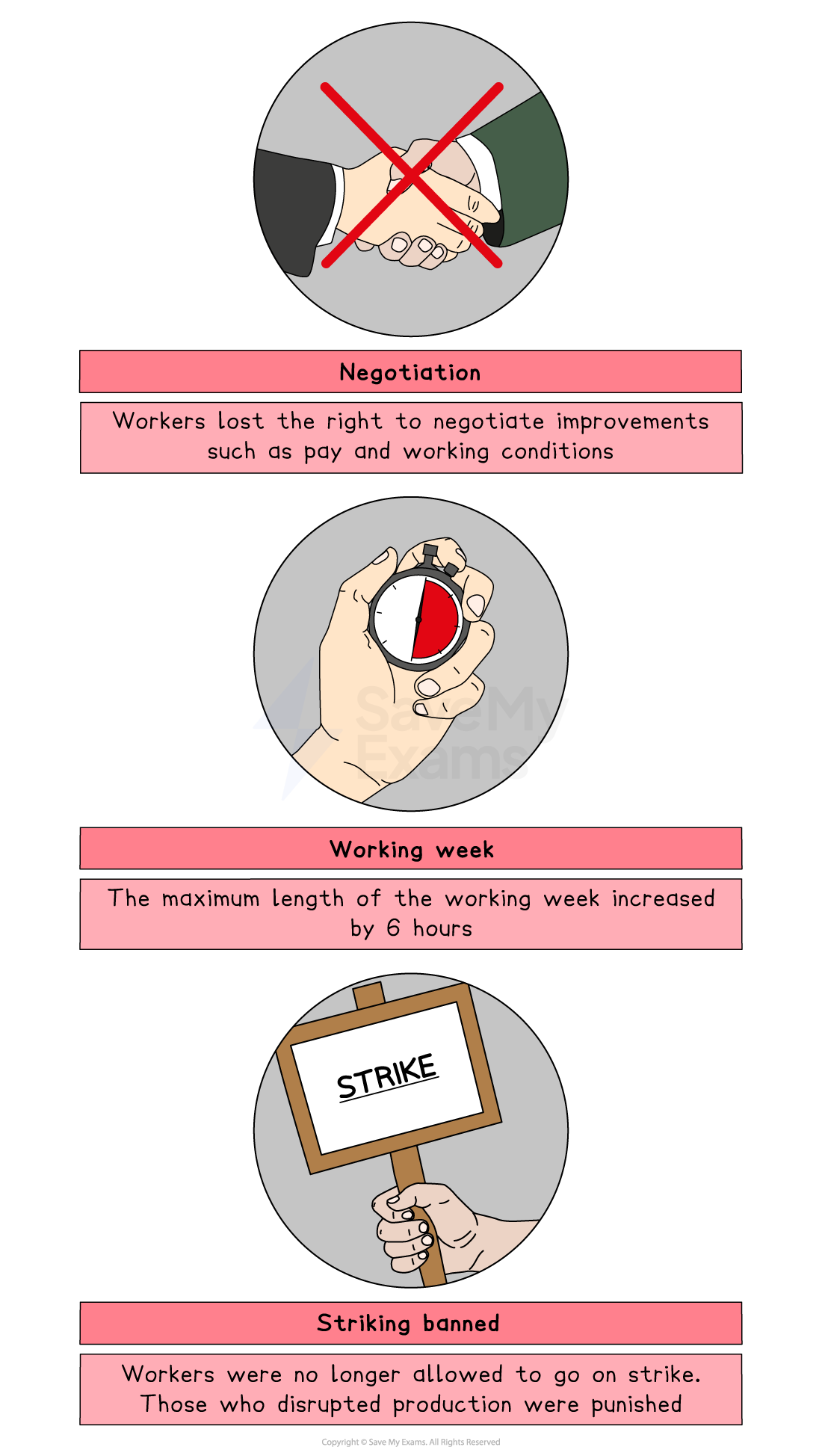
The first task was to get as many of the 6 million unemployed Germans back to work as soon as possible. Trade unions had been banned under the Enabling Act and German workers found themselves working longer hours but unable to go on strike or negotiate for a better deal.
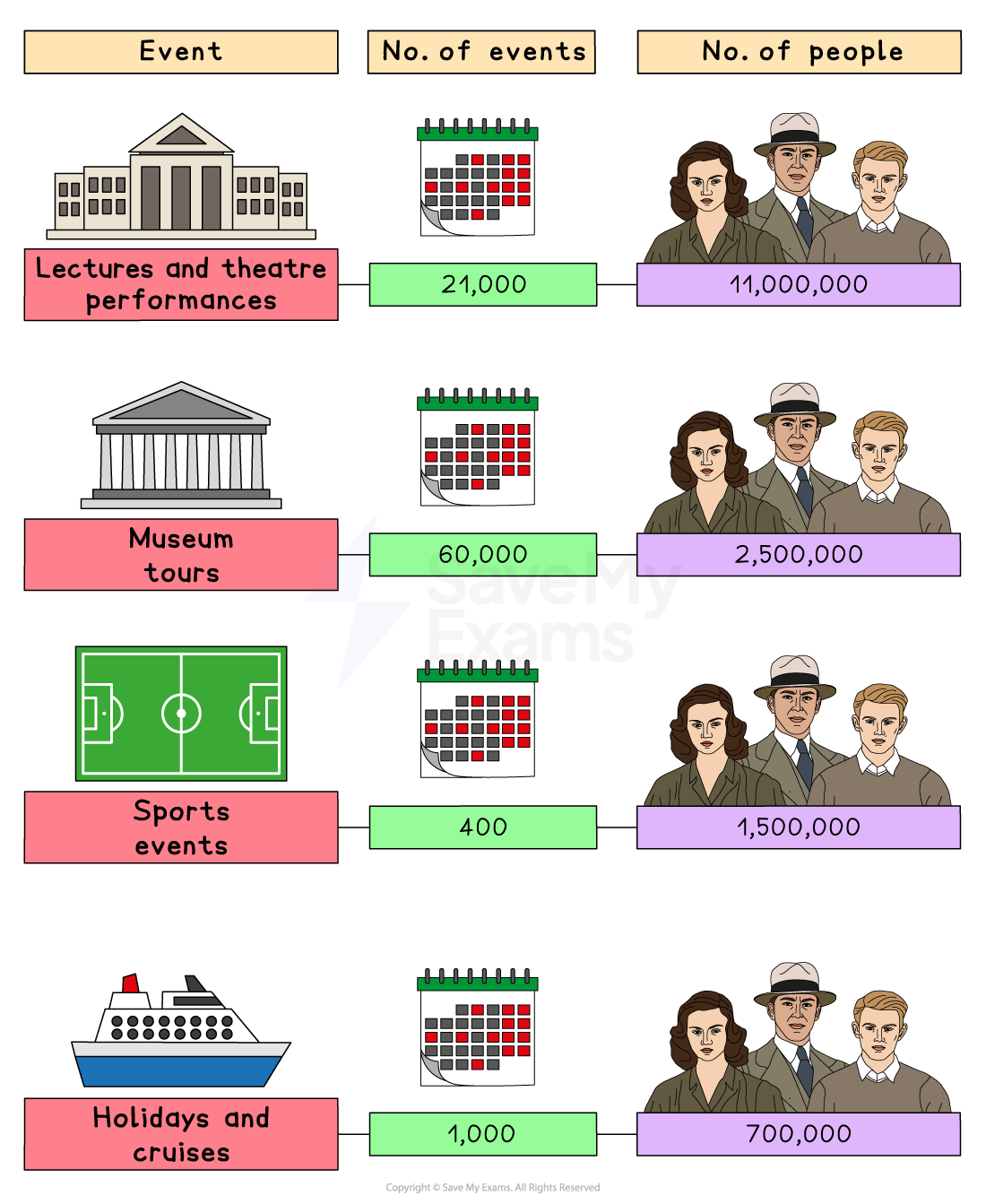
To try and keep workers happy, the Nazis established a variety of organisations that were meant to improve the standard of living. This involved discounted holidays and leisure trips and even the possibility of owning a car.
Historians have questioned how successful the Nazi policies were at both reducing unemployment and improving living and working conditions.
Reducing Unemployment
Reducing unemployment was a key focus for the Nazi Party:
Hitler feared that unemployed workers would support other groups, such as the communists, if they were not helped by the Nazis
People not in work were not contributing to society or the economy
When Hitler came to power in January 1933, there were around six million unemployed people in Germany
By 1939, this had been reduced to around half a million people
This was achieved through a number of different policies:
National Labour Service (RAD)
Set up in 1933
The RAD provided paid work for the unemployed
Workers carried out public jobs such as repairing roads and planting trees
From 1935, it was made compulsory for unemployed young men (18-25 years old) to join the RAD for six months
The pay was poor and many workers complained about the food, having to wear uniforms and working conditions
There were 422,000 members in 1935
Autobahns
The Nazis wanted to create a 7,000-mile autobahn (motorway) system to improve transport around Germany:
Hitler started the project in September 1933
By 1935, 125,000 men had been employed to build the motorways
Around 3,500 km of autobahn had been completed by 1938
The Nazis financed other public work schemes in Germany:
Buildings, roads, bridges and sports facilities such as the Berlin Olympic Stadium were built
Spending on public works more than doubled from 18 billion marks in 1933 to 38 billion marks in 1938
Rearmament
Increasing the size of the military would make Germany stronger and provide more jobs
The terms of the Treaty of Versailles limited the army to 100,000 soldiers:
Hitler ignored this and announced conscription in 1935
By 1939, there were around 1.4 million men in the German armed forces
The Nazis also needed to produce more weapons and armaments to supply their larger army, which also created more jobs:
Spending on armaments increased from 3.5 billion marks in 1933 to 26 billion marks by 1939
Employment in aircraft construction increased from 4,000 people in 1933 to 72,000 people by 1935
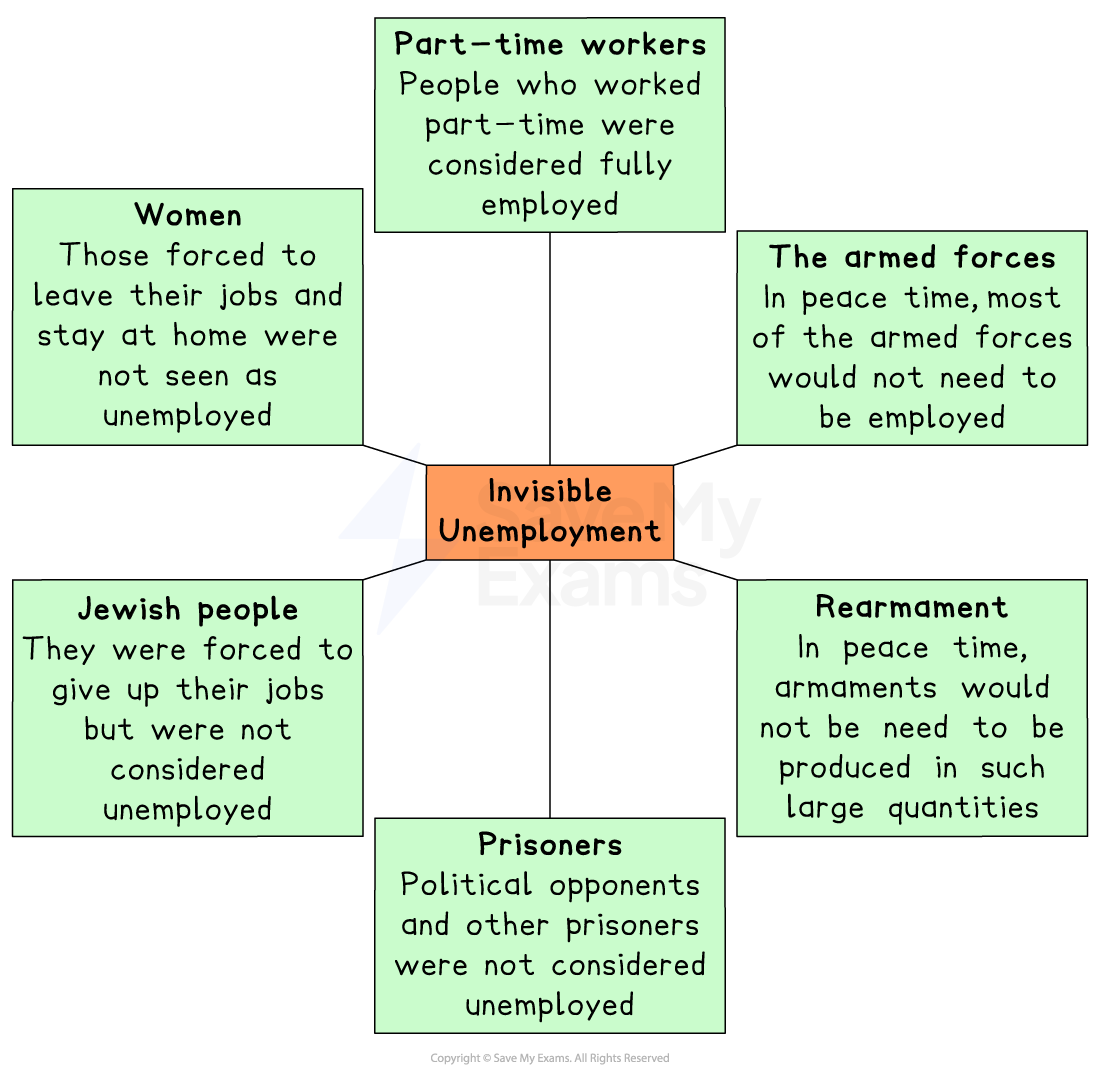
Invisible unemployment
Many groups of people were not included in Nazi unemployment figures, such as women and Jewish people
As a result, they were known as the ‘invisible unemployed’ in Nazi society
Who was excluded from Nazi Germany's employment figures?
An Economic Miracle?
Although the employment figures are impressive, there are doubts about how effective the Nazi economic policies really were
Many policies were too expensive to be sustainable in the long term
Also, whilst rearmament did provide jobs in the military and armaments industry, these jobs would not be required if Germany were not preparing for war
Policy towards workers
Hitler closed down and banned trade unions and other workers' organisations in 1933
He decided to replace them with Nazi worker organisations to:
Ensure high support for the Nazi Party from the workers
Keep control of worker disputes, such as pay and conditions
The Labour Front (Deutsche Arbeitsfront, DAF)
In place of the trade unions that had been banned under the Enabling Act, the German Labour Front (DAF) was meant to control the rights, hours and pay of workers
However, it terms of standing up for the workers, it was not an adequate replacement for trade unions
Strength Through Joy (Kraft durch Freude, KdF)
Set up in 1933, the Strength Through Joy organisation was meant to show the workers the benefits of hard work and cooperation
By 1936, there were 35 million members of the KdF
The Kdf aimed to make working-class life in Germany more enjoyable and prevent unrest
It provided out-of-work leisure activities, trips, holidays and even the prospect of cars to manual workers
The Volkswagen Scheme
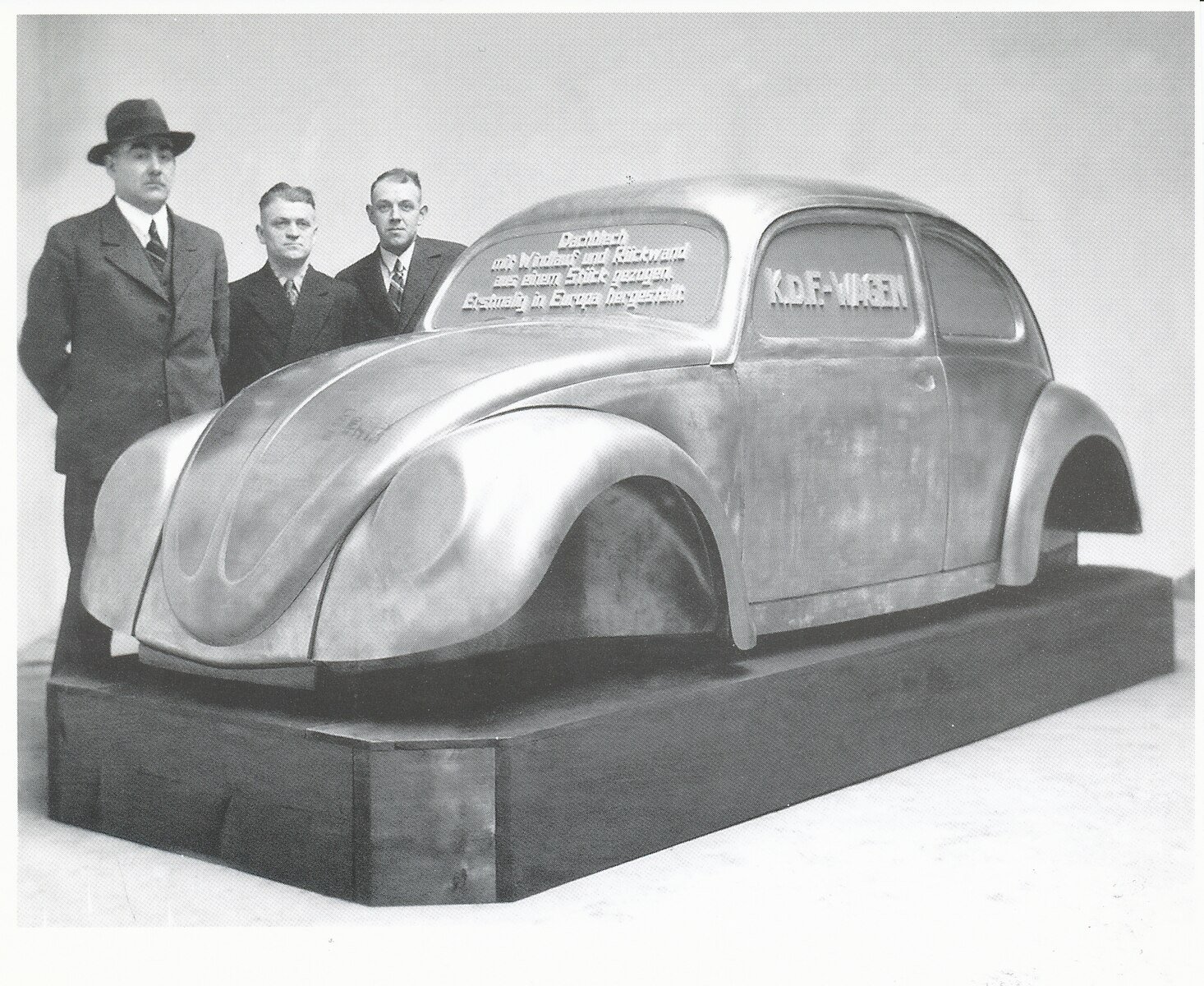
The KdF ran a scheme so workers could purchase a new car:
The Volkswagen - ‘people’s car’ - was an affordable and fuel-efficient car that the average German could afford
Workers in the KdF gave five marks per week from their wages so they could eventually receive a Volkswagen
However, car factories switched to producing armaments after 1938
Not a single worker received a Volkswagen
Beauty of Work (Schönheit der Arbeit, SdA)
The Beauty of Work (SdA) programme was set up in 1934 as a division of the KdF
The SdA aimed to provide better facilities for workers to improve their working environment
It provided facilities such as toilets, changing rooms, showers and canteens
By 1938, around 34,000 companies had improved their facilities
Many workers were expected to build and decorate the new facilities themselves, for no extra pay and outside of their typical working hours
Examiner Tips and Tricks
In question 2 on this paper, you will be asked to identify the purpose of a source. To do this effectively, you will have to incorporate the source’s provenance (what it says in the caption), its content (what it says in the source itself) and your own knowledge.

Unlock more, it's free!
Join the 100,000+ Students that ❤️ Save My Exams
the (exam) results speak for themselves:

Was this revision note helpful?