Nazi Racial Policy (WJEC Eduqas GCSE History): Revision Note
Exam code: C100

Summary & Timeline
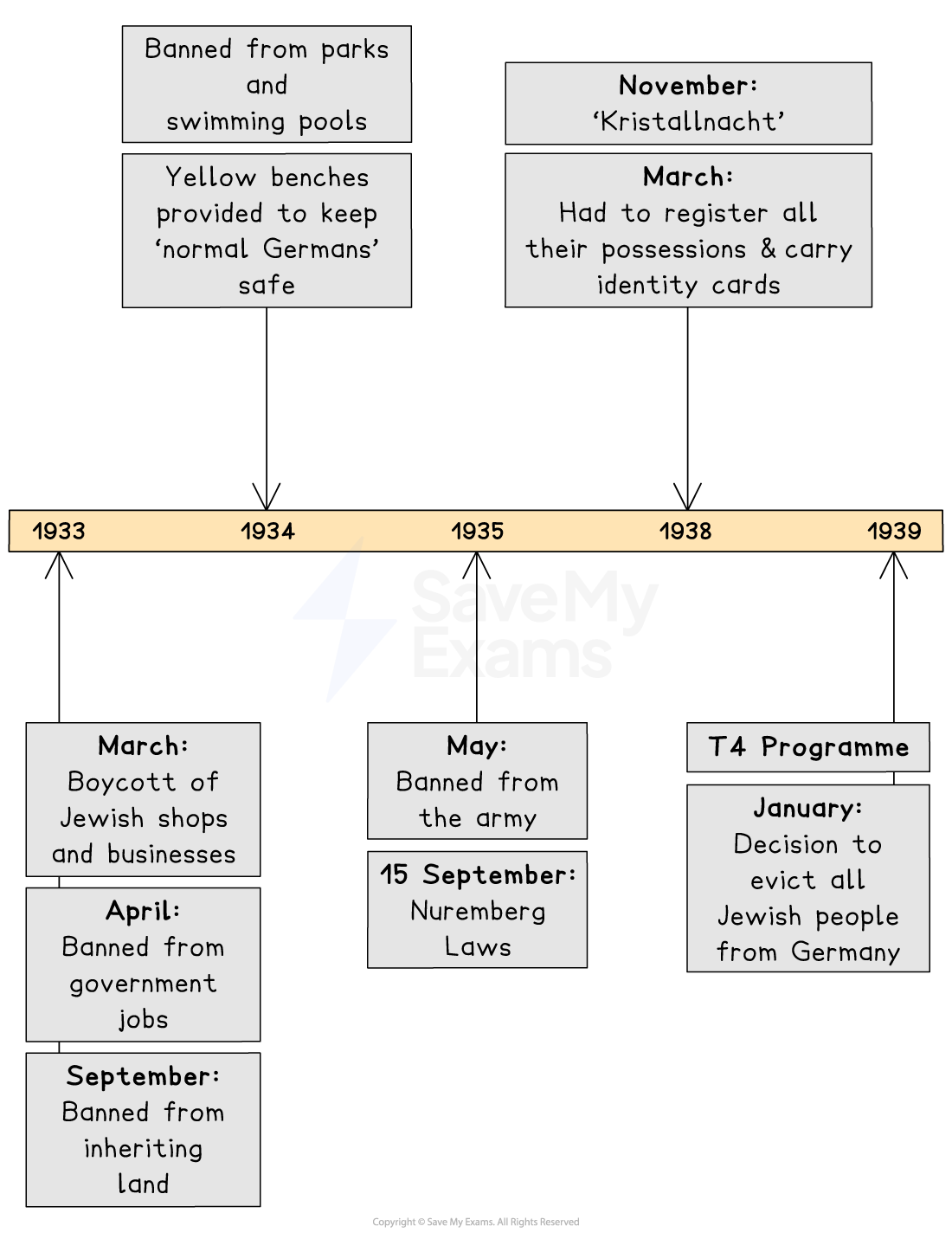
The persecution of Germany’s Jewish population began almost as soon as the Nazis came to power and gradually increased with each passing year. Jewish people were legally treated as second-class citizens and were stripped of their rights and protections by the Nuremberg Laws in 1935. In 1938, the persecution became deadly when a hundred German Jewish people were killed and nearly 200 synagogues were destroyed in a night of government-backed violence known as ‘Kristallnacht’.
The Treatment of the Jewish People in Nazi Germany
The persecution of Germany’s 437,000 Jewish people began almost as soon as Hitler became Chancellor in 1933
The Nazis organised a boycott of Jewish businesses and stationed SA men outside shops owned by Jewish people to prevent shoppers from entering
They then banned Jewish people from working for the government and introduced a law that stopped Jewish people from inheriting land
In 1934, Jewish people were banned from public places such as parks and swimming pools, and were forced to sit on separate yellow benches
In September 1935, the persecution of Germany’s Jewish population increased dramatically with the Nuremberg Laws
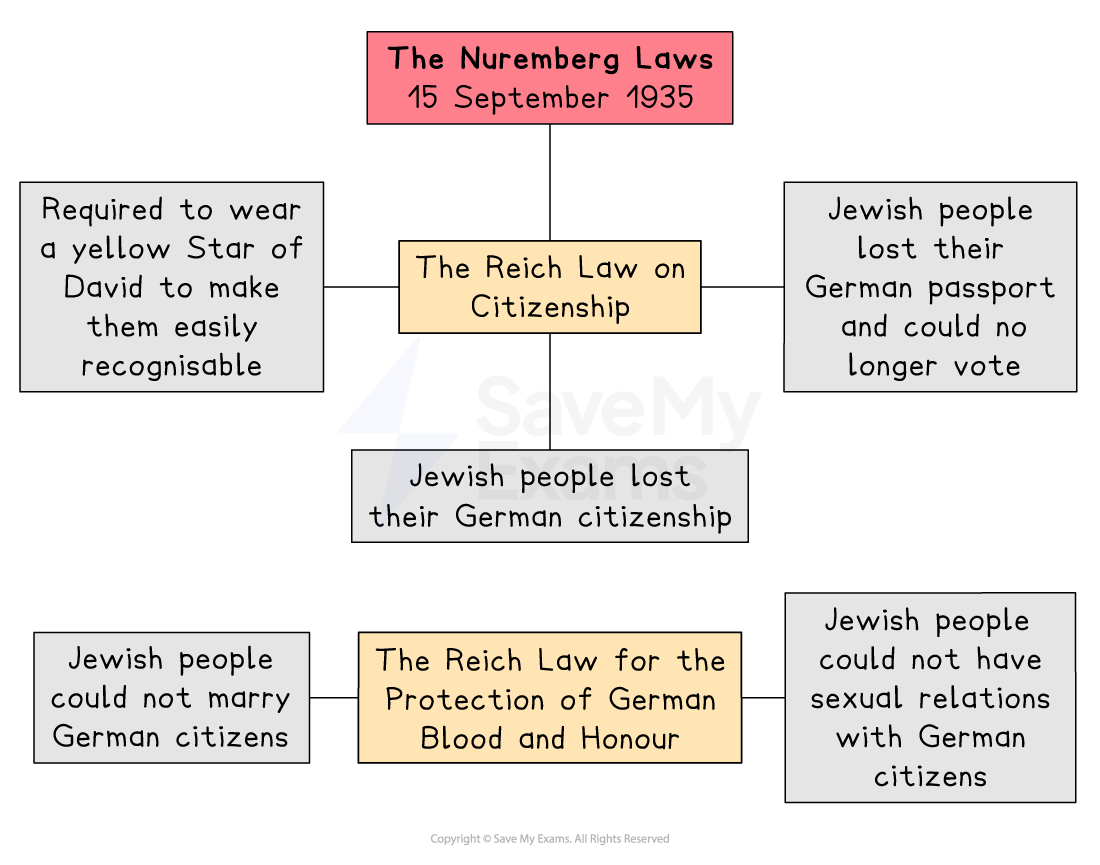
German people were classified as Jewish or not based on their grandparents
If they had three or more Jewish grandparents, the Nazis designated them as Jewish, regardless of religious beliefs
People who had been raised as Christians or who had converted to Christianity were still persecuted as Jewish people
From 1938, Jewish people had to register their possessions and also had to carry identity cards
'Kristallnacht'
The persecution of German Jewish people became deadly in November 1938 during an event known as ‘Kristallnacht’ (Night of Broken Glass)
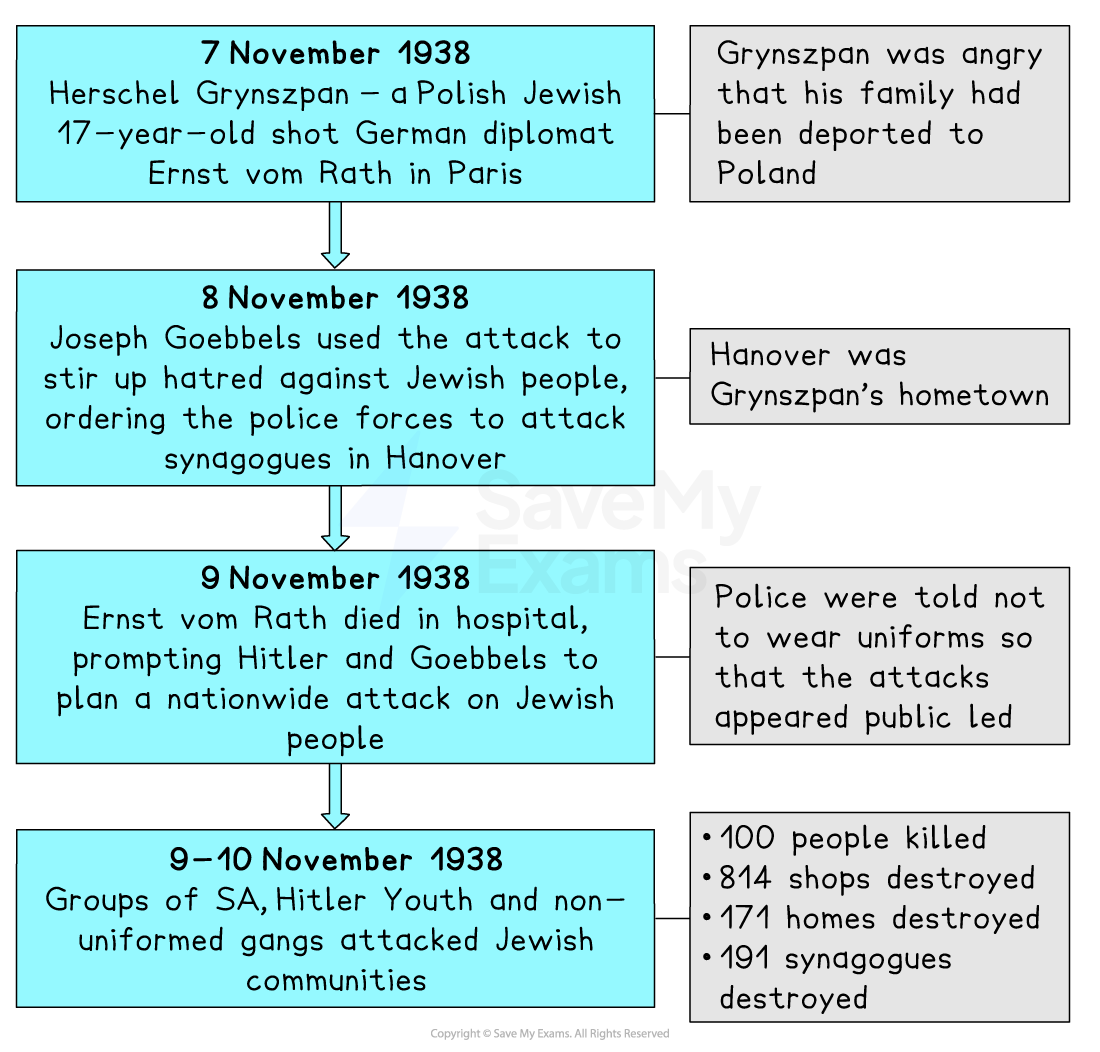
The Nazis blamed the Jewish communities for the violence and bloodshed of ‘Kristallnacht’
They imposed a fine of 1 million marks on the German Jewish community to pay for the repairs
Around 20,000 German Jewish people were rounded up in the aftermath and sent to concentration camps as a punishment for the violence
Examiner Tips and Tricks
Students can struggle to understand how the Nazis viewed Jewish people. Hitler and the Nazis considered Jewish people as a race, rather than a religion. A race is a permanent state that you are born into. A religion can be changed if the person desires. Therefore, the Nazis wanted to view Jewish people as a race. This means that no Jewish person could escape persecution, whether they practised Judaism or not.

Unlock more, it's free!
Join the 100,000+ Students that ❤️ Save My Exams
the (exam) results speak for themselves:

Was this revision note helpful?