How did the Weimar Republic Recover? (WJEC Eduqas GCSE History): Revision Note
Exam code: C100

Summary & Timeline

The first few years of the Weimar Republic had been chaotic both politically and economically. But from 1923 onwards, things improved and became more stable. Gustav Stresemann introduced a new currency to bring the hyperinflation crisis to an end. First, the Dawes Plan of 1924 and then the Young Plan of 1929 reduced the burden of the reparations imposed by the Treaty of Versailles. Germany appeared to be well down the road to recovery but questions remain over whether this was down to American loans.
Recovery from hyperinflation
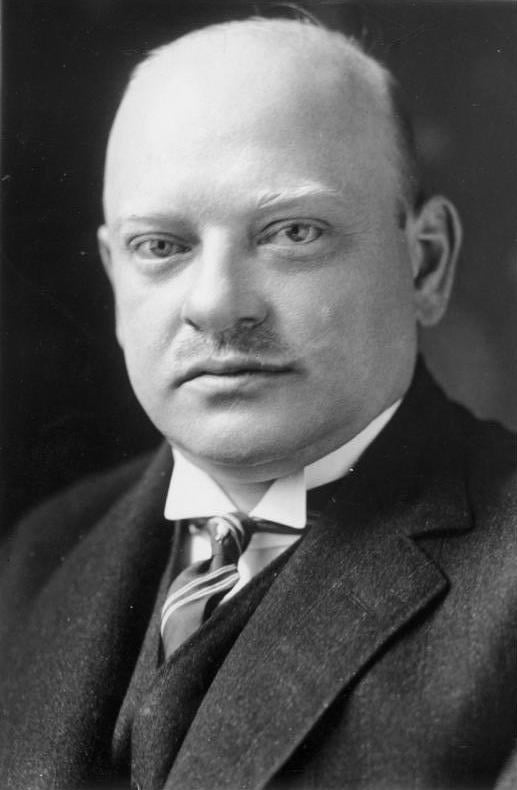
When Gustav Stresemann became German Chancellor in August 1923, he had three main aims:
To end the hyperinflation crisis
To rebuild relations with other European nations
To reduce the popularity of the German extremist parties
The Creation of the Rentenmark
Germany’s currency, the mark, was beyond saving:
The largest note was 100,000,000,000,000 (100 trillion) marks
The government believed there were 400.3 billion trillion marks in circulation
In November 1923, Stresemann created a new currency called the Rentenmark
One Rentenmark was the equivalent of a trillion marks
Stresemann established a new state-owned bank called the Rentenbank
The German public brought marks into the Rentenbank to transfer them into Rentenmark
The Rentenmark was a gold standard currency
This means that the value of the Rentenmark matched the price of gold
European countries trusted gold standard currencies
In August 1924, the government created the Reichsbank to control the Rentenmark
The Rentenmark was renamed the Reichsmark
This new currency had brought hyperinflation to an end and enabled German businesses to trade with foreign countries
Dawes & Young Plans
The Dawes Plan
Germany had been unable to meet the reparations payments stated in the Treaty of Versailles
Hyperinflation in 1923 led the Allies to consider reducing Germany’s reparations bill
The USA’s economy was booming , which meant it was in a position to help Germany
Britain and France were still repaying the money they had borrowed from the USA during the First World War
As a result, the USA had a surplus of money in their economy
Charles G. Dawes, an American banker, created a plan for Germany
The terms of the Dawes Plan
A temporary reduction of reparations to £50 million a year
A guarantee of US bank loans for German industry
The impacts of the Dawes Plan
Reparations became more manageable and enabled Germany to invest in its businesses
The Allies trusted that Germany would meet their reparation payments
Stresemann called off the passive resistance in the Ruhr and France agreed to leave
The USA gave $25 billion to German industry from 1924-30
Germany’s industrial output increased by 50% between 1923 and 1928
The government achieved more income from trade

The Young Plan
By the late 1920s, the Allies believed that they could provide Germany with more help
In June 1929, the Allies established a committee to reduce Germany’s reparations further
An American banker called Owen Young led the committee
In August 1929, the committee agreed upon the Young Plan
The terms of the Young Plan
Reduction of the total reparations bill from £6.6 billion to £2 billion
The Allies extended the time that Germany had to repay their reparation debts until 1988
The impacts of the Young Plan
The German government was able to lower taxes on its citizens
The German people then had more money to spend, which boosted German industry and created more jobs
This meant German companies made higher profits, meaning they paid more in tax, which gave the government more money to spend
There was less pressure on Germany to pay off the reparations debt
This improved relations between Germany and the Allies
France decided to leave the Rhineland in 1930
The Young Plan created a favourable reaction in Germany
In 1929, 85% of voters were in favour of the Young Plan. This was roughly 35 million German citizens
Weimar’s insistence on fulfilling the reparations payments outraged Germany's extremist parties:
In his speeches, Hitler stated that Weimar's consent to the extension of the reparations deadline was ‘passing on the penalty to the unborn’
Did Weimar Germany Economically Recover by 1929?
The strength of Weimar Germany’s economic recovery remains a topic for historians to this day
Arguments that Weimar Germany economically recovered
Stresemann’s policies facilitated Weimar’s ‘Golden Years' from 1924 to 1929
Living standards improved
Average working wages increased
Unemployment reduced
Germany fulfilled its reparation payments until 1929
There was no repeat of the occupation of the Ruhr
Arguments that Weimar Germany did not economically recover
Britain, France and Germany were gambling their economies on the USA’s prosperity
Stresemann was aware of the dangers involved in accepting American loans
In 1929, Stresemann stated that Germany was “dancing on a volcano”
If the USA recalled the loans or experienced a depression, the ‘volcano’ would erupt and destroy the stability of Weimar Germany
This occurred in 1929 due to the Wall Street Crash
Germany still owed a large amount of reparations
Germany took 92 years to pay off their reparations debt
German Chancellor Angela Merkel made the final payment in October 2010
Examiner Tips and Tricks
It is important to understand that not all Germans were affected equally by the financial situation in Germany in the early 1920s.
Many working-class people benefited overall as they did not have savings to lose during hyperinflation and many of the new jobs created by the Dawes Plan investments were manual, factory jobs.
Big businesses also benefited from the investment and were able to pay off debts during the hyperinflation crisis
However, farmers suffered from the effects of a global agricultural recession throughout the 1920s.
Also, the middle classes - such as civil servants, teachers and small business owners - had seen their savings wiped out by hyperinflation and did not directly benefit from the investments from the Dawes Plan.

Unlock more, it's free!
Join the 100,000+ Students that ❤️ Save My Exams
the (exam) results speak for themselves:

Was this revision note helpful?
