Stresmann & Improved Relations with Europe (WJEC Eduqas GCSE History): Revision Note
Exam code: C100

Summary & Timeline
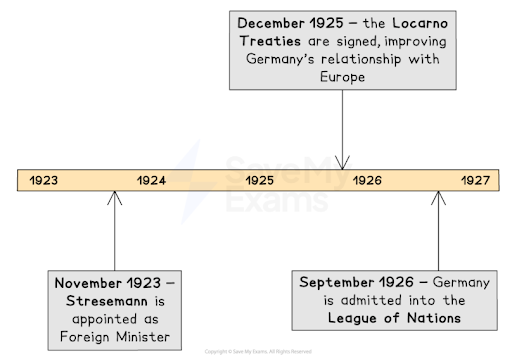
In November 1923, Gustav Stresemann lost his position as Chancellor and was appointed Germany’s Foreign Minister. The next few years saw Germany’s relations with other countries improve dramatically through the signing of the Locarno Pact, the Kellogg-Briand Pact and Germany’s entry into the League of Nations.
One of the consequences of this was increased investment in Germany, particularly from the USA, which led to things becoming more stable both politically and economically. The arts and culture also flourished in this time and some women took advantage of the new freedoms that the Weimar Republic offered.
The Locarno Pact
The Locarno Pact was a series of agreements between Germany, Britain, France, Italy and Belgium
The nations met in Locarno, Switzerland, on 16th October and signed the pacts on 1st December 1925
All nations entered the agreements as equals
This was unlike the diktat of the Treaty of Versailles
The Terms of the Locarno Pact
France and Germany promised to keep the peace with each other
Germany accepted its western borders as stated in the 1919 Treaty of Versailles
This infuriated the extremist parties in Germany
All members promised to keep the Rhineland demilitarised
To explore the possibility of admitting Germany into the League of Nations
Impact of the Locarno Pact
Stresemann considered the Locarno Pact as his greatest achievement because the terms:
Reduced the possibility of future wars
Improved the reputation of the Weimar Republic nationally and internationally
In 1926, the Nobel Prize was awarded to Stresemann and French Foreign Minister Aristide Briand
The League of Nations
What was the League of Nations?
The League of Nations was a forum where countries could discuss problems before resorting to armed conflict
Woodrow Wilson, the American President, played a leading role in the creation of the League of Nations
It was based on his 14 Points
Part 1 of the Treaty of Versailles established the League
The League did not formally meet until 10th January 1920
For a country to join the League of Nations as a permanent member, it had to receive two-thirds of the members’ votes
A country could leave the League if it gave two years' notice
Why was Germany originally not a member of the League of Nations?
Clemenceau, the French President, wanted revenge at the end of the First World War
He believed that Germany had started the conflict and should be punished
Due to Clemenceau’s anger, the Treaty of Versailles specifically banned Germany from joining the League of Nations
What caused Germany to join the League of Nations?
As a result of the Locarno Pact, the League of Nations met with Stresemann to discuss membership
The Council settled serious disputes between countries
In September 1926, the League agreed to accept Germany as a member
Impacts of joining the League of Nations
Joining the League had both positive and negative impacts on Germany
Positive impacts
Boosted German citizens’ confidence in the Weimar Republic
Gained support for moderate parties
Negative impacts
Some people did not want anything to do with the League of Nations
It was associated with the hated Treaty of Versailles
Created anger among extremist parties
Kellogg-Briand Pact
French foreign minister Aristide Briand met with US Secretary of State Frank B. Kellogg to discuss further steps towards world peace
Although the USA was not in the League of Nations, they still believed in achieving world peace
On 27th August 1928, they assembled Germany and 61 other countries to sign the Kellogg-Briand Pact
What did the Kellogg-Briand Pact agree upon?
War should never be used as a means for resolving disputes between countries
Impacts of the Kellogg-Briand Pact
The Kellogg-Briand Pact had positive and negative impacts on Germany
Positive impacts
Boosted German citizens’ confidence in the Weimar Republic
The world saw Germany as a respectable and trustworthy state
They could enter into treaties as equals to the other signatories
Negative impacts
The pact did not remove the military restrictions imposed by the Treaty of Versailles
This angered extremist parties
Many Germans thought other countries would move towards disarmament
The pact did not promise this
Germany was still considerably weaker militarily than the rest of Europe, making Germany feel unsafe
US Investment in German Business
The American economy experienced a boom at the end of the First World War
America’s factories had been untouched by the fighting
It only joined the war in 1917
There was a large demand for American goods as European factories and economies gradually recovered from the war, adapted to peacetime
At the same time, Britain and France started repaying the enormous loans they had taken out from the US during the war
America had a lot of money to invest and to many Americans, Germany looked like a good place to spend their money
The USA gave $25 billion to German industry from 1924-30
Germany’s industrial output increased by 50% between 1923 and 1928
Political and Social Developments
Political Developments
Although no political party ever won a majority of seats in the Weimar Republic, 1924-29 was a period of much greater political stability
The moderate Social Democrats increased in popularity
Extremist parties like the Nazi Party and the KPD (communists) gained fewer votes
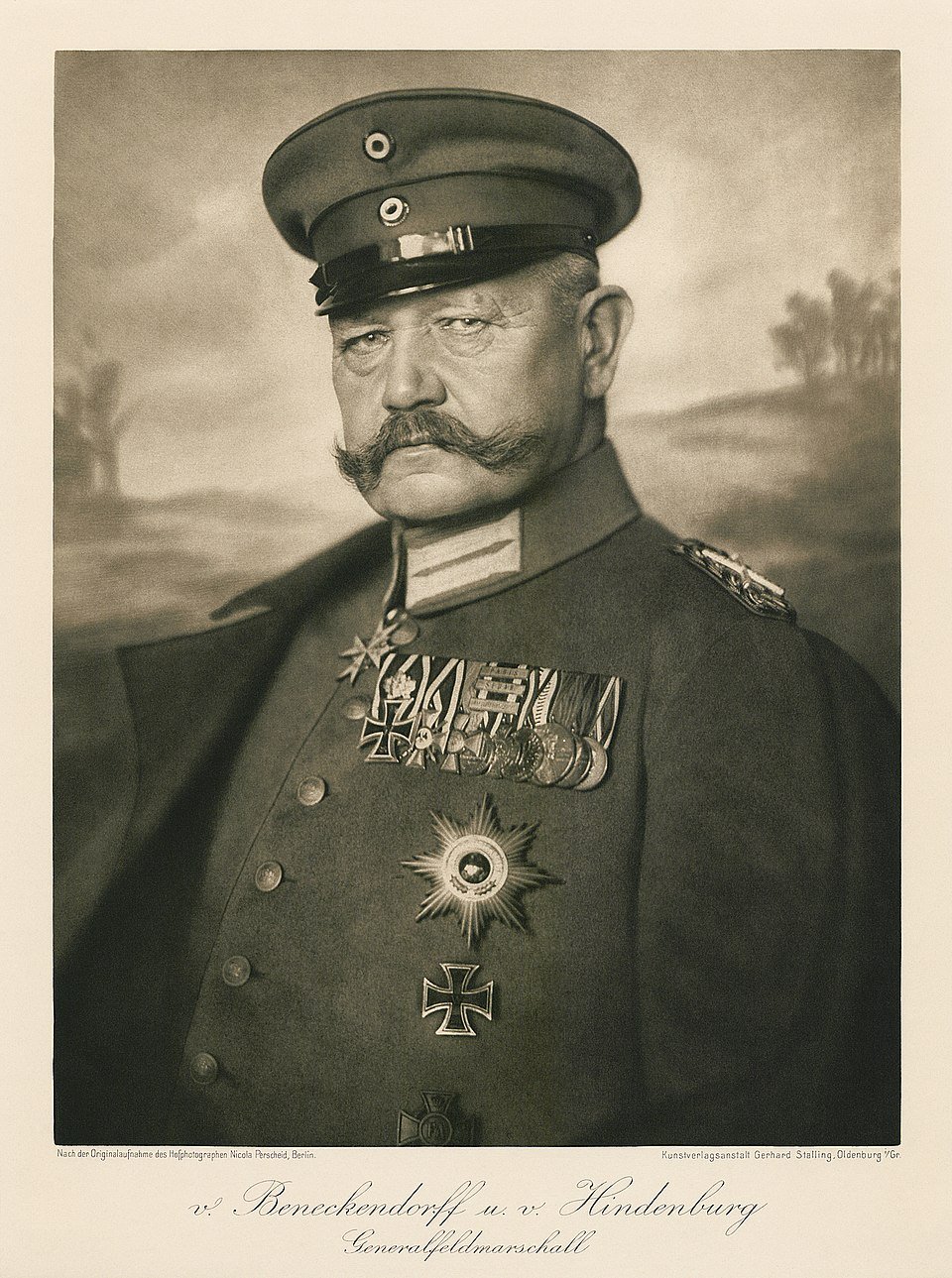
Much of this stability was down to the actions of Stresemann and Hindenburg
Stresemann had solved the hyperinflation crisis and made Germany more popular and respected abroad
Hindenburg, a Field Marshal and former war hero, was elected President in 1925
He was a member of the ‘old guard’ and by becoming president, he seemed to symbolise an acceptance of the Republic and democracy
Social Developments
More than two million homes were built in Germany between 1924 and 1931
Homelessness was reduced by over 60 per cent by 1928
The quality of many German homes was also improved
The Unemployment Insurance Law was passed in 1927
This required workers and employers to pay into a national scheme that provided benefits for people who had lost their jobs
War veterans and war widows also received benefits
The wages of many Germans who were in work increased, leading to an improvement in their standard of living
By 1928, Germany had some of the best-paid workers in Europe
The Weimar Constitution had given all women over 20 the right to vote and also introduced increased equality in education, pay and opportunities
This led to an increase in the overall number of women who were employed and a particularly large increase in the number of professional women
There were 100,000 female teachers and 3,000 female doctors in Germany by 1933
Socially, women enjoyed more freedoms than they had before the war.
Many socialised unescorted and smoked tobacco, drank alcohol and embraced what were considered to be daring fashions at the time
Cultural Developments
Before the war, arts and culture had been strictly censored in Germany
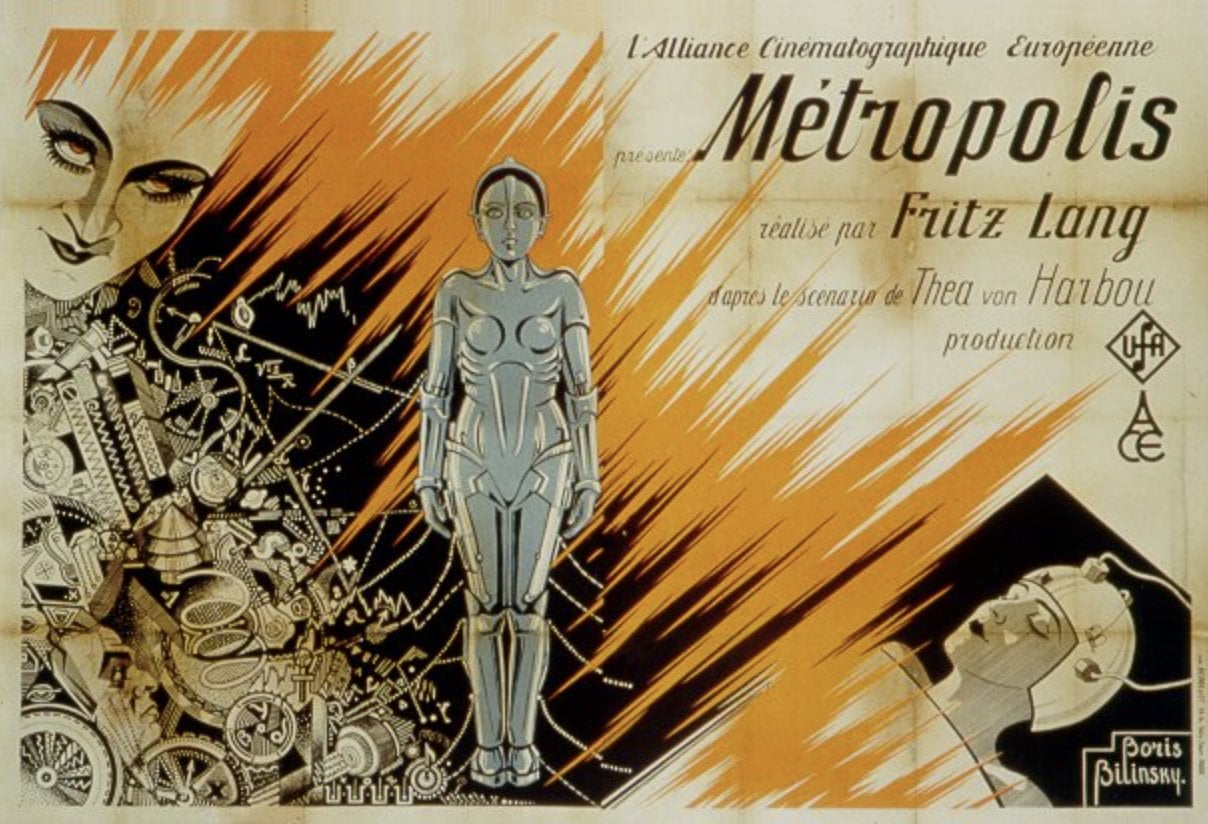
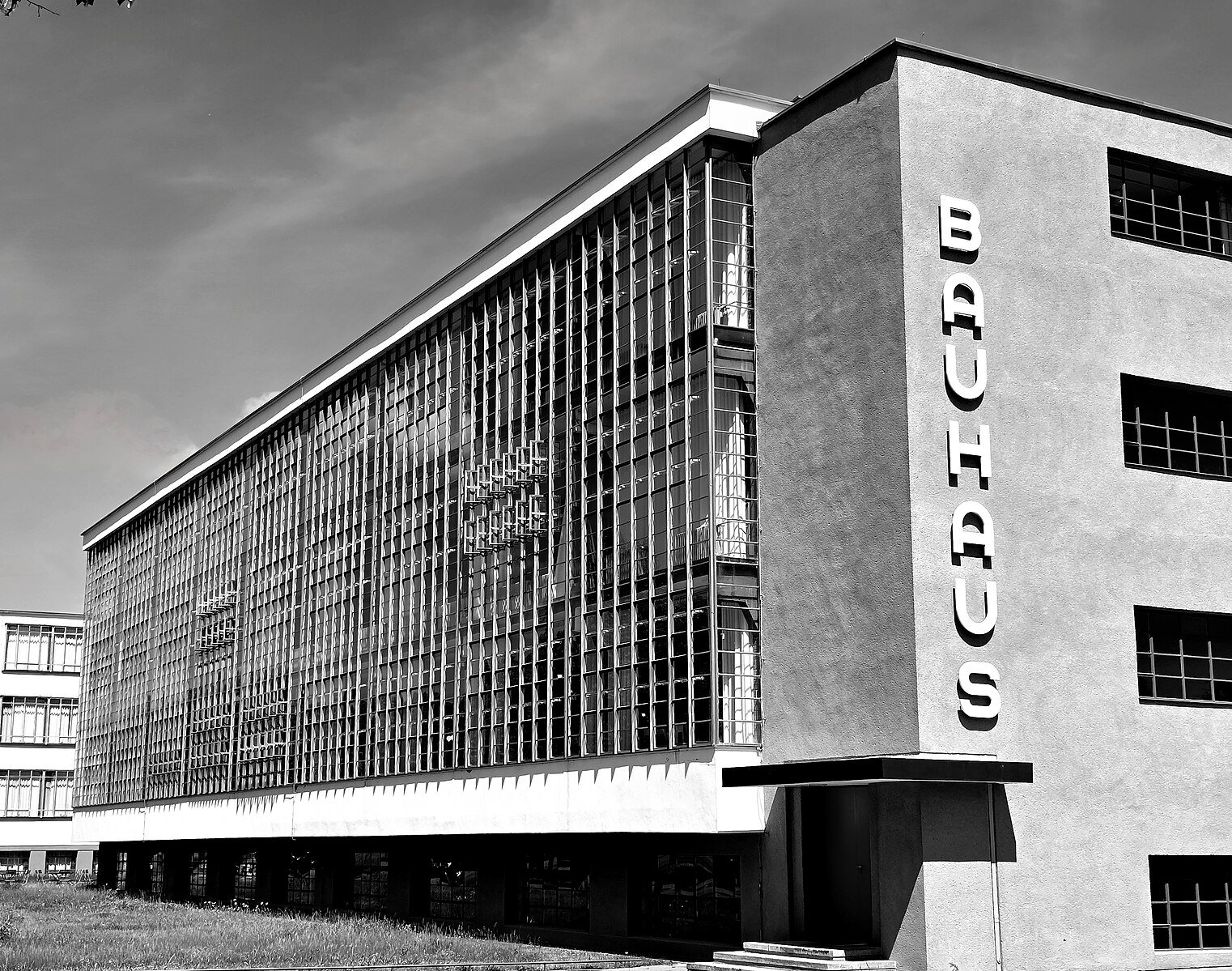
This was removed under the Weimar Republic, and there was an explosion of creativity in cinema, architecture, painting and the theatre
Berlin became the centre of the most exciting cultural developments in all of Europe
German cinema created international smashes like Metropolis and the design school Bauhaus influenced buildings and furniture around the world
Examiner Tips and Tricks
All of the questions on this paper will involve either a source or an interpretation. A source comes from the period you are studying, whereas an interpretation is written by a historian after the event. Historians use sources to help them develop their interpretations of why something happened.

Unlock more, it's free!
Join the 100,000+ Students that ❤️ Save My Exams
the (exam) results speak for themselves:

Was this revision note helpful?
