Control in Nazi Germany (WJEC Eduqas GCSE History): Revision Note
Exam code: C100

Summary
To maintain their grip on power, the Nazis used various methods to both intimidate and crush any opponents.
The SS grew to be a large, important organisation in Nazi Germany, and it fulfilled several roles. These roles included spying on potential opponents, running the concentration camps where their opponents were sent and forming a separate Nazi army, known as the Waffen SS.
The Nazi secret police, known as the Gestapo, struck fear into German society, as it was impossible to tell who the Gestapo officers or their informants were. Many Germans suddenly found themselves guilty of ‘political crimes’ due to their beliefs or lifestyles. Brutal concentration camps were opened to house people such as communists, homosexuals and trade union leaders. The Nazis imprisoned whoever they wanted for as long as they wanted, but still kept the legal system going, so it appeared as if there was justice in Germany. Trial by jury was abolished, and judges, who all had to be Nazis, decided on people’s guilt. The number of executions in Nazi Germany rapidly increased.
Use of the SS in Nazi Germany
The SS was created in 1925 to act as personal bodyguards to Hitler
SS stands for Schutzstaffel and literally means protection squad
Members had to be both ‘racially pure’ and radically loyal to the NSDAP
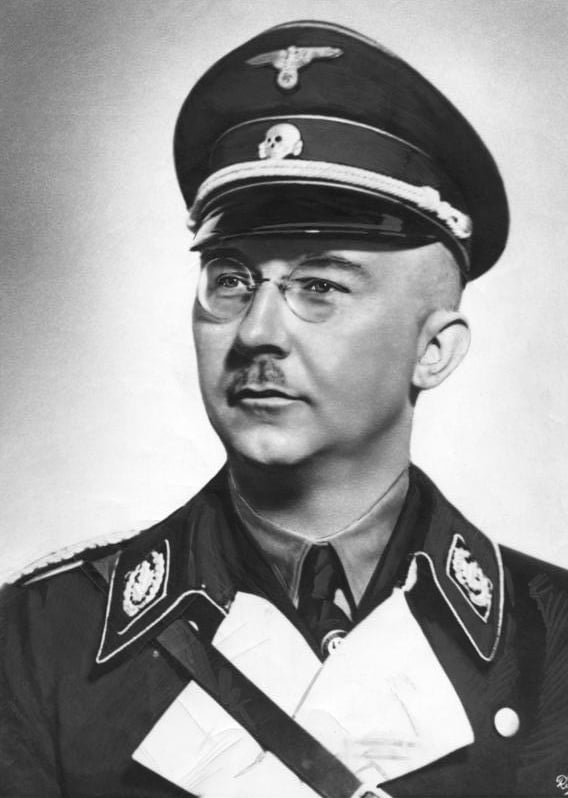
Heinrich Himmler became the leader of the SS in 1929
The SS wore black uniforms
The SS had several roles:
Protect Hitler and other Nazi leaders
Provide security during political meetings
Urge people to subscribe to the Nazi newspaper, Der Völkischer Beobachter
Marry ‘racially pure’ wives to create ‘racially pure’ children
The SS grew enormously under Himmler’s leadership, especially after the Night of the Long Knives
By 1939, membership of the SS had grown to 250,000
The SS broke down into three key units
The SD
The Waffen SS
The Death's Head Units
The SD
The SD was created in 1931 by Heinrich Himmler
Reinhard Heydrich was placed in charge
They gathered intelligence on anyone they suspected or knew opposed the Nazi Party, including:
Existing and new Nazi Party members
Leaders and activities within other political parties
Minority groups such as Jewish people, Jehovah’s Witnesses and Freemasons
Government officials
The Waffen SS
The Waffen SS was created in late 1939 by Heinrich Himmler
It was a military branch of the SS
They fought in most of the significant military campaigns in the war
During the Second World War, the Waffen SS grew to have 500,000 members
As dedicated and committed Nazis, members of the Waffen SS were willing to fight and die for Hitler
The Death's Head Units
The Death's Head Units were created in 1934 by Theodor Eicke, the first commandant of Dachau
Initially, the unit ran concentration camps
They were trained to treat prisoners harshly and cruelly
Members of the Death’s Head Units went on to play a crucial role in the extermination of millions of Jewish people during the Second World War
Use of the Gestapo in Nazi Germany
Hermann Goering initially created the Gestapo to 'investigate and combat all attempts to threaten the state'
Gestapo is short for Geheime Staatspolizei - Secret State Police
By 1934, Reinhard Heydrich, Himmler’s deputy, led the Gestapo
They were infamous for wearing plain clothes so they could not be easily identifiable
The Gestapo had several roles:
Tapping phones and spying on opponents
Arresting, questioning and torturing suspects
Around 160,000 people were arrested in 1939 for political crimes
Sending people directly to concentration camps using protective custody
Releasing information about concentration camp conditions to spread fear
They relied on denunciations from the public to target suspects:
Only around 10% of political crimes committed were discovered by the Gestapo, compared to 80% reported by ordinary citizens
Large cities such as Hamburg and Frankfurt only had 40-50 Gestapo agents, which demonstrates the reliance on informants and fear to reduce opposition
Concentration camps in Nazi Germany
Most arrests made by the police services were related to ‘political crimes’, which involved speaking out against the Nazi Party
Dachau was opened in 1933 and became the first concentration camp in Nazi Germany
Concentration camps were created to imprison many groups:
Minority groups such as Jewish people and Jehovah’s Witnesses
‘Undesirables’ such as homosexuals, prostitutes and Romani
Political opponents, including journalists, writers, intellectuals and communists
Conditions in concentration camps were awful, and inmates were forced to do hard labour
Control of the Legal System
The Nazi Party had control of the legal system
This allowed them to remove opposition under the illusion that it was fair and just
However, cases were often pre-determined and biased in favour of a conviction
Judges and lawyers
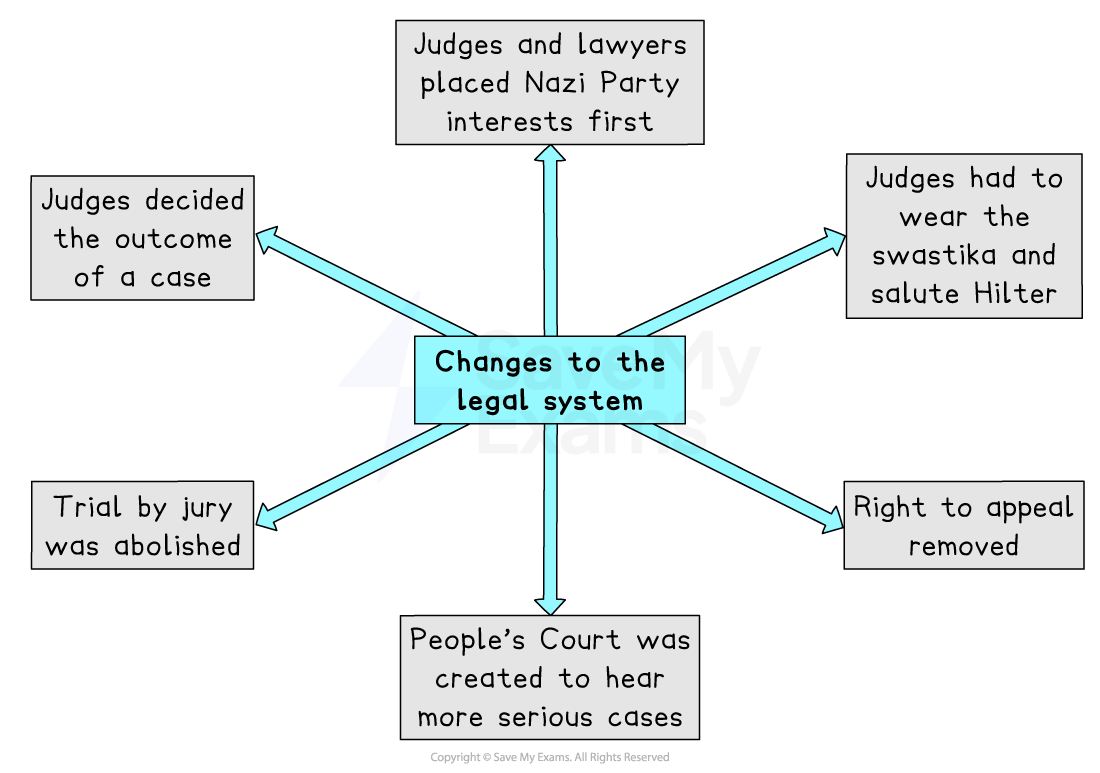
Judges and lawyers were required to prioritise the interests of the Nazi Party above all else
Judges joined the National Socialist League for the Maintenance of the Law
Judges were dismissed if they did not join
Lawyers joined the German Lawyers Front
Judges had to wear the swastika from 1936
Judges decided the outcome of cases, not the jury
Law courts
Trial by jury was removed
This meant that judges decided the outcome of the case
The People’s Court was introduced to hear cases of treason
Judges radically loyal to the Nazi Party were selected
Trials were held in secret
The right to appeal was removed
Nazi control of the legal system led to a rapid rise in the number of political opponents being executed:
Between 1930 and 1932, only eight people were executed
Between 1934 and 1939, this increased to 534 people
Examiner Tips and Tricks
In question 4 on this paper, you will be asked which of two sources is the most useful to a historian studying a particular event.
Start with an introduction where you briefly explain that both have their uses and their limitations
Evaluate how useful the first source is in terms of its content, provenance (who wrote it) and its wider context (using your own knowledge)
Use your own knowledge to make a judgement on how accurate the first source is
Evaluate how useful the second source is in terms of its content, provenance (who wrote it) and its wider context (using your own knowledge)
Use your own knowledge to make a judgement on how accurate the second source is
Reach an overall judgement on which of the two sources is most useful

Unlock more, it's free!
Join the 100,000+ Students that ❤️ Save My Exams
the (exam) results speak for themselves:

Was this revision note helpful?
