The USA’s Policy of Containment, 1947–49 (WJEC Eduqas GCSE History): Revision Note
Exam code: C100

Summary
The defeat of Nazi Germany saw the wartime allies of the USA and the USSR become enemies almost immediately. All of the countries that had been liberated from the Nazis by the Soviet Union remained under Soviet control. Fearful of communism spreading throughout the world and making its superpower rival even more powerful, the USA decided to step in to prevent any more communist takeovers. This policy became known as the Truman Doctrine and was named after the US President, Harry S. Truman. A key part of the Truman Doctrine was the Marshall Plan, which saw billions of dollars given to European countries in danger of falling to communist takeovers.
Why did the USA and USSR become rivals after 1945?
The USA and the USSR had fought alongside each other to defeat Nazi Germany and Imperial Japan during the Second World War
However, without common enemies, they very soon became rivals
After the war, the two countries became known as the superpowers
They had very different beliefs and were organised in completely different ways
The USA is a capitalist country
Capitalism is an ideology where everyone is free to own property and businesses to make money
By 1941, the main capitalist countries were the USA and Britain
The USSR was a communist country
Communism is an ideology where all property is owned by the state to ensure that everyone has a fair share
By 1941, the main communist country was the Soviet Union
Many Americans had a great fear of communism and were concerned about what the USSR would do after the Second World War ended
In 1945, the USA dropped two atomic bombs on Japan
Josef Stalin, the leader of the USSR, believed atomic bombs would soon be used to threaten the Soviet Union
Stalin set about trying to get an atomic bomb as soon as possible
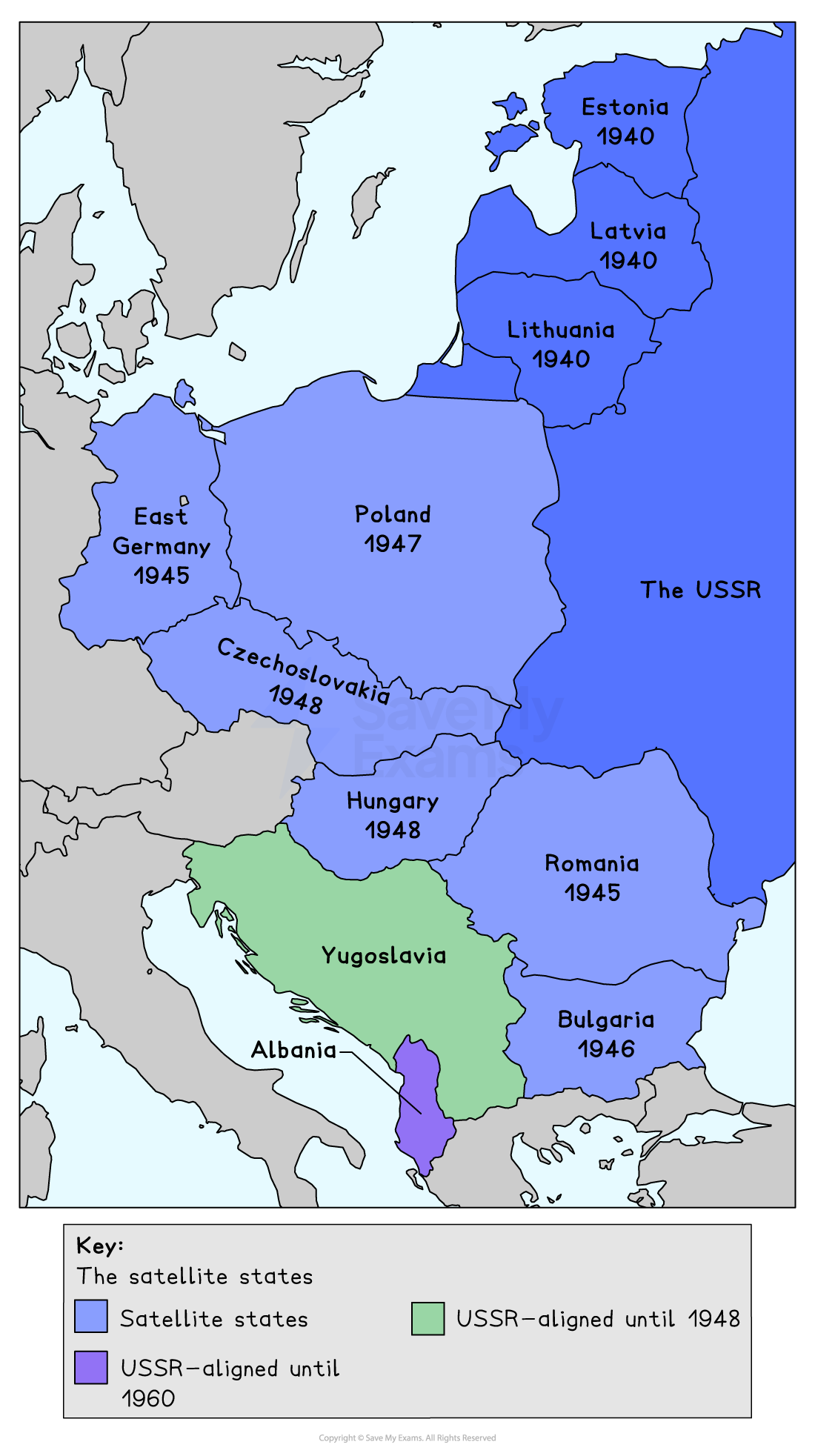
He also took control of much of Eastern Europe
Why did Stalin want control of Eastern Europe?
The Soviet Red Army had liberated many countries in Eastern Europe from Nazi control at the end of the Second World War
Stalin wanted to keep control of these countries to act as a ‘buffer zone’ between the East and West
These countries were called satellite states because of how they seemed to orbit the Soviet Union
The US President, Harry S Truman, became more and more concerned as each country fell under Soviet control
Containment of Communism
There were fears that more countries, such as Türkiye, Greece and Italy, could soon become communist and fall under the influence of the USSR
Truman’s policy to stop the spread of communism to any other countries became known as containment
The Truman Doctrine
Truman believed that poor and struggling countries that were rebuilding after the Second World War were more likely to be attracted to Communism
In 1947, he announced that the USA would not return to the isolationist policy it had before the war
Instead, it would intervene in any and every country that was in danger of becoming communist
This foreign policy became known as the Truman Doctrine
"I believe that it must be the policy of the United States to support peoples who resist being enslaved by armed minorities or by outside pressure. I believe that we must help free peoples to work out their own destiny in their own way.”
An extract from a speech by President Truman on 12th March 1947
The Marshall Plan
Truman realised that the USA would need to help poorer countries with financial aid to prevent them from becoming communist
After a visit to Europe, General George Marshall told Truman that ‘every’ country in Europe was at risk of turning to Communism because of how poor they were
He recommended that the USA provide these countries with economic aid to turn them away from communism
The US Congress passed the Marshall Plan after Czechoslovakia became communist in 1948
The Impact of the Marshall Plan
The Marshall Plan gave away $13 billion to 16 European countries in Western Europe
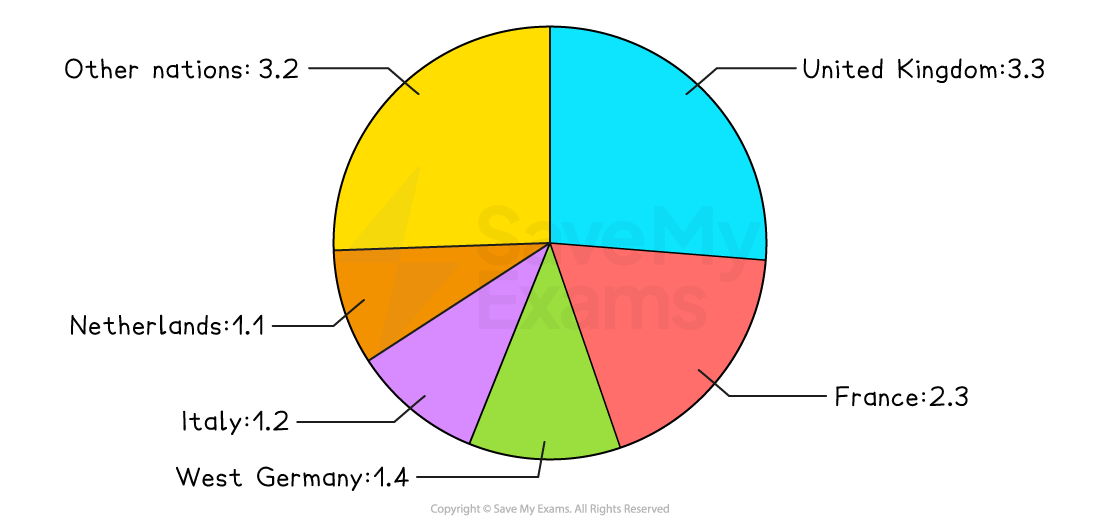
American money helped prevent Italy, Greece, Türkiye or any other European countries from turning communist
However, it increased tensions with the USSR
Stalin called the Marshall Plan ‘dollar imperialism’ because of how the USA was trying to expand its ‘empire’ using money
The Marshall Plan had divided the West from the East:
Satellite states were in support of the Soviet Union
Recipients of the Marshall Plan supported the USA
Examiner Tips and Tricks
Don’t confuse communism with socialism. They share similar features and are both left-wing beliefs. However, socialism has established classes, permits belief in religion and allows individuals to own property.

Unlock more, it's free!
Join the 100,000+ Students that ❤️ Save My Exams
the (exam) results speak for themselves:

Was this revision note helpful?