Changes in Youth Culture (WJEC Eduqas GCSE History): Revision Note
Exam code: C100
Summary
The generation of Americans who became young adults in the 1950s saw the world very differently from their parents. They also dressed, spoke and acted “differently”. A “generation gap” had opened up between parents and their teenage children.
In the 1960s, that gap increased further. It was not just driven by differences in views over fashion, music and hair length, but the Vietnam War and how American society should be organised. College students began organising protests against the war involving hundreds of thousands of Americans. In 1970, at Kent State University, four protestors were shot dead, which led millions of people to protest.
Changes in Youth Culture in the USA
After the Second World War ended, America experienced an economic boom
Many American parents wanted their children to have better lives and better opportunities than had been available to them
They encouraged and paid for their children to finish high school and attend college
This meant there was a generation of young Americans who had more money and more free time than any other young generation in history
They started to dress, speak, act and listen to music that was completely different to their parents
The differences between parents and their children were referred to as the ‘generation gap’
The younger generation was soon known as teenagers
They became associated with rock’n’roll music and rebellion

In the 1960s, many young people started growing their hair and questioned the lifestyles of their parents even further
They became known as the ‘hippy generation’ after the hippies who embraced an alternative lifestyle, took illegal drugs and wore flowers in their hair
Their beliefs were summed up by the phrases “flower power” and “make love not war”
Changes in Student Protest in the USA
During the 1960s, the Vietnam War became the key issue in the disagreement between the generations
Many young people were fiercely opposed to the war, and student organisations, like Students for a Democratic Society (SDS), helped organise protests against it
In 1968, over 400,000 students were involved in around 100 demonstrations against the war
In 1969, over 700,000 protestors marched in Washington, DC, many of them students
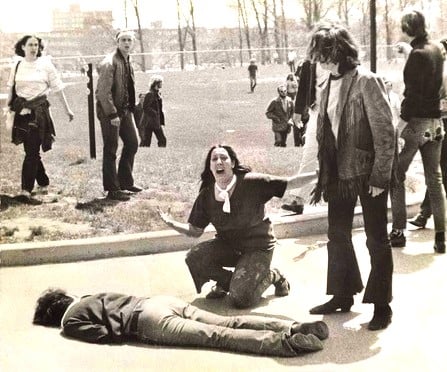
Things took a deadly turn at Kent State University in 1970 when members of the National Guard opened fire on anti-war protesters
Between 61 and 67 shots were fired,
Killing four students and injuring an additional nine students
The deaths caused uproar, and hundreds of colleges across America were forced to close as over 2 million students refused to attend classes in protest

Unlock more, it's free!
Join the 100,000+ Students that ❤️ Save My Exams
the (exam) results speak for themselves:

Was this revision note helpful?