Education & Civil Rights (WJEC Eduqas GCSE History): Revision Note
Exam code: C100

Summary & Timeline
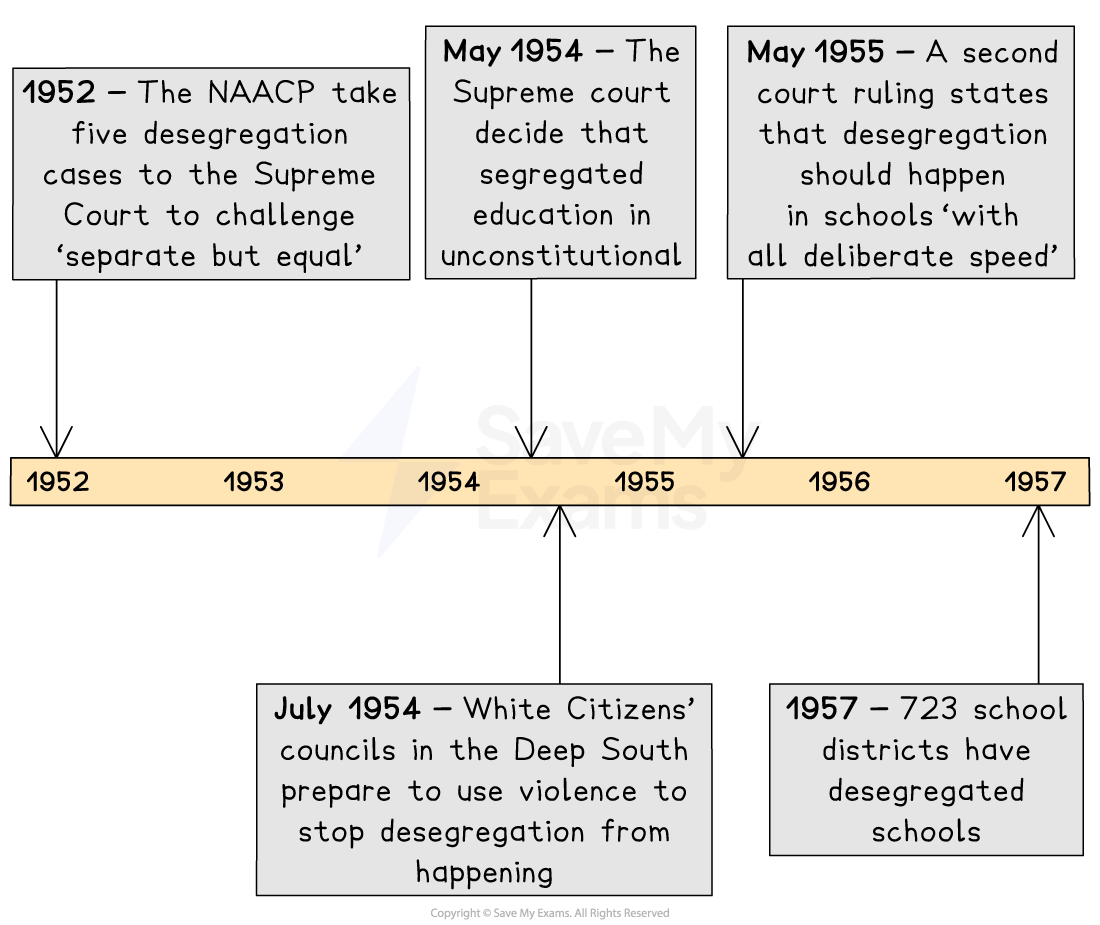
The legal case for segregation in American society was first challenged in the education sector. The Plessy v. Ferguson court case in 1896 had ruled that segregation in schools was legal as long as the education provided was ‘separate but equal’. This was challenged by a schoolgirl from Kansas, Linda Brown, and in 1952, the Supreme Court ruled that segregation in American schools had to end. However, the Supreme Court did not provide a deadline for desegregation to take place, and many schools in Southern States ignored the ruling.
When a school in Little Rock, Arkansas, was forced to desegregate in 1957, the State Governor of Arkansas sent 1,000 National Guard troops to block the entry of nine black students. President Eisenhower sent in troops from the Airborne Division to ensure the black students could get into the school and were protected. The State Governor. Orval Faubus responded by closing all schools in Arkansas for a year.
Eventually, in 1959, the Arkansas schools reopened and were desegregated. However, schools in other states, such as Mississippi, remained segregated into the 1960s. This was challenged when a black man named James Meredith attempted to enrol at Mississippi University. He took the university to the Supreme Court and argued that their failure to admit him was racial segregation. In 1962, the Supreme Court agreed with him, but Mississippi University of Mississippi refused to allow Meredith to enter the college buildings. President Kennedy responded by sending federal marshals to protect him and ensure he could enrol. This led to deadly riots by anti-desegregation protestors, but Meredith still completed his studies.
Timeline
Brown vs Topeka
The policy of segregation in education had been established in law in the US since the Plessy v. Ferguson court case in 1896.
In this case, the Supreme Court ruled that racial segregation did not break the American Constitution
The court ruled that the educational facilities available to both groups had to be ‘separate but equal’
This meant black children went to separate schools from White children
The schools that black children attended had less funding and poorer facilities than those attended by white children
The Plessy v. Ferguson ruling was challenged in 1954 by Linda Brown
Linda Brown was a black student from Kansas who had to walk past a school for white students before she reached her nearest ‘blacks only’ school
She believed this was unfair
With the support of the NAACP, she took the local Topeka Board of Education to court
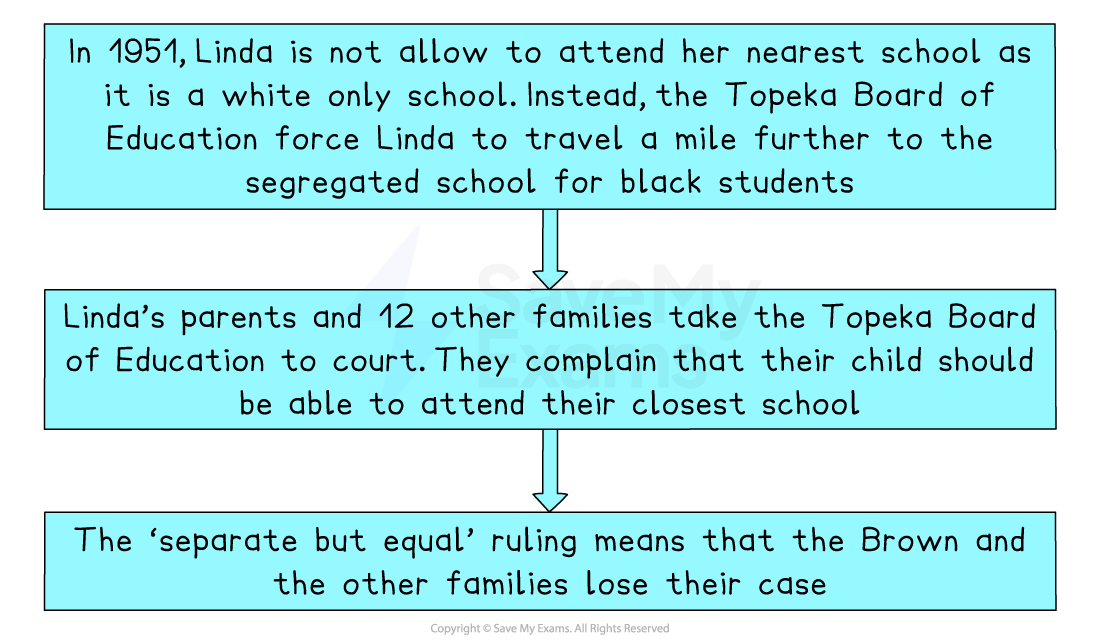
After losing their case in Kansas, Brown v. Topeka went to the Supreme Court in 1952
Brown’s lawyers argued that segregated education led to poorer results, mental stress and lower self-esteem for Black students
After 18 months of deliberating, the Supreme Court finally decided on 17 May 1954 and overturned the Plessy v. Ferguson ruling
Linda Brown had won her case
"Separating White and Black children in schools had a detrimental (damaging) effect upon Black children…We conclude that in the field of public education the doctrine of ‘separate but equal’ has no place. Separate educational facilities are inherently unequal.”
An amended extract from the closing judgement of the Supreme Court
The Impact of Brown vs Topeka
The Brown v. Topeka ruling meant that segregation in the education system had been judged to be unconstitutional by the highest court in the land
However, the ruling only stated that desegregation should happen ‘at the earliest possible speed’ and did not set a deadline
As a result, three years after the Supreme Court judgement, although 723 school districts had desegregated
2.4 million black children were still being taught in ‘blacks only’ schools
In the longer term, Brown v. Topeka set a legal precedent that meant other segregation laws could be challenged in the courts
Segregation in education had been judged to be unconstitutional
Therefore, segregation in transport, restaurants, cinemas, etc must also be unconstitutional
Little Rock High
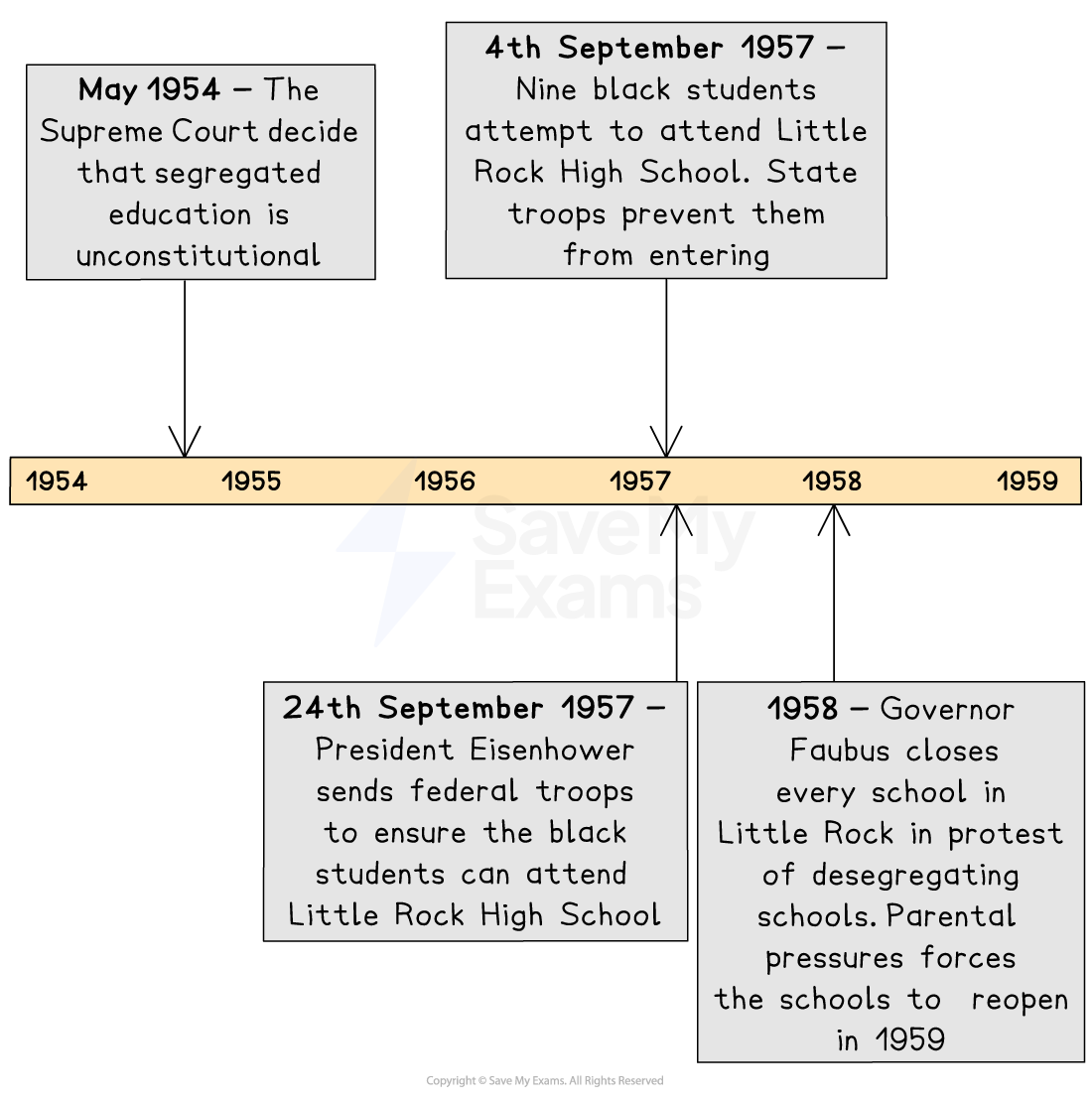
In 1957, over three years after the Brown v. Topeka Supreme Court judgement, Little Rock High School in Arkansas was forced to desegregate
The State Governor of Arkansas was called Orval Faubus
Faubus was a strong opponent of school desegregation
Arkansas, a southern state, wanted to keep segregated schools
Originally, 75 black students had applied to join the previously ‘whites only’ Little Rock High School
Just 25 students were accepted
A campaign of intimidation led to just nine taking up their places
Those students became known as the Little Rock Nine
When the nine black students arrived for their first day of school on 3 September 1957, their entry was blocked by soldiers from the Arkansas State National Guard
The State Governor, Orval Faubus, claimed there was a danger of violence and public disorder if the black students enrolled and ordered the soldiers to surround the school
On 4 September, Faubus ordered the National Guard to leave, and the nine students were faced with a crowd of 1,000 angry protestors and hundreds of reporters
Fears for their safety meant that police guards escorted the Little Rock Nine home
Governor Orbus was defying a Supreme Court ruling, and the coverage of events at Little Rock was damaging the USA’s reputation abroad
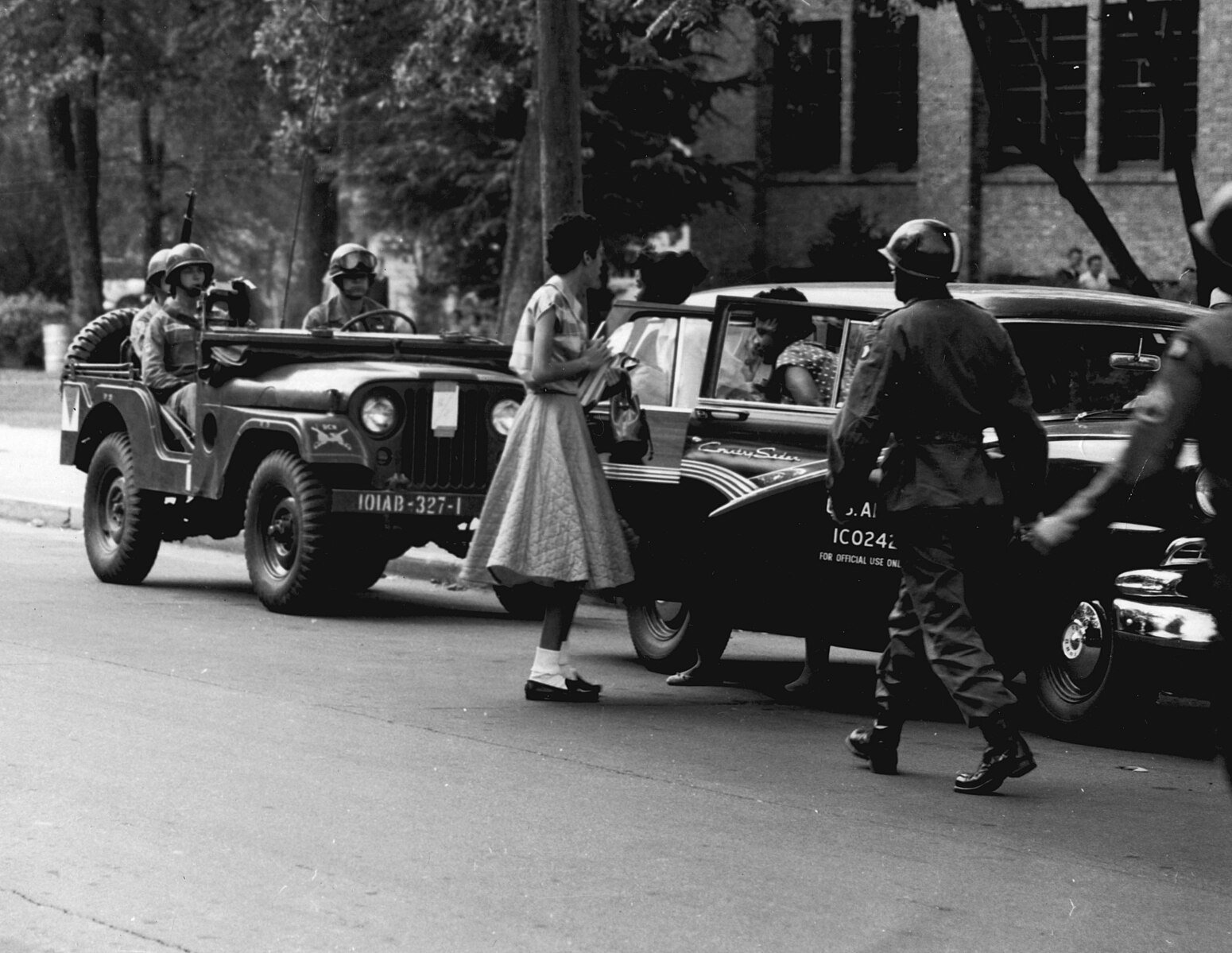
President Eisenhower decided to intervene by sending soldiers from the 101st Airborne Division to protect the nine Black students for the rest of the school year
Orbus responded by closing every school in Little Rock from the following September to prevent desegregation from taking place
The schools remained closed for the entire academic year until a combination of pressure from parents and a Supreme Court ruling caused Orbus to reopen them in 1959
The events at Little Rock had shown that the President was willing to become involved and even use soldiers to enforce the Supreme Court ruling
It also brought enormous international media attention to the issue of civil rights in the United States
Many people, including many Americans, were shocked by the level of racism in the Southern States
The James Meredith Case
Seven years after the Brown v. Topeka ruling, there were still no desegregated schools in the state of Mississippi
When a black man named James Meredith applied to study at the University of Mississippi after serving in the US Air Force for five years, his application was twice rejected
The NAACP supported Meredith and took Mississippi University to court
Arguing that his failed applications were due to racism
In June 1962, the Supreme Court agreed and ruled that Mississippi University had to accept Meredith as a student
The University refused to accept the court ruling and physically prevented Meredith from entering the campus buildings
President Kennedy sent 320 federal marshals to protect Merideth, ensure he enrolled and escort him around campus
The federal marshals were outnumbered by over 2,000 pro-segregation protesters who threw firebombs and rioted
The riots led to two people being killed and 166 marshals and 210 protesters being wounded
Kennedy sent 2,000 troops to regain control, and 300 soldiers remained on campus until Meredith had completed his studies
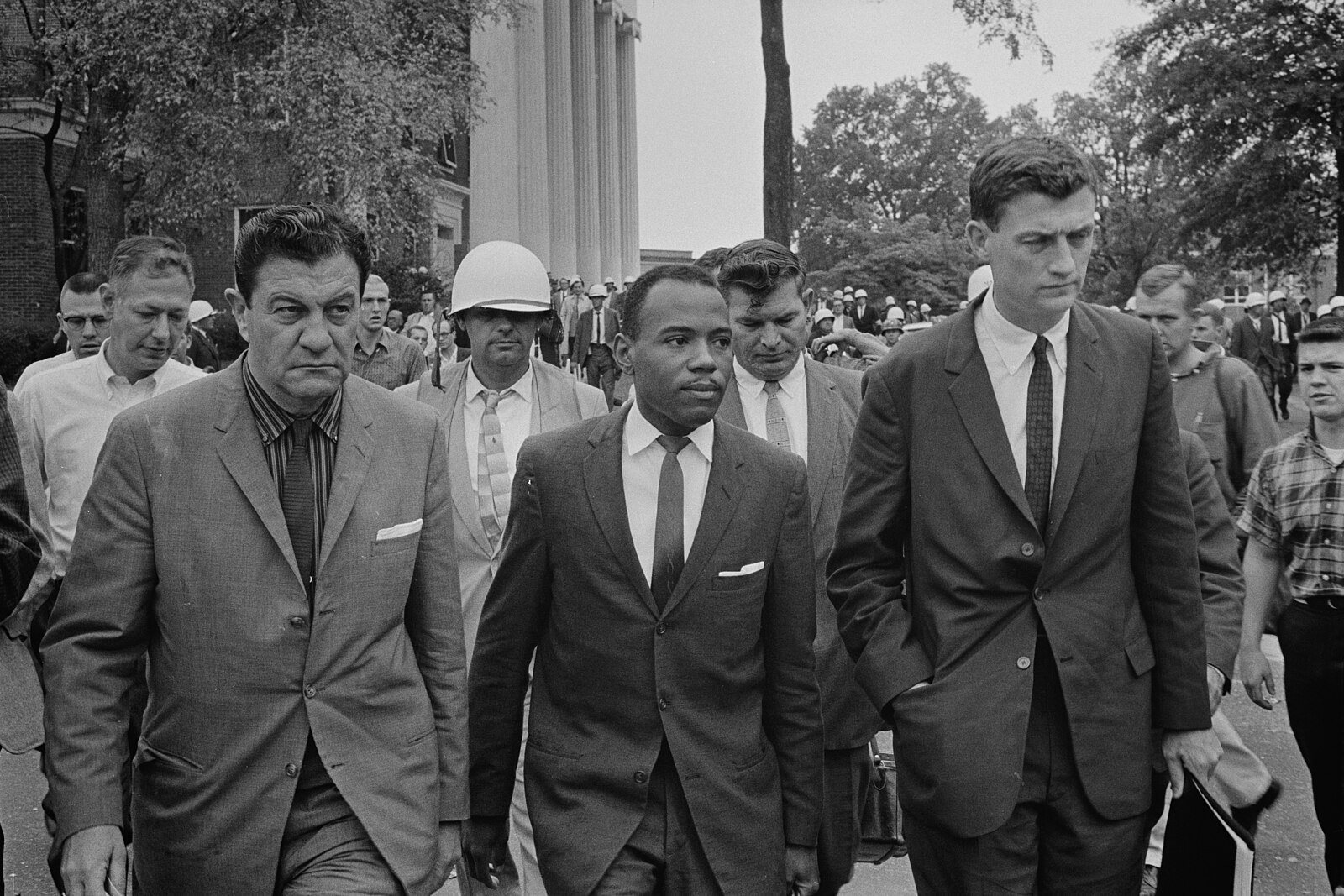
The Meredith case showed once again that the federal government was willing to get involved to enforce desegregation, regardless of the civil unrest caused
Examiner Tips and Tricks
Question 4 requires you to ‘Explain why’ something happened. Connectives are extremely useful when answering these types of questions. Words and phrases such as ‘Therefore,…’, ‘As a result,…’, ‘Consequently,…’ and ‘This led to…’ highlight to the examiner that you understand what you are being asked to do and are plotting out how one event led to another.

Unlock more, it's free!
Join the 100,000+ Students that ❤️ Save My Exams
the (exam) results speak for themselves:

Was this revision note helpful?