Malcolm X and the Black Power Movement (WJEC Eduqas GCSE History): Revision Note
Exam code: C100

Summary
During the early 1960s, not all campaigners agreed with the non-violent methods used by Martin Luther King. Many black Americans felt that peaceful protest was achieving too little, especially in communities that continued to face poverty, discrimination and police violence. The ideas of Malcolm X became increasingly influential during this time. He encouraged Black pride, self-confidence and the belief that people had the right to defend themselves when necessary. His messages inspired many to take greater control of their own lives and helped the rise of the Black Power movement. Supporters of Black Power argued that real progress would only come through strength, unity and pride in Black culture. Their growing influence shaped civil rights campaigns across the United States in the late 1960s.
Who was Malcolm X?
Malcolm X was born into poverty and spent time in prison as a young man
His beliefs and ideas changed throughout his life, but he was known for arguing in favour of:
Using armed resistance when necessary
Racial separation
Rejecting non-violence
Promoting Black pride and culture
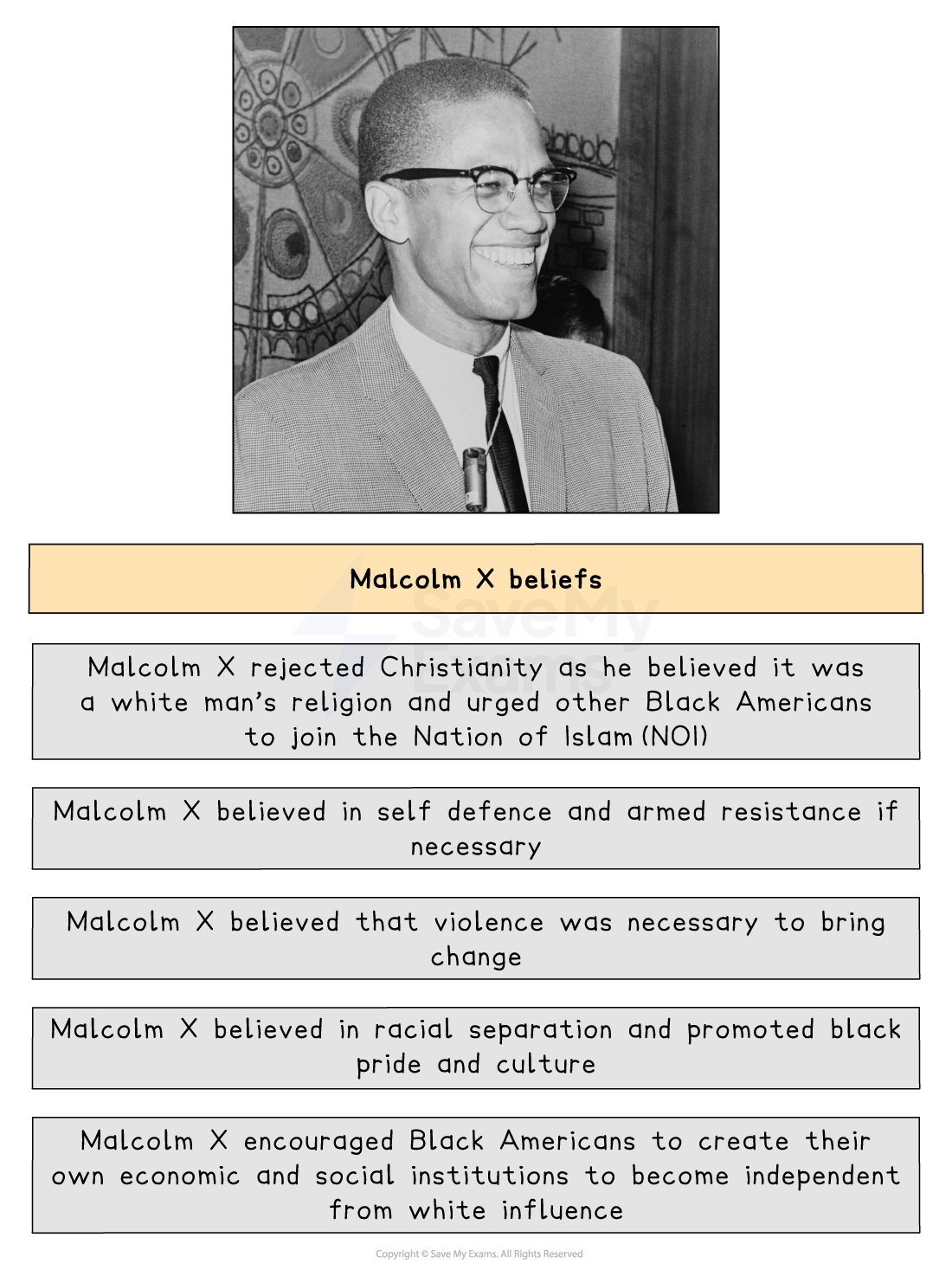
Malcolm X and the Nation of Islam (NOI)
Impact of Malcolm X
Malcolm X was a fiercely intelligent and highly effective public speaker
He was very charismatic and confrontational
His ability to inspire and educate led to the Nation of Islam (NOI) membership expanding to over 100,000 by 1963
Many people believe his popularity directly led to the formation of the Black Power movement
His approach also attracted a great deal of opposition and claims that he encouraged violence and hatred
He had called on black people to defend themselves by ‘by any means necessary’ and described white people as ‘collectively’ evil in a TV interview
Malcolm left the Nation of Islam in 1964 after falling out with its leader, Elijah Muhammad
He then travelled to Mecca and was profoundly affected by the shared experience with Muslims of different nationalities and skin colours
It caused him to reject his old beliefs about racial separation
He decided to enable cooperation between the civil rights groups by:
Setting up the Organisation of Afro-American Unity (OAAU)
Founding a religious group called Muslim Mosque Inc
He met with the Congress of Racial Equality (CORE) and the Student Nonviolent Coordinating Committee (SNCC) leaders to find a way of working together to advance the civil rights cause
Any plans Malcolm may have had for increased cooperation were ended when he was shot 15 times by an NOI assassin
He had previously survived his home being firebombed by members of the NOI
Over 15,000 people attended his funeral on 27 February 1965
The Black Power Movement
By 1963, many black Americans had become frustrated by what they saw as a lack of progress made by the non-violent approach
Malcolm X’s confrontational stance appealed to a lot of people who were living in both segregated and impoverished conditions
These people were angry at the treatment they received from white America and the treatment their ancestors had received
Some black Americans began to argue that they shouldn’t wait for white Americans to grant them improved rights
They also argued against accepting help from white Americans who supported their cause
Instead, they took pride in their culture and heritage and demanded change
This approach to achieving improved civil rights became known as Black Power
Members of the Black Power movement believed that self-defence was justified
They also campaigned on social issues such as unemployment and poor housing in the black community
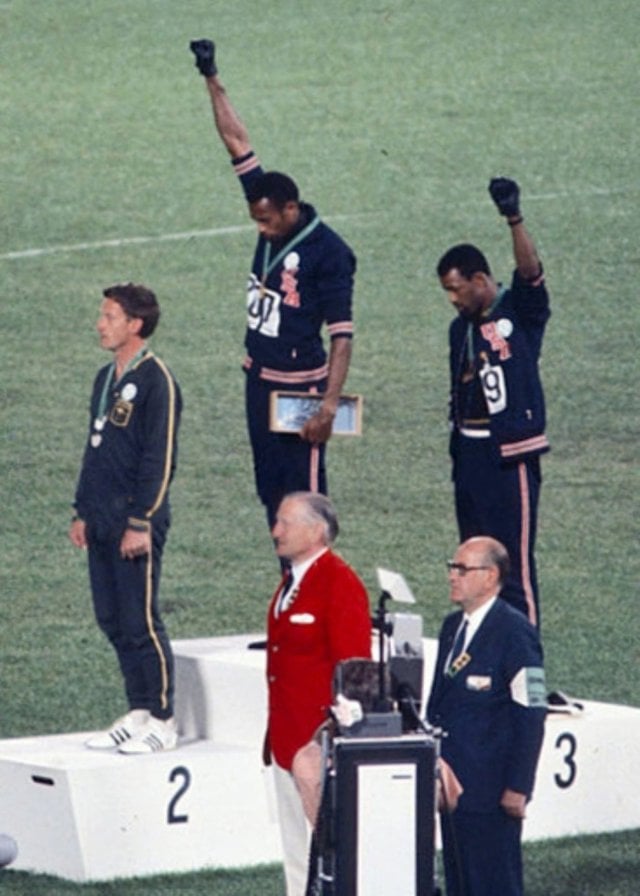
The Black Power Movement was brought to the attention of the entire world during the Mexico Olympics of 1968
Tommy Smith and John Carlos were gold and bronze-medal-winning athletes in the 200 metres
As the US national anthem was played during their medal presentation, the pair bowed their heads and raised a gloved fist into the air
This had become known as the Black Power salute
The protest meant that the Black Power movement gained enormous media attention
It inspired many Black Americans to join their struggle
However, it came at a huge personal cost to Smith and Carlos, who:
Received numerous death threats
They were widely criticised by politicians and the media
Suspended from the US Olympic team
The Black Panthers
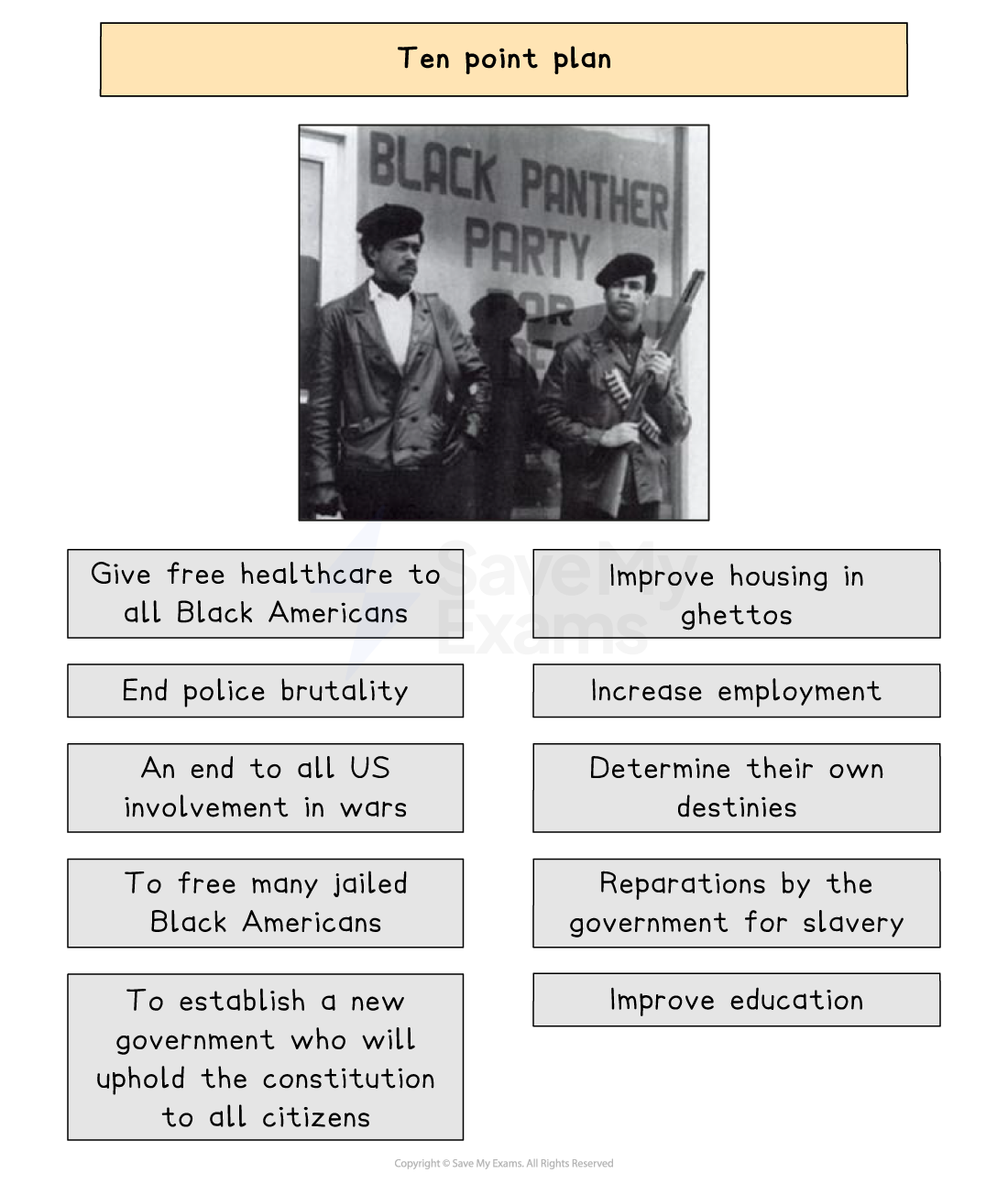
The Black Panther Party for Self-Defense was established by Huey Newton and Bobby Seale in 1966
Malcolm X and communist revolutionaries such as Che Guevara inspired them
They adopted a military-style uniform of black trousers, black leather jacket and black beret
They openly carried guns to protect themselves and tape recorders to record incidents of police harassment
Their political agenda was to transform American society through a ten-point plan
Many impoverished black American communities initially benefited from the impact of the Black Panthers
The Black Panthers helped to:
Create clinics
To help give free advice to black Americans on both rights and healthcare
Decrease gang violence
Create education programs
To help foster pride in black American heritage and history
Create free breakfast programmes
In poor communities
Their encouragement of carrying arms led to:
An increase in the number of shootouts
People storming government buildings
Department stores being blown up
This led many white Americans to see them as a violent and dangerous enemy
Making them unsympathetic to the civil rights cause
The influence and importance of the Black Panthers steadily declined over the years due to:
Infiltration by Federal Bureau of Investigation (FBI) agents
The imprisonment or murder of key members

Unlock more, it's free!
Join the 100,000+ Students that ❤️ Save My Exams
the (exam) results speak for themselves:

Was this revision note helpful?