Montgomery Bus Boycott & Freedom Rides (WJEC Eduqas GCSE History): Revision Note
Exam code: C100

Summary
By the mid-twentieth century, life in the United States, especially in the South, was divided by strict racial segregation. After the Supreme Court case Plessy v Ferguson in 1896 allowed separate but equal facilities, black Americans were forced to use different schools, transport and public services that were usually of a much poorer quality. Daily discrimination, along with violence and intimidation, made life extremely unfair.
By the 1950s, many black Americans were demanding change. Their determination led to a series of peaceful protests that directly challenged segregation. The arrest of Rosa Parks sparked the Montgomery Bus Boycott, which encouraged further action, such as the Greensboro Sit-Ins and later the Freedom Rides. These peaceful protests exposed the injustice of segregation, gained national attention and helped the civil rights movement make real progress.
Causes of the Montgomery Bus Boycott
The Montgomery Bus Company segregated its buses
The front rows were reserved for white people
Black people had to sit in the back rows
If the bus was full, black Americans had to give up their seats for white people
There had been demands from the Women’s Political Council (WPC) for this to stop, which were ignored by the bus company
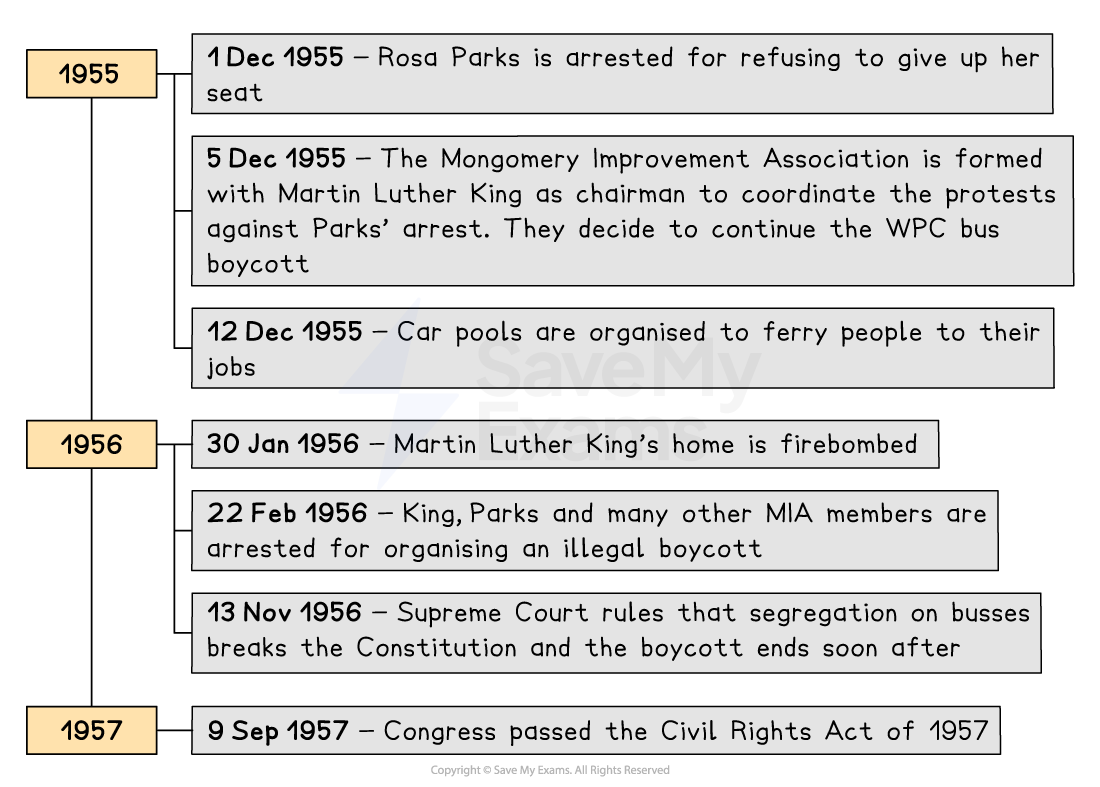
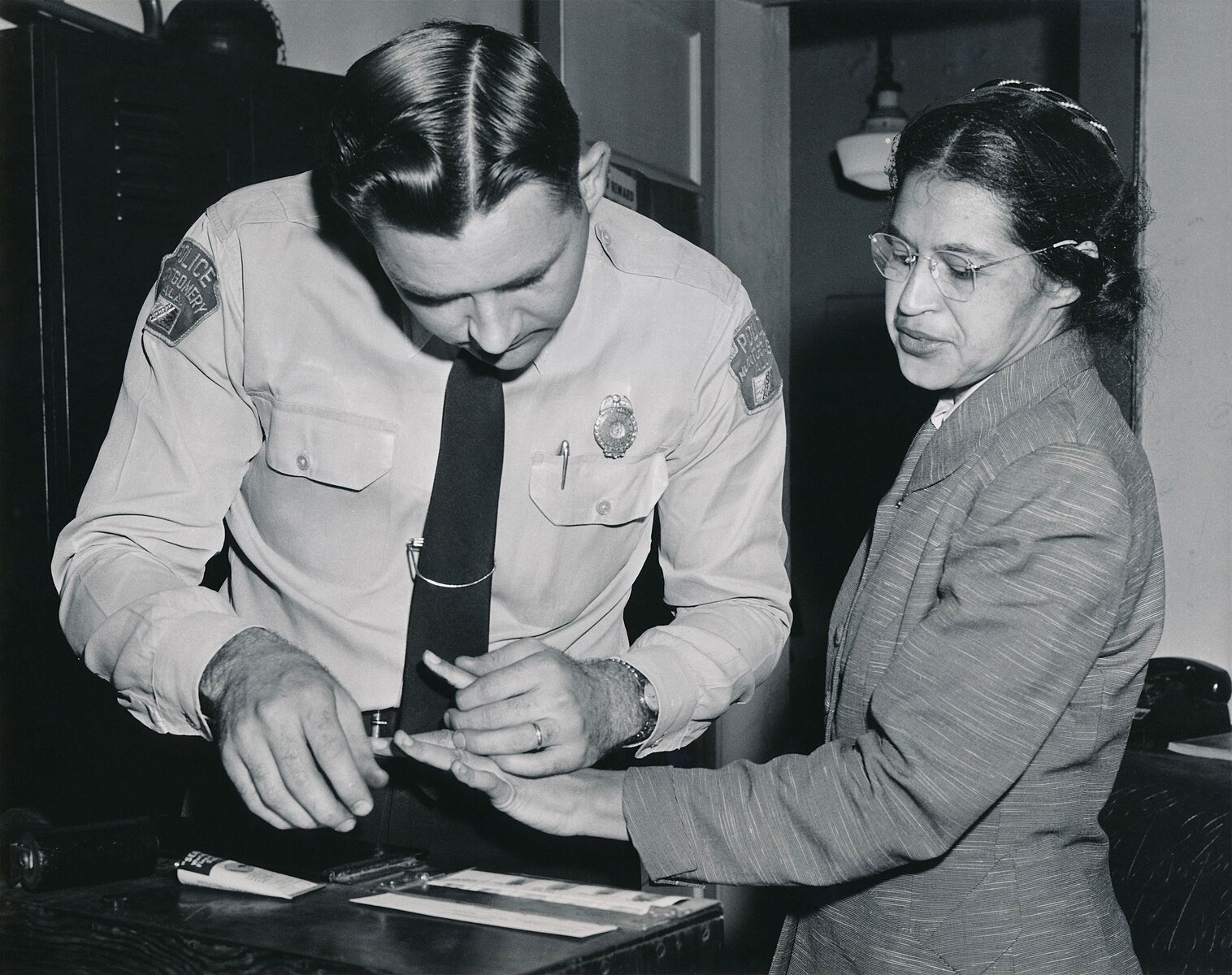
On 1 December 1955, Rosa Parks refused to give up her seat for a white passenger
Rosa was arrested and fined $14
Her arrest triggered outrage, and the WPC launched a boycott of the Montgomery Bus Company
Events of the Montgomery Bus Boycott
On 5 December, 90% of the black residents of Montgomery supported the boycott by refusing to use the buses
However, many black people in Montgomery relied upon the bus to get to work, so alternatives had to be provided
The Montgomery Improvement Association (MIA) made a deal with taxi companies to charge each passenger the same amount as individual bus tickets
This was eventually declared illegal
On 12 December, a carpool of over 300 vehicles was organised by MIA to carry people to the city centre
The boycott showed no signs of stopping in 1956, so opponents of desegregation increased the intimidation of its leaders
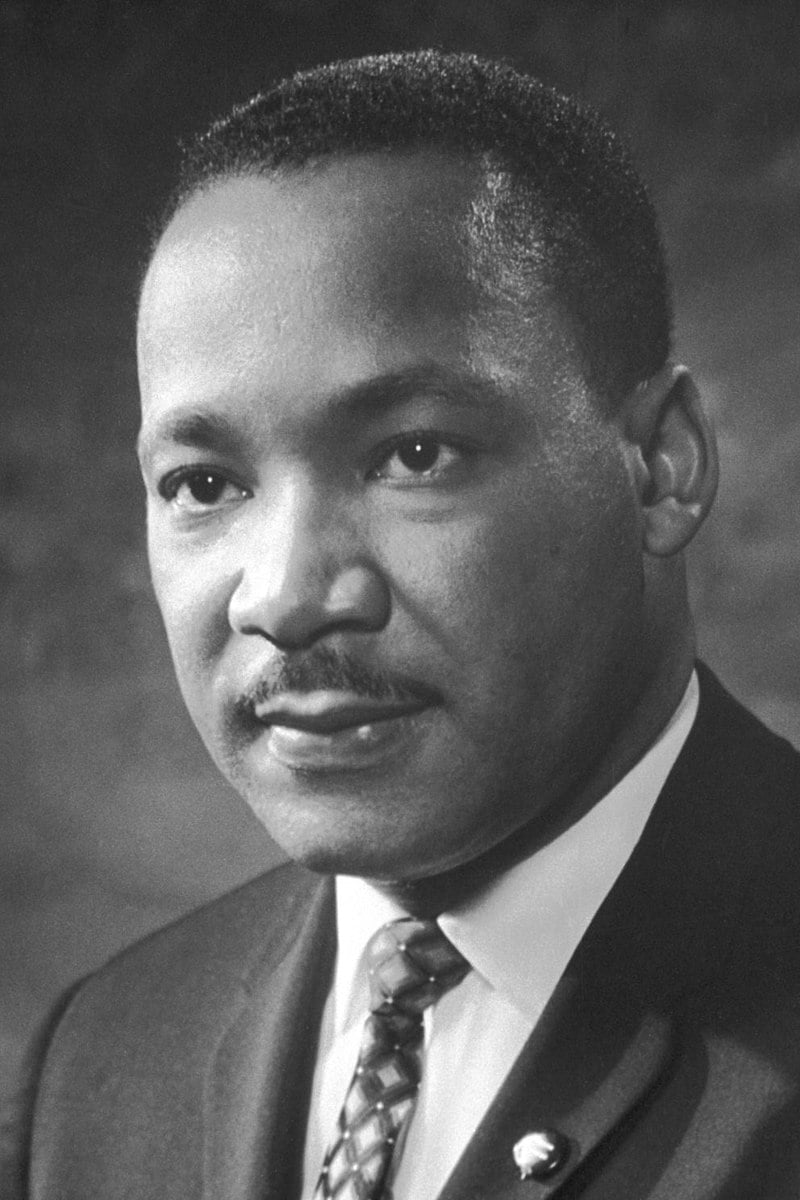
On 30 January 1956, Martin Luther King’s home was firebombed, with his wife and daughter narrowly avoiding injury
On 22nd February, 90 members of the MIA, including Parks and King, were arrested and found guilty of organising an illegal boycott
As the boycott continued, the MIA went to court to argue that segregation on buses went against the Constitution
On 5 June, a federal district court agreed and ruled that bus segregation, just like segregation in schools, was unconstitutional
The bus company appealed the decision, and it went to the Supreme Court
When the Supreme Court reached its verdict on 13 November 1956
It upheld the federal district court’s decision
The bus company was ordered to desegregate
On 20 December 1956, the MIA called an end to the boycott
After 340 days, the boycott had succeeded
Martin Luther King, Rosa Parks and others travelled on a desegregated bus
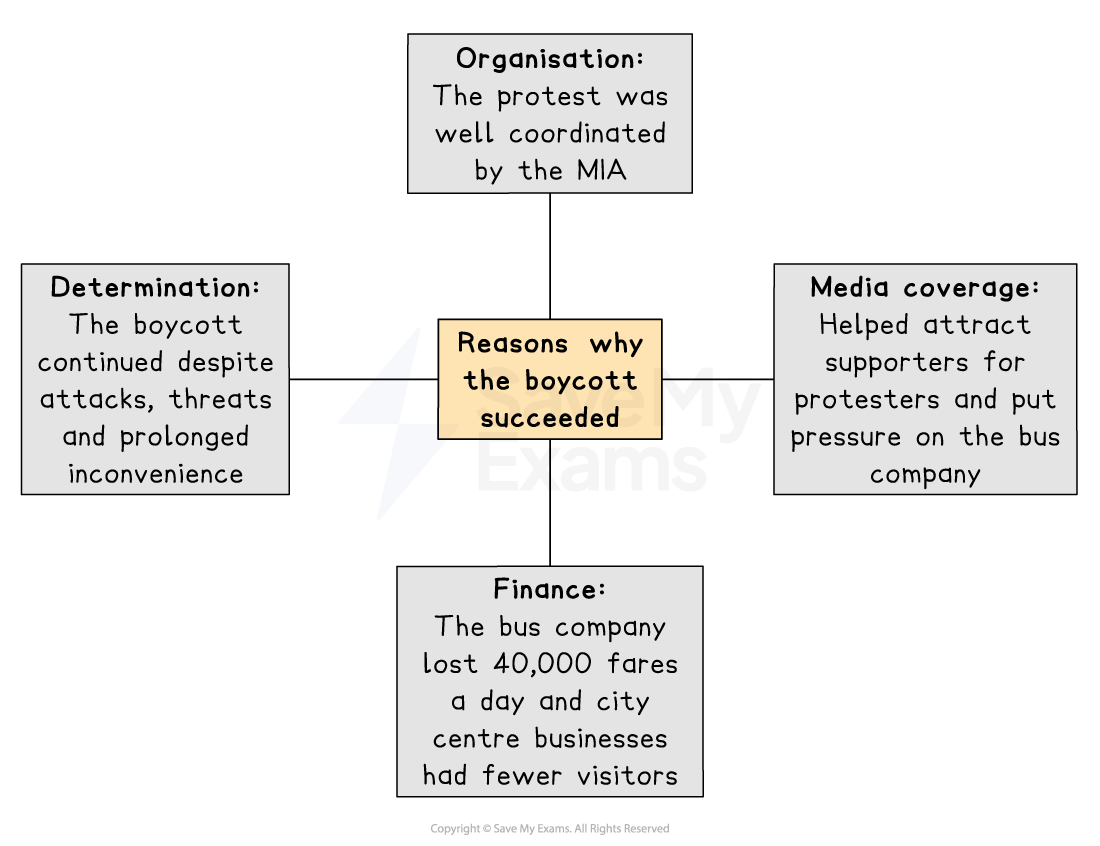
Why did the Montgomery Bus Boycott succeed?
There are several reasons why the Montgomery Bus Boycott was a success
The Greensboro Sit-Ins
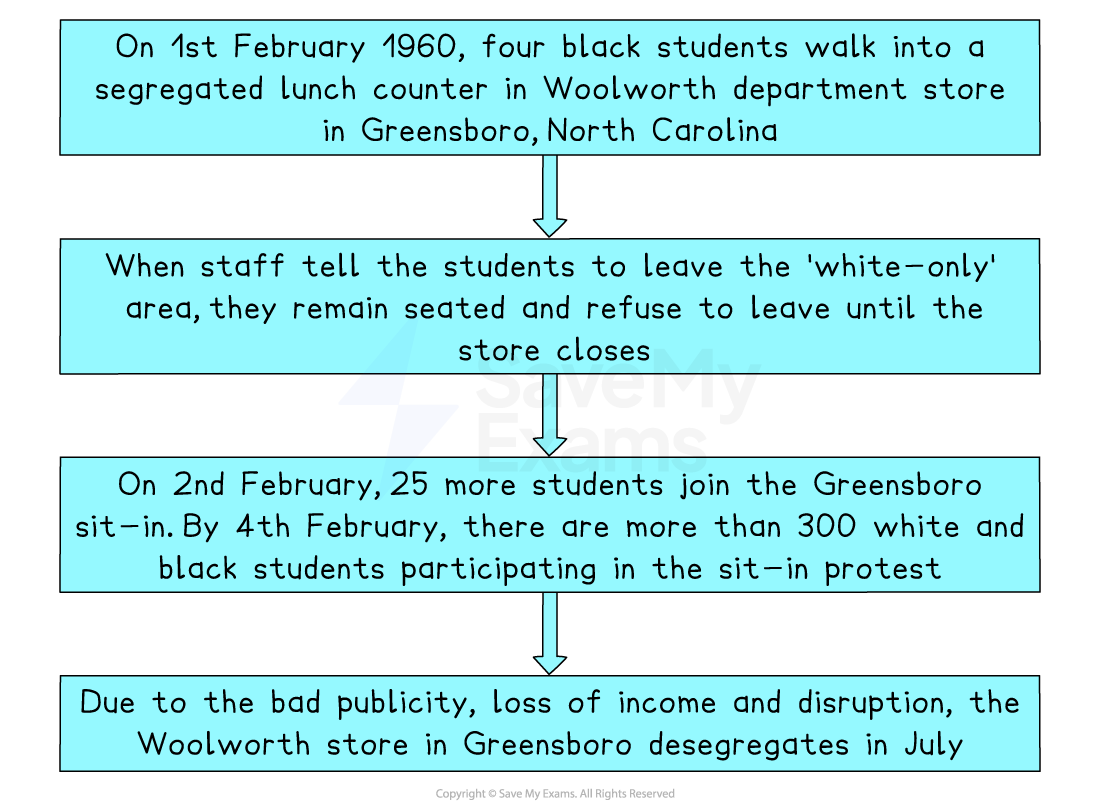
The Greensboro sit-in began on 1 February 1960 when four black students sat at a whites-only lunch counter in a department store in Greensboro, North Carolina and refused to move
They stayed until closing time and hoped their direct-action protest would lead to publicity that would shame the Woolworths department store into change
The following day, 27 more students joined them
By the end of the week, there were over 300 protestors taking part
Both black and white
Angry customers or police regularly removed protestors from the counters, but another protestor instantly replaced them
Sugar, coffee, and ketchup were poured on the protestors
By week two of the protest, over a thousand protesters attended the store, but so did many counter-protesters.
The protestors also organised boycotts of any other segregated stores in Greensboro
Soon, students in other North Carolina towns started to copy the protests at segregated lunch counters
Before long, sit-in protests had spread to 55 cities all over the South
The significance of the Greensboro sit-ins
The sit-in movement attracted enormous positive publicity for the civil rights cause
The protesters were seen to be peaceful and dignified
Those in favour of segregation appeared brutal and vicious
Like the Montgomery Bus Boycott, it damaged America’s reputation abroad
The success of the sit-in movement helped inspire the Freedom Riders and contributed to the momentum that led to the March on Washington
The Freedom Riders
In 1956, the Montgomery Bus Boycott and legal challenges led to the Supreme Court ruling that public transport must be desegregated
In 1960, the Supreme Court ordered that all bus station facilities, such as waiting rooms and toilets, must also be desegregated
In 1961, the Congress of Racial Equality (CORE) and the Student Non-Violent Co-ordinating Committee (SNCC) decided to test how much the law was being enforced and to highlight that segregation still existed in the South
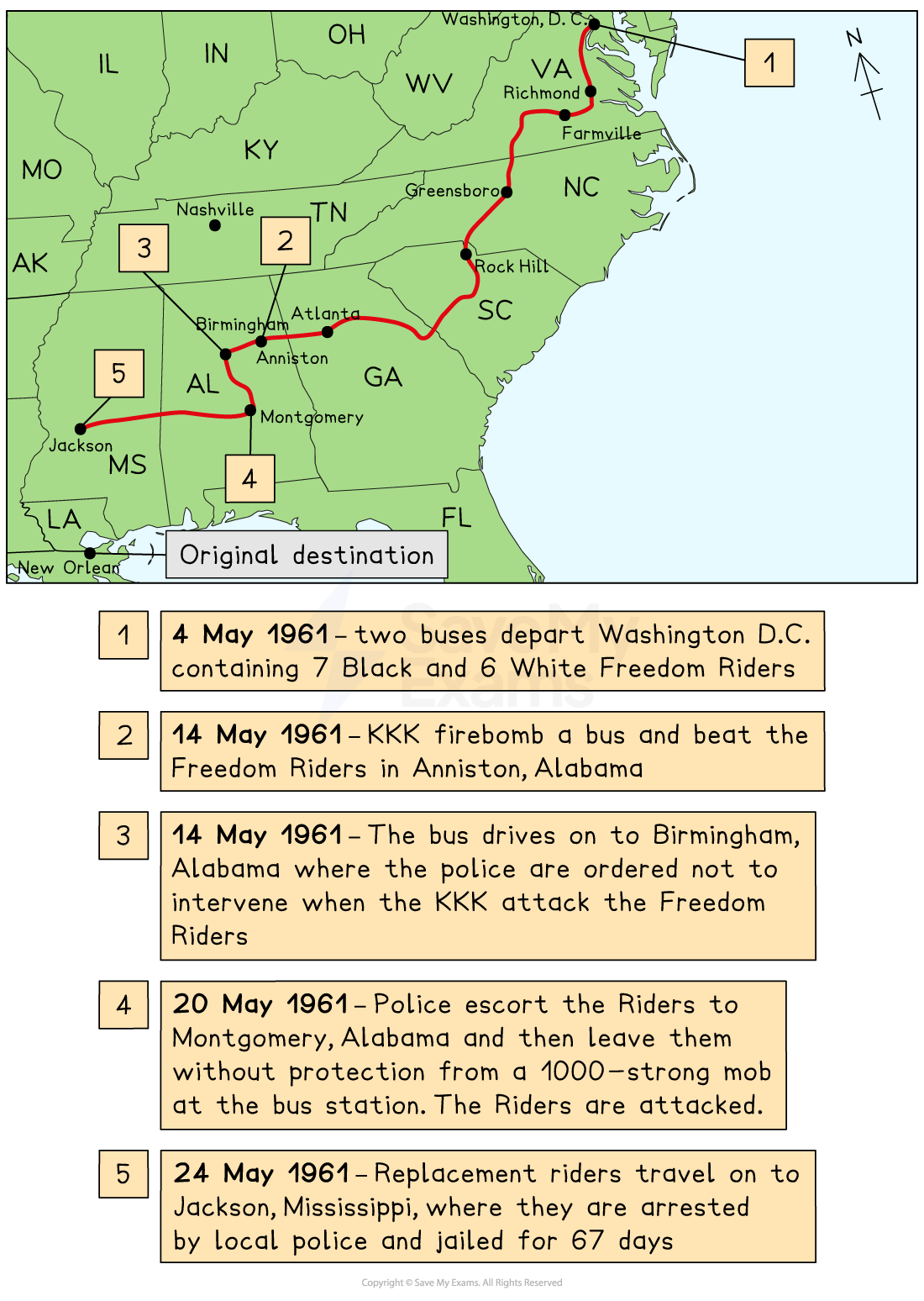
The National Director of CORE and twelve volunteers decided to travel by bus from Washington, DC, to New Orleans
They set off on 4th May and intended to arrive in New Orleans on 17th May, 1961 - the seventh anniversary of the Supreme Court’s judgement in Brown v. Topeka
They called themselves the Freedom Riders
Ku Klux Klan Violence towards the Freedom Riders
The Freedom Riders used whites-only facilities without incident as they travelled through the states of Virginia, North Carolina, South Carolina and Georgia
Things turned violent when they arrived in Alabama
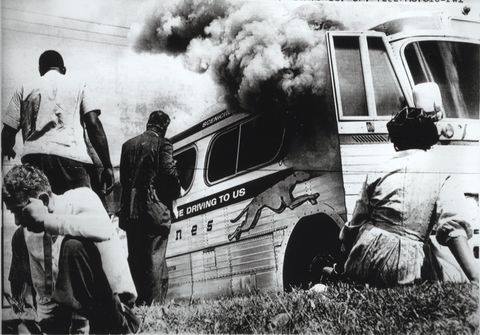
Their bus was firebombed by members of the Ku Klux Klan (KKK) in the town of Anniston, who then blocked the doors, intending the Freedom Riders to burn to death
The bus's fuel tank exploded
This caused the mob to move away and enabled the Freedom Riders to escape
Once off the bus, however, they were viciously attacked
The mob intended to lynch the Freedom Riders, but gunshots into the air from local police prevented their murders
The violent attacks continued when they reached Birmingham, Alabama, later in the day
A large mob had assembled to meet their arrival
Police Chief Eugene ‘Bull’ Connor left the Freedom Riders defenceless by ordering his officers not to intervene
More violent attacks occurred when the Freedom Riders arrived in Montgomery, Alabama
The police escort that had protected them as they left Birmingham abandoned them on the outskirts of town
A mob of over 1,000 people was awaiting their arrival at Montgomery Bus Station, and they were attacked once again
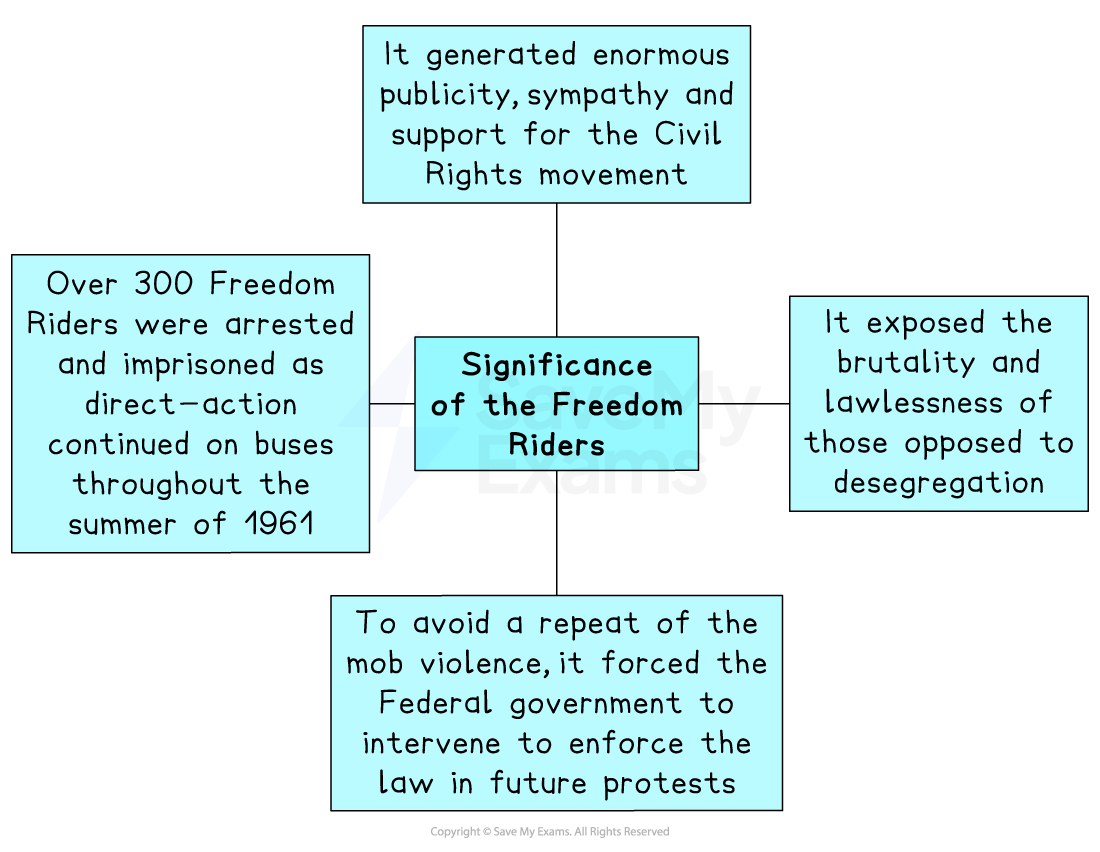
The injured protestors were replaced by new Freedom Riders and continued the journey to Jackson, Mississippi
The National Guard escorted the bus
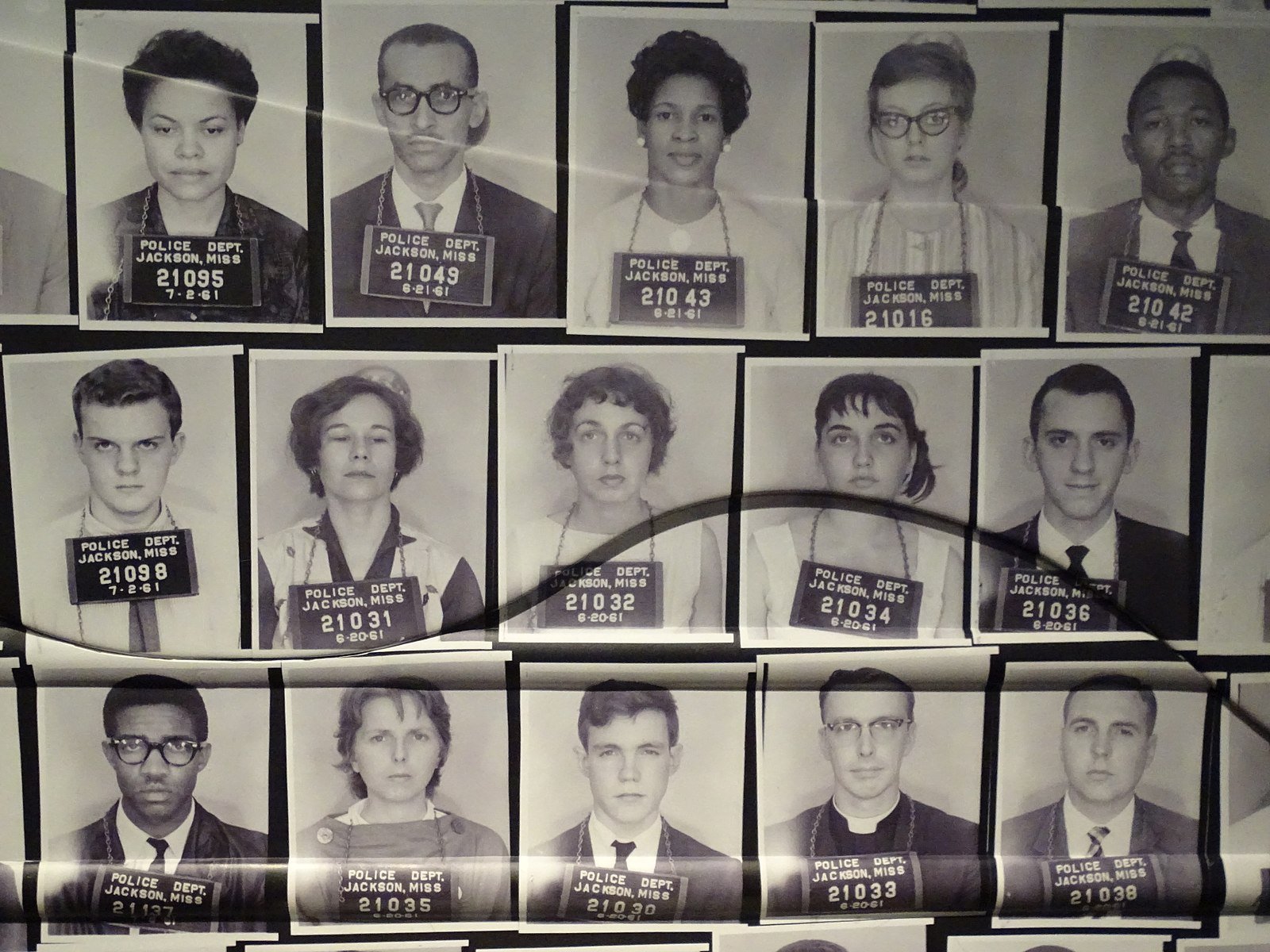
All of the Freedom Riders were arrested as soon as they tried to use the segregated facilities at Jackson Bus Station

Unlock more, it's free!
Join the 100,000+ Students that ❤️ Save My Exams
the (exam) results speak for themselves:

Was this revision note helpful?