The End of the Cold War (WJEC Eduqas GCSE History): Revision Note
Exam code: C100

Summary
The end of the Cold War was shaped by dramatic political changes in Eastern Europe and the collapse of the Soviet Union. In 1988–89, Mikhail Gorbachev withdrew Soviet troops and ended interference in Satellite States through the Sinatra Doctrine. Instead of strengthening Communism, this encouraged rapid reform. Between 1989 and 1990, every Eastern European communist government collapsed, and in July 1991, the Warsaw Pact was formally dissolved. The fall of the Berlin Wall in November 1989 became the most powerful symbol of weakening Soviet control, leading to German reunification in 1990.
These events placed Gorbachev in a vulnerable position at home. Hardline communists blamed him for losing control of Eastern Europe, and nationalist movements grew inside the USSR. In August 1991, a group of communist leaders attempted a coup, but it failed due to a lack of support and public opposition led by Boris Yeltsin. The coup destroyed Gorbachev’s authority. By the end of 1991, most Soviet republics had broken away to form the Commonwealth of Independent States. On 25 December 1991, Gorbachev resigned as Soviet president, marking the official end of the USSR and the Cold War.
The Fall of Communism
The Independence of the Satellite States
In December 1988, Gorbachev removed Soviet troops from Eastern European bases to save money
In 1989, Gorbachev announced the Sinatra Doctrine
This allowed members of the Warsaw Pact to make changes to their countries without any interference
Gorbachev hoped this would strengthen Communism in Eastern Europe
However, from May 1989 to December 1990, Eastern Europe removed their communist governments
Popular pressure within the Satellite States forced reforms and elections
By December 1990, no Eastern Bloc countries were communist
Reform in Eastern Europe affected the Warsaw Pact
The Soviet Union no longer influenced Eastern Europe. By early 1990, the Soviet Union had to stop its military cooperation with Eastern Europe
The Soviet Union ended the Warsaw Pact in July 1991
The end of the Warsaw Pact meant that Eastern Europe no longer contained satellite states of the Soviet Union
Eastern Europe's countries could govern themselves
The leaders in Eastern Europe no longer had to follow Soviet policies
The people of Eastern Europe no longer provided for the Soviet Union's economy
As a result, the power of the Soviet Union decreased
As the country no longer had the political, military and economic support of satellite states
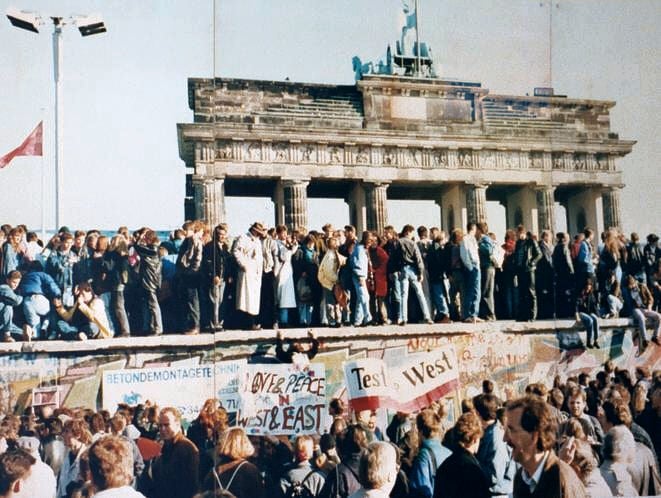
The fall of the Berlin Wall
On November 9, 1989, the East German government planned to open the border crossings into Western Germany in Berlin
To make emigration easier
As citizens would be able to cross the borders between East and West Berlin
During the announcement of this plan, Günter Schabowski, the communist representative for East Germany, announced that the new travel policy would begin straight away
However, this is not what the party had agreed to
East and West Berliners crowded the borders in an attempt to cross
Border guards could not control the crowds. The guards opened the borders
Thousands of East Berliners crossed to West Berlin on 9th November
Both East and West Berliners began to pull parts of the Berlin Wall down
Within a few days, over 1 million people were reunited with friends and family
In October 1990, West and East Germany were officially reunited
Germany was officially invited into NATO in 1991
Examiner Tips and Tricks
Some students confuse the fall of the Berlin Wall with the end of the Cold War. Although the Wall has become a powerful symbol of the Cold War ending, the event itself did not officially end it.
The Cold War only ended after further agreements and political changes, including the collapse of the USSR in 1991. Use the Wall as evidence of weakening Soviet control, not as the final turning point.
The Collapse of the Soviet Union
Gorbachev’s fall from power
The collapse of the Eastern Bloc placed Gorbachev in a dangerous position in the Soviet Union
Devout communists blamed Gorbachev for weakening the Soviet Union
The Soviet Union lost control of the Baltic States of Estonia, Latvia and Lithuania throughout 1990
In August 1991, a group of Communist Party members called the 'Gang of Eight' attempted a coup against Gorbachev
The coup demanded complete control of the Soviet Union and the declaration of a state of emergency in the country
Gorbachev refused, and the 'Gang of Eight' kept him under house arrest
The coup against Gorbachev failed because:
The coup lacked popular support
Prominent communists like Boris Yeltsin spoke out against the coup
Gorbachev was able to continue to govern the Soviet Union
The Communist Party no longer respected Gorbachev
The coup ruined Gorbachev's reputation across the Soviet Union
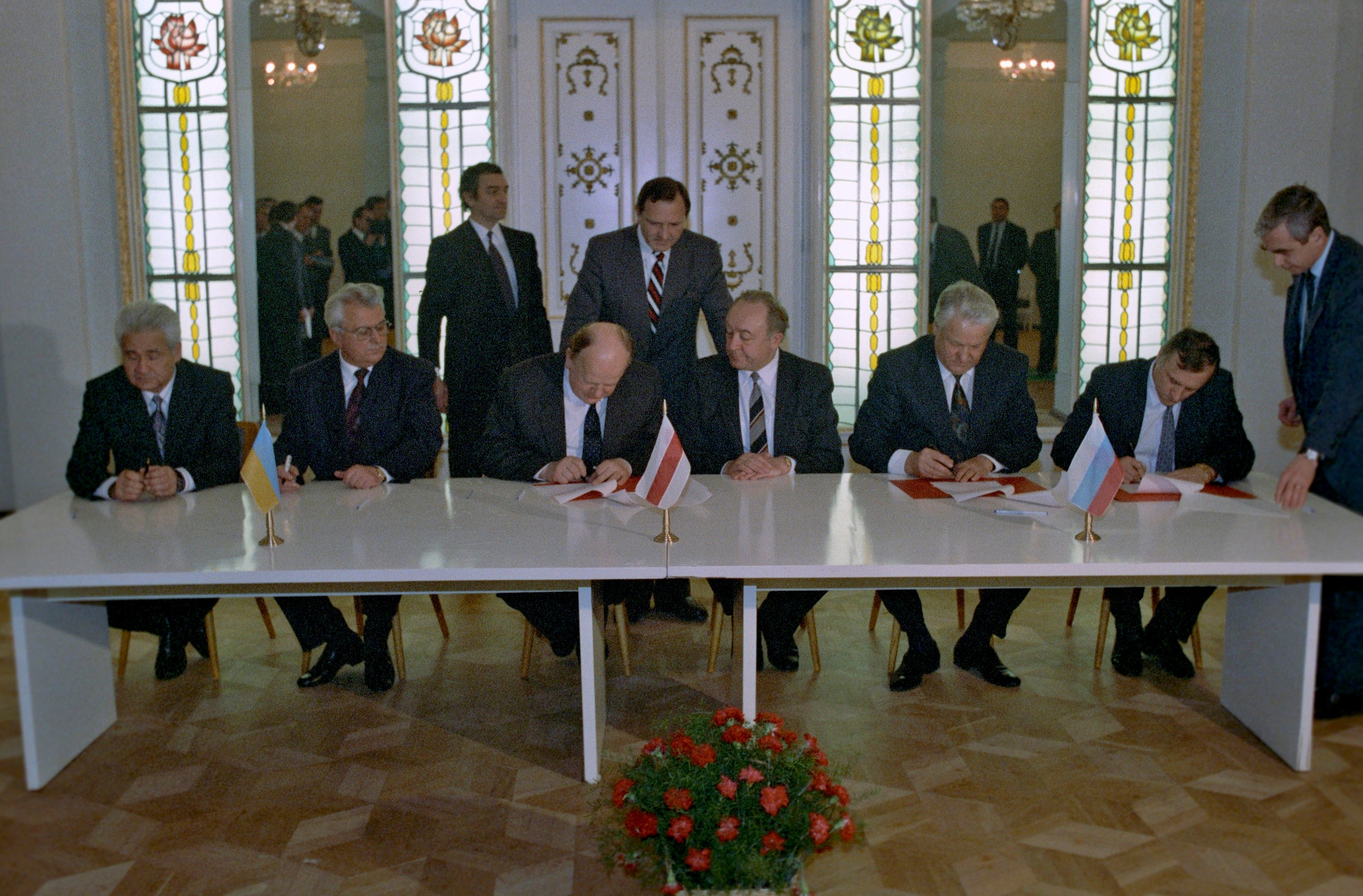
12 states of the Soviet Union joined together to create the Commonwealth of Independent States
As a result, Gorbachev could no longer rule the Soviet Union
On 25th December 1991, Gorbachev resigned as General Secretary of the Soviet Union
Boris Yeltsin and the end of the Soviet Union
Yeltsin was a prominent member of Gorbachev's government
Gorbachev chose Yeltsin as the Mayor of Moscow in 1986
Gorbachev forced Yeltsin to resign in 1987 after Yeltsin publicly criticised Gorbachev
Yeltsin rose to power again in 1990
The first public elections in the Soviet Union elected Yeltsin as the President of the Soviet Republic of Russia in May 1990
The coup against Gorbachev allowed Yeltsin to take ultimate power in Russia
Gorbachev's reputation was ruined in the Soviet Union
Yeltsin became the most influential political leader in Russia
The resignation of Gorbachev also marked the end of the Soviet Union
In his televised resignation on 25th December 1991, Gorbachev announced:
Due to the situation which has evolved as a result of the formation of the Commonwealth of Independent States, I hereby discontinue my activities at the post of president of the Union of Soviet Socialist Republics
With this statement, Gorbachev passed the leadership of Russia to Yeltsin
As president of the Soviet Republic of Russia, Yeltsin became the leader of Russia

Unlock more, it's free!
Join the 100,000+ Students that ❤️ Save My Exams
the (exam) results speak for themselves:

Was this revision note helpful?
