Causes of Crime in the 16th & 17th Centuries (WJEC Eduqas GCSE History): Revision Note
Exam code: C100

How did Economic and Religious Changes in the 16th &17th Centuries shape life in England and Wales? - Summary
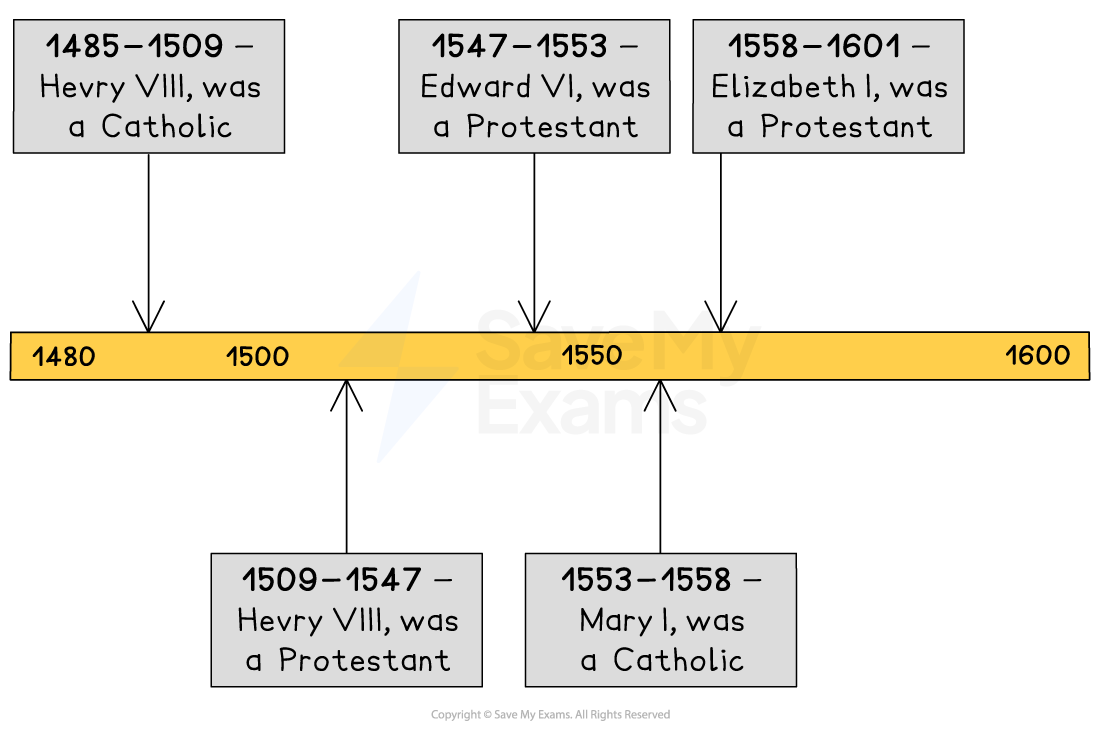
The 16th and 17th centuries were a time of great change in England and Wales, marked by religious upheaval, economic hardship, and social tension. The Tudor monarchs, from Henry VIII to Elizabeth I, changed the religion from Catholic and Protestant several times during this period. These changes led to new religious crimes such as heresy and treason.
At the same time, rapid population growth, inflation, enclosure of land, bad harvests, and the collapse of key industries caused widespread poverty. Many people turned to crime out of desperation, while others rebelled against high taxes and unemployment. These combined issues made this period one of instability and change, both in society and in the causes of crime.
Economic Pressures as a Cause of Crime
In the 16th Century, there was a rapid increase in poverty
Poverty was caused by
Inflation
Wages could not keep up with inflation
Poor people with the lowest incomes suffered the most
Rising population
The population increased from 2.9 million in the 1500s to 4.3 million by 1600
This increased the demand for food, housing, and jobs
Bad harvests
During the 1500s, there were many poor harvests
This resulted in food shortages and higher food prices
The threat of starvation increased crime
Changes in farming methods
Enclosure of land prevented people from being able to use common land to grow their own food and graze animals
Farmers switched from growing crops to sheep farming, which needed fewer workers
Such changes resulted in an increase in crime, including the 1549 Kett’s Rebellion because people were starving and unemployed
Rack renting
An increase in prices resulted in landlords increasing their rent
This led tomany tenants being evicted as they could not afford the rent
Homelessness and vagrancy increased
War
Henry VIII’s war with France and Elizabeth I’s war with Spain were costly
Such wars increased taxes
When the wars ended, many men were unemployed and wandered around the countryside in gangs, looking for work
Changes in industry
The collapse of the cloth trade in the 16th century resulted in many people becoming unemployed
For many people in poverty, their only solution was crime
Due to the increase in poverty at this time, the Tudor monarchs classified the poor into two different categories
The impotent poor
Included people who were genuinely poor or unable to work
Due to age or disability
The able-bodied poor
Included people who were able to work but were unable or unwilling to find a job
They were encouraged or, in some cases, forced to find work
The Impact of Religious Change
Many crimes happened in the 16th and 17th centuries due to religion
Throughout this period, the religion of England changed several times, resulting in changes to the definition and punishments for crimes
Religious change resulted in crime due to
The dissolution of the monasteries
After Henry VIII left the Catholic Church, he closed the monasteries
Monasteries provided charity to the poor and employment to many people
Changes in the monarch's religion
If their subjects did not follow their religion, they were punished
For example, during the reign of Mary I, Protestants were burnt at the stake
Heresy
As a result of the constant change of religion, the crime of heresy grew during this period
Henry VIII
Became a Protestant after the Pope refused a divorce from Catherine of Aragon
He tolerated some Protestant beliefs, but the church still had many Catholic features
Edward VI
Edward and his two Lord Protectors, the Duke of Somerset and Northumberland, were strong Protestants
They introduced many changes to the Church of England
Including the Bible in English and Welsh, and the Book of Common Prayer
Those who refused to accept these changes were called heretics
The heresy was treason, and the punishment was the death penalty
Mary I
Was a devout Catholic and changed the religion in England and Wales back to Catholic
Mary reinstated the Pope as the Head of the Church
Those who refused to change their religion to Catholicism were seen as heretics
Heresy was treason, and the penalty was death
Mary hadapproximately 300 Protestants burned to death
Elizabeth I
Elizabeth was a Protestant, but wanted to establish a Religious Settlement that suited everyone
It became known as the ‘middle way’
Protestantism became the official religion of England
Elizabeth became the ‘Supreme Governor of the Church’
Some Catholic practices were introduced, such as the use of crosses and candles
However, some Protestants and Catholics refused to accept these changes
They were seen as heretics
Heresy became treason and resulted in the death penalty
Treason
As people did not agree with the religious changes happening in this period, many planned to overthrow their monarch or government by
Riots
Rebellions
Plots
Often, those people involved were captured and found guilty of treason
The punishment for treason depended on the monarch, the person accused, and the situation. The punishment was often either
Execution
Hung, drawn, and quartered
As the 16th and 17th centuries were difficult times, monarchs used treason as a way to prevent and silence opposition
For example, Henry VIII accused people of treason if they
Wrote or said things against the king or queen
Wrote anything that went against the Church of England
Questioned the king's authority
Agreed with the Pope
Examiner Tips and Tricks
Question 5 in this exam might ask you to explain how the causes of crime have changed over time. In the 16th and 17th centuries, the main causes were still linked to poverty, hunger, and unemployment, showing continuity from the medieval period. However, new causes emerged due to religious change, population growth, and enclosure. Using clear terms in your answers, like “this shows change as …”, will help you to answer these types of questions.

Unlock more, it's free!
Join the 100,000+ Students that ❤️ Save My Exams
the (exam) results speak for themselves:

Was this revision note helpful?
