Artefacts as a Form of Expression in Catholic Christianity (AQA GCSE Religious Studies B): Revision Note
Exam code: 8063

Paschal candle as an article of resurrection
The Paschal candle is a large candle, also known as the Easter candle
It is an important feature of the Easter Vigil
This is the first Mass of Easter that celebrates Jesus’s resurrection
It is usually held in darkness on the evening before Easter Sunday
During the Easter Vigil, the priest lights a fire outside the church
This symbolises the light of Christ rising from the tomb (his resurrection from the dead)
The priest blesses and lights the Paschal candle
They carry it through the darkened church
Light from the Paschal candle is used to light candles that everyone in the church holds
This shows that all believers share in the light of the risen Christ, who overcame the darkness of sin and death
The words the priest uses for the blessing are:
“May the light of Christ rising in glory dispel the darkness of our hearts and minds” (Blessing at the lighting of the Paschal candle, Easter Vigil Mass)
The Paschal candle is decorated with important Christian symbols
The cross of Christ
The alpha and omega symbols, which are the first and last letters of the Greek alphabet
This shows that Christ is at the first and last of everything; he is eternal
Five small holders are placed into the Paschal candle
Each contains a grain of incense
These represent the five wounds Jesus suffered in his hands, feet and side during his crucifixion
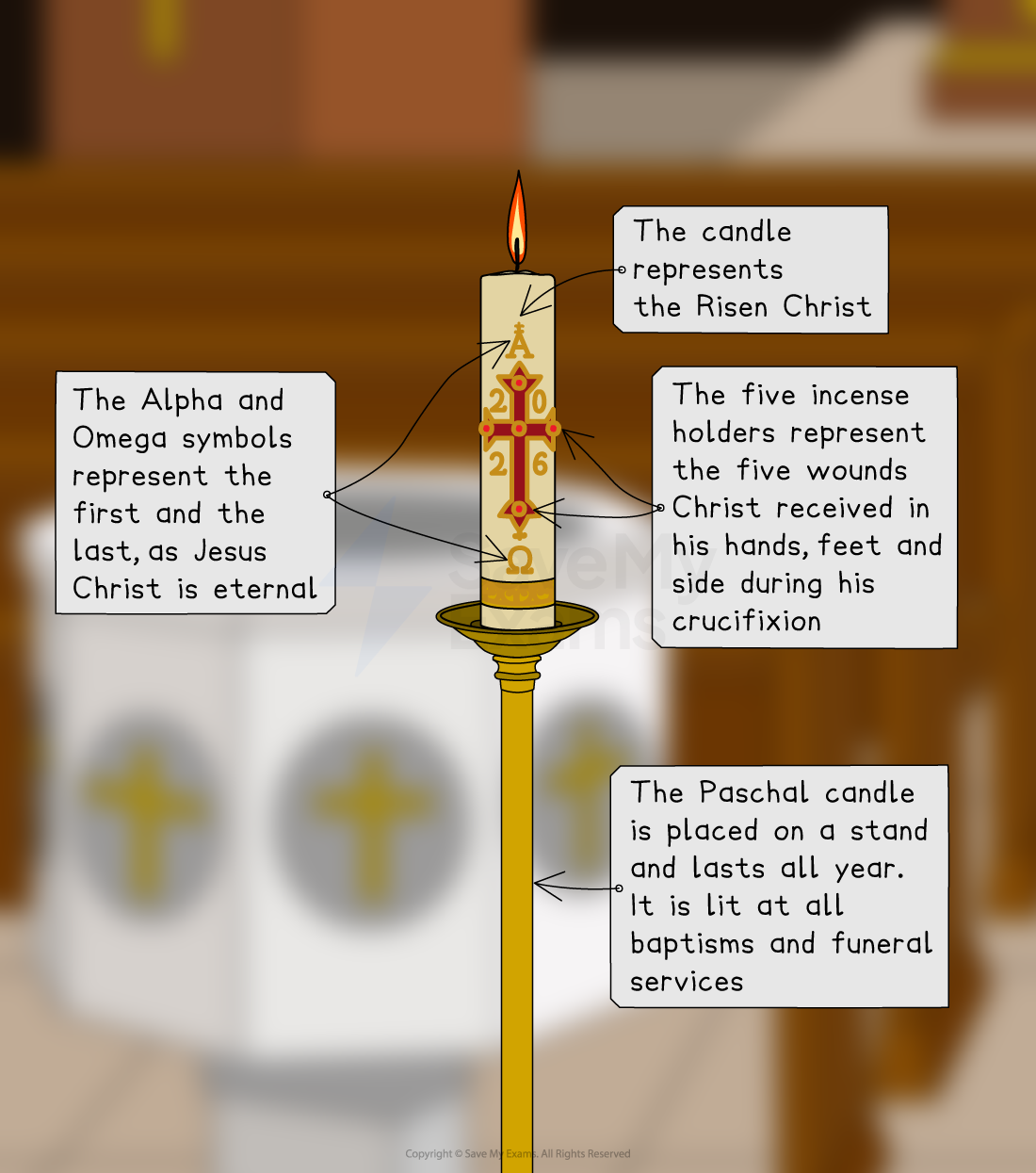
The Paschal candle is marked with the current year and lasts for the whole year
As well as Masses during the Easter period, it is also used at baptisms and funerals
At baptism, the family is given a candle lit from the Paschal candle
This symbolises the light of Christ coming into the life of the new Christian
The priest says to the parents and godparents:
“This child of yours has been enlightened by Christ. He/she is to walk always as a child of the light. May he/she keep the flame of faith alive in his/her heart” (Catholic rite of baptism)
At funerals, the Paschal candle is lit to show that the person who has died has joined Christ in eternal life
Michelangelo’s the Last Judgment
Michelangelo, Public domain
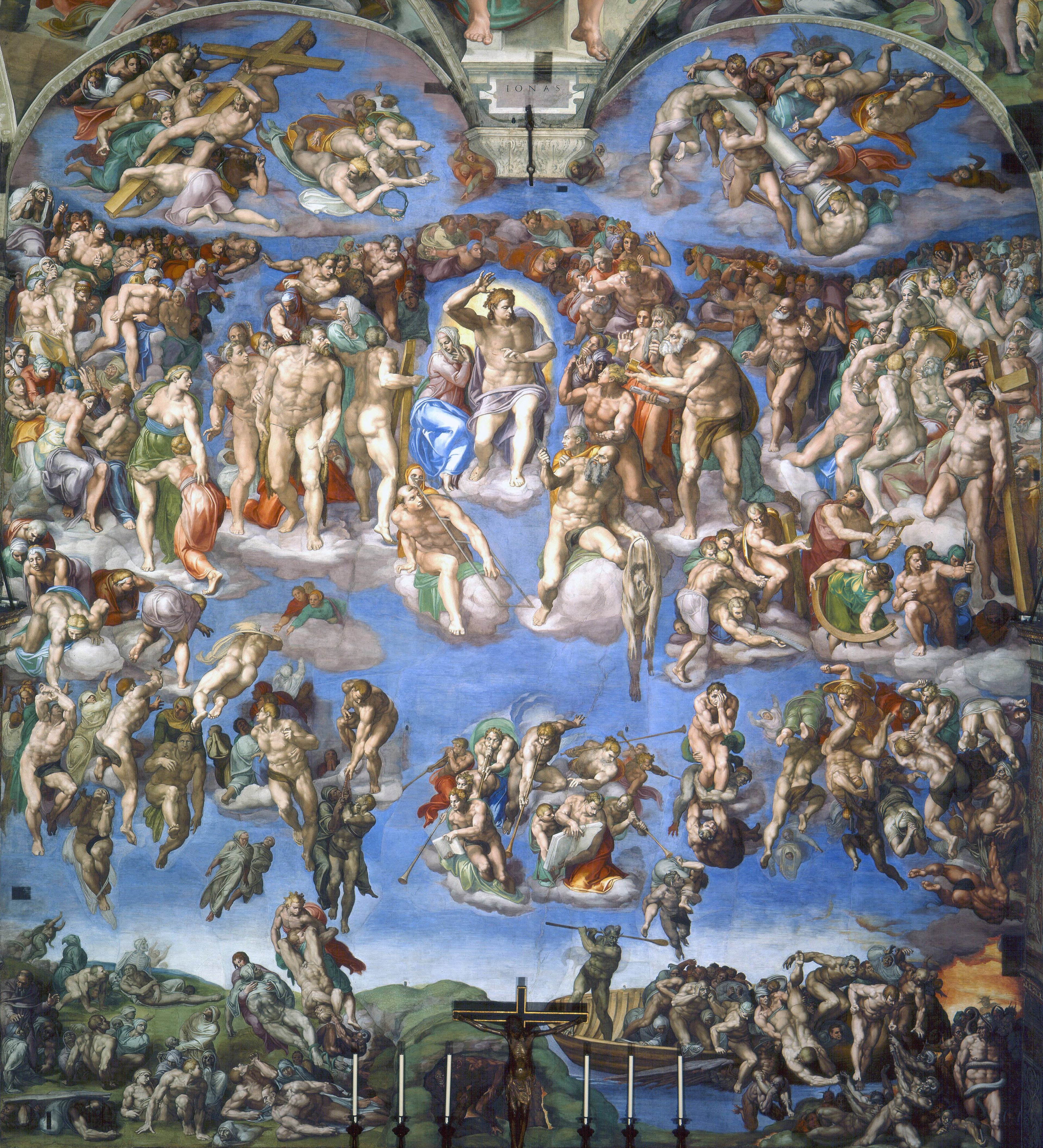
Michelangelo finished painting the Last Judgment in 1541 on the wall of the Sistine Chapel in Rome
It is still there today
The painting depicts Judgement Day
It reflects Christian beliefs on “the four last things” that will happen at this event: death, judgement, heaven and hell
Michelangelo shows Christ in the centre with the wounds from his crucifixion visible
Christ is raising those on his right up to heaven with his right hand
Those on his left appear to be descending to a place of darkness, fire and torment
This reflects the teaching from the parable of the Sheep and the Goats, where Jesus promised that the good would be on his right and the wicked on the left
The people closest to Christ are Mary and the saints
Some of the saints carry weapons that were used to torture and kill them
Their bodies are not damaged, showing that in the resurrection, all will be renewed and that people’s bodies are resurrected, not just their souls
They are in heaven, showing the belief that the reward for following Christ is eternal life in heaven
Everyone in the painting is naked, except Jesus and Mary
This shows the belief that all people are equal at the last judgement, regardless of their status in life (later on, an artist was asked to cover up some of the nudity)
At the foot of the painting, people are rising from their graves
This reflects the belief that everyone will be raised up for judgement on the last day
Seven angels are shown, blowing trumpets
These are the angels described in the book of Revelation (chapters 8–10)
The sound of the trumpets is the sign that the end of the world is coming and Christ’s judgement is to happen
One of the angels, the archangel Michael, has a book of names of those who are going to heaven
The angel next to him has a much larger book with the names of the people who are going to hell
This shows Jesus’s teaching that people should do their best to ensure they are in the book of those who are going to be rewarded in heaven
Memorials for the dead
Memorials are structures to honour and respect those who have died
Christians believe that the body is the temple of the Holy Spirit (1 Corinthians 6:9) and therefore should be treated with respect, even after death
Christians use various forms of memorials, including tombstones, monuments and remembrance gardens
Tombstones
A tombstone marks the location of the dead, so they are treated with respect
They are often marked with the person’s name and the dates they lived
Many contain Bible verses or Christian symbols
Some may be shaped in the form of a cross to show the person’s Christian faith and the hope that, as they have joined Christ in death, they will rise with him to eternal life
The letters RIP are common. This stands for “Requiescat in pace”, which is Latin for “rest in peace”
Monuments
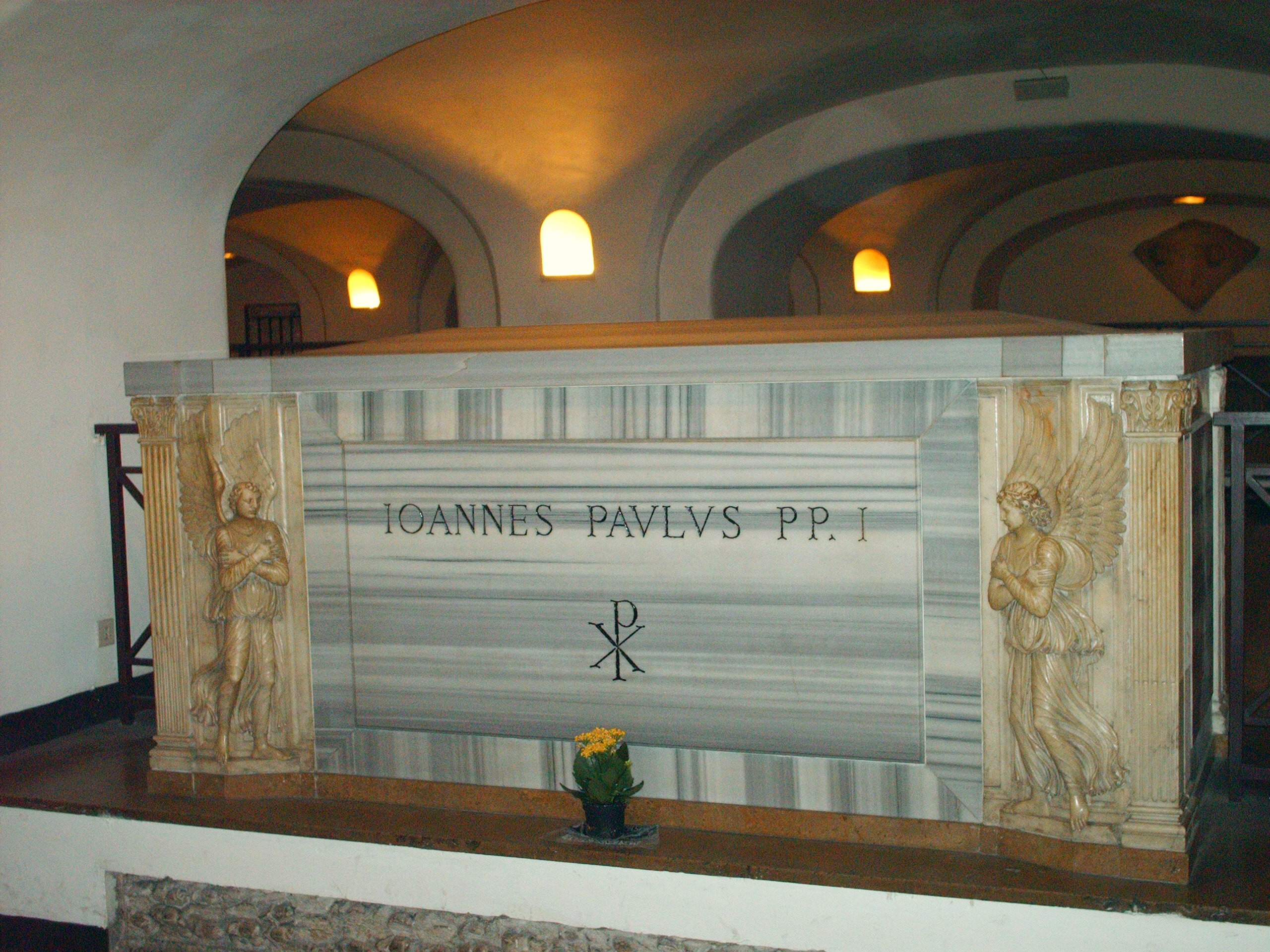
Monuments are structures built to remember an important person
In the early Church, some wealthy people were buried in large, decorated coffins called sarcophagi
These had the Chi-Rho symbol on them to show that the person believed in Christ
Often, monuments contain signs and symbols of Christianity
Scenes from the life of Jesus are often used, such as the Sacred Heart or the Good Shepherd
Riccardov, Public domain
Remembrance gardens
Many Christians today choose to be cremated instead of having a burial
A remembrance garden is an outdoor space where a person’s ashes can be placed after cremation
The Catholic Church did not allow cremation until 1966 because of the belief in the resurrection of the body
Cremation is now permitted, but the Catholic Church still requires ashes to be treated with dignity and respect
Ashes should be buried in a holy place, not scattered
Remembrance gardens are beautiful places designed to reflect the peace and beauty of heaven
They are quiet and reflective places to allow people to mourn their loved ones in a calm and peaceful way that helps them feel close to the person they lost
Trees or shrubs may be planted with simple plaques to indicate the presence of the person
All forms of memorial are designed to show respect and love for the person who has died, upholding their memory
They also reflect the Christian hope that the deceased is now at rest with God in heaven for eternity
A common prayer said when visiting these sites shows this belief:
“Eternal rest grant unto them, O Lord, and let perpetual light shine upon them. May they rest in peace. Amen” (Catholic prayer for the dead)
Worked Example
Which one of the following memorials is used for the ashes of people who have been cremated?
[1 mark]
Tombstone
Remembrance garden
Grave
Monument
Answer:
B. Remembrance garden
The Catholic Church teaches that after cremation, a person’s ashes should be treated with dignity and respect and buried in a holy place.
Examiner Tips and Tricks
Although you may be asked about the content of Michelangelo’s Last Judgment in the exam, the exam paper won’t contain an image of the painting. You’ll need to be able to remember the main features of the piece and be able to explain the beliefs depicted.

Unlock more, it's free!
Join the 100,000+ Students that ❤️ Save My Exams
the (exam) results speak for themselves:

Was this revision note helpful?
