Scripture & Life After Death (AQA GCSE Religious Studies B): Revision Note
Exam code: 8063

The parable of the Rich Man and Lazarus
The parable of the Rich Man and Lazarus (Luke 16:19–31) is a story Jesus told about what happens to a rich man and a poor man in the afterlife
It reveals a lot about the nature of the afterlife
In the story, a rich man lived a life of luxury and ignored Lazarus, the poor, sick beggar at his gate
When they died, the rich man went to Hades (hell) and suffered, while Lazarus went to “Abraham’s side” (heaven)
The rich man begged that Lazarus be sent to cool his tongue with a drop of water to lessen his “agony”
“The poor man died and was carried away by the angels to be with Abraham. The rich man also died and was buried. In Hades, where he was being tormented, he looked up and saw Abraham far away with Lazarus by his side. He called out, ‘Father Abraham, have mercy on me, and send Lazarus to dip the tip of his finger in water and cool my tongue; for I am in agony in these flames.’” (Luke 16:22–24)
Abraham explained to the man that he had already received good things while Lazarus suffered and that now Lazarus is receiving comfort
“Abraham said, ‘Child, remember that during your lifetime you received your good things, and Lazarus in like manner evil things; but now he is comforted here, and you are in agony’” (Luke 16:25)
The rich man asked for a chance to warn his brothers to change their ways so they would never join him there
Abraham told the rich man that if his brothers did not believe the Scripture, they would not believe a messenger either, even one from heaven
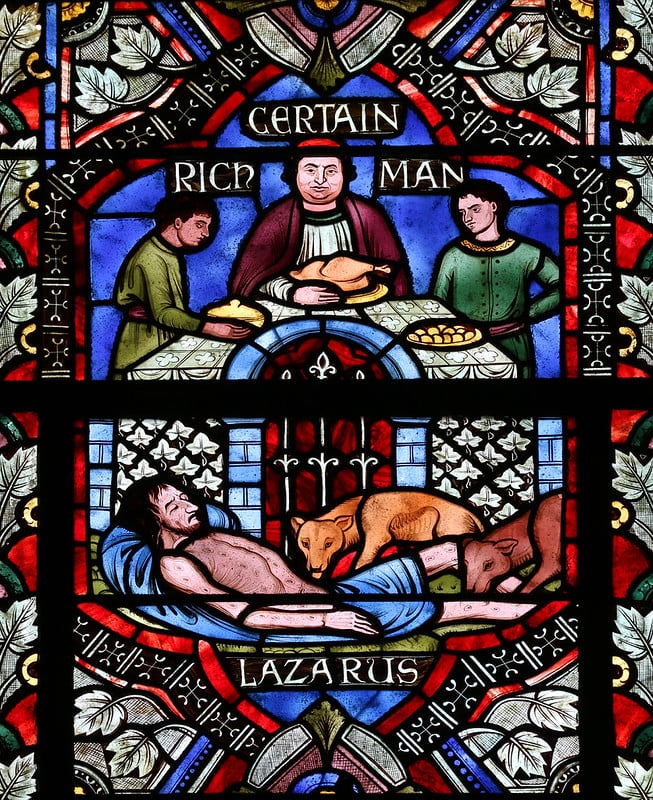
Lazarus and the Rich Man” by Lawrence OP, CC BY-NC-ND 2.0
The significance of the parable of the Rich Man and Lazarus
The parable of the Rich man and Lazarus is a cautionary tale that teaches the importance of compassion and generosity in this life
Showing kindness and love to others will lead to rewards in heaven
It shows the consequences of allowing wealth and riches to become too important in life — people may lose empathy and fail to use their wealth to help others
The rich man ended up in hell for refusing to help Lazarus, the beggar
It shows the nature of hell as a place of torment and agony
The rich man ended up “far away” from Abraham, showing that the torment comes from being separated from God
The rich man was aware of Lazarus’s happiness in heaven
This reflects the belief that souls in hell are aware of the happiness of those with God in heaven, which worsens their suffering
When the rich man pleaded for help, Abraham said that there was no way of passing between heaven and hell; a “great chasm” had been fixed
This shows that repenting or apologising in the afterlife is not a means to escape hell
A person’s actions and choices in life determine their fate in the afterlife
Jesus teaches that there are no second chances after death and that people must follow God’s law in life
The rich man asked for someone to warn his brothers that heaven and hell are real, but Abraham explained that they already had the teachings of Moses and the prophets
This is significant because it teaches that people already have all the knowledge they need in the scriptures about how to get to heaven
According to the Youth Catechism of the Catholic Church (YOUCAT), people freely choose to exclude themselves from God, rather than God condemning them to hell
“God does not damn men. Man himself is the one who refuses God’s merciful love and voluntarily deprives himself of eternal life by excluding himself from communion with God” (YOUCAT, 162)
Worked Example
Give two beliefs about heaven and hell that are shown in the parable of the Rich Man and Lazarus.
[2 marks]
Answer:
Heaven is a reward for showing love and kindness to others in this life. [1 mark]
Hell is a place of torment where people are cut off from a relationship with God. [1 mark]
Examiner Tips and Tricks
Jesus used several parables to teach people about the nature of the afterlife, such as the parable of the Sheep and Goats. Although questions on this topic will be about the parable of the Rich Man and Lazarus, you can also refer to any additional passages you have studied to show wider knowledge and understanding in your answers.
For example, in the Sheep and Goats, hell is described as “the outer darkness, where there will be weeping and gnashing of teeth” (Matthew 25:30), while heaven is “eternal life” (Matthew 25:46).
In Matthew 22:2–10, Jesus says, “The kingdom of heaven may be compared to a king who gave a wedding banquet for his son”. (Matthew 22:2).
In John’s gospel, Jesus compares heaven to a large house, saying, “In my Father’s house, there are many rooms”. (John 14:2).

Unlock more, it's free!
Join the 100,000+ Students that ❤️ Save My Exams
the (exam) results speak for themselves:

Was this revision note helpful?
