Architecture as a Form of Expression in Catholic Christianity (AQA GCSE Religious Studies B): Revision Note
Exam code: 8063

Architecture of Catholic Churches: Beliefs and worship
The Church is the people who make up the worldwide Catholic community
The church (without a capital letter) also refers to the building in which Catholics gather to worship and attend Mass
The purpose of churches
Catholic churches are buildings in which believers gather to worship, both individually and as a community
They are designed to help and inspire Catholics to pray because they are:
Designed to reflect the glory of God, so great care is taken in how they are laid out and decorated
Quiet places where people can concentrate on their prayer, and there may be side chapels to help with this
Decorated with signs, symbols and statues that remind Catholics of key events in the life of Christ or the saints. This focuses and inspires them in their prayer
Catholic Churches before 1965
Traditional Catholic church buildings were built facing east towards Jerusalem, where Jesus died and rose again
They were often in the shape of a cross, called cruciform
This showed the central importance of Jesus’s death
The altar was against the east wall
The priest said Mass (in Latin) with his back towards the people
Catholic Churches after 1965
After the Second Vatican Council (1962–1965), church buildings underwent changes
In churches built before 1965, the layout was altered
The altar was moved closer to the people to make them feel more involved in the Mass
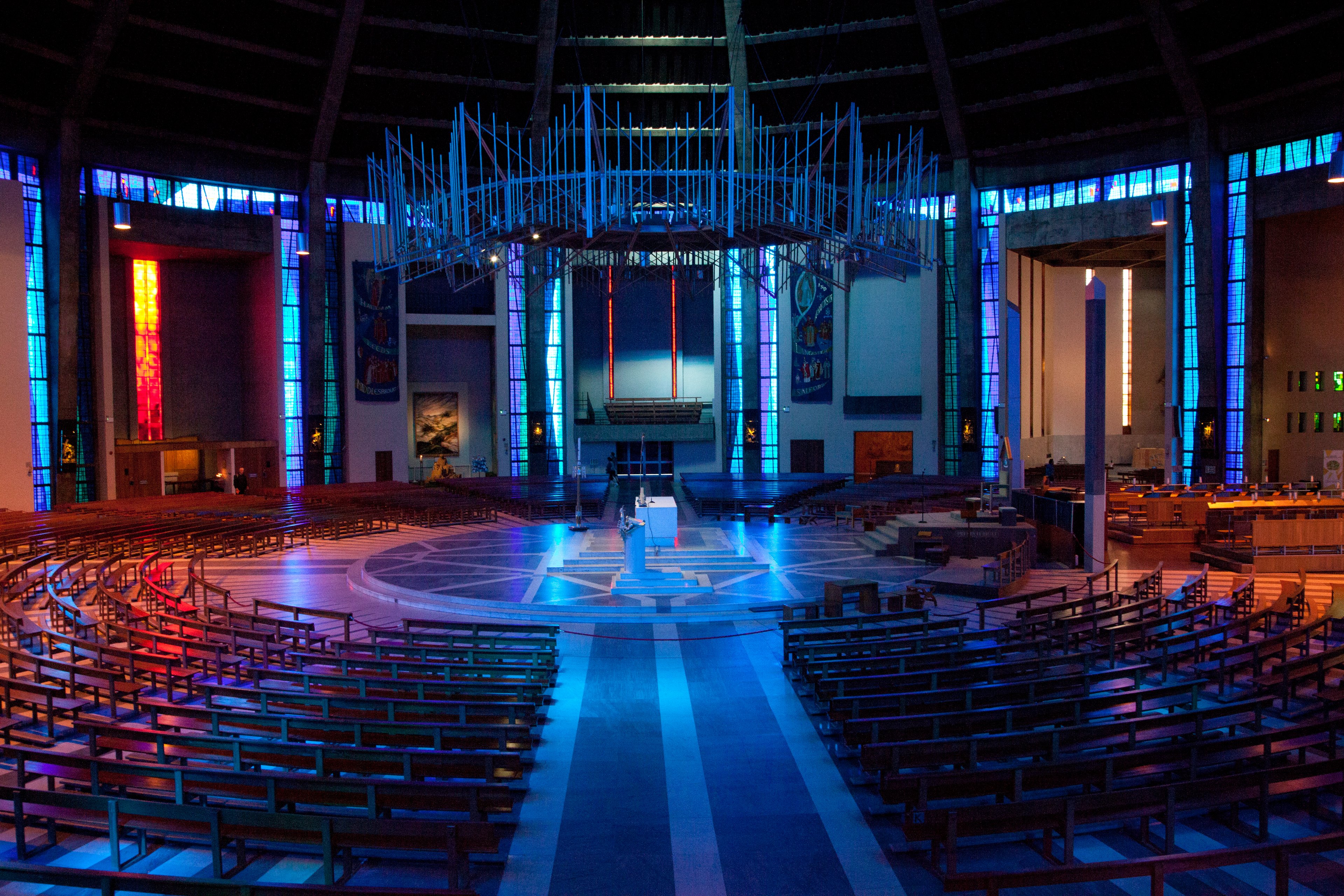
New churches were designed to ensure as many people as possible were close to the altar and felt involved during Mass
Some churches were built in a circular shape with the altar in the middle, for example, the Liverpool Metropolitan Cathedral
The circular design also represents God’s eternal love
Attribution: Gershowitz, CC0
Church features and expressions of redemption
Catholic churches around the world vary in shape, size and level of decoration
However, they all contain four main features: the altar, lectern, crucifix and tabernacle
Each of these features helps Catholics remember the redemption Jesus Christ brought through his suffering, death and resurrection
Lectern
The lectern is a book stand from which the readings take place during the Mass
During every Mass, there are at least two readings from the Bible
The Bible is the Word of God, so the lectern is always placed in a prominent place in the church
This helps everyone to hear God’s word clearly
Some lecterns are ornately decorated; others are plain
Altar
The altar is the “place of sacrifice”; the stone table where consecration takes place during the Mass
It is the table at which the bread and wine are blessed and offered to God
This offering is joined with the sacrifice of Jesus on the cross
The bread and wine become the Body and Blood of Christ
This means that Christ is truly present on the altar at each Mass; receiving the Body and Blood of Christ through Holy Communion strengthens the lives and faith of believers
At each Mass, the bread and wine are offered in “remembrance”, following Jesus’s instructions at the Last Supper
At the altar, Jesus’s words are repeated: “This is my body … this is my blood”
Crucifix
The crucifix is a cross with the figure of Jesus on it, reminding Catholics of Christ’s suffering and sacrifice for humanity
It inspires believers to be grateful for all that Jesus did for humanity and to show love in return
Tabernacle
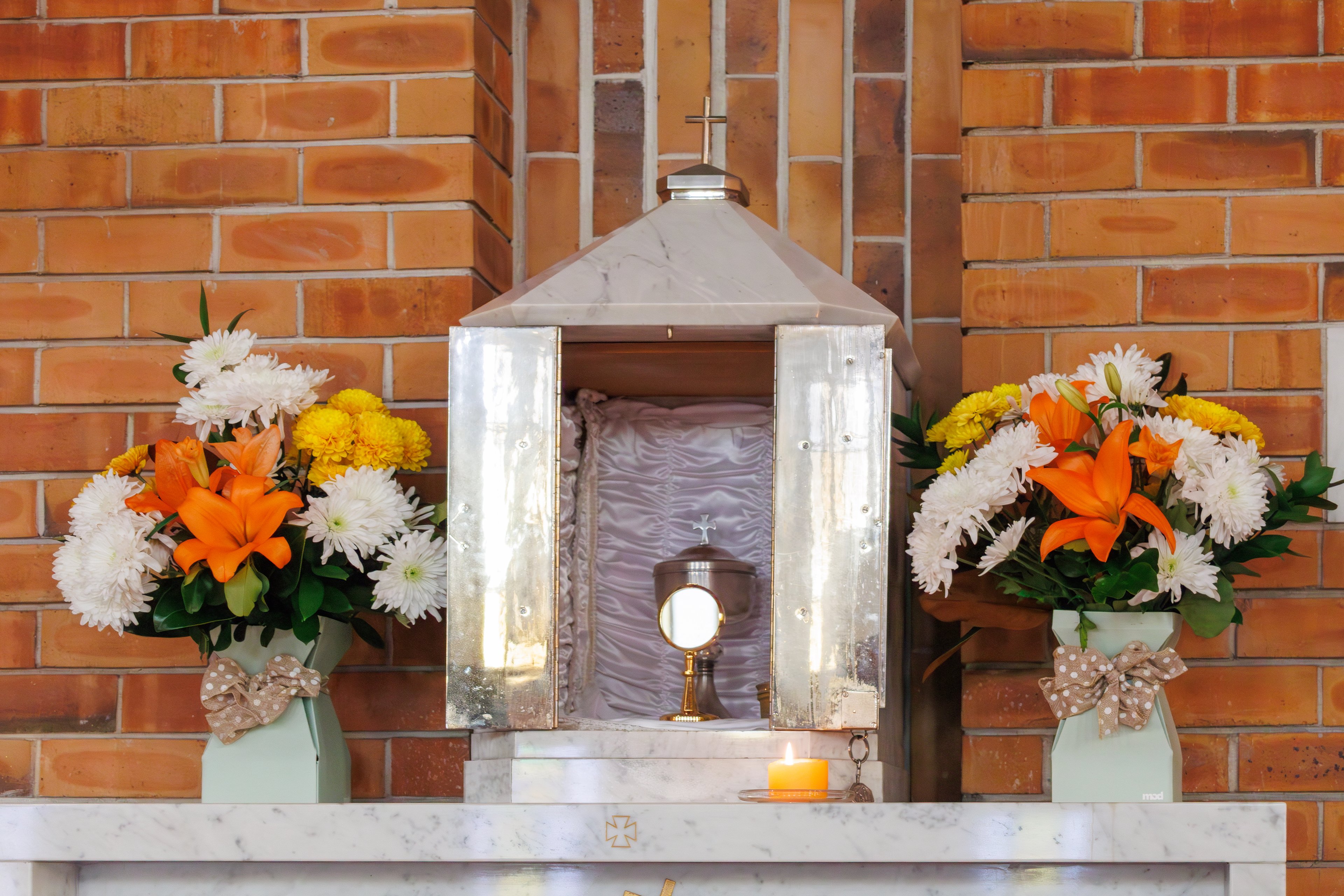
The tabernacle is a box or safe where the consecrated bread is placed after the Mass for later use
This is known as the “reserved sacrament”
It is taken to people who cannot come to Mass to receive Holy Communion, such as the sick and the elderly
People pray before the tabernacle because it contains the Real Presence of Jesus Christ in the Eucharist
A light shines next to the tabernacle at all times to show that the Real Presence of Jesus Christ is being kept there
Attribution: Bjankuloski06, CC BY 4.0
Contrasting church features and Catholic beliefs
There are some variations between church features within different Catholic churches and between the Catholic Church and other Christian denominations
Altar and table
An altar is a place of sacrifice and thanksgiving
Animals were sacrificed at an altar several times in the Old Testament
For Catholics, the blessing of the bread and wine at the altar represents the ultimate sacrifice Jesus made on the cross — his life
The altar reminds them that Jesus’s sacrifice is being made each Mass through the bread and wine that become his Body and Blood
Each time Catholics take part in Mass, they give thanks for this sacrifice
Therefore, the altar is the central feature in a Catholic church
Mass is also a re-enactment of the events of the Last Supper when Jesus shared a meal with his disciples at a table
Some Catholic churches use a table at Mass to remind worshippers that they are joining in with the Last Supper
Other Christian denominations, including Protestants, see Holy Communion services as just a remembrance of the Last Supper
Therefore, they would use a table rather than an altar
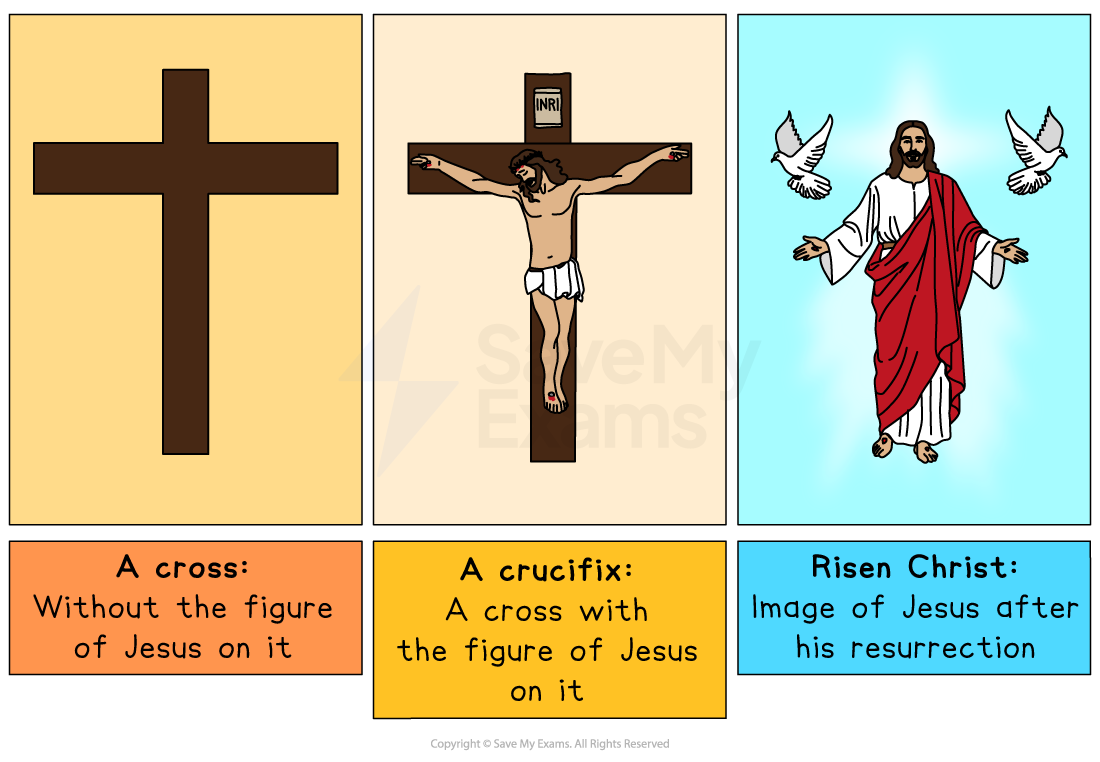
Cross, crucifix and Risen Christ
A crucifix is a cross with the figure of Jesus on it
All Catholic churches contain a crucifix because:
It reminds believers of Christ’s suffering and his sacrifice for humanity
It inspires believers to be grateful for all that Jesus did
Mass re-enacts Jesus’s sacrifice, and Catholics consider it important to have a crucifix present in the church to help them call this sacrifice to mind
A cross does not contain the figure of the crucified Jesus
Many Christians prefer to use a cross rather than a crucifix because:
The crucifix makes people focus too much on Jesus’s suffering, rather than his victory over death
Jesus is no longer on the cross because he rose again from the dead
The cross shows this victory over death
It is a more hopeful symbol of new life for Christians
A statue or picture of the Risen Christ shows an image of Jesus in glory after his resurrection
Some Christians prefer to use an image of the Risen Christ because:
Like a cross, an image of the Risen Christ shows Jesus’s victory over sin and death
It focuses on Jesus as the glorified Saviour
It helps believers focus on the resurrection as the most important event and the basis of Christian faith
Worked Example
Give two ways in which the decoration inside a Catholic church can help people worship.
[2 marks]
Answer:
Statues of saints inspire people to pray. [1 mark]
The tabernacle shows people that the Real Presence of Christ is present, giving them confidence that God hears their prayers. [1 mark]
Examiner Tips and Tricks
Make sure you can identify these church features and explain their importance. Making a set of flashcards may help:
Lectern
Tabernacle
Altar
Table
Cross
Crucifix
Risen Christ

Unlock more, it's free!
Join the 100,000+ Students that ❤️ Save My Exams
the (exam) results speak for themselves:

Was this revision note helpful?
