Magisterium & the Kingdom of God (AQA GCSE Religious Studies B): Revision Note
Exam code: 8063

Conciliar and pontifical nature of the Magisterium
The Magisterium is the Catholic Church’s teaching authority, held by the Pope and the bishops who work together
There is the Conciliar Magisterium and the Pontifical Magisterium
The Conciliar Magisterium
Conciliar means Council
The Magisterium is conciliar because it meets in Councils
Councils are official meetings called by the Pope
Councils are held so the Pope and bishops can discuss important issues with each other and listen to other Church members
They help the Pope make important decisions about Church teachings and doctrine
These decisions affect the whole Catholic Church community
Councils express the voice of the whole Church
The most recent Council was the Second Vatican Council, which met between 1962 and 1965 to examine the Church’s relationship with the modern world
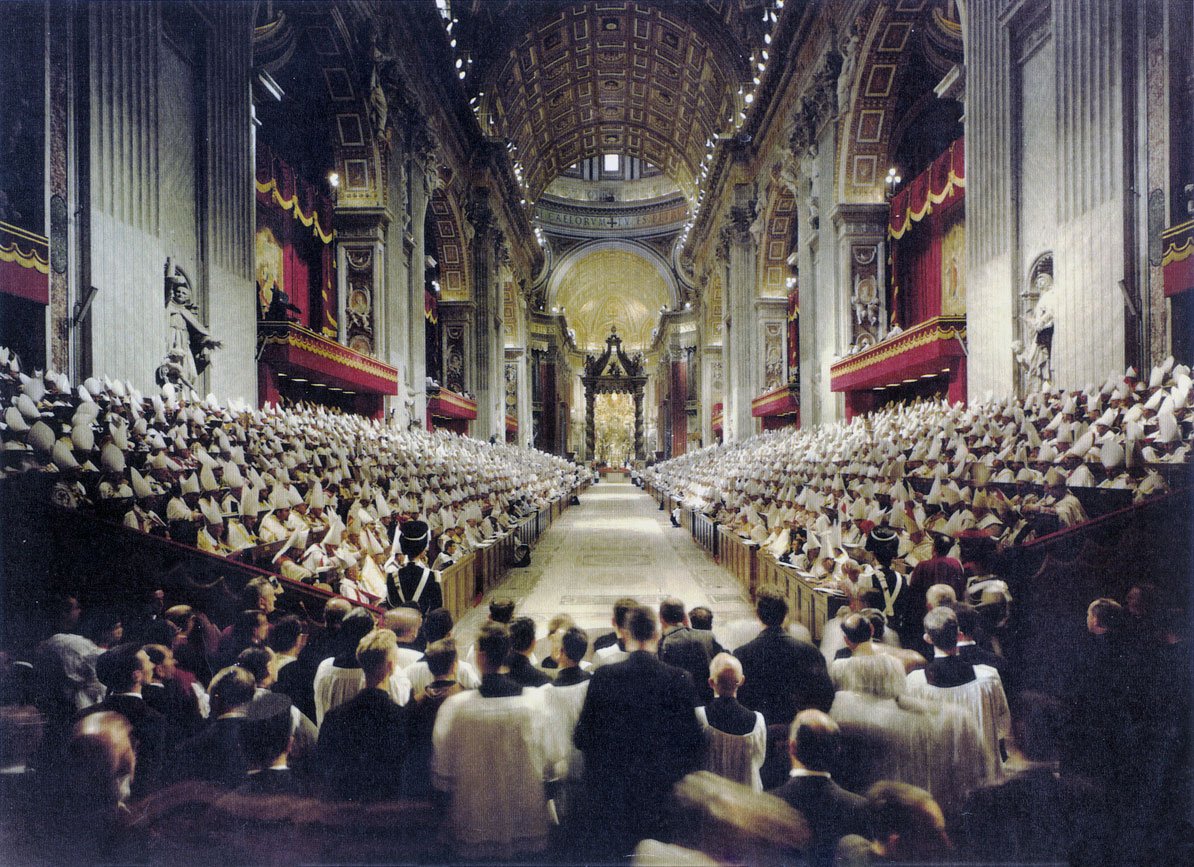
The taker of the photo is unknown, the publisher is from Carroll College, CC BY 3.0
The Pontifical Magisterium
Pontifical refers to the Latin word pontiff, which means papal
The Magisterium is pontifical because the Pope is the Church’s leader and its highest authority
This authority comes from Saint Peter, who was selected by Jesus and was the leader of the apostles
Saint Peter’s authority is passed on by apostolic succession to the current Pope, who is his successor
This makes the Pope the representative of Christ on earth today
In this role, the Pope uses the title Vicar of Christ
The Pope is guided by the Holy Spirit in a special way, and Catholics take his teachings very seriously
Most of the time, these teachings are delivered through letters called encyclicals
On rare occasions, the Pope will speak ex cathedra (from the chair of Saint Peter). These teachings can be declared as infallible, meaning that they are without error
Catholic social teaching and the Magisterium
Catholic social teaching is the application of gospel teachings to the needs of people in the world today
The Catholic Church recognises the importance of every human life and the need to speak out on behalf of the weakest and poorest members of society, showing them God’s love
It teaches individual Catholics that they have a responsibility to help the poor and weak and do what they can to relieve others’ suffering
Gaudium et Spes (Joy and Hope) from the Second Vatican Council opens with a plea to all Catholics to see that the struggles of the poor and suffering are also their struggles
“The joys and the hopes, the griefs and the anxieties of the men of this age, especially those who are poor or in any way afflicted, these are the joys and hopes, the griefs and anxieties of the followers of Christ. Indeed, nothing genuinely human fails to raise an echo in their hearts” (Gaudium et Spes, 1)
Catholic social teaching aims to change society and influence political decisions to bring about a fairer and more equal world
“The Church sincerely professes that all men … ought to work for the rightful betterment of this world in which all alike live” (Gaudium st Spes, 21)
Catholic social teaching is about stewardship and respecting human dignity
It is also about standing against economic exploitation and a culture of greed
“We have to say ‘thou shalt not’ to an economy of exclusion and inequality” (Evangelii Gaudium, 53–4)
Catholic social teaching tries to spread the Kingdom of God as widely as possible by seeking a more just and fair world
Worked Example
Give two ways in which the Catholic Church is pontifical.
[2 marks]
Answer:
One way the Church is pontifical is that the Pope is its leader. [1 mark]
Another way is that the Pope has the authority of Saint Peter, the leader of the apostles. [1 mark]
Examiner Tips and Tricks
The course specification defines the Magisterium’s role in providing Catholic social teaching in Gaudium et Spes 1 and Evangelii Gaudium 53–54, so make sure you can explain what these documents teach Catholics about their responsibilities.
However, you may have studied other Catholic social teaching documents during your course, and any relevant teachings will be useful if you are writing more generally about the Church’s work to help the poor.

Unlock more, it's free!
Join the 100,000+ Students that ❤️ Save My Exams
the (exam) results speak for themselves:

Was this revision note helpful?