Practices & the Trinity (AQA GCSE Religious Studies B): Revision Note
Exam code: 8063

Baptism and the Trinity
Baptism is a very important sacrament for all Christians, except the Salvation Army and the Quakers
It is the sacrament of initiation, or joining the Christian Church
Jesus himself was baptised by John the Baptist
After Jesus was crucified and resurrected, he told his disciples to go out and baptise people
“Go and make disciples of all nations, baptising them in the name of the Father and of the Son and of the Holy Spirit” (Matthew 28:19)
Jesus’s words are still used in the baptism ceremony today
Jesus’s words show that through baptism, a Christian enters the life of the Trinity
They become a child of God the Father
They join in with Jesus’s death and resurrection
They are filled with the Holy Spirit
The symbol of water is used in the sacrament of baptism to show that the person is joining with Jesus’s death and resurrection
Traditionally, the person being baptised was totally immersed under water to symbolise dying with Jesus and entering the tomb
Rising up from the water represents starting a new life with the risen Jesus as a Christian
Even though Catholics are not baptised by total immersion today, water is still poured over their heads to represent this idea
St Paul taught the Romans about the symbolism of joining in Christ’s death and resurrection in baptism
“Do you not know that all of us who have been baptised into Christ Jesus were baptised into his death? Therefore, we have been buried with him by baptism into death, so that, just as Christ was raised from the dead by the glory of the Father, so we too might walk in newness of life.”(Romans 6:3–4)
There are many reasons why baptism is an important sacrament to Christians
It is the sacrament of initiation, welcoming them into the Church and making them children of God
It allows God’s grace to enter their lives
It cleanses Christians of their sin
It shares the life of the Trinity (Father, Son and Holy Spirit) with them
It is a means for Christians join in with Jesus’s death and resurrection and so share his victory over the power of sin and death
The person receives the power of the Holy Spirit to give them strength to live a life of faith
The person has the promise of joining God in heaven through being baptised
Prayer and the Trinity
The Catechism calls prayer “the raising of one’s heart and mind to God”
The Youth Catechism (Youcat) calls it “turning the heart towards God”
Prayer is any form of communication with God
Prayer can take many different forms
Thanksgiving — thanking God for something
Supplication — asking God for something
Adoration — worshipping God
Confession — admitting to and asking for forgiveness for sins
Intercession — asking God to help other people
Prayer is important to Christians because:
It is a conversation with God, and people take comfort in the fact that God is listening to them
It is a chance for people to open up their minds to God and listen to his message to them
It strengthens a person’s relationship with God
It is inspired by the Holy Spirit, who helps Christians to pray
It unites the whole Church: There is always someone praying or a Mass being offered somewhere in the world, so Christians are never alone in their prayer
Christians believe the whole of the Trinity is present in prayer, with God both enabling and hearing all prayer
People pray to God the Father
They pray in the name of Jesus, who offered his own life as the ultimate prayer
They are inspired by the Holy Spirit, who inspires all prayer
The end of the Eucharistic prayer in the Mass shows how the Trinity is present in prayer
“Through him, and with him, and in him, O God, almighty Father, in the unity of the Holy Spirit, all glory and honour is yours, for ever and ever” (Eucharistic Prayer)
Traditional prayers are prayers with set words that Christians read from prayer books or recite from memory
These prayers have been passed down through many generations
Examples of traditional prayers include the ‘Our Father’, the ‘Hail Mary’ and the ‘Rosary’
Benefits of traditional prayers include:
They are familiar and bring comfort
The person can spend time with God without having to think of the right words to say, which is particularly helpful if they are upset or need comfort
Reciting traditional prayers can help a Christian to think about God more deeply because they do not need to focus on their words
Spontaneous prayers are prayers with no set format or words
People choose their own words and may make the prayer up on the spot
People might pray for help with a particular situation or concern
They may feel they have been inspired and guided by the Holy Spirit, who helps them know what to say
Benefits of spontaneous prayers include:
They come from the heart and are sincere
They help the person to express their own unique worries and concerns
They help the person to develop an individual relationship with God
Prayer and posture in Christian worship
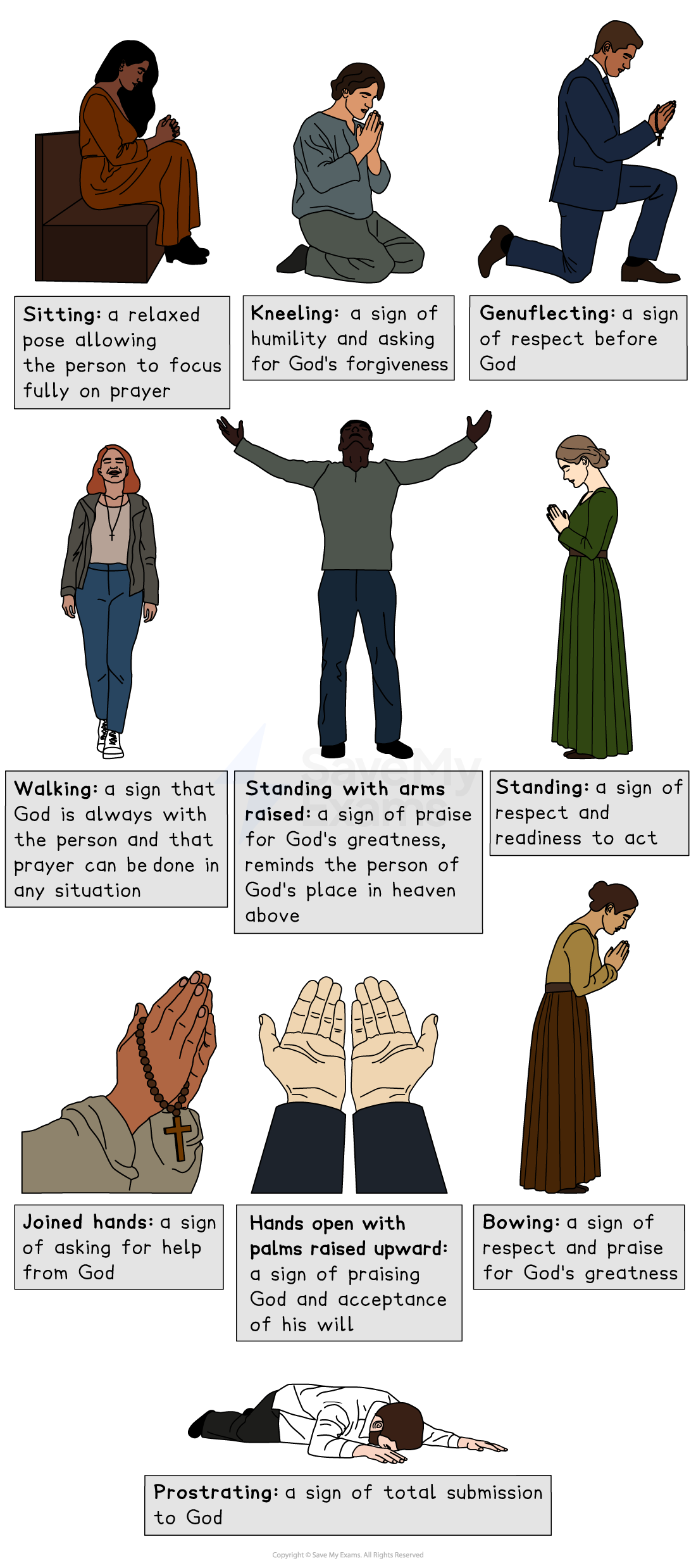
Prayer can be expressed in physical postures, not just words
Some of the most common postures used in prayer are kneeling, bowing and joining hands
Kneeling is a sign of humility before God, showing how great God is compared to the person offering the prayer
Genuflecting, or bending one knee only, is a sign of respect before God
Catholics genuflect when they enter the church or before the tabernacle
Prostrating is when someone lies flat on the ground, face down
This is a position of total submission and shows that a person is giving themselves wholly to God and asking for his help
Standing is a sign of respect and readiness to act
People stand in church to say certain prayers and to listen to the gospel reading at Mass out of respect for the word of God
Bowing is another sign of respect and praise for God’s greatness
Sitting allows people to be more relaxed and focus more on their prayer
Joining hands together is a sign of asking for help from God
Holding hands open with palms raised upwards symbolises praising God and acceptance of whatever God sends
Raising arms above the head is a sign of praise for God’s greatness and calls to mind God’s place in heaven
Worked Example
Give two prayer postures that demonstrate a person’s respect for God.
[2 marks]
Answer:
Genuflecting when a person enters the church is a sign of respect for God. [1 mark]
Bowing is another sign of respect for God. [1 mark]
Examiner Tips and Tricks
You may be asked to evaluate a statement such as “Using different postures for prayer is a distraction for Christians.”
Think of some reasons why people may say that postures can be a distraction. For example, if someone is new to Catholic worship, they may be unsure of the “correct” posture for each part of the Mass or service. Perhaps the prayer itself is the most important thing, regardless of a person’s posture or gestures.
Second, make a list of what the different prayer postures show about a person’s intention for their prayer. Think about how these may help a person to express how they feel about God without using words at all.
Which side is more convincing? Cardinal Basil Hume said, “The only important thing about prayer is that you show up to do it!”

Unlock more, it's free!
Join the 100,000+ Students that ❤️ Save My Exams
the (exam) results speak for themselves:

Was this revision note helpful?
