Tradition & the Trinity (AQA GCSE Religious Studies B): Revision Note
Exam code: 8063

St Augustine and Catherine LaCugna
Throughout Christian history, many theologians have attempted to explain the idea of the Trinity, including St Augustine and Catherine LaCugna
St Augustine
St Augustine (354–430 CE) was the Bishop of Hippo in North Africa
He is one of the most influential theologians in Catholic Church history
St Augustine wrote On the Trinity to explain the relationship between God the Father, the Son and the Holy Spirit
He said that the starting point for understanding their relationship is the Bible’s statement that “God is love” (1 John 4:16)
For love to exist, there must be three parts
The person who loves (the lover)
The person who is loved (the beloved)
The love that unites them
“True love is: a trinity of lover, beloved and the love that binds them together into one” (St Augustine, On the Trinity)
Love cannot exist on its own: There must be someone to give and someone to receive it
This makes sense of the Trinity; it is three persons united in love
The Father loves the Son
The Son is beloved (and loves the Father)
The Holy Spirit is the love that unites them
God contains all three parts, and so, God is love
St Augustine was concerned with the relationship between Father, Son and Holy Spirit because he wanted to understand the nature of God as fully as possible
However, he taught that the same love pours out into the lives of believers, and so, Christians can share in this gift of God’s love
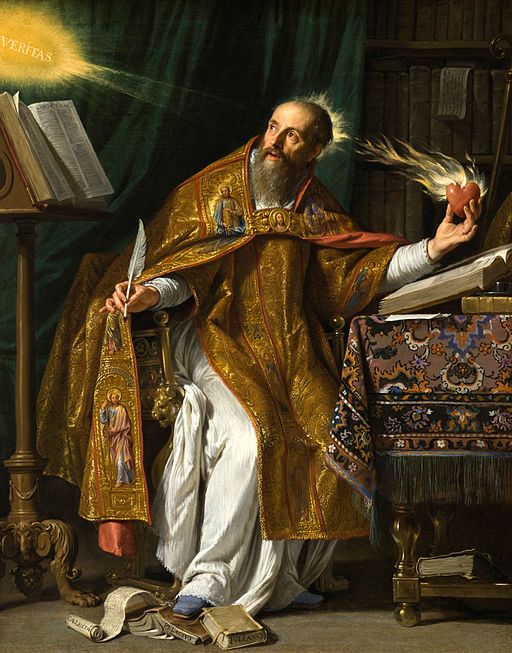
Attribution: Saint Augustine by Philippe de Champaigne, Public domain
Catherine LaCugna
Catherine LaCugna (1952–1997) was an American theologian who examined the Trinity for the modern age
She moved away from St Augustine’s focus on how the Trinity worked internally and the relationship among the Father, Son and Spirit
This is known as immanent theology
Instead, LaCugna focused on the Trinity’s outward effects: how it can be seen and understood in the world today
LaCugna said that everything we know about God comes from God’s self-revelation: how he has acted in people’s lives
God the Father can be seen in the creation of the world
God the Son can be seen in Jesus’s teachings and actions recorded in the Gospels
God the Holy Spirit, can be seen in the love and kindness that unite people on earth
LaCugna also taught that the whole revelation of God as Trinity to humans is an attempt to redeem them
God sent the Son to earth to bring redemption and restore people’s relationship with the Father
God also sent the Holy Spirit to guide and strengthen believers and bring them ever closer to God, completing the work of redemption
Once redemption is complete, through the work of God the Father, Son and the Holy Spirit, all things will ultimately be brought back to God
Similarities and differences between St Augustine and LaCugna
Both St Augustine and LaCugna believe in the importance of love in the life of the Trinity
They both recognise the Catholic Church teaching that the persons are three-in-one and are eternal
They differ in their emphasis
St Augustine focuses on the relationship of love between the persons of the Trinity (immanent theology)
Lacugna focuses on the Trinity’s outward actions and how they affect humankind (relational)
Worked Example
Give two ways in which the Trinity contributes to human redemption.
[2 marks]
Answer:
One way is that God the Son, Jesus, came to earth to save people and bring them back to God. [1 mark]
Another way is that the Holy Spirit is continually at work in the world, guiding people towards God. [1 mark]
Examiner Tips and Tricks
One way to remember the difference between the ideas of St Augustine and Catherine LaCugna is the clue in Augustine’s name: Augustine looked inward at the relationship within the Trinity.
Meanwhile, LaCugna looked at the Trinity’s outward effects on humans (La Cugna means sister-in-law in Italian).

Unlock more, it's free!
Join the 100,000+ Students that ❤️ Save My Exams
the (exam) results speak for themselves:

Was this revision note helpful?
