What are Human Rights? (WJEC Eduqas GCSE Religious Studies): Revision Note
Exam code: C120

The Universal Declaration of Human Rights
Human rights are the universal moral rights that apply to all people at all times and in all places
These rights are meant to ensure that everyone is treated fairly, with dignity and respect, no matter their race, religion, gender, nationality or any other status
In 1948, the United Nations (UN) adopted the Universal Declaration of Human Rights (UDHR)
The UDHR outlines a set of fundamental human rights that should be protected for all people
The declaration includes 30 articles that cover rights such as the right to life, liberty, education and work
The UK signed this declaration; therefore, UK law should always protect these rights
The UDHR opens with a statement that the rights set out apply to all humans equally
“All human beings are born free and equal in dignity and rights. They are endowed with reason and conscience and should act towards one another in a spirit of brotherhood” (Article 1, UDHR)
The responsibilities that come with human rights
Having your human rights upheld comes with the accompanying responsibility of upholding and respecting the rights of others
For example:
The right: Everyone has the right to freedom of thought, conscience and religion (Article 18)
The responsibility: Everyone needs to respect all religious beliefs and treat all religions fairly
The right: Everyone has the right to freedom of opinion and expression (Article 19)
The responsibility: Everyone needs to ensure that what they express does not deliberately offend others or cause violence or hatred
Some people’s human rights may be limited
For example, people serving prison sentences have lost their rights to liberty and freedom of movement
When human rights are violated, international organisations and other countries may put pressure on governments to protect people’s rights
Human rights organisations, such as Amnesty International, monitor cases in which human rights are denied, and they campaign for justice and fair treatment
What is social justice?
Social justice is the process of promoting a fair society by challenging injustice and valuing diversity
To achieve social justice, everyone must have equal access to provisions, equal opportunities and rights
The former Secretary-General of the United Nations, Ban Ki-Moon, outlined the need for social justice for everyone
“Circumstances such as where a person is born, where they live, or their gender and ethnicity should never determine their income or their opportunities for quality education, basic healthcare, decent work, adequate shelter, access to drinking water, political participation or living free from threatened, or actual, physical violence”
(Ban Ki-Moon, Eighth Secretary-General of the United Nations)
The United Nations describes social justice as an “underlying principle” for peaceful coexistence
“Social justice is an underlying principle for peaceful and prosperous coexistence within and among nations. We uphold the principles of social justice when we promote gender equality or the rights of indigenous peoples and migrants. We advance social justice when we remove barriers that people face because of gender, age, race, ethnicity, religion, culture or disability” (United Nations)
Those who do have rights must recognise that with rights come responsibilities
This means recognising that injustices exist and acting to correct them so that they do not increase and get worse
Both individuals and groups must work for social justice
Governments and agencies may work together to help developing countries, reduce the rich/poor divide and improve the environment for everyone
Religious believers are often involved in this work for social justice because of their belief in the dignity of human life
Campaigns for human rights
There are many examples of individuals and organisations that have campaigned for human rights and social justice because of their personal convictions
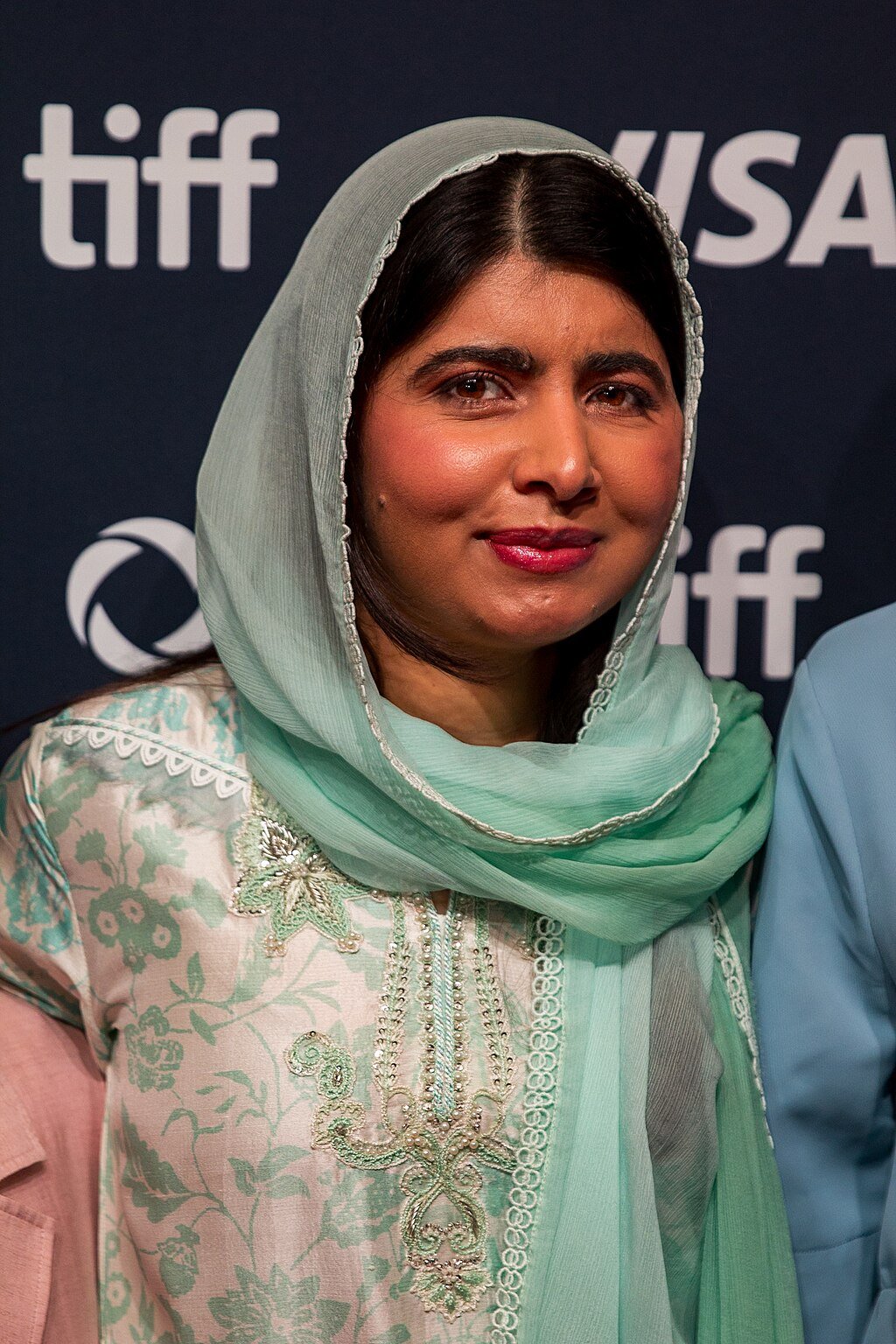
Malala Yousafzai
Human rights campaigner Malala Yousafzai has a personal conviction in the importance of education for girls
In Pakistan, where she lived, the Taliban had banned girls from attending school
Malala realised that this rule went against the Universal Declaration of Human Rights, since Article 26 says that everyone has the right to education
Malala started to blog and speak out publicly to campaign for education for girls
“I raise up my voice — not so I can shout but so that those without a voice can be heard … we cannot succeed when half of us are held back” (Malala Yousafzai)
In 2012, the Taliban shot Malala while she was boarding her school bus
She survived the attack and recovered in England, where she continued her education
Malala continues to campaign for the importance of education today and, in 2014, won the Nobel Peace Prize for her work
Attribution:
Malala Yousafzai, producer, at the 2024 Toronto International Film Festival (TIFF) in Toronto, Canada, is licenced under CC BY-SA 4.0
Original source:
https://commons.wikimedia.org/wiki/File:Malala_Yousafzai_at_the_2024_Toronto_International_Film_Festival_5.jpg (opens in a new tab)
Amnesty International
Amnesty International is a human rights organisation that works worldwide
To protect and uphold basic human rights
To campaign on behalf of people whose human rights have been violated
Amnesty International uses a range of nonviolent actions to highlight and campaign against human rights violations. These include:
Writing letters to governments to highlight injustice
Conducting protest marches
Executing media campaigns to raise awareness of human rights abuses
Organising public events and school programmes to educate people about human rights abuses
Peter Benenson, who had a personal conviction that everyone should be entitled to human rights, founded Amnesty International in 1960
Benenson read about two students who had been imprisoned for raising their glasses "to liberty”, and he started campaigning to free wrongfully imprisoned people
He designed the Amnesty International candle logo with the Chinese proverb, “Better light a candle than curse the darkness”, in mind
Amnesty International has continued its work ever since
In 1977, the organisation won the Nobel Peace Prize to mark the worldwide impact of its work
Attribution:
Candle logo of Amnesty International, public domain
Original download from:
https://commons.wikimedia.org/wiki/File:Amnesty_International_logo_candle.jpg (opens in a new tab)
Worked Example
What is meant by a human right?
[2 marks]
Answer:
A human right is a basic freedom or protection that every person is entitled to simply because they are human. These rights apply to everyone equally, in all places and situations
Examiner Tips and Tricks
There are many examples of individuals and groups that have campaigned for human rights and social justice. You may have studied alternative examples to the ones highlighted on this page. The examiner will accept any valid examples in your answers. Make sure you can explain the personal convictions behind the actions of any alternative examples you might use.

Unlock more, it's free!
Join the 100,000+ Students that ❤️ Save My Exams
the (exam) results speak for themselves:

Was this revision note helpful?
