Religious Views on Wealth & Poverty (WJEC Eduqas GCSE Religious Studies): Revision Note
Exam code: C120

Christian attitudes to wealth and poverty
Christian attitudes to wealth
Christians do not believe that it is wrong to be wealthy but think that spiritual values are more important than physical wealth
Jesus taught this, saying:
“You cannot serve both God and money” (Matthew 6:24)
Jesus taught that wealth can distract people from loving God and loving their neighbour
When a rich man asked how to be perfect, Jesus told him to sell everything and give to the poor, teaching that spiritual priorities matter more than possessions.
Jesus said:
“It is easier for a camel to go through the eye of a needle than for someone who is rich to enter the kingdom of God” (Mark 10:25)
Saint Paul warned Christians not to rely on wealth, saying that “the love of money is a root of all sorts of evil” (1 Timothy 6:10) and cautioning them, “Do not put your hope in wealth … but in God” (1 Timothy 6:17)
Christians believe wealth is not wrong in itself, but how it is gained matters
Many oppose gambling or making money through exploiting others because it encourages greed and harms society
Some denominations, such as Methodists and Quakers, avoid all gambling
Wealthy people should not be selfish and should use their wealth responsibly to help people in need
The Parable of the Sheep and Goats gives several examples of how people can achieve eternal rewards in heaven for helping those in need on earth
Jesus teaches that helping the hungry, thirsty, sick and imprisoned is like helping Jesus himself
This passage encourages Christians to show compassion and care
The Parable of the Rich Man and Lazarus is a cautionary tale in which the rich man ends up in hell for refusing to help Lazarus, the beggar (Luke 16:19–31)
This story shows the consequences of failing to use wealth to help others
The Parable of the Good Samaritan teaches Christians to care for people in need, no matter who they are
The Samaritan helps a man in need, even though they were not from the same community
The early Christian community exemplified a positive attitude towards wealth
They shared possessions, cared for the poor and made sure no one was in need (Acts 4:32–35)
This inspires Christians today to live by the same principles of sharing and helping others
Christians today can show a responsible attitude towards wealth by:
Living simply and putting God and others first
Tithing or giving regular donations to charity
Supporting charities such as Christian Aid that are trying to end world poverty
Donating to food banks and local Christian projects
Looking after others who have less or who are struggling
Supporting Fairtrade to ensure workers are paid fairly
Being content with what they have rather than envying others who appear to have more
Christian attitudes to poverty
Christians believe God created all people. Every life is sacred and deserves dignity
The earth belongs to God, and its resources should be shared fairly
“The earth is the Lord’s, and everything in it” (Psalm 89:11)
Christians believe God is a God of justice and calls people to act justly
“What does the Lord require of you? To act justly, love mercy, and walk humbly … ” (Micah 6:8)
The Bible teaches that refusing to help people in need is incompatible with Christian love
“If anyone has material possessions and sees a brother or sister in need but has no pity … how can the love of God be in that person?” (1 John 3:17)
Jesus taught about the importance of helping the poor
The Parable of the Sheep and Goats teaches that Christians will be judged on how they treated the poor
The Parable of the Rich Man and Lazarus shows the consequences of ignoring people who suffer
Jesus warned against storing up earthly treasures and encouraged storing up treasures in heaven through good deeds
Jesus praised a widow’s offering when she gave two small coins in the temple, teaching that God values generosity over the amount given (Mark 12:43–44)
Christian actions to alleviate poverty
Working for justice and supporting efforts to alleviate poverty is an important duty for Christians
Christians support both local and global projects
Local Christian actions include:
Food banks
Soup kitchens
Debt counselling
Job skills and education support
Projects run by local churches to help vulnerable families
One local Christian charity is the Trussell Trust, which:
Aims to end poverty and hunger in Britain by providing help to those in need
Provides emergency food and support through a nationwide network of food banks
Helps people of all religions, as well as those who have no faith at all
Christians also support global organisations and charities aiming to tackle poverty, such as CAFOD, Tearfund and Christian Aid
The work of Christian Aid
Christian Aid is a Christian charity that helps those in need in more than 60 countries. It aims to:
Stop poverty
Challenge injustice
Support long-term development
Achieve fairer global systems
Christian Aid’s work includes:
Organising projects run by partners in different countries
Educating people about the causes of poverty
Publicising examples of inequality and poverty
Running Fairtrade activities and campaigns
Christian Aid’s values are based on Bible teachings
Love and solidarity for all
Dignity and respect for all people
Justice and equality for everyone, challenging unfair and unequal structures that prevent people from breaking free from poverty
Cooperation and partnership between all people, religious and non-religious, including governments and other faith groups
Stewardship and accountability for the earth’s resources
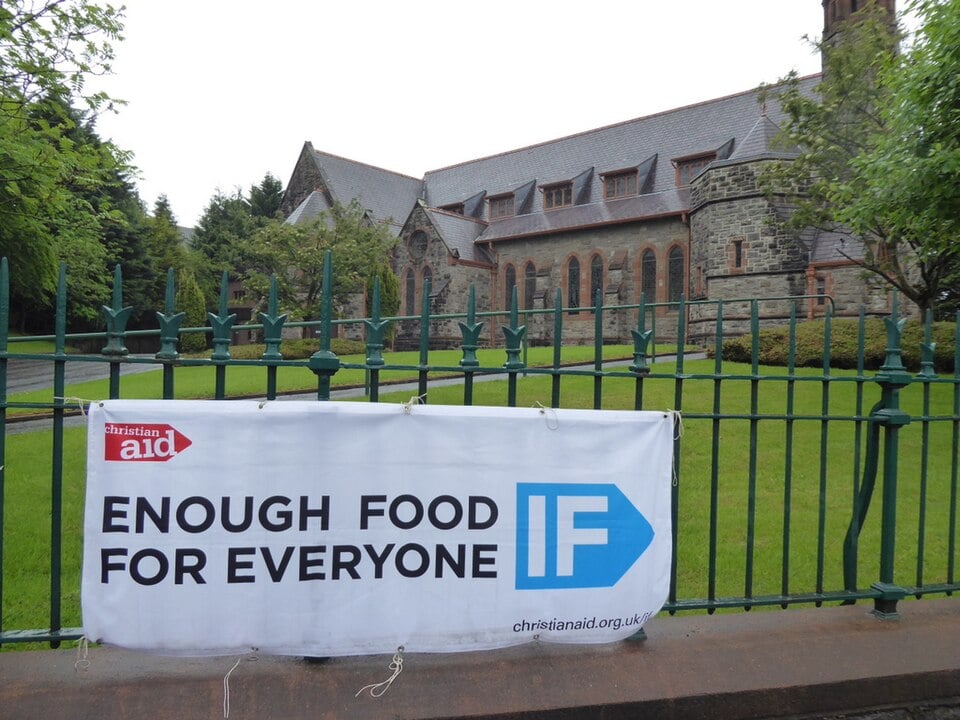
Attribution:
Christian Aid banner, Omagh is licenced under CC BY 2.0
Original source:
https://commons.wikimedia.org/wiki/File:Christian_Aid_banner,_Omagh_-_geograph.org.uk_-_5781517.jpg (opens in a new tab)
Muslim attitudes to wealth and poverty
Muslim attitudes to wealth
Islam teaches that all wealth belongs to Allah. Humans are caretakers (khalifah) and will be judged on how they gain and use their money
Wealth is seen as a test, not a sign of Allah’s favour
“Your wealth and your children are only a test for you … ” (Qur’an 64:15)
The story of Adam and Hawwa (Eve) shows that Allah originally intended humans to have what they needed
“You will never go hungry, feel naked, be thirsty, or suffer the heat of the sun” (Qur’an 20:118–119)
Wealth must be earned honestly
Gambling (qimar) and gaining money through chance are forbidden
“Intoxicants, gambling … are defilement from the work of Satan, so avoid it” (Qur’an 5:90)
Interest (riba) is forbidden, as it exploits the poor. Islamic banks offer interest-free loans so Muslims can borrow ethically
Wealth must also be used wisely
Muslims must not hoard wealth or ignore the needy
“Tell those who hoard gold and silver … they will have a grievous punishment” (Qur’an 9:34)
The Qur’an teaches generosity and sharing
“Give relatives their due, and the needy … do not be tight-fisted” (Qur’an 17:26–30)
The Hadith teaches that “the upper hand is better than the lower hand”, meaning it is better to give than to receive
However, Muslims should give with the right spirit. They should:
Give sincerely for Allah alone, not for praise
Give secretly where possible (Qur’an 2:271–274)
Be humble and avoid reminding people of their generosity
“Those who spend their wealth … and do not follow their spending with reminders of benevolence … will have their reward with their Lord” (Qur’an 2:262)
Muslim attitudes to poverty
Islam teaches that followers have a responsibility to help the needy, wherever they are
“Be good to your parents, to relatives, to orphans, to the needy” (Qur’an 4:36)
The Qur’an also calls caring for the poor and needy as “true righteousness”
“True righteousness is in one who believes in Allah, the Last Day, the angels, the Book, and the prophets and gives wealth, in spite of love for it, to relatives, orphans, the needy, the traveller, those who ask, and for freeing slaves” (Qur’an 2:177)
Muslims believe that those who help others will gain favour with Allah
They believe that Allah sees all that they do and that they will be rewarded for sharing with others
“Be steadfast in prayer and regular in charity: and whatever good you send forth for your souls before you, you shall find it with Allah: for Allah sees all that you do” (Qur’an 2:110)
“If any saves a life, it is as if he saves the lives of all mankind” (Qur’an 5:32)
The Hadith also promises reward, saying that “the generous person is near God … ”
Helping the poor is an essential Islamic duty because:
Allah created all humans equal
All wealth ultimately belongs to him
Muslims will be judged on their compassion and generosity
Supporting the poor strengthens justice and the global ummah
Islam promotes four types of giving
Zakah: The third pillar of Islam. All Muslims are to give 2.5 per cent of their annual earnings to help those in poverty (Sunni and Shi’a Muslims)
Khums: 20 per cent of savings given to Muslim scholars and community leaders for community welfare (Shi’a Muslims)
Sadaqah: Voluntary donations of money, food or clothes to those who need it (all Muslims)
Zakat-ul-fitr: Donation at the end of Ramadan, so even those in poverty can share in a meal during Eid al-Fitr
Muslim actions to alleviate poverty
Several Islamic organisations work to help people in need in the UK and overseas. Examples include Islamic Relief, Muslim Aid and Muslim Hands
Muslim Hands is a UK-based organisation that helps British Muslims facing poverty. It works to:
Help people get out of poverty
Provide support for prisoners
Help women who are experiencing exclusion and marginalisation
Help vulnerable young people, those suffering from addiction and the elderly
The work of Islamic Relief
Islamic Relief was founded in the UK in 1984
It now works in over 40 countries
It provides emergency aid in disasters and long-term development projects
It aims to enable people to break out of poverty and secure their future without the need for charity
Islamic Relief helps all people regardless of religion
It particularly supports orphans, women and vulnerable families
Its work reflects Islamic values
Compassion
Justice
Stewardship
Sincerity
Excellence
Worked Example
What is meant by Zakah?
[2 marks]
Answer:
Zakah is the compulsory giving of 2.5 per cent of a Muslim’s annual surplus wealth to help those in need. It is one of the Five Pillars of Islam and is given to support the poor and vulnerable.
Examiner Tips and Tricks
You may be asked to write about a religious charity that works to combat poverty for each of the religions you have studied. The examples given here are those listed in the syllabus, but you may have studied alternatives.
For each charity, make sure you can explain both the work it does and also the principles and actions that inspire its actions.

Unlock more, it's free!
Join the 100,000+ Students that ❤️ Save My Exams
the (exam) results speak for themselves:

Was this revision note helpful?
