Earthquakes & Volcanoes (SQA National 5 Geography): Revision Note
Exam code: X833 75

Distribution of Earthquakes and Volcanoes
Most earthquakes and volcanoes occur at plate boundaries
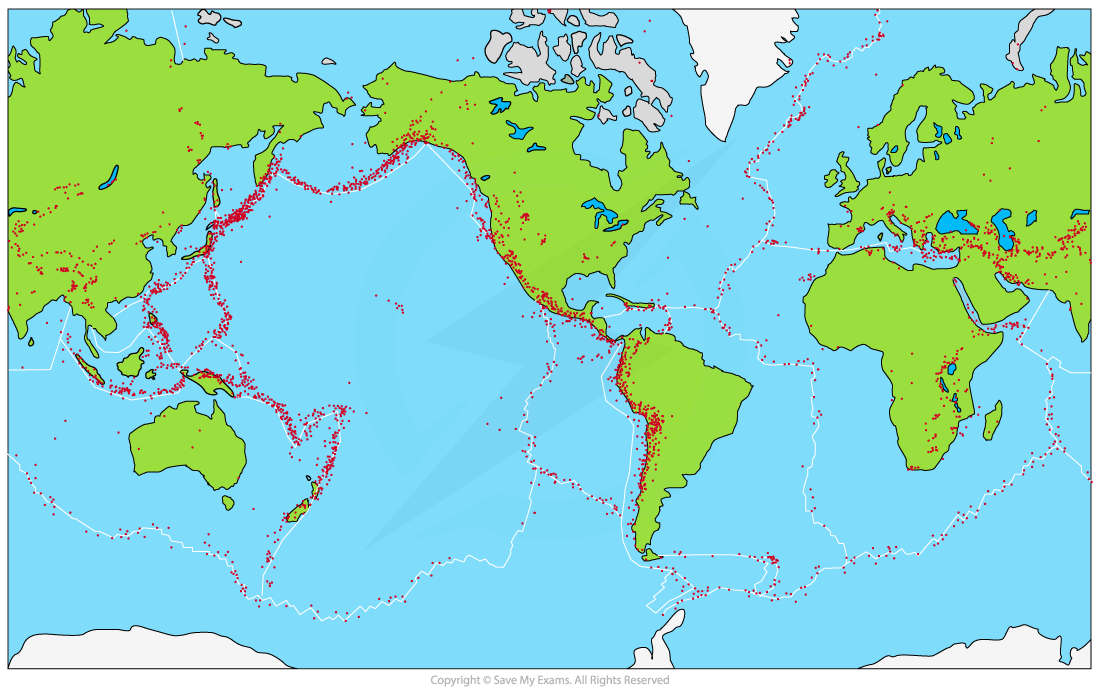
Earthquake distribution
Earthquakes occur at all types of plate boundaries
Most (approximately 90%) occur around the rim of the Pacific Ocean
This zone is called the ‘Ring of Fire’
Volcano distribution
Most volcanoes occur at divergent (constructive) and convergent (destructive) plate boundaries
Like earthquakes, the majority of active volcanoes (approximately 75%) are located around the Pacific ‘Ring of Fire’
Volcanoes also occur at hotspots away from plate boundaries and are plumes/columns of magma which escape through the Earth’s crust
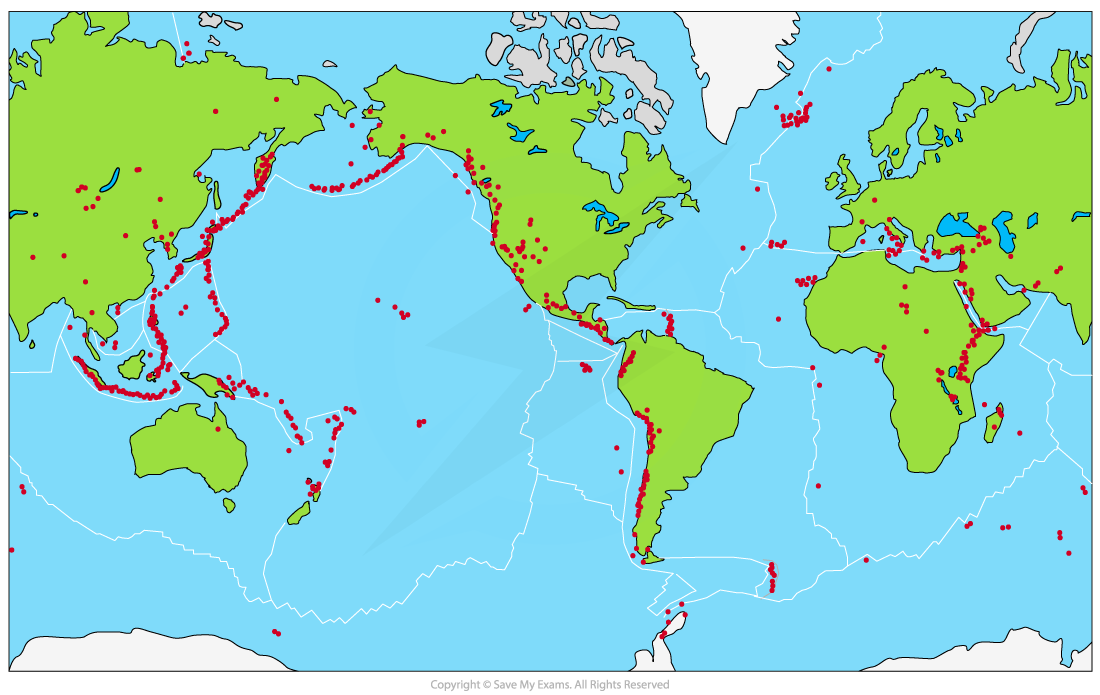
Plate Tectonics and Plate Boundaries
The Structure of the Earth
The Earth is composed of various layers
Inner core: About 1400km in diameter, a solid and dense layer composed of iron and nickel with temperatures of about 5000 - 6000°C
Outer core: About 2100km thick, a semi-molten metal layer with temperatures between about 4000 and 6000 °C
Mantle: About 2900km thick, a semi-molten layer which is less dense than the outer core. This is split into two parts
Crust: the thickness varies and there are two types of crust
Continental crust is thick (25–90km), old and not as dense as oceanic crust
Oceanic crust is thinner (5–10km), younger and denser than continental crust
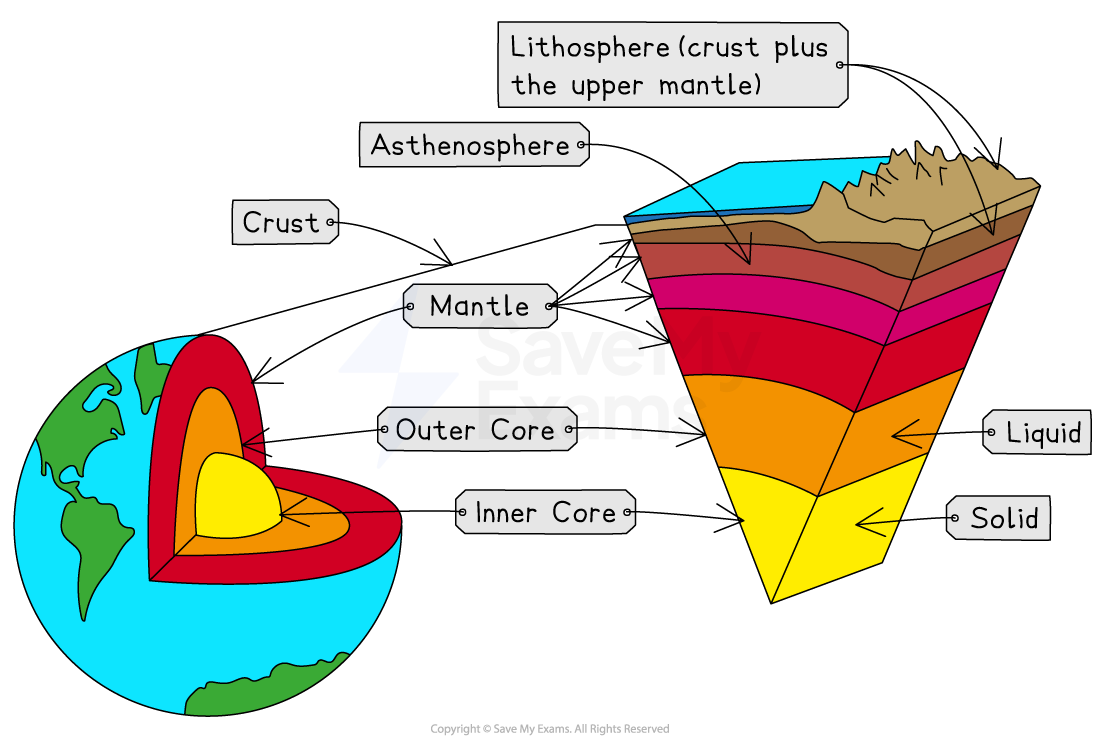
Plate tectonics
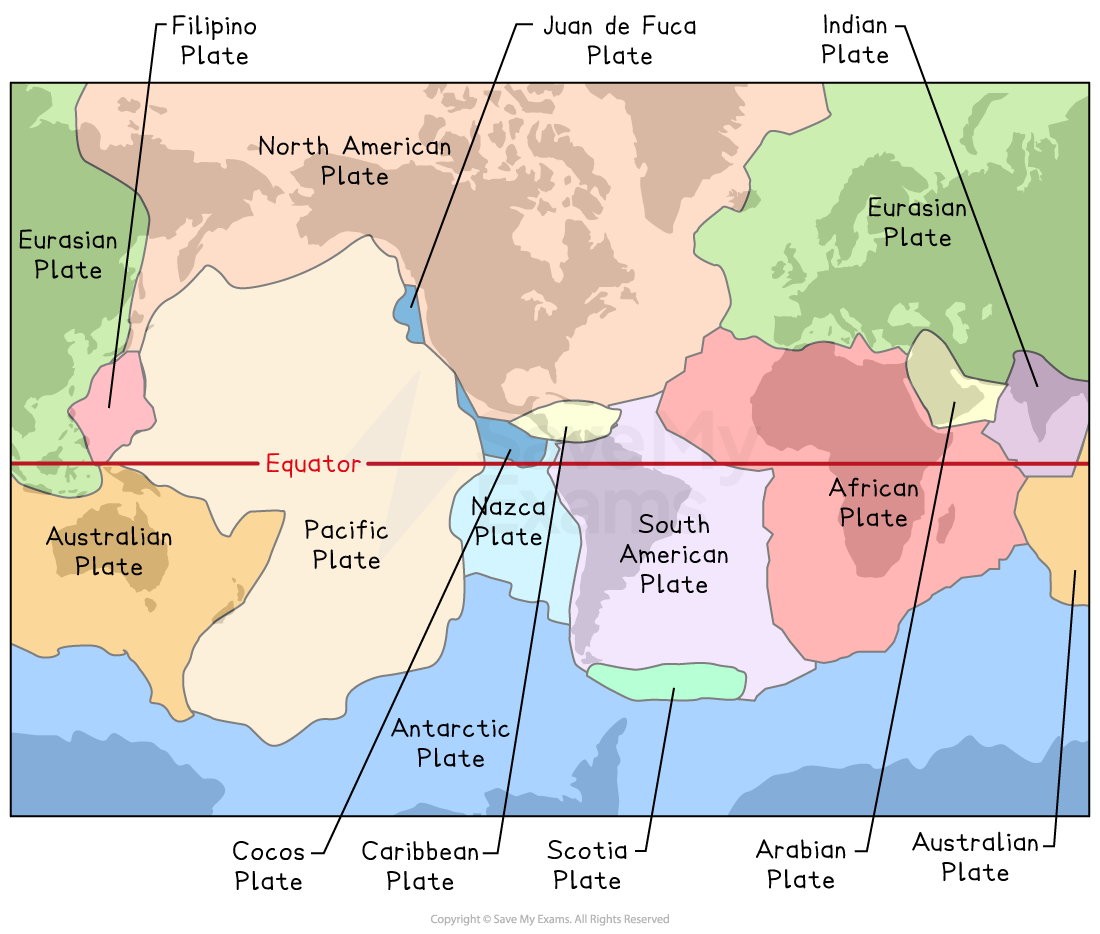
The Earth’s crust is broken into many tectonic plates
These plates move on top of the semi-molten mantle below
The movement of the plates is in part due to the convection currents within the mantle
The places where the plates meet are called plate boundaries
Types of plate boundary
There are four main types of plate boundaries:
constructive
destructive
conservative
collision
Constructive plate boundary
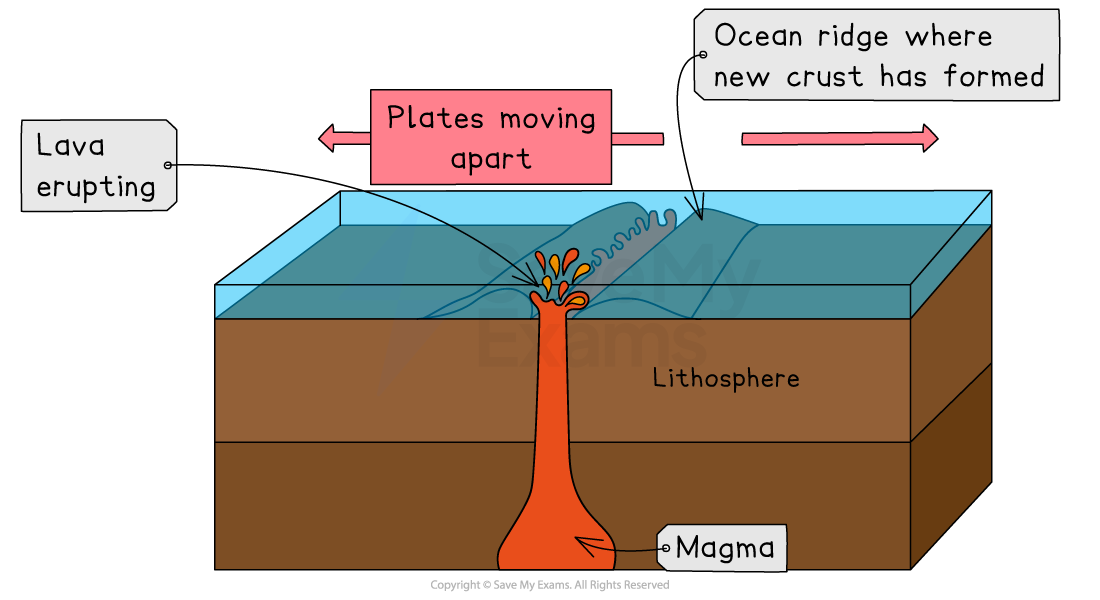
At a constructive plate boundary, the plates are moving apart
As they move apart, magma rises to fill the gap
This leads to the formation of volcanoes and eruptions
The Mid-Atlantic Ridge is an example of a constructive plate boundary
Both volcanic eruptions and earthquakes can occur at this type of plate boundary
Destructive plate boundary
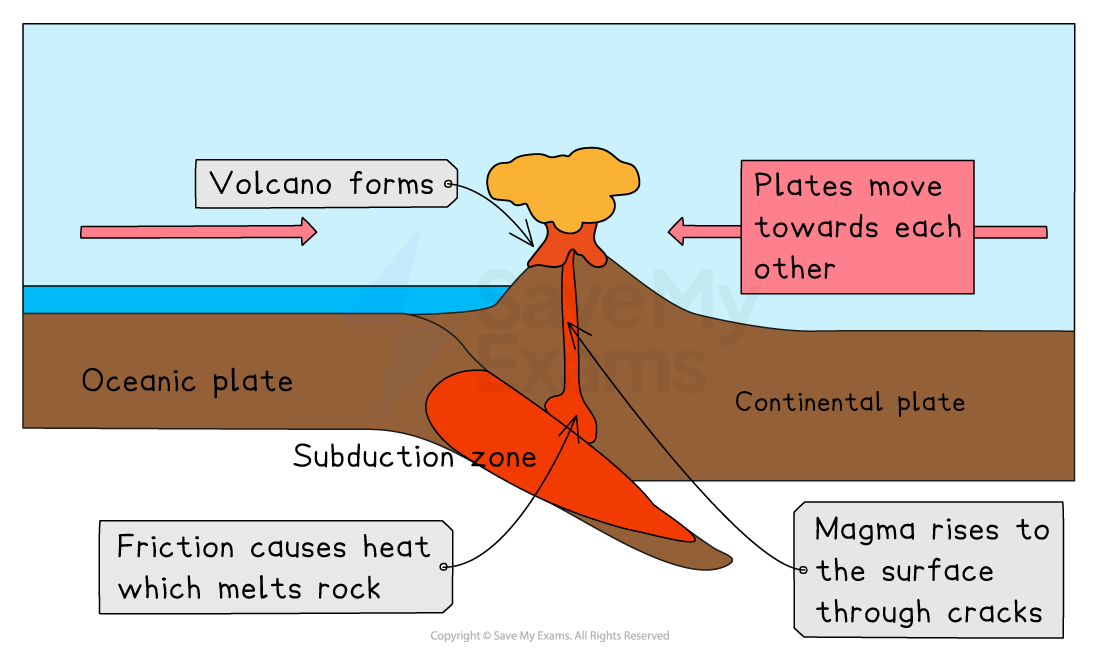
At a destructive plate boundary, the plates are moving together
The denser, heavier oceanic plate subducts under the lighter, less dense continental plate
This leads to friction and heat, which melt the crust and form magma
Magma rises to the surface through cracks in the crust
It erupts on the surface as lava and forms a volcano
The boundary between the Nazca plate and the South American plate is an example
Both volcanic eruptions and earthquakes occur at this type of plate boundary
Conservative boundary
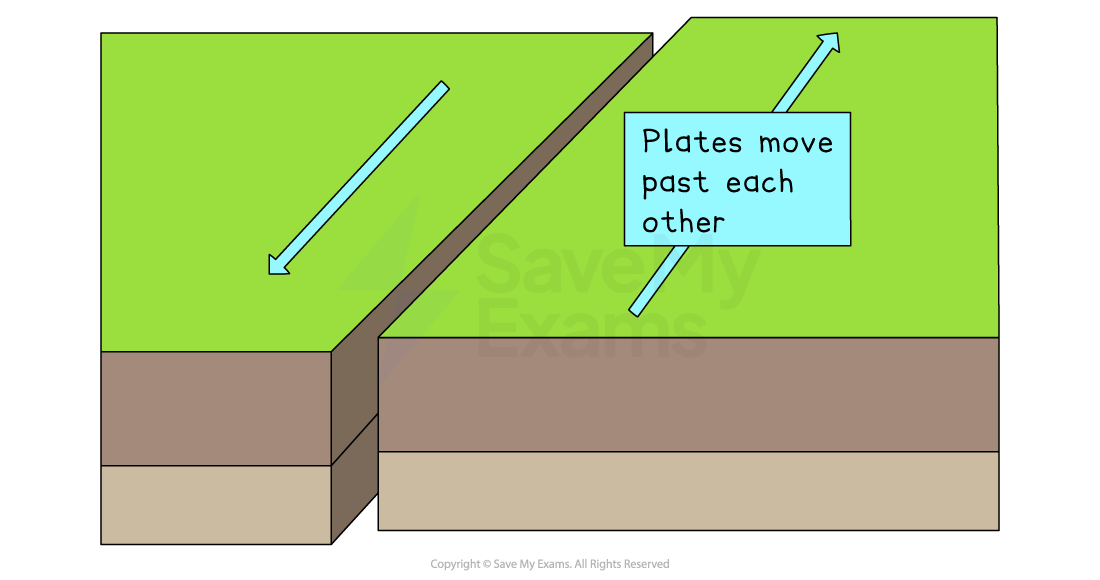
At a conservative boundary, the plates move past each other in opposite directions or in the same direction at different speeds
The San Andreas Fault is an example of a conservative boundary
Earthquakes are the only hazard at this type of boundary
Collision boundary
At a collision boundary, two continental plates of similar density move towards each other
Neither is dense enough to subduct, so the land is pushed upwards
This process forms fold mountains such as the Himalayas
Earthquakes are the only hazard at this type of plate boundary
Examiner Tips and Tricks
For each plate boundary type, make sure you can explain how the tectonic plates are moving and what type of hazards occur. Practise drawing simple sketches to help you remember each one.
Causes of Earthquakes
Earthquakes can occur anywhere, but mostly occur at or near plate boundaries
Earthquakes happen at all plate boundaries: constructive, destructive, conservative and collision
At constructive plate boundaries, earthquakes tend to be weaker
At destructive, conservative and collision plate boundaries, earthquakes tend to be stronger
Features of an earthquake
An earthquake is the sudden, violent shaking of the ground
Earthquakes are the result of pressure building when tectonic plates move
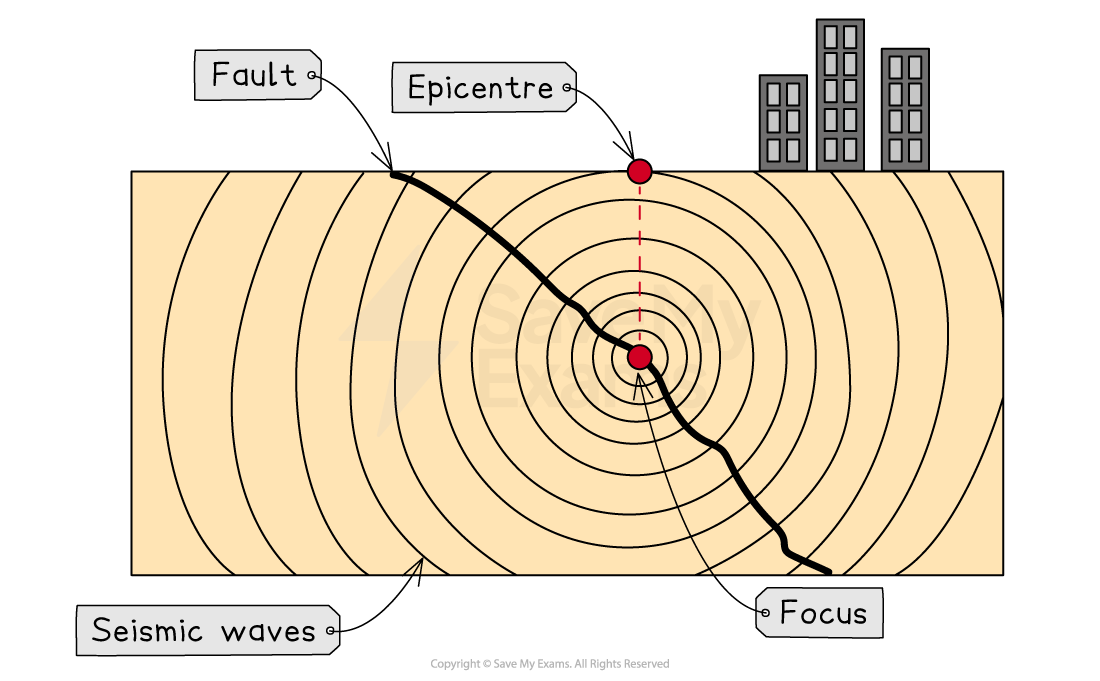
The focus is the point where the earthquake starts below the Earth’s surface
The epicentre is the point on the Earth’s surface directly above the focus
The magnitude (amount of energy released) by earthquakes is measured on the Moment Magnitude Scale (MMS), which replaced the Richter scale
Earthquake sequence
The sequence of an earthquake is the same regardless of the type of plate boundary:
As the tectonic plates move, they can become stuck
Pressure builds as the plates continue to try to move
Eventually, the plates jolt free and the pressure is released as energy
The energy passes through the Earth’s crust as seismic waves, which are the earthquake
Causes of Volcanoes
Volcanoes occur at constructive and destructive plate boundaries
Volcanoes do not occur at conservative or collision boundaries
At constructive plate boundaries, eruptions tend to be more gentle
At destructive plate boundaries, eruptions tend to be more explosive
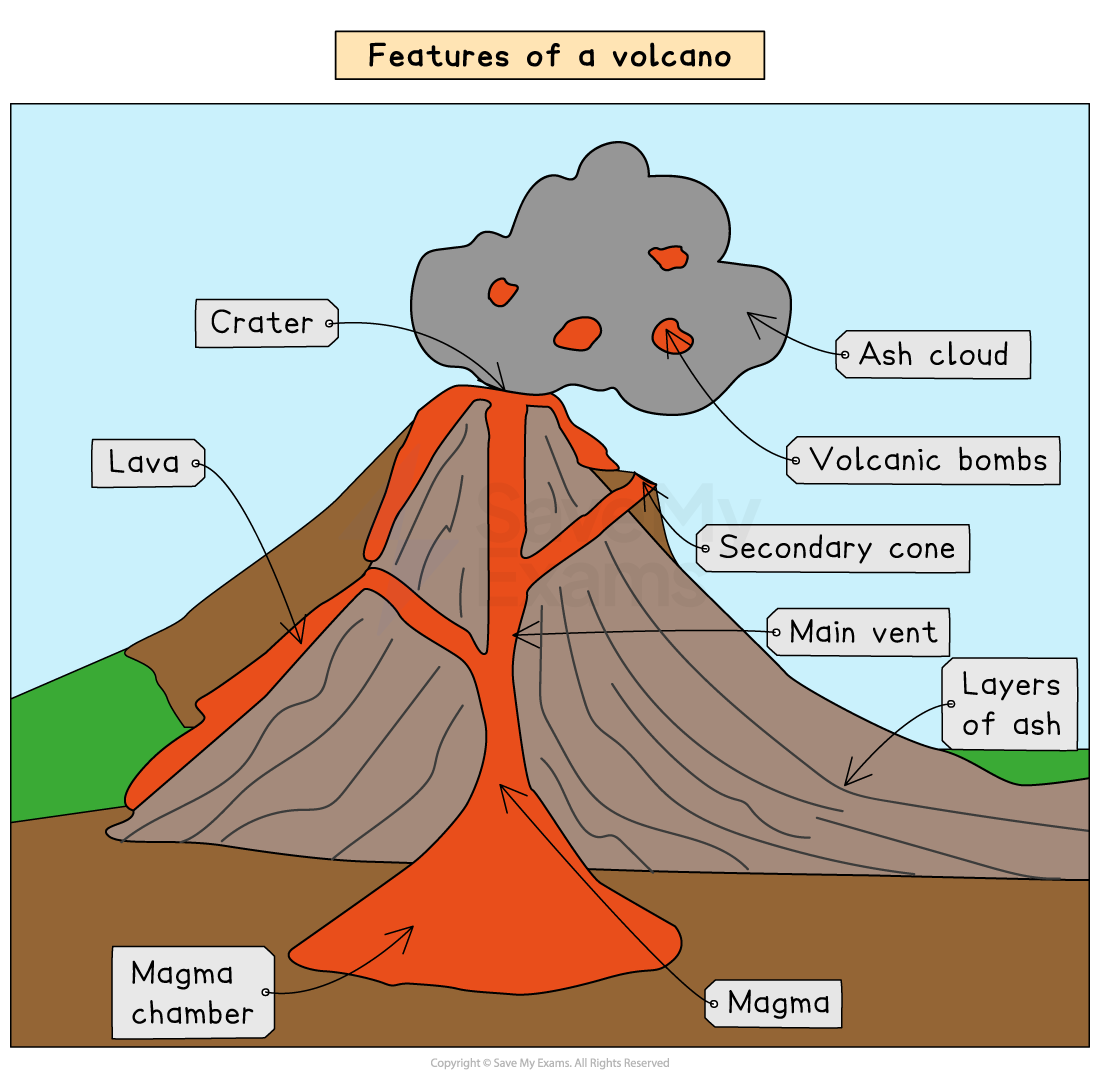
Features of a volcano
A volcano forms when magma erupts onto the Earth’s surface as lava through a vent in the Earth’s crust
When magma erupts onto the surface, it is called lava
The magnitude of a volcanic eruption is measured on the Volcanic Explosivity Index (VEI)

Unlock more, it's free!
Join the 100,000+ Students that ❤️ Save My Exams
the (exam) results speak for themselves:

Was this revision note helpful?
