Impact of Tropical Storms (SQA National 5 Geography): Revision Note
Exam code: X833 75

Impacts of Tropical Storms
Tropical storms cause a range of hazards that can threaten human life and property:
High winds over 119 km/h uproot trees and damage buildings and infrastructure, causing injury and loss of life
Intense rainfall leads to flash flooding, damaging property and injuring people
Landslides are triggered because heavy rain causes soil to become heavy and unstable
Storm surges occur when large volumes of water are forced inland by the low pressure (which causes the sea surface to rise) and strong winds associated with tropical storms
They can reach several metres high and cause catastrophic flooding
Image
Primary and secondary impacts of tropical storms
Primary effects are the immediate impacts of strong winds, high rainfall and storm surges
Secondary effects are the impacts that occur later on, after the storm has passed
Primary impacts
Buildings and homes were damaged and destroyed
Transport links such as roads, railways, ports and airports are damaged
Electricity lines and gas pipes were damaged
Sewage overflows
Rivers and coastal areas flood
Businesses destroyed
Secondary impacts
People are left homeless, leading to distress, poverty, ill-health and even death
The cost of rebuilding can be expensive and some people may not have insurance
Damaged transport links prevent rescue and emergency aid from reaching communities in need
Risk of fires and explosions
Water supplies may become contaminated, increasing the risk of waterborne diseases such as cholera
Crops and livestock are damaged, leading to food shortages and rising prices
Loss of jobs and income leads to a reduced standard of living
Case Study
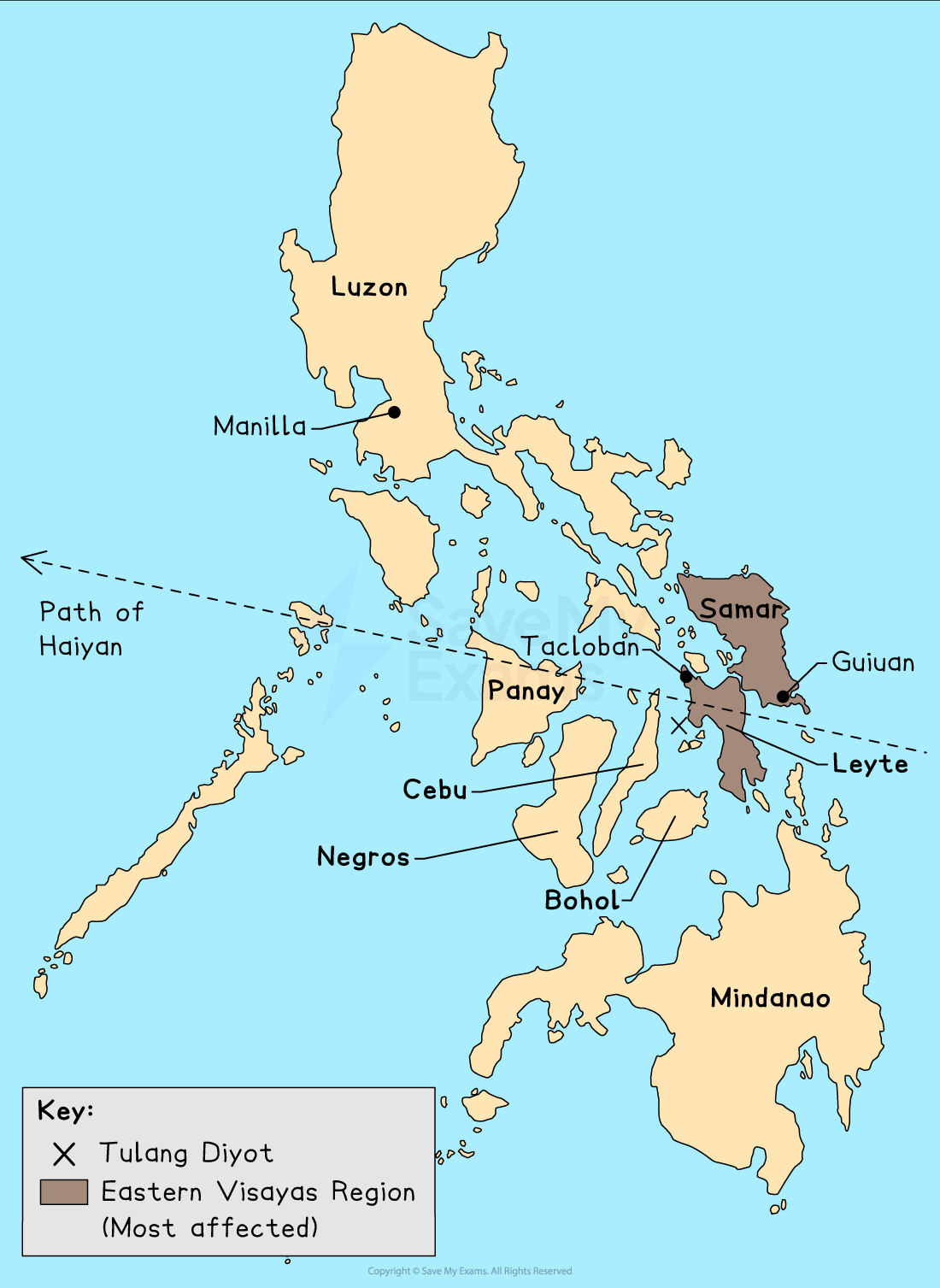
Case study: Super Typhoon Haiyan, Philippines, 2013
Typhoon Haiyan (locally called Yolanda) was one of the strongest ever-recorded tropical storms to hit the Philippines
It made landfall on November 8, 2013, as a Category 5 storm, with sustained winds of over 315 km/h (195mph)
Background and causes
The Philippines is made up of 7000 islands located in the South China Sea, east of Vietnam and north of Indonesia
The islands sit in an area of unusually warm ocean water – at the time of the storm, the sea temperature was 30°C
Between 8 and 10 tropical storms hit the Philippines each year
The storm travelled over a long stretch of warm ocean without hitting land
This allowed it build energy before landfall in the Philippines
Climate change has resulted in warmer sea surface temperatures, increasing the intensity of tropical storms
Impacts on people
Approximately 6300 deaths
Over 28,000 people were injured
More than 4 million people displaced
Over 1 million homes were damaged or destroyed, leading to homelessness
Many survivors suffered stress, anxiety and trauma
Water supplies were contaminated, leading to waterborne diseases such as cholera
Power cuts and damaged roads slowed the delivery of aid
Fishing boats and crops were destroyed, leading to loss of income and food shortages
Damages estimated at $13 billion
Impacts on the landscape
Widespread flooding caused by a 5m high storm surge
Land was contaminated with saltwater
Large areas of mangrove forest were destroyed, causing loss of biodiversity and wildlife habitats
33 million coconut trees were destroyed, reducing income from exports
Heavy rain triggered landslides, which buried roads and farmland
Coral reefs were damaged, threatening marine life
800,000 litres of oil leaked when an oil tanker ran aground, damaging ecosystems
175,000 acres of farmland were damaged
90% of buildings in the city of Tacloban were destroyed
Examiner Tips and Tricks
Make sure you can explain the impacts on people and the impacts on landscapes of a named tropical storm. Use flashcards to help you remember key facts and figures.

Unlock more, it's free!
Join the 100,000+ Students that ❤️ Save My Exams
the (exam) results speak for themselves:

Was this revision note helpful?
