Tropical Storms (SQA National 5 Geography): Revision Note
Exam code: X833 75

Distribution of Tropical Storms
Features of tropical storms
Tropical storms are large, intense low-pressure systems (between 100–1000km across and pressure below 950mb)
Depending on their wind speed, they are:
Tropical depressions – wind speeds of less than 62 km/h (38 mph)
Tropical storms – wind speeds ranging from 63 to 118 km/h (39 to 73 mph)
Tropical cyclones – wind speeds of 119 km/h (74 mph) and above
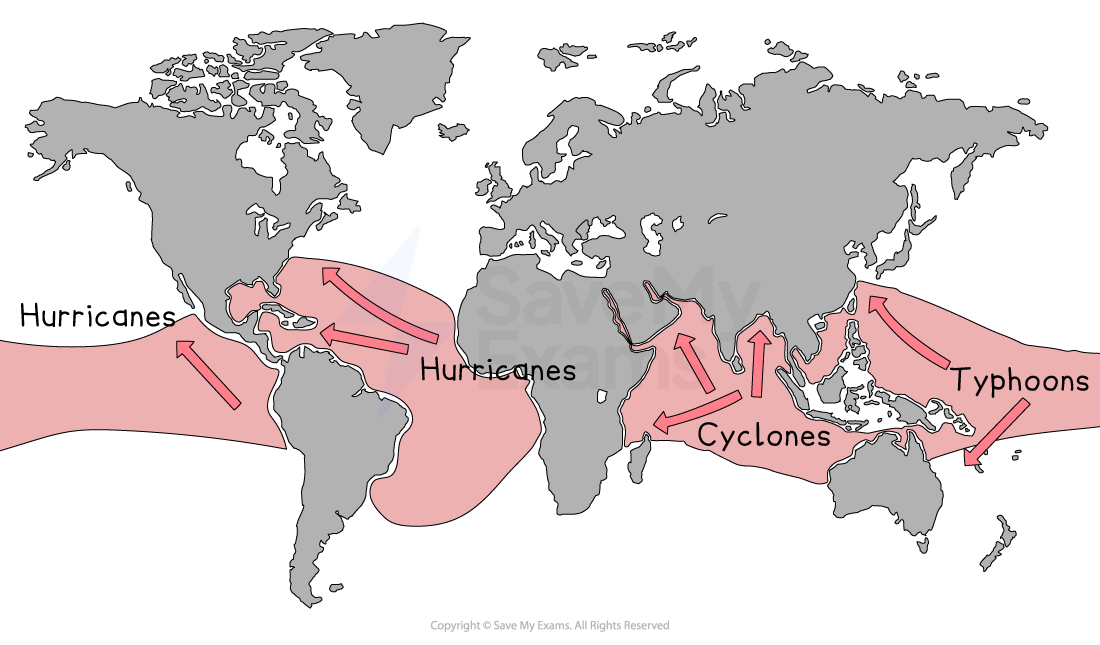
Tropical cyclones are also known as hurricanes or typhoons, depending on their location
Characteristics include:
Heavy rainfall
High wind speeds
High waves and storm surges
The rotating clouds surround a calm eye in the centre
Distribution
Tropical storms develop in tropical regions between 5° and 30° north and south of the equator
They form over warm ocean water
Formation of Tropical Storms
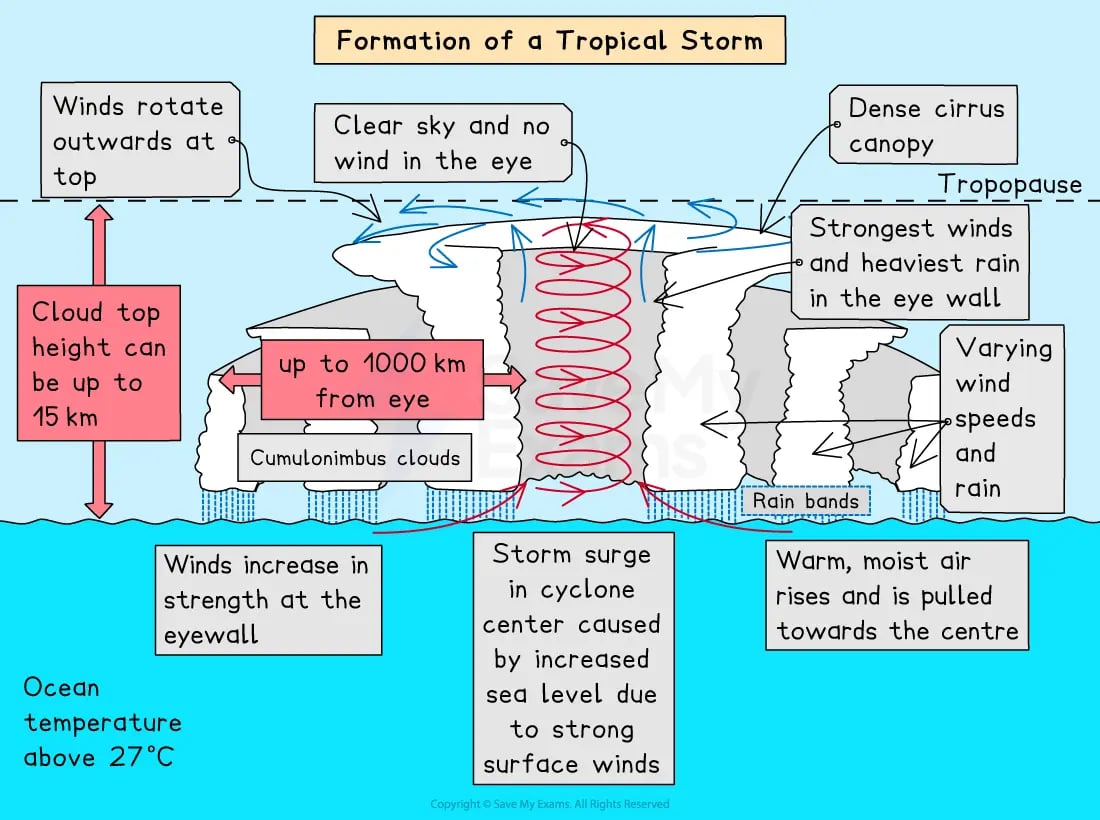
Tropical storms require specific conditions to form:
Warm sea surface temperatures (over 27°C)
Deep ocean (at least 50–60m deep)
Low wind shear
Moist air
Low air pressure
Stages of tropical storm formation
There are several stages in the formation of a tropical storm:
Warm, moist air rises quickly, forming an area of intense low pressure
Air from high-pressure areas rushes in to take the place of the rising air, generating strong winds
This air then rises, forming a continuous flow of rising air
As the air rises, it cools and condenses, releasing heat energy which helps to power the storm
Air at the top of the storm goes outwards away from the centre of the storm
The rising air spirals around the centre due to the spinning of the Earth on its axis
Some of the air sinks at the centre, creating a calm area known as the eye of the storm
Tropical storms will die out if the heat energy and moisture from the ocean are no longer available to drive the storm
Examiner Tips and Tricks
Make sure you can explain the formation of a tropical storm. Start by learning the conditions required for a tropical storm to develop, then learn how the storm develops in stages.
Worked Example
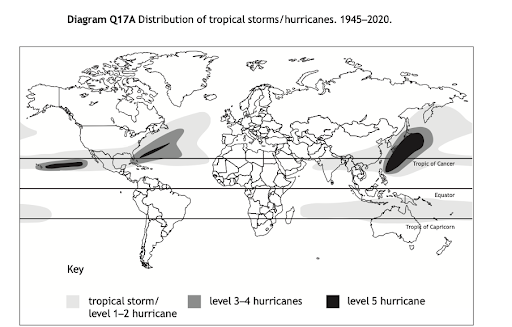
Study Diagram Q17A.
Describe, in detail, the distribution of tropical storms and hurricanes throughout the world
[4 marks]
Answer
Tropical storms are found in areas between and around the Tropics [1]. Category 3 and 4 hurricanes occur on the Pacific Coast of the USA [1] and in the North Pacific Ocean, near Japan [1]. Category 5 hurricanes are most common off the coast of Japan [1]
Award 1 mark for each valid point
Award 2 marks for a developed point
Award 1 mark for a list of places
No marks for explanation
No marks for reference to places which are not affected by tropical storms
Examiner Tips and Tricks
When you are asked to describe a pattern from a map, make sure you only describe the features shown. For example, the examiner will credit descriptions of where tropical storms are found, not where they aren’t found. Always try to use compass directions and named countries, continents and oceans on the map. There is no need to add any explanation because this question is a “describe” question.

Unlock more, it's free!
Join the 100,000+ Students that ❤️ Save My Exams
the (exam) results speak for themselves:

Was this revision note helpful?
