Asthma in Developed Countries (SQA National 5 Geography): Revision Note
Exam code: X833 75

Causes of Asthma
What is asthma?
Asthma is a long-term respiratory condition that affects people’s breathing
It causes the airways in the lungs to become narrow and inflamed, making breathing more difficult
Although there is no cure for asthma, most people can control their symptoms effectively with treatment
If asthma is severe or not well controlled, asthma attacks may happen, which can be life-threatening
Asthma is a non-communicable disease
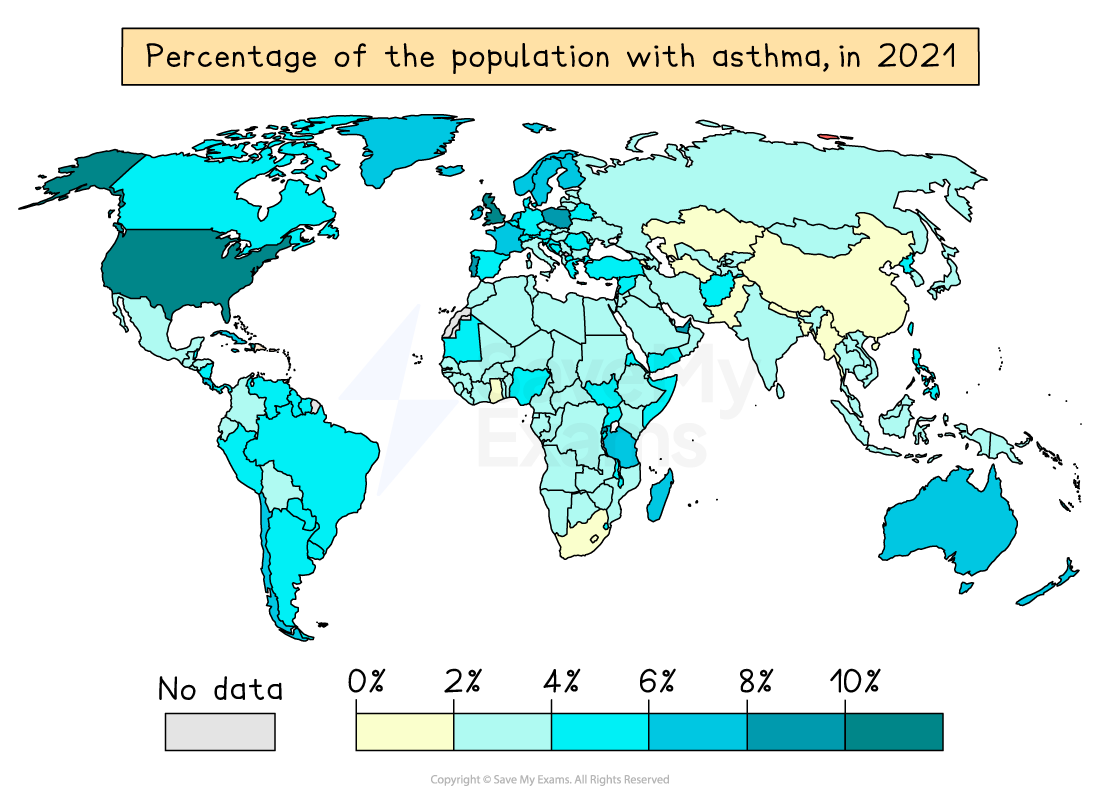
Global distribution of asthma
Asthma is a common condition
Over 250 million people around the world are living with asthma
It causes around 455,000 deaths per year
Asthma is more prevalent in developed countries
This is due to better diagnosis and factors like urbanisation
However, most deaths are in developing countries
This is mainly because it can be difficult to get an effective diagnosis and treatment
Urban areas have much higher asthma rates than rural areas because of poorer air quality
Causes of asthma
Environmental factors
Exposure to air pollution, such as traffic fumes, can lead to the development of asthma
It can also make symptoms worse and cause asthma attacks
Allergens such as dust mites, pollen and mould trigger asthma attacks
Lifestyle
Smoking or exposure to second-hand smoke can lead to the development of asthma
Medical history
Severe respiratory infections during childhood can damage airways, leading to asthma
Genetics and age
Children are more vulnerable to asthma because they have smaller airways, which are more sensitive to inflammation
Older adults are also vulnerable as they are more susceptible to severe asthma attacks and infections
People may be more likely to suffer from asthma due to family history
Effects of Asthma
Effects of asthma on people
People with asthma suffer from a range of symptoms:
Difficulty breathing
Wheezing and coughing
Breathlessness during physical activity
A feeling of tightness in the chest
Asthma attacks, where sufferers experience severe symptoms which can be life-threatening
Effects of asthma on communities and countries
Asthma attacks can lead to sufferers' dying
In the UK, 4 people die every day because of asthma attacks
The death of loved ones causes grief for families and negatively affects their health and well-being
Poor health and long-term sickness
This leads to a loss of income for the person and their family
This could cause them to fall into poverty or experience a poorer standard of living
More sick days or people being unable to work
This reduces productivity and profits for businesses
This leads to lower tax income for the government
More pressure on the health and welfare system
There may be a shortage of GP appointments
The cost of healthcare increases for medication and treatment
Higher spending on benefits due to people being unable to work
Money needs to be diverted away from other sectors, such as education, which could lead to slower progress in those areas
Examiner Tips and Tricks
You could be asked to explain the impacts of asthma on people and the countries that are affected. Make sure you learn about the symptoms that individual people will suffer, as well as the wider impacts on the community or country.
Strategies to Manage Asthma
Medication
Preventer Inhalers are used daily to reduce inflammation and prevent asthma attacks
Reliever Inhalers are used to relieve airway narrowing during an attack, allowing breathing to become easier
Oral medications such as steroid tablets can be used during severe flare-ups or when inhalers aren’t working effectively
Avoiding triggers
Reducing exposure to irritants such as smoke, pollutants, dust and other allergens
Ensuring good ventilation and cleaning to reduce dust and mould
Education
Doctors can create personal asthma plans to help sufferers recognise worsening symptoms and take action
Government policies
Strategies to reduce air pollution can help to reduce asthma and asthma attacks in cities
For example, Low Emissions Zones (LEZ) in Edinburgh and Glasgow are helping to reduce air pollution in the city centres
Other options include improving public transport and encouraging walking or cycling to reduce harmful emissions
Examiner Tips and Tricks
You only need to learn about one disease that is prevalent in a developed country, so choose between heart disease, cancer or asthma.

Unlock more, it's free!
Join the 100,000+ Students that ❤️ Save My Exams
the (exam) results speak for themselves:

Was this revision note helpful?
