Cancer in Developed Countries (SQA National 5 Geography): Revision Note
Exam code: X833 75

Causes of Cancer
What is cancer?
Cancer is a disease where abnormal cells multiply in an uncontrolled way and grow into tumours
There are more than 200 different types of cancer
They develop in different parts of the body and can spread from one part of the body to another
This is known as metastasis
Cancer cells take nutrients and space away from healthy cells
They can damage organs and stop them from working properly
If left untreated, cancer is usually fatal
Cancer is a non-communicable disease
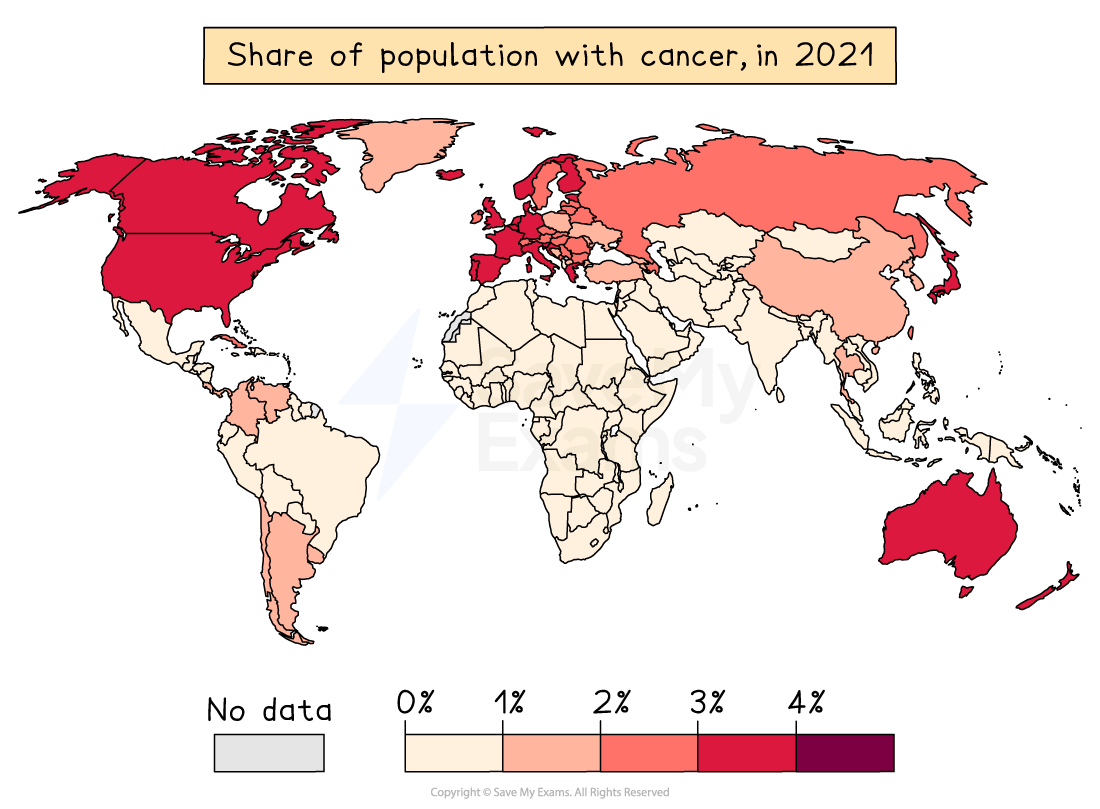
What is the global distribution of cancer?
More than 80 million people around the world are living with cancer
Cancer is one of the leading causes of death globally
In 2021, it accounted for 15% of all deaths
Cancer is most prevalent in developed countries
This is mainly due to older populations, better diagnosis systems, and lifestyle risk factors
Developing countries have lower overall rates of cancer, but higher death rates once cancer occurs
This is mainly due to poor access to healthcare
Some types of cancer have regional patterns
For example, higher rates of skin cancer where UV exposure is high, like Australia
What are the causes of cancer?
Lifestyle factors
Smoking causes lung cancer, and is also linked to mouth, throat and bladder cancer
A diet high in processed and red meat increases the risk of bowel cancer
High alcohol intake increases the risk of liver, breast and throat cancer
Obesity and lack of physical activity can make people vulnerable to a range of cancers
Environmental factors
Air pollution increases the risk of lung cancer
Exposure to dangerous chemicals like asbestos can cause lung cancer
UV exposure from sunbeds or sunlight increases the risk of skin cancer
Infections
Some infections can increase the risk of cancer
HPV is linked to cervical cancer
Hepatitis is linked to liver cancer
HIV is linked to various cancers
Age and genetics
The risk of cancer increases significantly as people get older
This is because there is more time for cellular damage to accumulate
People can be more likely to suffer from cancer as a result of their family history
Effects of Cancer
Effects of cancer on people
People with cancer suffer from a range of symptoms:
Unexplained weight loss
Persistent tiredness
Lumps or swellings as the cancer grows
Pain/bleeding
Persistent cough, chest pain or breathlessness can result from lung cancer
Changes in bowel or bladder habits
People who have been diagnosed with cancer may also struggle with their mental health
For example, they may suffer from anxiety or depression
Effects of cancer on communities and countries
Lower life expectancies
The death of loved ones causes grief for families and negatively affects their health and well-being
Poor health and long-term sickness
This leads to a loss of income for the person and their family
This could cause them to fall into poverty or experience a poorer standard of living
Other family members may also have to give up work to act as carers
More sick days or people being unable to work
This reduces productivity and profits for businesses
This leads to lower tax income for the government
More pressure on the health and welfare system
There may be a shortage of beds in hospitals
The cost of healthcare increases for medication and treatment
Higher spending on benefits due to people being unable to work
Money needs to be diverted away from other sectors, such as education, which could lead to slower progress in those areas
Examiner Tips and Tricks
You could be asked to explain the impacts of cancer on people and the countries that are affected. Make sure you learn about the symptoms that individual people will suffer, as well as the wider impacts on the community or country.
Strategies to Manage Cancer
Cancer prevention strategies and education
Anti-smoking campaigns encourage people to stop smoking
For example, in the UK, smoking rates have fallen from around 45% in 1974 to around 12% in 2024
People are educated about how to check themselves for lumps to help early detection
Leaflets can raise awareness about eating healthily and exercising regularly to maintain a healthy weight
A diet with lots of fruit and vegetables and less processed food is linked to reduced cancer risk
As people become more aware of the risks, they are more likely to make healthy lifestyle choices
For example, by reducing alcohol intake or using sun protection
Vaccination programmes can reduce the number of HPV and Hepatitis infections, therefore lowering cancer risk
Early detection and screening
This can help to detect cancers earlier, when they are more treatable
This significantly increases survival rates
There are several screening methods being used for certain cancers:
Mammograms for breast cancer
Cervical smear tests for cervical cancer
Bowel cancer screening
Medical care to treat cancer
Surgery to remove tumours can cure cancer if it is found early enough
Chemotherapy uses drugs to help slow down the growth of cancer cells and can destroy them completely
Radiotherapy uses high-energy radiation to target tumours and either destroy them or reduce their size
Immunotherapy boosts the body’s immune system to help it attack and kill cancer cells
Examiner Tips and Tricks
You only need to learn about one disease that is prevalent in a developed country, so choose between heart disease, cancer or asthma.

Unlock more, it's free!
Join the 100,000+ Students that ❤️ Save My Exams
the (exam) results speak for themselves:

Was this revision note helpful?
