Cholera in Developing Countries (SQA National 5 Geography): Revision Note
Exam code: X833 75

Causes of Cholera
What is cholera?
Cholera is a severe infectious disease caused by a bacterium called Vibrio cholerae
It spreads through contaminated water or food
If untreated, it can be fatal within hours, but it is highly treatable with the right medical care
Global distribution of cholera
It is estimated that there are between 1.3 and 4.0 million cholera cases every year
Between 21,000 and 143,000 people die from cholera each year
It is prevalent in developing countries
This is mainly due to a lack of access to safe water and basic sanitation
Outbreaks often happen in the aftermath of a disaster (such as an earthquake) or conflict
Children are at particular risk and can die within 24 to 48 hours if untreated
While cholera used to affect developed countries too, it has now been eliminated
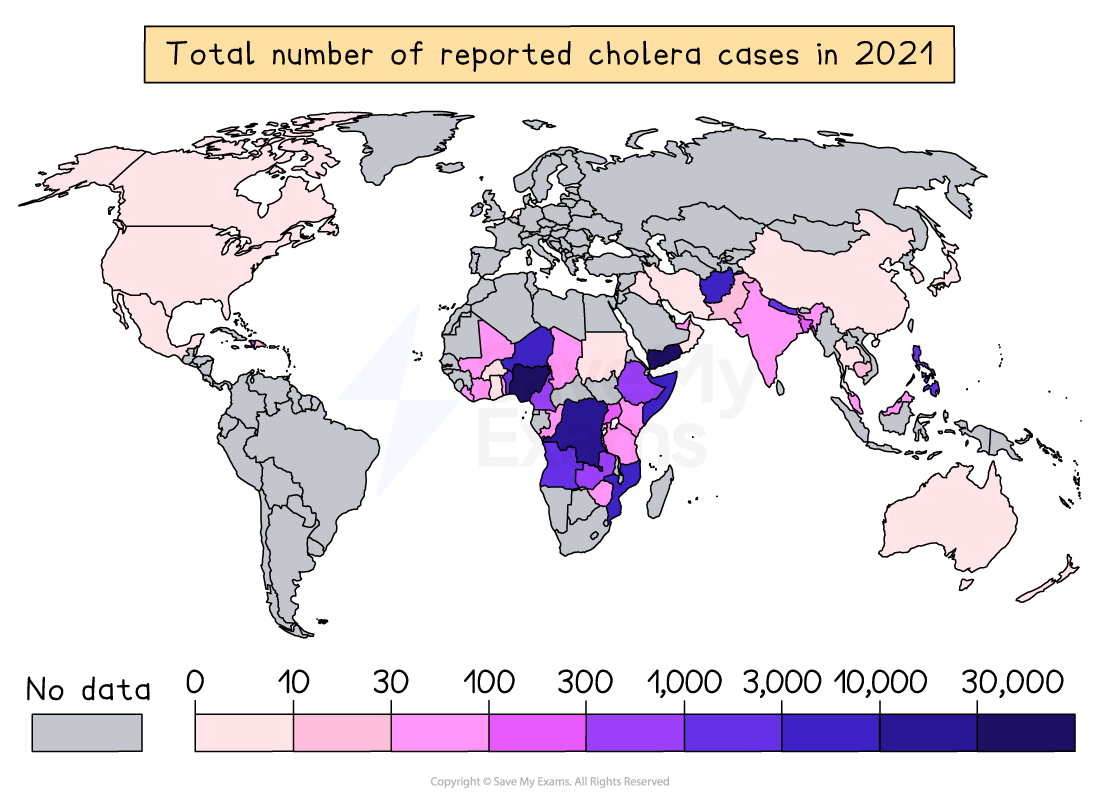
Causes of cholera
Cholera is mainly caused by drinking dirty/unsafe water that is contaminated by Vibrio cholerae bacteria
The bacteria are usually found in human faeces
There are several contributing factors:
Lack of access to clean drinking water
Poor sanitation
For example, no toilets or sewage systems
Poor hygiene practices
For example, limited handwashing
Low food safety practices
For example, washing food with contaminated water, or touching food with unwashed hands
Overcrowded living conditions help the bacteria to spread quickly
Flooding, which contaminates water supplies
Effects of Cholera
Effects of cholera on people
Symptoms develop within 2 to 5 days of infection
The most common symptoms of cholera include:
Sickness and vomiting
Muscle Cramps
Diarrhoea
If untreated, this can lead to:
Severe dehydration due to loss of body fluids
Severe drop in blood pressure
Shock
Death
Up to 60% of people who develop cholera will die if they do not receive treatment
Effects of cholera on communities and countries
Lower life expectancies
The death of loved ones causes grief for families and negatively affects their health and well-being
Poor health and long-term sickness
This leads to a loss of income for the person and their family
This could cause them to fall into poverty
This may mean that families can’t afford to send their children to school, so they miss out on an education
They may not be able to afford sufficient food, leading to malnutrition and hunger
Crops may be left unharvested if farm workers are too ill to gather them in
More sick days or people being unable to work
This reduces productivity and profits for businesses
This leads to lower tax income for the government
More pressure on the health system
There may be a shortage of medication and doctors, leading to increased death rates
Money needs to be diverted away from other sectors, such as education, which could lead to slower progress in those areas
Tourists may be reluctant to visit the country if there is an active cholera outbreak
This can lead to further loss of income for the national economy
Examiner Tips and Tricks
You could be asked to explain the impacts of cholera on people and the countries that are affected. Make sure you learn about the symptoms that individual people will suffer, as well as the wider impacts on the community or country.
Strategies to Manage Cholera
Clean water and improved sanitation
Water can be boiled or chlorinated to kill the bacteria
Piped water systems can be installed to deliver clean and treated water
Wells can be dug to access clean groundwater
Toilets and sewage systems can be built to ensure proper waste disposal
Education
Encourages people to wash their hands often with soap and safe water
Encourages people to use toilets
Teaches people about food safety and encourages habits such as:
Peel fruit and vegetables to remove bacteria
Wash food in clean water to prevent contamination
Washing hands before touching food
Medical treatment
Oral Rehydration Solutions (ORS) help to replace lost fluids and salts
This is cheap and effective, reducing the death rate from cholera to less than 1%
If unavailable, an alternative is to make a drink with a litre of safe water, 6-8 teaspoons of sugar and 1-2 teaspoons of salt
Intravenous (IV) fluids can be used to treat severe dehydration quickly
Antibiotics can help to tackle severe illness and reduce the length of illness
Vaccinations are used in high-risk areas and during outbreaks
Examiner Tips and Tricks
You only need to learn about one disease that is prevalent in a developing country, so choose between malaria, cholera, kwashiorkor or pneumonia.

Unlock more, it's free!
Join the 100,000+ Students that ❤️ Save My Exams
the (exam) results speak for themselves:

Was this revision note helpful?
