Heart Disease in Developed Countries (SQA National 5 Geography): Revision Note
Exam code: X833 75

Causes of Heart Disease
What is heart disease?
Heart disease is a type of cardiovascular disease
This refers to conditions that affect the heart and blood vessels
The most common type of cardiovascular disease is coronary heart disease
This is when blood vessels supplying the heart with blood become narrowed or blocked by fatty deposits
Other cardiovascular diseases affect the heart itself or the arteries carrying blood to other parts of the body, such as the brain
Cardiovascular diseases can lead to heart attacks, strokes, angina and heart failure
Cardiovascular diseases are non-communicable
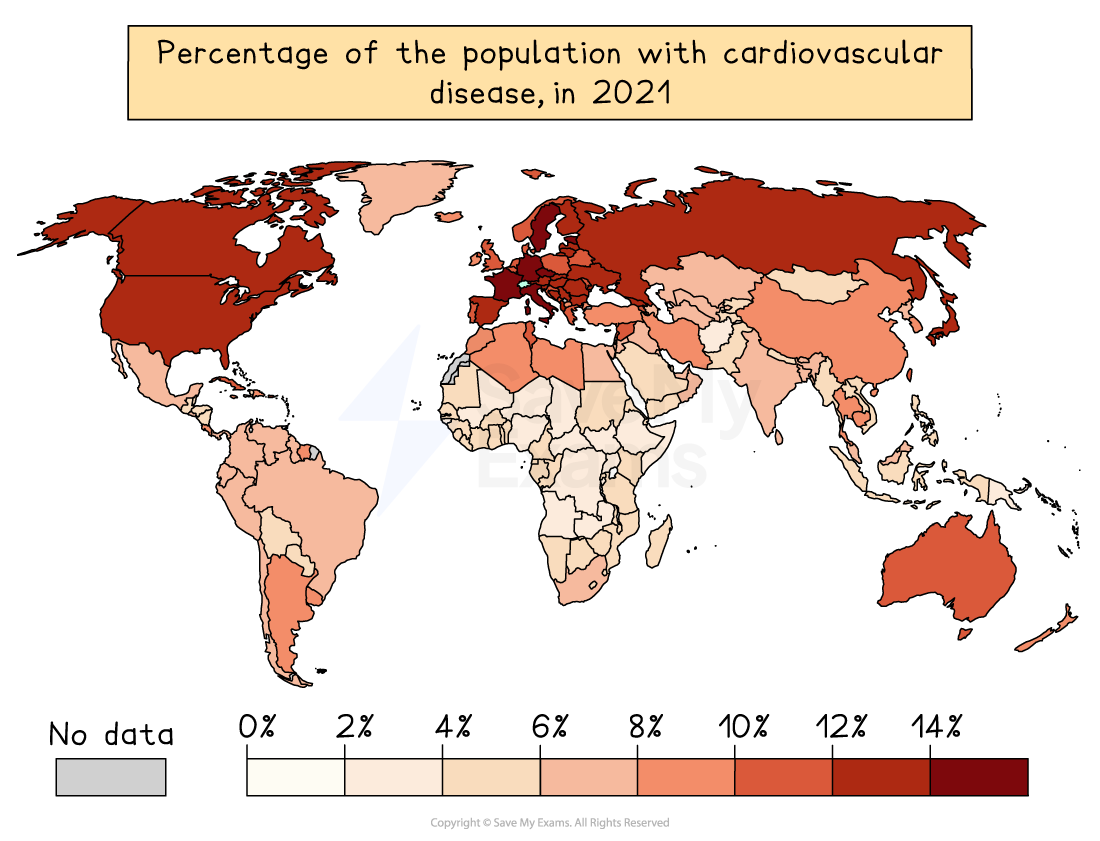
What is the global distribution of heart disease?
More than half a billion people around the world are affected by cardiovascular diseases
They are the most common cause of death globally, accounting for around 32% of all deaths in 2022
The highest rates of cardiovascular diseases are found in developed countries
This is mainly due to lifestyle factors such as poor diet and lack of exercise
However, many developed countries are seeing declines in death rates as prevention and treatment improve
Meanwhile, rates of cardiovascular disease in developing countries are rising
About 80% of deaths caused by cardiovascular diseases occur in low- and middle-income countries
This is mainly due to poor access to healthcare
What causes heart disease?
Poor diet
A diet that is high in saturated fats can increase cholesterol, which narrows the arteries
Too much salt can raise blood pressure, increasing strain on the heart
Too much sugar can increase the chances of diabetes, increasing the risk for heart disease
A poor diet can also lead to weight gain
Lack of exercise
This results in the heart becoming less efficient at pumping blood around the body
High blood pressure, high cholesterol and weight gain are more likely
Obesity and diabetes
Excess weight increases strain on the heart and is linked to high blood pressure and high cholesterol
Diabetes damages blood vessels, increasing the risk of blockages
Smoking
Smoking can damage arteries, making it more likely that they will become clogged
It also reduces the amount of oxygen in the blood, putting the heart under extra strain
Stress
Chronic stress can lead to high blood pressure, putting extra strain on the heart
Age and genetics
The risk of cardiovascular disease increases as people get older
People are likely to suffer from high cholesterol or high blood pressure as a result of their family history
Effects of Heart Disease
Effects of heart disease on people
People with heart disease suffer from a range of symptoms:
Shortness of breath, especially during exercise
Tiredness and reduced stamina
Chest pain/angina, due to the arteries becoming blocked
Numbness, pain, or coldness in some parts of the body due to poor circulation
Heart attacks if arteries become fully blocked
Symptoms include pain in the chest, dizziness, sweating, nausea, and breathlessness
Strokes if blood flow to the brain is reduced
Symptoms include numbness on one side, confusion, difficulty speaking, seeing or walking
Long-term damage to the heart or heart failure if the heart becomes too weak to pump blood around the body
Effects of heart disease on communities and countries
Lower life expectancies
For example, Glasgow has one of the highest rates of heart disease in the UK and one of the lowest life expectancies
The death of loved ones causes grief for families and negatively affects their health and well-being
Poor health and long-term sickness
This leads to a loss of income for the person and their family
This could cause them to fall into poverty or experience a poorer standard of living
Other family members may also have to give up work to act as carers
More sick days or people being unable to work
This reduces productivity and profits for businesses
This leads to lower tax income for the government
More pressure on the health and welfare system
There may be a shortage of beds in hospitals
The cost of healthcare increases for medication and treatment
Higher spending on benefits due to people being unable to work
Money needs to be diverted away from other sectors such as education, which could lead to slower progress in those areas
Examiner Tips and Tricks
You could be asked to explain the impacts of heart disease on people and the countries that are affected. Make sure you learn about the symptoms that individual people will suffer, as well as the wider impacts on the community or country.
Strategies to Manage Heart Disease
Education and lifestyle changes
People can be encouraged to exercise more regularly to maintain a healthy heart
Leaflets and support groups can raise awareness about how to eat healthily and which foods to avoid
This can reduce the number of people suffering from high cholesterol and high blood pressure
As people become more aware of the risks, they are more likely to make healthy lifestyle choices
For example, maintaining a healthy weight to reduce strain on the heart
Medication to prevent and treat heart disease
Statins help to lower cholesterol and prevent arteries from becoming blocked
Blood pressure medications, such as beta blockers, help to reduce blood pressure, reducing the risk of strokes, heart attacks and heart failure
Blood-thinning medicines such as Warfarin reduce the chances of blood clotting
Clot-busting medicines help to break up clots and restore blood flow, improving survival rates for people who suffer heart attacks or strokes
Surgery and emergency care
Pacemakers can be implanted to keep the heart beating at a steady rhythm
Stents can be inserted into clogged or narrowed arteries to keep them open and restore blood flow
Bypass surgery allows doctors to reroute blood flow around a blocked artery using a healthy blood vessel from another part of the body
Heart valves can be repaired or replaced
People can be given heart transplants if their heart becomes too weak or damaged
Mobile defibrillators deliver electric shocks to restart a stopped heart, increasing survival rates
Examiner Tips and Tricks
You only need to learn about one disease that is prevalent in a developed country, so choose between heart disease, cancer or asthma.

Unlock more, it's free!
Join the 100,000+ Students that ❤️ Save My Exams
the (exam) results speak for themselves:

Was this revision note helpful?
