HIV & AIDS (SQA National 5 Geography): Revision Note
Exam code: X833 75

Causes of HIV/AIDS
What is HIV/AIDS?
HIV (Human Immunodeficiency Virus) is a virus that attacks the immune system
If left untreated, HIV can develop into AIDS (Acquired Immune Deficiency Syndrome)
This happens because HIV weakens the immune system, reducing the body’s ability to fight everyday viruses and bacteria
Infections that healthy people could easily recover from can become very serious or even life-threatening
When the immune system is severely damaged and dangerous infections occur, AIDS is diagnosed
There is no cure for HIV, but with modern treatment, people with HIV or AIDS can still live long and healthy lives
HIV/AIDS is a major public health issue, with transmission happening in every country in the world
What is the global distribution of HIV/AIDS?
It is estimated that almost 41 million people around the world were living with HIV in 2024
There were 1.3 million new infections that year
Around 630,000 people died from HIV-related causes in 2024
This equated to around 1.5% of all deaths
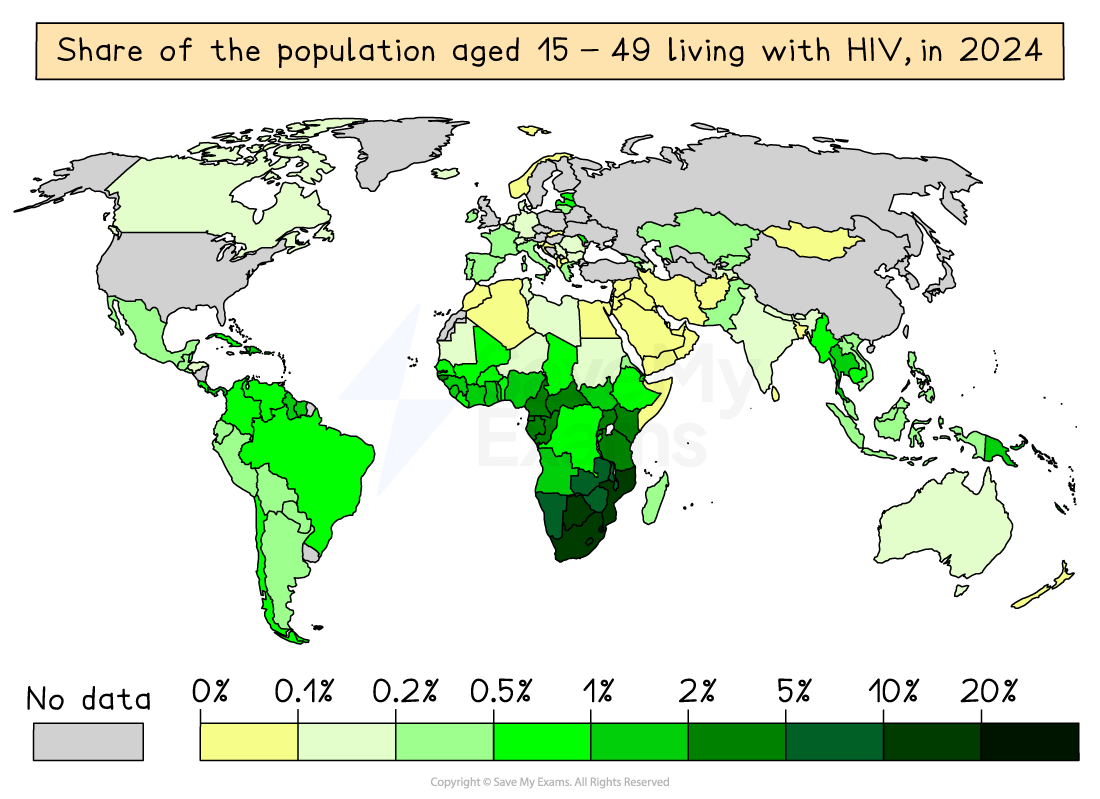
The global distribution of HIV infections and deaths from HIV/AIDS is uneven
Over 65% of the people living with HIV live in sub-Saharan Africa
In many European countries, the share of the population aged 15–49 living with HIV is less than 0.5%
In contrast, in many southern African countries, more than 8% of the population aged 15–49 are living with HIV, reaching as high as 23% in Eswatini
How is HIV transmitted?
HIV is spread through the exchange of body fluids with people infected with HIV
The most common ways it is transmitted are:
Unprotected sex with an infected person
Sharing contaminated needles or syringes (e.g. for drug use)
Blood transfusions with infected blood
Transmission from mother-to-child during pregnancy, birth or breastfeeding
Effects of HIV/AIDS
Symptoms of HIV/AIDS
At first, people may have few or no symptoms, making the disease difficult to detect and diagnose
Early symptoms include:
Fever
Headache
Rash
Sore Throat
Over time, as the immune system weakens, the symptoms become worse:
Frequent infections
Weight loss
Swollen lymph nodes
Diarrhoea
Persistent tiredness
If people with HIV do not get treatment, they can develop severe illnesses such as:
Tuberculosis
Meningitis
Pneumonia
Certain cancers
Effects of HIV/AIDS in Developed Countries
In developed countries, HIV is usually a long-term, manageable condition
If treated early, life expectancy for people with HIV is similar to the country's average
There are comparatively low death rates from HIV/AIDS in developed countries due to early and effective treatment
People with HIV can continue working
This results in minimal productivity loss, reducing the economic burden considerably
Rates of mother-to-child transmission are very low
However, there remains a social stigma around suffering from HIV/AIDS
People living with HIV/AIDS are more likely to suffer from poor mental health
Healthcare costs for treatment are high
The NHS in the UK spends an average of £11,000 per person per year on HIV treatment
Over the course of a lifetime, this adds up to around £360,000 per person
Effects of HIV/AIDS in Developing Countries
In developing countries, HIV/AIDS causes much higher death rates
It is the leading cause of death in some countries, such as Equatorial Guinea
Life expectancy for people infected with HIV is much lower than the country's average
Some countries, such as Botswana and Eswatini, suffered significant declines in life expectancy of a decade or more in the 1990s
Now, life expectancies are increasing again as treatment becomes more widely available
Many children have been orphaned because their parents died of HIV/AIDS
In 2024, over 10 million children living in Africa had been orphaned due to AIDS deaths
Countries like Nigeria and Mozambique each had over 1 million orphaned children
The high prevalence of HIV has a significant economic impact
High death rates reduce the number of working adults
Frequent sickness means that people are unable to work
This leads to reduced productivity and increased poverty
Health systems in some countries struggle to treat the high number of people infected with HIV
Many people living with HIV cannot afford to seek treatment
For those who can access treatment, it puts significant pressure on household income
Strategies to Manage HIV/AIDS
Treatment
Although there is no cure for HIV, it can be treated with antiretroviral therapy (ART), which stops the virus from replicating in the body
The drugs help to strengthen the immune system, enabling people with HIV to fight other infections
ART reduces the amount of virus in the body
This prevents symptoms and reduces transmission
The drugs must be taken every day for the rest of a person’s life
ART has saved millions of lives since it was first introduced in the late 1980s
In 2024, nearly 1.8 million deaths from HIV/AIDS were prevented by ART
Before ART was developed, the chances of people with HIV surviving for more than 10 years were low
Now, it is possible for people diagnosed with HIV to expect a near-normal life expectancy
Prevention
A key strategy to manage HIV/AIDS is to prevent transmission
Education about HIV/AIDS helps to promote awareness and prevent infection
People are educated about how the virus is transmitted and risky behaviours that may increase the chances of becoming infected
People are encouraged to get tested so they can take steps to receive treatment and prevent transmission to other people
Blood is screened before use in transfusions in hospitals to prevent new infections
Most HIV infections are transmitted through sexual activity
Practising safe sex (using a condom) can prevent transmission
Treatment can help prevent mother-to-child transmission of HIV
There are also medications that can reduce the chances of becoming infected with HIV
PrEP (Pre-Exposure Prophylaxis) is over 99% effective at preventing HIV transmission
Strategies to Manage HIV/AIDS in Developed Countries
In developed countries, people living with HIV are often able to get free or subsidised antiretroviral therapy (ART) and preventative treatment
In the UK, people are able to access treatment for free through the NHS
99% of people diagnosed with HIV in the UK are receiving treatment
Over 100,000 people in the UK access PrEP through the NHS
Routine HIV testing is widely available to enable early diagnosis
In the UK, tests are available for free
95% of people with HIV in the UK have been diagnosed
Strong public health campaigns raise awareness and reduce social stigma
Sex education at school is compulsory in many developed countries, reducing transmission
Condoms are widely available, often for free, to prevent transmission
Mother-to-child transmission is minimised
With treatment, the chances of an HIV-positive mother transmitting the virus to a child are reduced from 15–45% to just 5%
Strategies to Manage HIV/AIDS in Developing Countries
In developing countries, public-sector funding and international aid is helping to increase access to antiretroviral therapy (ART)
In 2005, only 3.5% of people with HIV in sub-Saharan Africa were receiving ART
This increased to almost 81% in 2022
Education programmes raise awareness and help to prevent transmission
The ABC (Abstain, Be Faithful, use Condoms) campaign in Uganda was very successful in reducing the rate of infection
Mobile clinics help to spread awareness in remote areas
Free or subsidised condoms are increasingly widely available
South Africa gives out over 400 million free condoms every year
Mobile units, community testing days and free home-based tests have helped to increase the rate of testing and diagnosis
This helps to ensure that people living with HIV are diagnosed and able to receive treatment and take action to prevent further transmission
Worked Example

Look at Diagram Q17B.
Explain the methods used to manage HIV&AIDS
Answer
Health education programmes raise awareness of HIV/AIDS, helping to prevent new transmissions [1]. Treatment such as antiretroviral therapy (ART) helps to prevent HIV from developing into AIDS [1]. It stops the virus replicating and strengthens the immune system so that it can fight infections [1]. PrEP is also used to prevent partners of people living with HIV from contracting the disease [1]. Blood is screened before use in transfusions in hospitals to prevent new infections [1]. Increased testing helps with early diagnosis, enabling people to access medication and take action to prevent further transmission [1].

Unlock more, it's free!
Join the 100,000+ Students that ❤️ Save My Exams
the (exam) results speak for themselves:

Was this revision note helpful?
