Malaria in Developing Countries (SQA National 5 Geography): Revision Note
Exam code: X833 75

Causes of Malaria
What is malaria?
Malaria is a communicable disease that is spread by certain types of infected mosquitoes
Infected female Anopheles mosquitoes carry a parasite which spreads the disease
If a person is bitten by the infected mosquito, the parasite can enter the person’s bloodstream
The parasites rapidly reproduce, causing a flu-like illness
Malaria is preventable and treatable, but can be fatal if untreated
Global distribution of malaria
More than 280 million people around the world are living with malaria
The majority of infections are found in tropical and subtropical regions
In 2024, 610,000 people died of malaria
Malaria is most prevalent in developing countries
This is mainly due to the warmer climates, which lead to larger numbers of mosquitoes and poorer access to healthcare
In 2024, 95% of malaria cases and deaths were in sub-Saharan Africa
Malaria has been eradicated from many developed countries
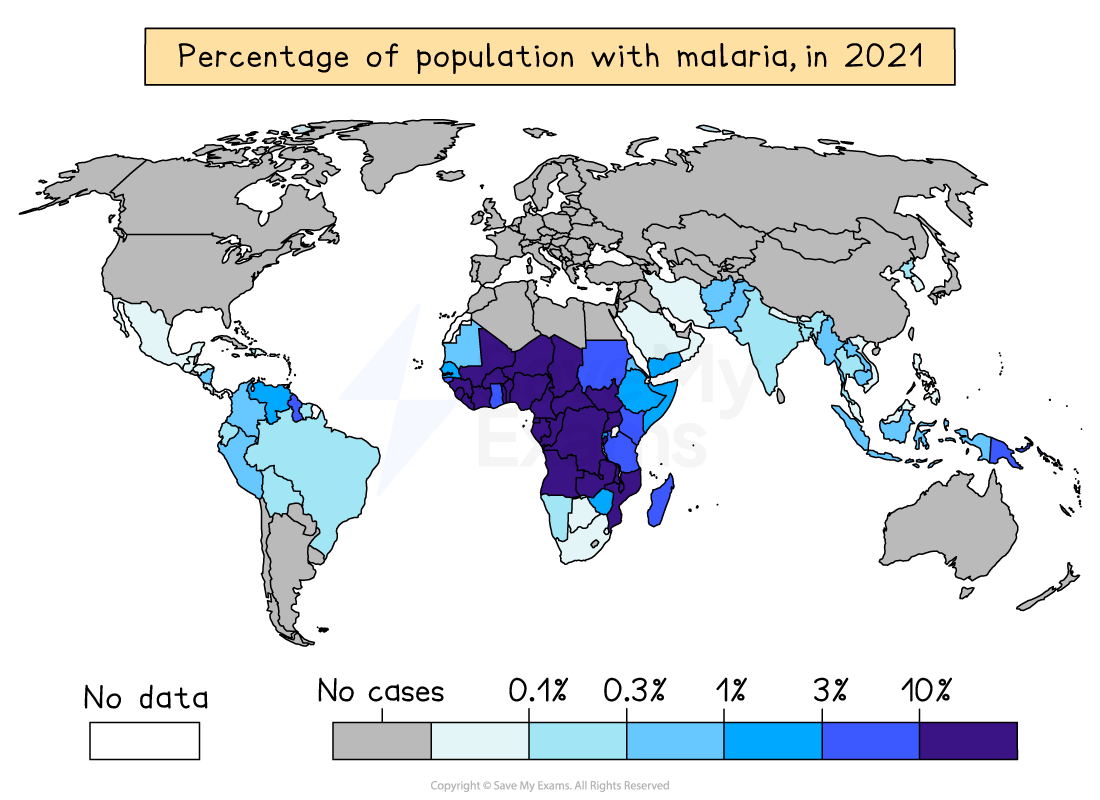
Causes of malaria
Environmental factors
Hot and wet climates in tropical and subtropical regions allow mosquitoes to breed more quickly
Temperatures need to be between 15 and 35°C for the mosquito and the parasite to develop
High humidity helps mosquitoes to have longer lifespans
Consistently high temperatures and humidity allow mosquitoes to survive all year round and bite more frequently, enabling them to transmit the disease more effectively
Mosquitoes need standing water, e.g. a lake, pond or puddle to lay eggs
Frequent rainfall and poor drainage lead to build-ups of standing water
Human factors
Poor-quality housing allows easier access for mosquitoes
For example, a lack of window screens or mosquito nets makes it difficult to avoid mosquito bites
Global travel and migration allow the disease to spread
Poor sanitation can lead to more areas of standing water
Humans create areas of standing water, for example, by building dams
Poverty makes people more vulnerable to malaria by reducing access to prevention and treatment
Children are particularly vulnerable to malaria
Children under 5 years account for around three-quarters of malaria deaths in sub-Saharan Africa
Effects of Malaria
Effects of malaria on people
Symptoms first appear about 7-10 days after an infected mosquito bite
The most common symptoms include:
Fever and sweating
Chills and shivering
Headache
Extreme tiredness
Muscle aches
Nausea, vomiting and diarrhoea
If not treated promptly, malaria can progress into a severe illness
More severe symptoms include:
Impaired consciousness
Confusion
Convulsions
Breathing difficulties
Dark or bloody urine, indicating kidney failure
Jaundice (yellowing of eyes and skin), indicating liver failure
Abnormal bleeding
Ultimately, if not treated, malaria will lead to multiple organ failure and death
Effects of malaria on communities and countries
Lower life expectancies
The death of loved ones causes grief for families and negatively affects their health and well-being
Poor health and long-term sickness
This leads to a loss of income for the person and their family, causing them to fall into poverty
This may mean that families can’t afford to send their children to school, so they miss out on an education
They may not be able to afford sufficient food, leading to malnutrition and hunger
Crops may be left unharvested if farm workers are too ill to gather them in
More sick days or people being unable to work
This reduces productivity and profits for businesses
This leads to lower tax income for the government
More pressure on the health system
There may be a shortage of medication and doctors, leading to increased death rates
Money needs to be diverted away from other sectors, such as education, which could lead to slower progress in those areas
Tourists may be reluctant to visit the country because of the malaria threat
This can lead to further loss of income for the national economy
Examiner Tips and Tricks
You could be asked to explain the impacts of malaria on people and the countries that are affected. Make sure you learn about the symptoms that individual people will suffer, as well as the wider impacts on the community or country.
Strategies to manage malaria
Medicines and vaccinations
Antimalarial drugs such as Malarone kill the parasite that causes the disease
Since 2021, vaccinations such as Mosquirix have been recommended for young children in high-risk regions to reduce the chances of them catching malaria
Preventing mosquito bites
Use of mosquito nets and window screens
Protective clothing and mosquito repellents, which contain DEET
Spraying with insecticides, such as malathion, to kill mosquitoes
Removing standing water to prevent mosquitoes from breeding
For example, by planting eucalyptus trees, which soak up a lot of water
Killing mosquito larvae in standing water
For example, by adding fish, which eat them, or mustard seeds, which drag them down and drown them
Education to teach people how to eradicate mosquitoes and protect themselves from bites
Genetic engineering to produce sterile male mosquitoes which cannot breed or carry the malaria parasite
Over time, as they mate with infected female mosquitoes, the number of mosquitoes declines and fewer mosquitoes can spread malaria
Examiner Tips and Tricks
You only need to learn about one disease that is prevalent in a developing country, so choose between malaria, cholera, kwashiorkor or pneumonia.

Unlock more, it's free!
Join the 100,000+ Students that ❤️ Save My Exams
the (exam) results speak for themselves:

Was this revision note helpful?
