Pneumonia in Developing Countries (SQA National 5 Geography): Revision Note
Exam code: X833 75

Causes of Pneumonia
What is pneumonia?
Pneumonia is a respiratory illness which causes the lungs to fill with fluid, making breathing difficult
It is a communicable disease which develops from a range of infections, such as influenza (also known as flu)
These may be caused by pathogens like bacteria, viruses or fungi
The pathogens are contagious and can spread when a person coughs or sneezes
Pneumonia can be fatal, especially in young children, elderly people or people with weak immune systems
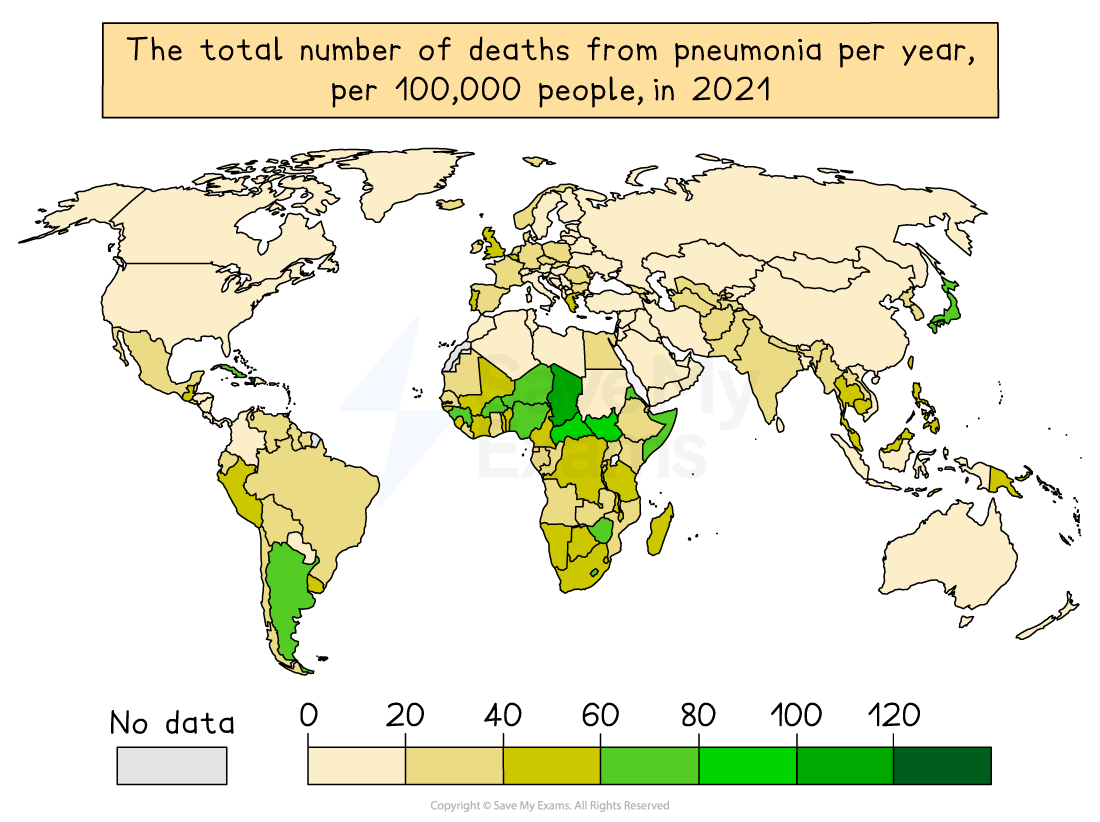
Global distribution of pneumonia
Pneumonia is one of the most common causes of death worldwide
In 2023, 2.5 million people died of pneumonia
It kills more children than any other infectious disease
Over 610,000 children under the age of 5 years died of pneumonia in 2023
It is most prevalent and causes the most deaths in developing countries
This is mainly due to malnutrition, crowded living conditions and poor access to healthcare
While pneumonia commonly causes hospitalisation in developed countries, there are lower death rates due to better access to healthcare and vaccinations
Causes of pneumonia
Bacterial infections, such as Streptococcus pneumoniae
Bacterial pneumonia is more common and more severe than viral pneumonia
Viral infections, such as influenza or COVID-19
Viral pneumonia is less likely to require hospitalisation than bacterial pneumonia
Fungal infections
Fungal pneumonia is rarer and is most likely to affect people with weaker immune systems
Common risk factors include:
Age
Young children and people over 65 years are more at risk
Weakened immune systems
For example, people suffering from HIV/AIDS or who have undergone chemotherapy are more vulnerable to pneumonia
Respiratory conditions
People with respiratory illnesses such as asthma are more vulnerable to pneumonia
Smoking
People who smoke are more likely to have damaged lungs making them more vulnerable to pneumonia
Poor living conditions
Overcrowded living conditions make it easier for pneumonia to spread, while indoor air pollution can damage the lungs making people more vulnerable
Malnutrition
The body struggles to fight off infections without a balanced diet
Effects of Pneumonia
Effects of pneumonia on people
People suffering from pneumonia experience a range of symptoms:
Cough
Shortness of breath
Fever
Chills or sweating
Chest pain
An aching body
Tiredness
Nausea, vomiting or diarrhoea
Confusion, especially in elderly people
If pneumonia is severe, symptoms worsen:
Difficulty breathing leading to a shortage of oxygen
Sepsis, where the immune system overreacts to an infection causing inflammation, tissue damage and ultimately organ failure
Effects of pneumonia on communities and countries
Higher child mortality rates and lower life expectancies
The death of loved ones causes grief for families and negatively affects their health and well-being
Poor health and long-term sickness
Children may not be able to go to school and so miss out on an education
This results in lower literacy rates and reduced earning potential as adults
This leads to a cycle of poverty
Loss of work days as parents care for sick children
This leads to a loss of income for the family
This could cause them to fall into poverty
More sick days or people being unable to work
This reduces productivity and profits for businesses
This leads to lower tax income for the government
More pressure on the health system
There may be a shortage of medication and doctors, leading to increased death rates
Money needs to be diverted away from other sectors, such as education, which could lead to slower progress in those areas
Examiner Tips and Tricks
You could be asked to explain the impacts of pneumonia on people and the countries that are affected. Make sure you learn about the symptoms that individual people will suffer, as well as the wider impacts on the community or country.
Strategies to Manage Pneumonia
Medical treatment
Antibiotics are used to treat bacterial pneumonia
Most people get better in 2 to 4 weeks
Antiviral medications may be used to treat people with severe viral pneumonia
Antifungal medications can treat pneumonia caused by a fungal infection
Paracetamol reduces headaches and fevers
People with severe pneumonia may be hospitalised
They may be given fluids to prevent dehydration, oxygen to help them breathe and sometimes steroids to treat the infection
Vaccinations can help to prevent pneumonia
For example, vaccinations against infections such as influenza, whooping cough and COVID-19 can prevent the development of pneumonia
Pneumococcal vaccines are recommended for children younger than 24 months
Community health workers help to control the spread of pneumonia
Children are likely to be diagnosed and treated more quickly, improving survival rates
Healthy lifestyles
A balanced and nutritious diet
This strengthens the immune system, helping people to fight off infections
Good hygiene
Frequent handwashing and covering your mouth when you cough helps to reduce the spread
Giving up smoking
This prevents lung damage and reduces vulnerability to pneumonia
Reduce indoor air pollution
By providing clean, affordable indoor stoves
Examiner Tips and Tricks
You only need to learn about one disease that is prevalent in a developing country, so choose between malaria, cholera, kwashiorkor or pneumonia.

Unlock more, it's free!
Join the 100,000+ Students that ❤️ Save My Exams
the (exam) results speak for themselves:

Was this revision note helpful?
