World Diseases (SQA National 5 Geography): Revision Note
Exam code: X833 75

Distribution of World Diseases
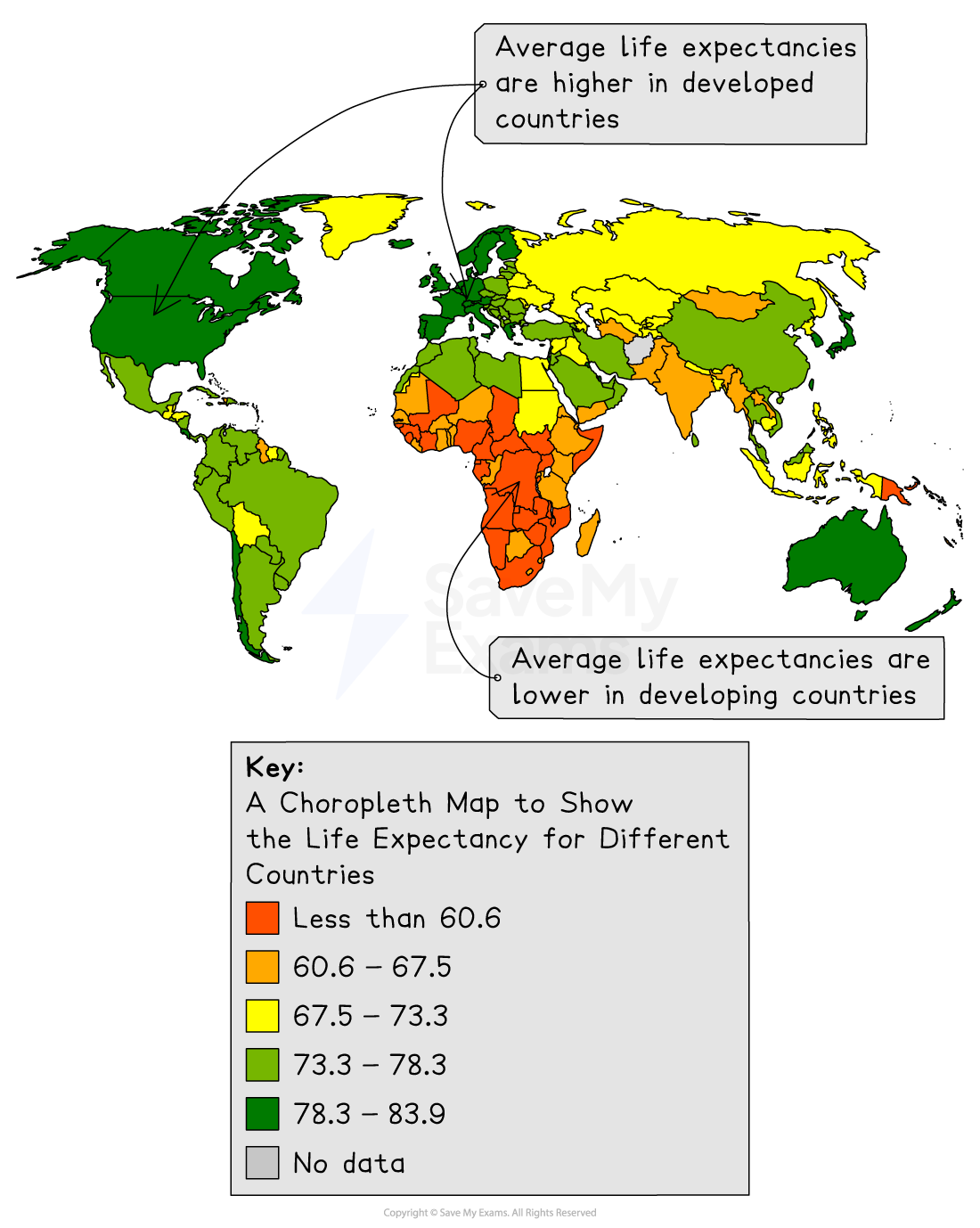
There are significant health inequalities between developing and developed countries
A key indicator which demonstrates this is life expectancy
Life expectancy tends to be higher in developed countries than in developing countries
People all over the world are affected by various diseases that impact their health
Diseases can be divided into:
Infectious diseases (also known as communicable diseases)
These are more prevalent in developing countries
Non-infectious diseases (also known as non-communicable diseases)
These are more prevalent in developed countries
Some infectious diseases, such as HIV/AIDS, are prevalent in both developing and developed countries
Middle-income countries such as Brazil tend to struggle with both infectious and non-infectious diseases at the same time
Communicable diseases
These are spread by people or vectors
Examples include:
Malaria
Cholera
Kwashikorkor
Pneumonia
HIV/AIDS
Developed countries have been very effective in reducing infectious diseases, so they tend to be more prevalent in developing countries
Reasons for this include:
Poor access to clean water and sanitation
Limited healthcare services
Poor diet and malnutrition
Warm climates with more flies and mosquitoes that spread diseases
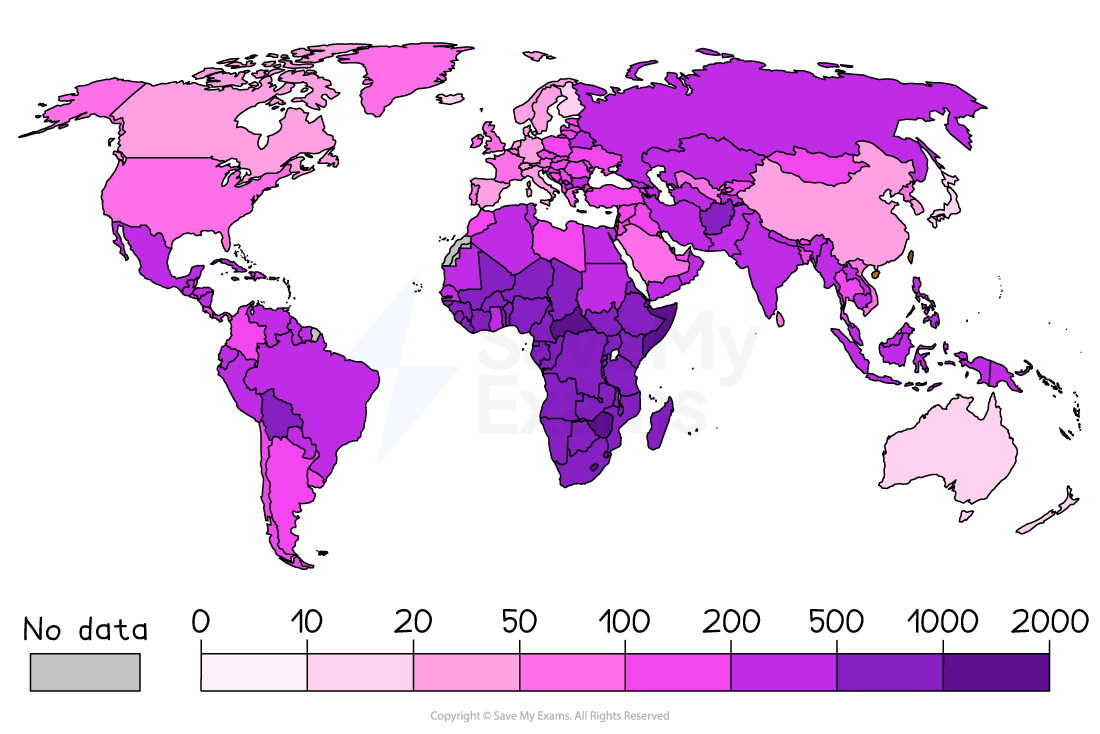
People living in developing countries are far more likely to die from a communicable disease than a non-communicable disease
Non-communicable diseases
These are long-term health conditions that are not spread by people or vectors
Examples include:
Heart Disease
Cancer
Asthma
Non-communicable diseases are the leading cause of death globally
They killed at least 43 million people in 2021
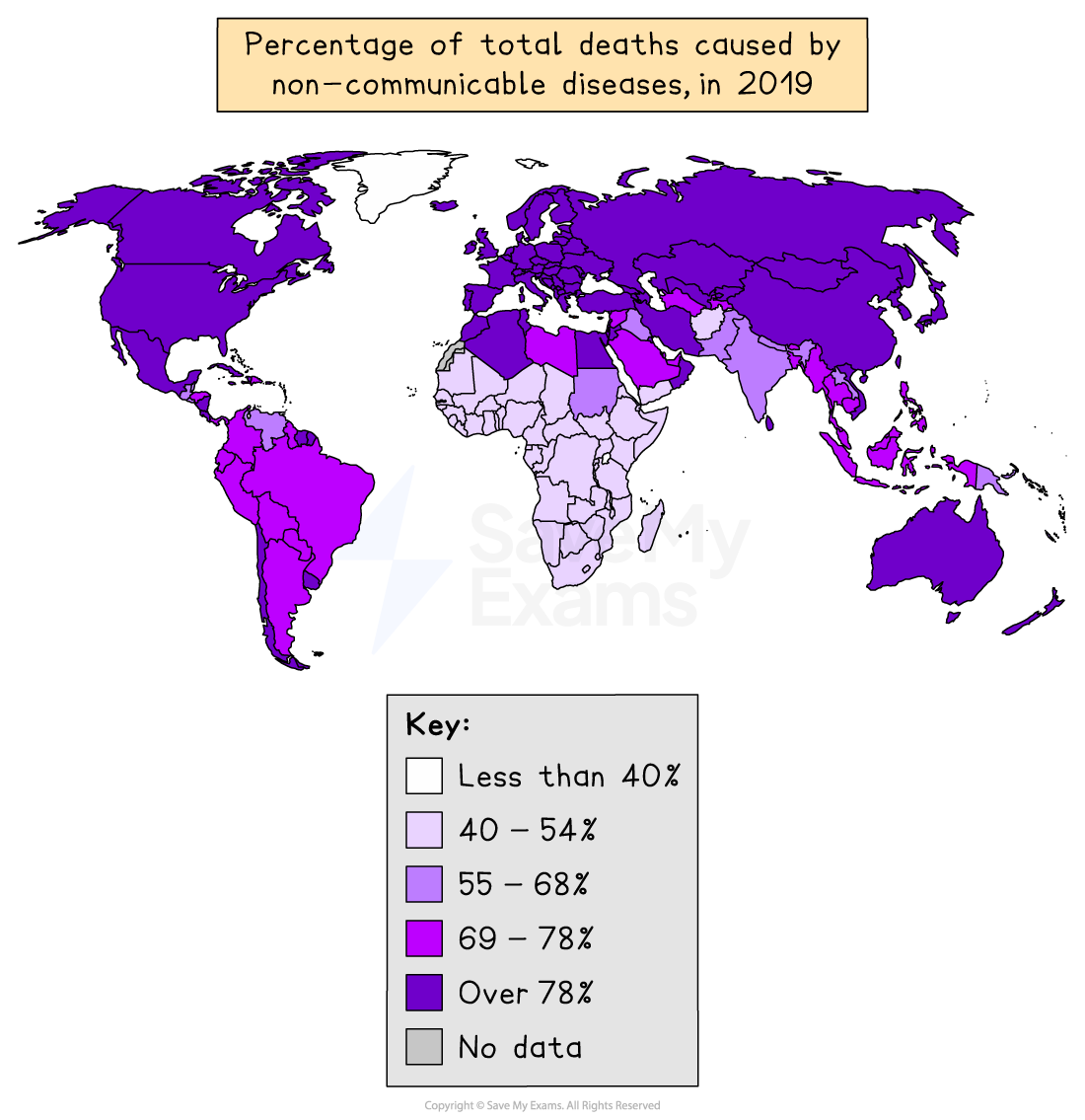
They are more prevalent in developed countries
Reasons for this include:
Higher proportions of elderly people
Unhealthy lifestyles with limited exercise
Poor diets that are high in sugar, salt and fat
Smoking and alcohol consumption
Despite being more prevalent in developed countries, non-communicable diseases are more likely to cause premature deaths in developing countries
This is due to better healthcare in developed countries, which supports early diagnosis and effective treatment
However, they account for a larger percentage of deaths in developed countries, which experience comparatively low rates of communicable diseases

Unlock more, it's free!
Join the 100,000+ Students that ❤️ Save My Exams
the (exam) results speak for themselves:

Was this revision note helpful?
