Human Activity & Tundra (SQA National 5 Geography): Revision Note
Exam code: X833 75

Human activity in the tundra ecosystem
People use the tundra landscape to their advantage in several ways
But sometimes the landscape is misused, causing problems for people and the environment
Indigenous people
Indigenous people, such as Inuits, tend to use the tundra environment in a sustainable way
They have lived in the tundra for thousands of years and adapted their lifestyles to cope with the harsh climate
They use traditional methods to hunt and fish for their food
They only hunt enough food to survive, which reduces the impact on the ecosystem
They use every part of the animal to avoid waste
Skins and fur for clothing
Bones and antlers for tools
Mineral extraction
There are large reserves of oil and gas in the Arctic tundra
Prudhoe Bay in Alaska, USA, is the largest oil field in North America
There are also reserves of minerals like gold, silver, iron ore, copper and diamonds
The Red Dog Mine in Alaska, USA, is the world’s largest producer of zinc
Kiruna Mine in Sweden is a major iron ore producer
Benefits (uses)
Provides energy and valuable minerals for industries
Creates jobs and boosts the economy
Costs (misuses)
Construction and heavy machinery damage vegetation and permafrost
Oil spills and toxic waste pollute the environment
Roads and pipelines can destroy habitats and disrupt animal migration
Tourism
Tourism in the tundra is growing
People are attracted by activities like seeing the Northern Lights, hiking and dog sledding
1.8 million people visited Lapland in Finland in 2024
Benefits (uses)
Provides jobs and income for local communities
Raises awareness of the tundra ecosystem and climate change
People are educated about indigenous cultures, helping to preserve traditions
Helps to fund conservation efforts
Costs (misuses)
Some tourists visit to hunt animals like caribou and musk oxen, which can lead to over-hunting
Increased numbers of visitors cause trampling of vegetation and disruption of wildlife
Pollution from vehicles and cruise ships damages ecosystems
Transport and infrastructure
Roads and pipelines increase the number of people and vehicles in the tundra
Heat generated by infrastructure, such as terminal buildings, homes and transport, causes permafrost to thaw
This can cause the infrastructure to crack and collapse
Benefits (uses)
Improves accessibility for remote communities
Enables development, boosting the economy
Provides goods and services, improving the quality of life
Costs (misuses)
Construction scars the landscape
Disrupts animal migration routes
Threatens traditional cultures
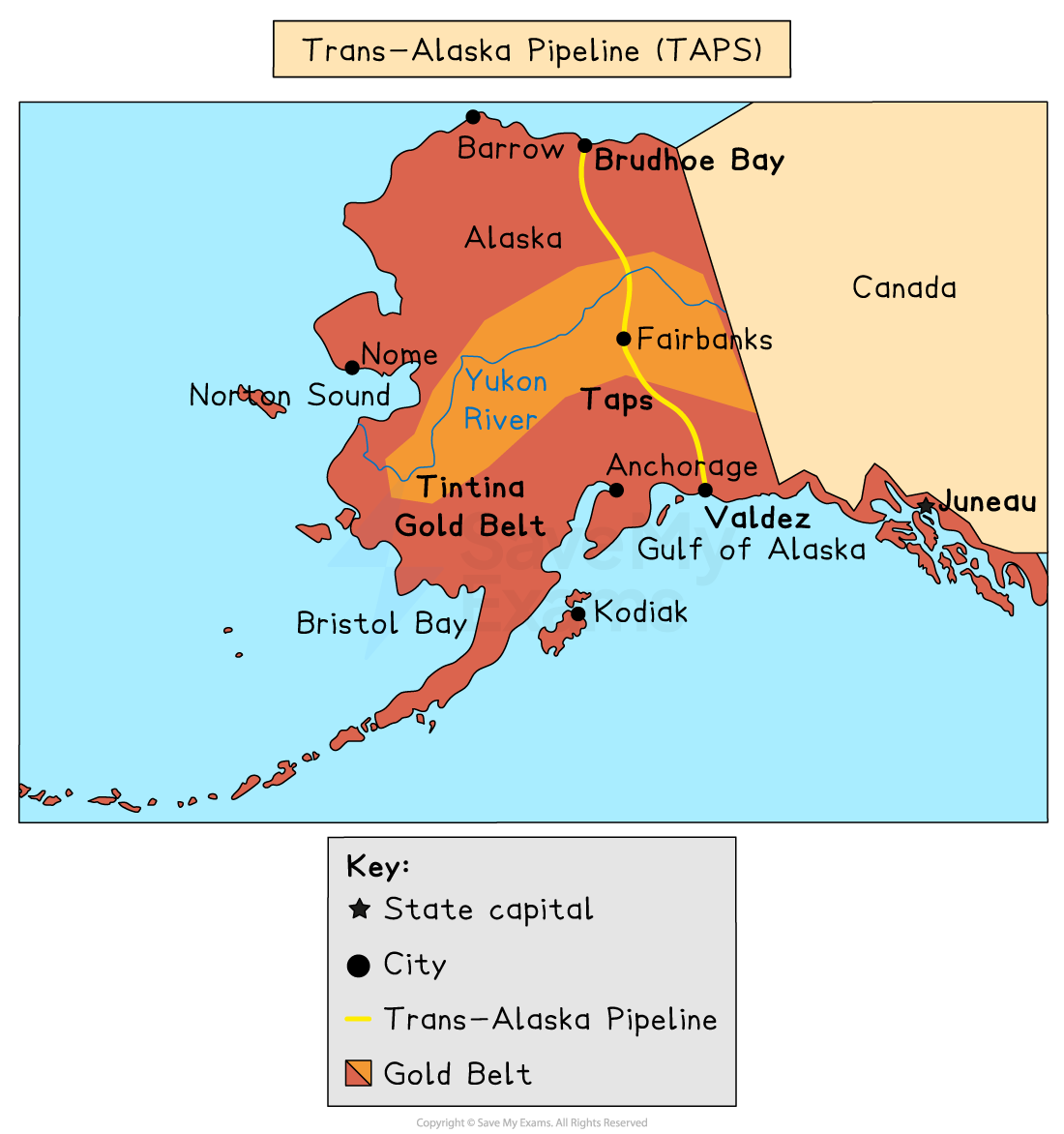
Trans-Alaska Pipeline System (TAPS)
This 800-mile-long pipeline transports oil from Prudhoe Bay in Northern Alaska to Valdez on the south coast
Benefits (uses)
Oil can be exported globally from an ice-free port
Provides jobs and income
It was built on stilts to raise it above the ground, preventing the transfer of heat to the permafrost
Some sections are elevated to allow animals to pass underneath safely
Costs (misuses)
Disrupts indigenous people’s traditional hunting areas
Construction damaged vegetation
Disturbs animals’ breeding grounds
Disrupts the migration patterns of animals like caribou
Risk of oil spills
Requires constant monitoring and maintenance
Examiner Tips and Tricks
Make sure you know how humans use the tundra landscape to their advantage, and also how they misuse it by exploiting it unsustainably and causing damage to people and the environment
Impacts of human activity in the tundra
Effects of land degradation on people and the environment
Impacts on people
Land and water pollution means that indigenous people may be unable to hunt and fish for their food
People are forced to buy imported foods at high prices
Connection to land and culture is lost
Traditional cultures are threatened as indigenous people get jobs in industries such as mining
Younger generations don’t learn traditional skills like hunting and tracking
Pollution leads to an increase in respiratory illnesses and cancer
Mental health problems like depression increase due to rapid cultural change
Buildings and roads become damaged as permafrost melts
Leads to high repair costs and safety risks
Impacts on the environment
Cold environments are fragile and easily damaged
Vegetation is damaged and destroyed by construction and vehicles
Some animals lose their habitats and food sources
Plants take years to regrow, leaving the soil bare and exposed to erosion
Oil spills and toxic waste from mining pollute rivers and lakes
Impacts aquatic ecosystems and food chains
Roads and pipelines can block animal migration routes
Wildlife can’t access food sources and breeding areas
Noise and construction can disrupt wildlife breeding and feeding areas
Species numbers decline
Sea ice melts, disrupting animal feeding patterns
Species such as polar bears become vulnerable as they struggle to hunt
Permafrost melts, releasing large amounts of carbon dioxide and methane
These greenhouse gases contribute to the enhanced greenhouse effect and further global warming
Managing human activity in the tundra
Many strategies have been used to minimise the impacts of human activity
The Arctic Council
Arctic countries work together to protect and manage the tundra environment
Indigenous people are included in decision-making
The Arctic Council carries out research and monitoring of the impacts of climate change and industrial activity in the tundra
It develops guidelines and agreements to promote sustainable management
Adaptations to infrastructure
Roads, pipelines and buildings can be built on stilts or gravel pads to reduce heat transfer and melting of permafrost
The Trans-Alaska Pipeline is raised on stilts and uses refrigerated supports to keep the ground frozen
Wildlife conservation
National Parks are created to conserve wildlife and the environment
Gates of the Arctic National Park in Alaska is the largest national park in the USA
Governments also use Biodiversity Action Plans (BAPs) to protect and restore species and habitats
Industrial activity is restricted in wildlife corridors to allow animals to migrate safely
Groups like the World Wildlife Fund for Nature (WWF) help to raise awareness of climate change and biodiversity loss
This encourages sustainable management and pressures governments to prevent damage
Hunting restrictions help to protect ecosystems and food chains
Quotas limit the number of animals that can be hunted
Hunting is banned during breeding seasons to protect young animals
Management of tourism
Popular tourist destinations such as Svalbard, Norway, can be managed to make them more sustainable
Strategies include:
Strict limits on the use of vehicles
Tour operators and visitors have to get permission to visit nature reserves
Plants are protected by law to prevent people from picking flowers or trampling vegetation
People must view animals from a distance to prevent disturbance
Climate change mitigation
International climate agreements like the Paris Agreement help to limit global warming
It encourages countries to reduce greenhouse gas emissions by shifting to renewable energy sources and lowering energy demand
This would prevent permafrost and sea ice from melting, protecting the ecosystem
Worked Example
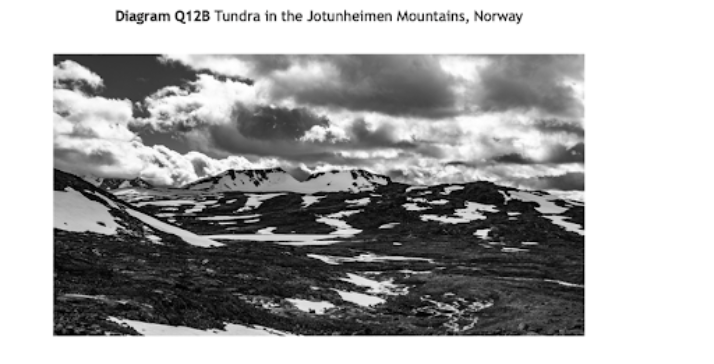
Study diagram Q12B
Explain the different ways in which the world's tundra regions are being used and misused.
[6 marks]
Example answer
Use:
Local people have found employment in the oil industry or modern settlements. [1] The oil industry has brought huge wealth to some people in Alaska, [1] some of whom have the highest average income in the USA [1]
Misuse:
The construction of the Trans-Alaskan pipeline has disturbed animals’ breeding grounds [1] and affected the migration of the caribou. [1] The pipeline has cut off access to traditional hunting areas for the Inuit people [1]

Unlock more, it's free!
Join the 100,000+ Students that ❤️ Save My Exams
the (exam) results speak for themselves:

Was this revision note helpful?